




How long do dermal fillers last? Learn about types, science, results duration, safety, aftercare, and what influences longevity in London’s aesthetic treatments.

Finding a natural way to refresh your look while keeping drastic changes at bay can feel like a challenge for many women across London. As subtle volume loss and fine lines appear with age, understanding how dermal fillers work and what truly affects their longevity becomes essential. This guide dispels common myths, explains the science behind dermal fillers, and offers tailored advice so you can make confident, well-informed choices about enhancing your facial aesthetics.
Table of Contents
- Dermal Fillers Explained And Common Myths
- Types Of Fillers And Differences In Longevity
- How Dermal Fillers Work Beneath The Skin
- Factors Influencing How Long Fillers Last
- Aftercare Steps To Extend Your Results
- Potential Risks And Managing Unwanted Effects
Key Takeaways
| Point | Details |
|---|---|
| Understanding Fillers | Dermal fillers are diverse injectable treatments designed for volume restoration and facial contour enhancement, utilizing various substances for specific results. |
| Myths Debunked | Common misconceptions include beliefs that fillers provide permanent results and are only for older individuals; understanding realistic outcomes is essential. |
| Influencing Factors | Filler longevity is impacted by composition, anatomical factors, and individual patient variables like metabolism and skin health. |
| Aftercare Importance | Proper aftercare strategies can significantly maximise treatment results, including lifestyle adjustments and skincare routines to extend the longevity of the fillers. |
Dermal fillers explained and common myths
Dermal fillers are sophisticated aesthetic treatments designed to restore facial volume, enhance contours, and address age-related volume loss. These injectable implants offer women a nuanced approach to facial rejuvenation beyond traditional approaches. Soft tissue augmentation techniques have evolved significantly, providing targeted solutions for various aesthetic concerns.
Understanding the fundamental science behind dermal fillers is crucial. These treatments typically use different substances to achieve specific aesthetic goals:
- Hyaluronic Acid (HA) Fillers: Provide immediate hydration and volume
- Calcium Hydroxyapatite (CaHA): Stimulate long-term collagen production
- Poly-L-Lactic Acid (PLLA): Offer gradual volumising effects
- Polymethyl Methacrylate (PMMA): Provide permanent structural support
Contrary to popular misconceptions, dermal fillers are not exclusively for wrinkle reduction. Advanced filler technologies can address multiple aesthetic concerns including volume restoration, scar improvement, and facial feature refinement. These treatments require precision, expertise, and a deep understanding of facial anatomy.
Patient selection, practitioner expertise, and realistic expectations are paramount in achieving safe and satisfactory results.
Common myths surrounding dermal fillers often stem from misinformation and lack of understanding. Some prevalent misconceptions include:
- Believing fillers provide permanent results
- Assuming fillers are only suitable for older individuals
- Thinking all fillers produce identical outcomes
- Expecting instant and dramatic transformations
In reality, filler treatments are nuanced procedures that require professional assessment and personalised approaches. Treatment longevity varies significantly, typically ranging from six months to several years depending on the specific product and individual metabolic factors.
Pro tip: Always consult a medically qualified practitioner who understands facial anatomy and can recommend personalised treatment strategies tailored to your specific aesthetic goals.
Types of fillers and differences in longevity
Dermal fillers represent a diverse range of aesthetic treatments, each with unique compositions and varying longevity profiles. Hyaluronic acid filler technologies offer nuanced approaches to facial rejuvenation, with different substances providing distinct benefits and duration of results.
The primary types of dermal fillers include:
Here is a comparison of the main dermal filler types and their unique applications:
| Filler Type | Best For | Distinctive Feature |
|---|---|---|
| Hyaluronic Acid (HA) | Lip and cheek enhancement | Provides instant hydration |
| Calcium Hydroxyapatite (CaHA) | Jawline contouring | Stimulates natural collagen |
| Poly-L-Lactic Acid (PLLA) | Cheek and temple volume | Gradual, long-term results |
| Polymethyl Methacrylate (PMMA) | Deep wrinkles, acne scars | Offers semi-permanent support |
Hyaluronic Acid (HA) Fillers
- Instant volume and hydration
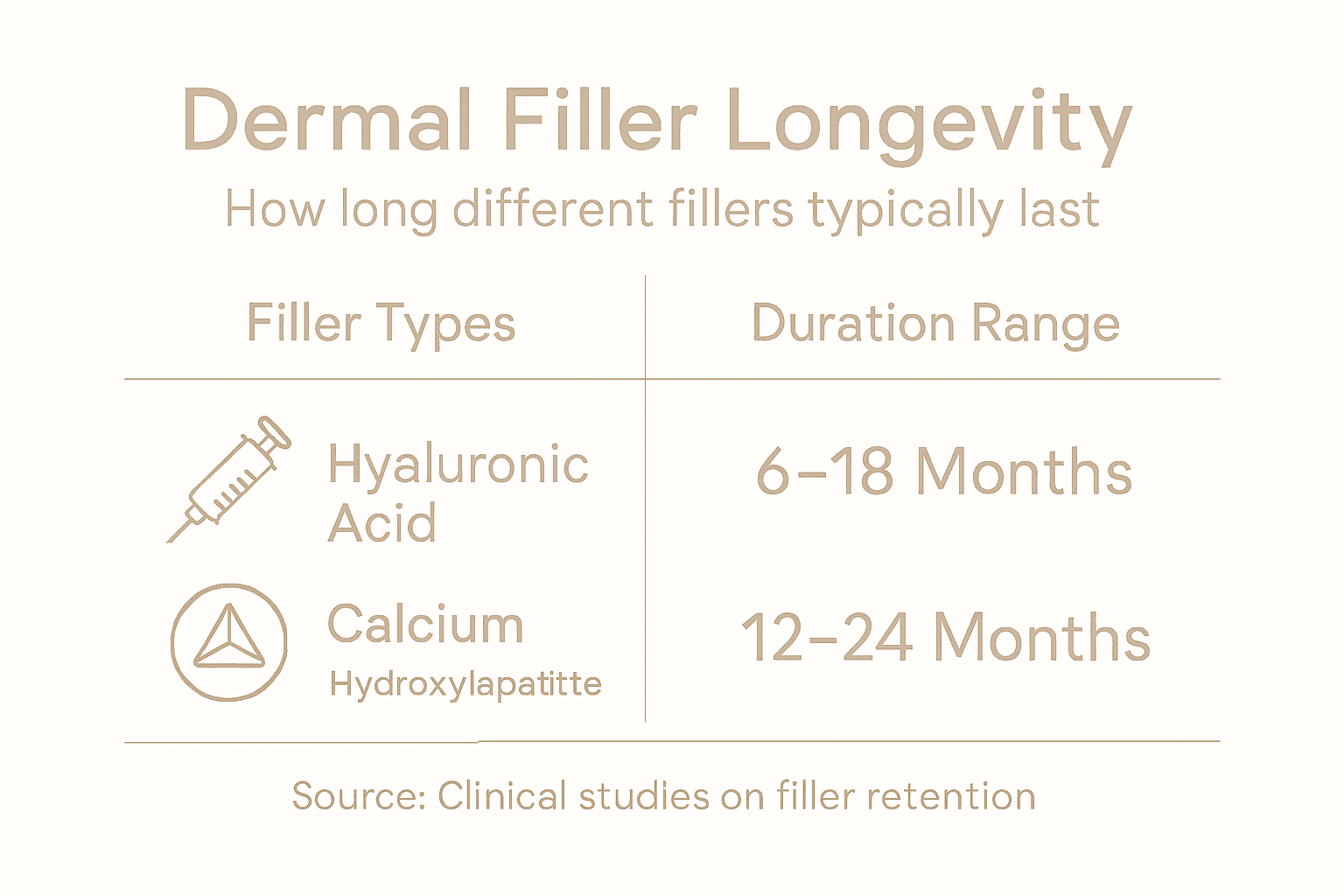
- Typical duration: 6-18 months
- Ideal for immediate facial enhancement
Calcium Hydroxyapatite (CaHA) Fillers
- Stimulates collagen production
- Duration: 12-18 months
- Promotes gradual skin improvement
Poly-L-Lactic Acid (PLLA) Fillers
- Collagen stimulation
- Duration: Up to 2 years
- Gradual skin firmness restoration
Polymethyl Methacrylate (PMMA) Fillers
- Provides long-lasting structural support
- Duration: Potentially several years
- Most permanent filler option
Scientific precision in filler selection is crucial for achieving optimal aesthetic outcomes.
Clinical studies on filler longevity reveal fascinating insights into volume retention. Research indicates that hyaluronic acid fillers can maintain 50-86% of their volume at 12 months post-treatment, with some formulations demonstrating persistence up to 24 months. The actual longevity depends on multiple factors including product cross-linking, injection technique, and individual patient metabolism.
Interestingly, filler degradation rates vary significantly across different facial regions. Dynamic areas with more muscle movement tend to break down injectable treatments faster, while static regions preserve volume more effectively. This variability underscores the importance of personalised treatment planning and expert practitioner assessment.
Pro tip: Consult a medical professional who can assess your unique facial anatomy and recommend the most appropriate filler type for your specific aesthetic goals.
How dermal fillers work beneath the skin
Dermal filler mechanics represent a sophisticated approach to addressing age-related skin changes. These injectable treatments work by strategically restoring volume and supporting the skin’s underlying structural layers, counteracting the natural loss of facial volume that occurs with aging.
The primary mechanisms of dermal fillers involve multiple intricate processes:
Volume Restoration
- Immediate physical space filling
- Lifting and supporting facial tissues
- Addressing volume deficits caused by aging
Hydration Enhancement
- Attracting and binding water molecules
- Improving skin’s moisture retention
- Creating a plumper, more youthful appearance
Collagen Stimulation
- Encouraging natural protein production
- Supporting long-term skin structure
- Gradually improving skin texture and firmness
Precise anatomical knowledge is crucial for achieving optimal aesthetic results with dermal fillers.
The injection process requires exceptional technical skill and understanding of facial anatomy. Different filler types interact with skin tissues uniquely: hyaluronic acid fillers provide immediate volume by binding water molecules, while calcium hydroxyapatite and poly-L-lactic acid fillers stimulate gradual collagen production. Dermal filler injection techniques demand intricate knowledge of facial layers, ensuring product placement that supports both immediate aesthetic enhancement and long-term skin health.

Beneath the skin’s surface, these treatments work by addressing multiple age-related changes. They compensate for fat redistribution, bone resorption, and decreased collagen production. By strategically introducing supportive substances, practitioners can effectively manage volume loss, smooth wrinkles, and restore facial contours with remarkable precision.
Pro tip: Always seek a medically qualified practitioner who understands the complex anatomical considerations of facial rejuvenation and can customise treatments to your unique facial structure.
Factors influencing how long fillers last
Hyaluronic acid filler longevity depends on a complex interplay of biological and procedural factors that determine the duration and effectiveness of aesthetic treatments. Understanding these variables helps patients set realistic expectations and practitioners develop personalised treatment strategies.
The primary factors affecting dermal filler duration include:
Filler Composition
- Cross-linking density
- Molecular structure
- Gel cohesiveness
- Material viscosity
Anatomical Considerations
- Injection site muscle activity
- Vascular supply
- Local metabolic rate
- Tissue characteristics
Patient-Specific Variables
- Individual metabolism
- Age
- Skin health
- Lifestyle factors
- Hormonal balance
Individual biological variation can significantly impact filler performance and longevity.
Certain facial regions experience faster filler degradation due to increased muscular movement and metabolic activity. Areas like the lips and perioral region typically show quicker product breakdown compared to more static regions such as cheeks or temples. The intricate balance of enzymatic activity, blood supply, and mechanical stress plays a crucial role in determining how long aesthetic enhancements remain visible.
The following table summarises key factors affecting dermal filler longevity:
| Influencing Factor | Typical Effect on Longevity |
|---|---|
| Facial Region Treated | Dynamic areas degrade faster |
| Patient Metabolism | Fast metabolism, shorter effect |
| Product Cross-linking | Higher cross-linking, longer lasting |
| Injection Depth | Deeper placement, more durable |
Practitioners can optimise filler longevity through strategic approaches, including:
- Selecting high cross-linked, cohesive gel technologies
- Precise injection techniques
- Customising treatment plans to individual patient profiles
- Recommending appropriate aftercare and maintenance strategies
Pro tip: Discuss your unique physiological characteristics with your aesthetic practitioner to develop a tailored approach that maximises the longevity and effectiveness of your dermal filler treatment.
Aftercare steps to extend your results
Dermal filler aftercare strategies are critical for maximising treatment effectiveness and ensuring optimal aesthetic outcomes. Proper post-procedure management can significantly influence the longevity and quality of your aesthetic enhancements, helping patients maintain their desired results for an extended period.
Key immediate aftercare recommendations include:
Physical Precautions
- Avoid strenuous exercise for 24-48 hours
- Minimise excessive heat exposure
- Prevent direct pressure on treated areas
- Limit facial movements and manipulations
Lifestyle Considerations
- Postpone alcohol consumption
- Stay hydrated
- Maintain balanced nutrition
- Get adequate rest
Skincare Protocols
- Use gentle, non-irritating skincare products
- Apply recommended healing serums
- Protect skin from direct sunlight
- Avoid extreme temperature variations
Precision in aftercare directly correlates with treatment longevity and aesthetic quality.
Patients must understand that individual healing processes vary, and following personalised instructions from their aesthetic practitioner is paramount. Some individuals might experience minor swelling or bruising, which typically subsides within a few days. Avoiding blood-thinning medications and maintaining a calm, stress-reduced environment can further support optimal healing and filler preservation.
Long-term maintenance strategies are equally important for extending dermal filler results. These include:
- Scheduling regular follow-up consultations
- Maintaining a consistent skincare routine
- Protecting skin from excessive sun exposure
- Managing overall health and hydration levels
- Considering complementary treatments recommended by your practitioner
Pro tip: Document your treatment journey with photographs and detailed notes to help your practitioner track your progress and refine future treatment approaches.
Potential risks and managing unwanted effects
Cosmetic procedure risks are an essential consideration for anyone contemplating dermal filler treatments. Understanding potential complications empowers patients to make informed decisions and recognise early warning signs that might require medical intervention.
The primary potential risks associated with dermal fillers include:
Immediate Side Effects
- Temporary bruising
- Mild swelling
- Skin sensitivity
- Slight discolouration
Moderate Complications
- Infection
- Allergic reactions
- Asymmetrical results
- Tissue irregularities
Rare but Serious Risks
- Vascular occlusion
- Tissue necrosis
- Immune system responses
- Potential vision complications
Expert practitioner selection is crucial in minimising potential treatment risks.
Specific anatomical regions, such as under-eye areas, carry unique risk profiles. These delicate zones require exceptional precision and advanced technical expertise. Potential complications like the Tyndall effect (a bluish discolouration) or persistent filler deposits can occur if treatments are not performed with meticulous care and comprehensive understanding of facial anatomy.
Risk management strategies involve multiple preventative approaches:
- Selecting a medically qualified practitioner
- Providing comprehensive medical history
- Undergoing thorough pre-treatment assessment
- Following precise aftercare instructions
- Monitoring treatment sites for unusual changes
Pro tip: Always maintain open communication with your aesthetic practitioner and seek immediate medical advice if you experience unexpected symptoms or prolonged discomfort following a dermal filler treatment.
Discover How Monaz Clinic Can Help You Achieve Naturally Lasting Dermal Filler Results
Understanding how long dermal fillers last and the science behind their safety is essential in making informed decisions about your aesthetic journey. If you are concerned about finding treatments that offer subtle yet effective volume restoration without compromising your natural beauty, you are not alone. Many women seek personalised approaches that respect their unique facial anatomy while ensuring longevity and safety — exactly the expertise we provide at Monaz Clinic.

Experience the difference of a medically qualified practitioner dedicated exclusively to women. At Monaz Clinic, located in the heart of London, Mrs Mona Zirak and her team combine advanced techniques with compassionate care. Explore expert advice and tips on maximizing your dermal filler results in our tips – Monaz Clinic | Facial Aesthetic Clinic in London section and learn more about our full range of tailored treatments on our website. Take the first step today by booking your complimentary consultation and receive a treatment plan designed specifically to enhance your natural features safely and beautifully.
Frequently Asked Questions
How long do dermal fillers typically last?
Dermal fillers can last from six months to several years depending on the type of filler used and individual factors such as metabolism and the treatment area.
What factors influence the longevity of dermal fillers?
The longevity of dermal fillers is influenced by several factors, including the filler composition, anatomical considerations (such as the location of the injection), and individual patient-specific variables like metabolism and skin health.
Are all dermal fillers the same in terms of longevity?
No, different types of dermal fillers have varying longevity profiles. For example, hyaluronic acid fillers generally last 6-18 months, while poly-L-lactic acid fillers can last up to 2 years due to their collagen-stimulating properties.
What aftercare steps can help extend the results of dermal fillers?
To extend the results of dermal fillers, it is important to avoid strenuous exercise, excessive heat, and direct pressure on the treated areas for 24-48 hours. Maintaining good hydration and following a proper skincare routine can also aid in prolonging the results.
Recommended
- How Long Fillers Last – What Every Woman Should Know – Monaz Clinic London
- Long-Lasting Filler Options: Complete Expert Guide – Monaz Clinic London
- Understanding the Benefits of Dermal Fillers for Facial Aesthetics – Monaz Clinic London
- Timeline of Filler Results: What to Expect in London – Monaz Clinic London