




Lip injections explained for women in London: discover what substances are used, the science, the procedure, safety protocols, risks, and ethical care.

Choosing the right approach to lip enhancement can feel overwhelming when you want results that look naturally beautiful, not obvious. For many women in Central London, the appeal of non-surgical lip injections lies in the possibility of subtle, personalised refinement without lengthy recovery time. This guide breaks down what you need to know about the science behind lip fillers, the safest techniques, and how expert practitioners use hyaluronic acid fillers for soft, balanced results that suit your unique features.
Table of Contents
- Lip Injections Explained: Science And Purpose
- Substances Used In Lip Enhancement Procedures
- How Lip Injections Work: Step-By-Step Process
- Safety, Regulation, And Professional Standards
- Risks, Aftercare, And Setting Realistic Expectations
Key Takeaways
| Point | Details |
|---|---|
| Lip Injections Enhance Aesthetics | Lip injections use advanced techniques to improve lip volume, contour, and definition while ensuring personalised results. |
| Choose Safe and Qualified Practitioners | Always consult medically qualified professionals with recognised credentials to ensure safety in cosmetic procedures. |
| Understand Risks and Aftercare | Be aware of potential risks and follow aftercare instructions to optimise healing and achieve desired outcomes. |
| Know Your Filler Options | Different lip fillers have unique properties and durations; understanding these helps in making informed choices regarding lip enhancement. |
Lip Injections Explained: Science and Purpose
Lip injections represent a sophisticated aesthetic procedure designed to enhance and restore lip volume, contour, and definition. Dermal filler techniques offer women precise options for addressing various lip concerns, ranging from subtle volume enhancement to targeted symmetry correction.
The scientific foundation of lip injections revolves around understanding complex lip anatomy and strategic injection placement. Key anatomical features guiding these procedures include:
- Vermilion border: The distinct margin between lip skin and surrounding facial tissue
- Cupid’s bow: The central curved area of the upper lip
- Philtrum: The vertical groove between the nose and upper lip
- Oral commissures: The corners where upper and lower lips meet
Modern lip enhancement techniques utilise advanced dermal fillers composed primarily of hyaluronic acid, a naturally occurring substance in human skin. These injectable treatments work by:
- Adding immediate volume
- Stimulating natural collagen production
- Hydrating lip tissue
- Improving overall lip definition
Scientific precision meets aesthetic artistry in contemporary lip injection approaches.
Patients seeking lip injections can expect personalised treatments tailored to their unique facial structure and aesthetic goals. The procedure allows for nuanced modifications, from gentle volume restoration to more dramatic reshaping.
Pro tip: Always consult a medically qualified professional who understands facial anatomy and can recommend the most appropriate lip enhancement technique for your specific features.
Substances Used in Lip Enhancement Procedures
Hyaluronic acid (HA) fillers dominate contemporary lip enhancement techniques, offering women sophisticated options for achieving natural, refined lip aesthetics. Advanced lip filler formulations provide tailored solutions that address individual aesthetic concerns with remarkable precision.
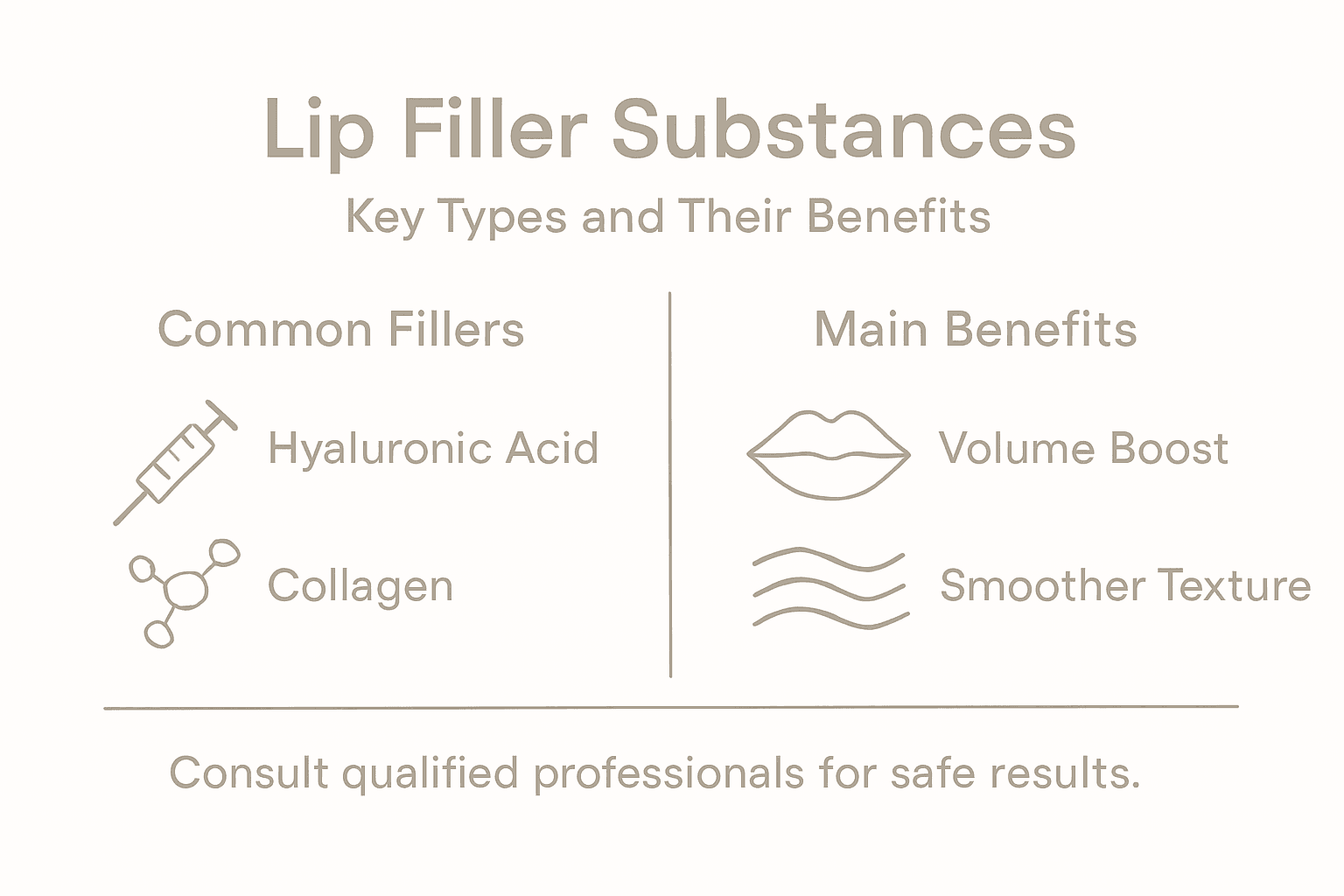
The primary substances used in contemporary lip enhancement procedures include:
- Hyaluronic acid fillers: Most prevalent, featuring multiple sub-types
- Collagen-based fillers: Require comprehensive allergy screening
- Calcium hydroxylapatite: Less common volumising option
- Fat transfer: Utilising patient’s own biological material
- Synthetic implants: Considered higher-risk intervention
Hyaluronic acid fillers offer significant advantages through their unique characteristics:
- Immediate volume restoration
- Natural tissue integration
- Reversibility using hyaluronidase enzyme
- Customisable aesthetic outcomes
Contemporary lip enhancement represents a delicate balance between scientific precision and artistic refinement.
Each filler substance presents distinct properties affecting durability, texture, and aesthetic potential. Practitioners carefully select formulations based on particle size, cross-linking technology, and individual patient requirements, ensuring optimal, personalised results.
Here is a summary of primary lip filler substances and their unique characteristics:
| Substance Type | Longevity | Unique Benefit | Typical Use Cases |
|---|---|---|---|
| Hyaluronic acid fillers | 6-12 months | Natural look, reversible | Volume, contour, hydration |
| Collagen-based fillers | 3-6 months | Fine line filling | Subtle structure, fine lines |
| Calcium hydroxylapatite | 12-18 months | Firmer texture, volumisation | Pronounced volume, shaping |
| Fat transfer | Several years | Autologous material, lasting | Dramatic augmentation |
| Synthetic implants | Permanent | Significant reshaping | High volume, defined borders |
Pro tip: Consult a medically qualified aesthetic professional who can comprehensively assess your unique facial anatomy and recommend the most appropriate lip enhancement substance.
How Lip Injections Work: Step-by-Step Process
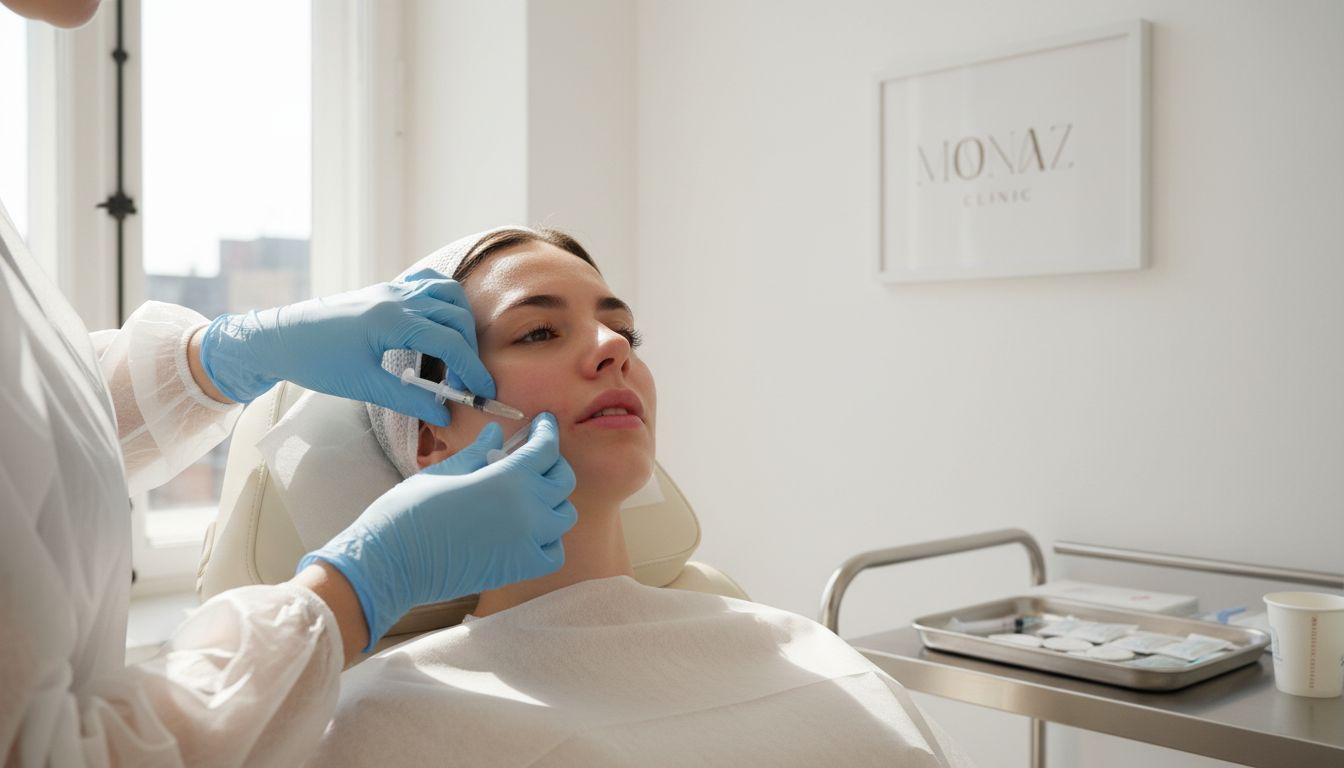
Lip injections are a precise aesthetic procedure requiring meticulous planning and expert technique. Lip injection techniques involve sophisticated medical approaches designed to enhance lip appearance while maintaining natural aesthetic balance.
The comprehensive lip injection process typically follows these critical stages:
- Initial consultation: Detailed facial assessment and aesthetic goal discussion
- Medical screening: Comprehensive health and medical history evaluation
- Treatment planning: Customised approach based on individual lip anatomy
- Preparation: Cleansing and anaesthetic application
- Injection procedure: Precise filler placement
- Post-treatment care: Immediate aftercare and healing guidance
Detailed procedural steps include:
- Comprehensive patient consultation and goal setting
- Precise medical assessment and anatomical mapping
- Topical anaesthetic application to minimise discomfort
- Strategic filler injection using fine needles or cannulas
- Careful monitoring of injection depth and volume
- Immediate post-procedure assessment
Precision and artistry converge in contemporary lip enhancement techniques.
The injection process demands extraordinary attention to detail, with practitioners carefully navigating lip anatomy to achieve balanced, natural-looking results. Specialized techniques allow for subtle volume enhancement, symmetry correction, and refined lip contour.
Pro tip: Request photographic documentation of your treatment plan to ensure clear communication and alignment with your aesthetic expectations.
Safety, Regulation, and Professional Standards
Cosmetic lip enhancement procedures demand rigorous safety protocols and professional oversight. Non-surgical cosmetic regulations in the United Kingdom are evolving to protect patient well-being and ensure high-quality aesthetic interventions.
Key regulatory considerations for lip injection procedures include:
- Medical qualification: Practitioners must hold recognised aesthetic medicine credentials
- Prescriber status: Only qualified medical professionals can administer treatments
- Product verification: Use of regulated, approved dermal fillers
- Informed consent: Comprehensive patient consultation and risk disclosure
- Sterile environment: Maintaining stringent infection control standards
Critical safety protocols involve:
- Comprehensive medical history assessment
- Thorough pre-procedure consultation
- Detailed explanation of potential risks
- Precise injection technique
- Post-procedure monitoring
- Follow-up care instructions
Patient safety remains the paramount consideration in aesthetic medicine.
Professional bodies continuously advocate for enhanced training, stricter licensing requirements, and improved patient protection mechanisms. The aesthetic medicine landscape is transitioning towards more robust regulatory frameworks that balance consumer choice with comprehensive safety standards.
The following table highlights essential factors to verify for safe lip enhancement procedures in the UK:
| Requirement | Why It Matters | What to Check |
|---|---|---|
| Medical qualification | Ensures safe practice | GMC/NMC/GDC registration |
| Product regulation | Prevents unsafe filler use | CE-marked, MHRA-approved products |
| Informed consent | Protects patient rights | Signed documents, clear discussion |
| Sterile technique | Minimises infection risk | Clean clinic, gloves used |
| Prescriber oversight | Legal compliance | Practitioner must be a prescriber |
Pro tip: Always verify your practitioner’s medical qualifications and professional registration before proceeding with any cosmetic injectable treatment.
Risks, Aftercare, and Setting Realistic Expectations
Lip enhancement procedures require comprehensive understanding of potential outcomes and associated risks. Lip filler side effects vary from minor temporary reactions to rare but significant complications, necessitating thorough patient education and informed consent.
Potential risks associated with lip injections include:
- Temporary swelling: Normal response lasting 24-48 hours
- Bruising: Minor discolouration at injection sites
- Asymmetry: Potential uneven filler distribution
- Infection: Rare but serious potential complication
- Vascular complications: Extremely rare blockage risks
Critical aftercare recommendations involve:
- Avoiding excessive lip movement
- Applying cold compresses
- Maintaining hydration
- Avoiding intense physical activity
- Protecting lips from direct sunlight
- Following practitioner’s specific guidance
Realistic expectations form the foundation of satisfactory aesthetic outcomes.
Patients should understand that final results emerge gradually, with initial swelling subsiding over two weeks. The subtle, natural enhancement requires patience and careful adherence to post-procedure instructions. Professional practitioners emphasize gradual transformation rather than dramatic, instantaneous changes.
Pro tip: Document your initial lip appearance with photographs to track subtle, nuanced changes throughout the healing process.
Discover Expert Lip Enhancement Designed for You
Understanding the science behind lip injections is the first step towards achieving natural, beautiful results that respect your unique facial anatomy. If you seek precise volume restoration or subtle contouring with safe, medically approved hyaluronic acid fillers, the dedicated team at Monaz Clinic in London is here to help. We combine deep anatomical knowledge with artistic skill to ensure your lip enhancement feels both comfortable and empowering.

Ready to refresh your look with confidence and safety ? Explore our tailored approach by visiting tips – Monaz Clinic | Facial Aesthetic Clinic in London where medical expertise meets personalised care. Book your complimentary consultation today at our Harley Street clinic and begin your journey to harmonious, refined lips. Discover more about our comprehensive treatments at Monaz Clinic.
Frequently Asked Questions
What are the most common substances used in lip injections?
The most common substances used in lip injections include hyaluronic acid fillers, collagen-based fillers, calcium hydroxylapatite, fat transfer, and synthetic implants. Hyaluronic acid fillers are particularly popular due to their ability to provide natural results and their reversibility.
How do hyaluronic acid fillers enhance the lips?
Hyaluronic acid fillers enhance the lips by adding immediate volume and hydration, stimulating natural collagen production, and improving overall lip definition. They integrate well with the body’s tissue, allowing for a natural look.
What should I expect during a lip injection procedure?
During a lip injection procedure, you can expect an initial consultation where your aesthetic goals are discussed, followed by medical screening, treatment planning, and the actual injection process. An anaesthetic may be applied to minimise discomfort, and post-treatment care will be provided to support healing.
What are the potential risks associated with lip injections?
Potential risks associated with lip injections include temporary swelling, bruising at injection sites, asymmetry in lip appearance, and rare complications such as infection or vascular issues. It is important to discuss these risks with your practitioner before undergoing the procedure.