



Discover how facial reshaping enhances natural beauty for London women. Expert guide to non-surgical treatments, safety, and choosing the right procedures.

Many women worry that facial reshaping means dramatic changes or frozen expressions, but modern non-surgical methods work quite differently. If you’re considering ways to enhance your natural features and manage early signs of ageing without surgery, understanding what facial reshaping truly involves helps you make confident choices. This guide explains the procedures available in London, their benefits, safety considerations, and how to select treatments that preserve your unique beauty whilst addressing your aesthetic goals.
Table of Contents
- Key takeaways
- Understanding facial reshaping and its role in natural beauty
- Popular non-surgical facial reshaping procedures and their benefits
- Safety, longevity, and choosing the right facial reshaping treatment
- How to prepare for your facial reshaping consultation and treatment
- Explore facial reshaping treatments at Monaz Clinic London
- Frequently asked questions about facial reshaping
Key Takeaways
| Point | Details |
|---|---|
| Natural enhancement | Non surgical facial reshaping seeks to enhance subtle features while preserving a natural look rather than delivering dramatic changes. |
| Common treatments | Dermal fillers, wrinkle softening injections and skin boosters are widely used to restore volume, smooth lines and improve contour. |
| Safety with experts | Safety is highest when procedures are performed by experienced clinics with personalised plans tailored to individual facial anatomy. |
| Informed choices | Understanding options helps you approach consultations with clear priorities and realistic expectations. |
Understanding facial reshaping and its role in natural beauty
Facial reshaping refers to procedures that enhance facial contours, restore volume, or soften lines to create more balanced, youthful features. The term encompasses both surgical interventions like facelifts and non-surgical treatments such as injectable fillers and wrinkle softening. For women seeking subtle enhancement rather than dramatic change, non-surgical facial reshaping methods provide natural-looking enhancement and minimal downtime, making them increasingly popular choices.
Non-surgical options work by addressing specific concerns without incisions or lengthy recovery periods. These treatments respect your natural anatomy whilst improving symmetry, definition, or smoothness. Unlike surgical procedures that physically alter tissue structure, injectables work with your existing features to create gentle improvements. This approach suits women who want to look refreshed rather than obviously treated.
Common concerns about facial reshaping include worries about safety, whether results will appear natural, and understanding costs involved. Many women also wonder which treatments suit their specific needs and how long effects will last. Addressing these questions helps you approach consultations with realistic expectations and clear priorities.
Non-surgical facial reshaping treatments available in London include:
- Dermal fillers for cheeks, jawline, chin, and lips
- Wrinkle softening injections for forehead lines, crow’s feet, and frown lines
- Skin boosters for overall texture and hydration
- Polynucleotide therapy for regenerative skin improvement
- Targeted treatments for specific concerns like tear troughs or marionette lines
Each treatment serves distinct purposes, and understanding these differences helps you identify which procedures align with your aesthetic goals. The key is selecting methods that enhance rather than mask your natural features.
Popular non-surgical facial reshaping procedures and their benefits
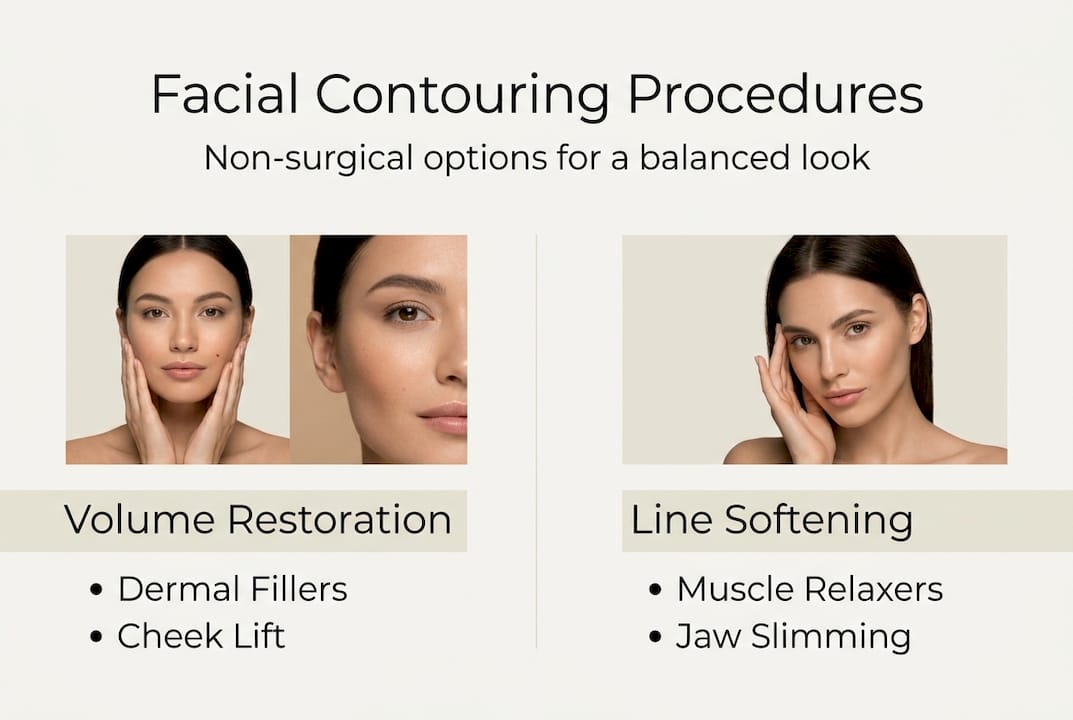
London clinics offer several core non-surgical treatments that address different aspects of facial ageing and contour. Dermal fillers and wrinkle softening are top non-surgical treatments for enhancing facial features and reducing ageing signs, each working through different mechanisms to achieve complementary results.
Dermal fillers restore lost volume and create definition in areas like cheeks, jawline, and lips. These gel-based products contain hyaluronic acid, a substance naturally found in skin that attracts moisture and provides structure. When strategically placed, fillers can lift sagging areas, soften deep folds, and enhance facial proportions. Results appear immediately and continue improving over the following days as the product settles.
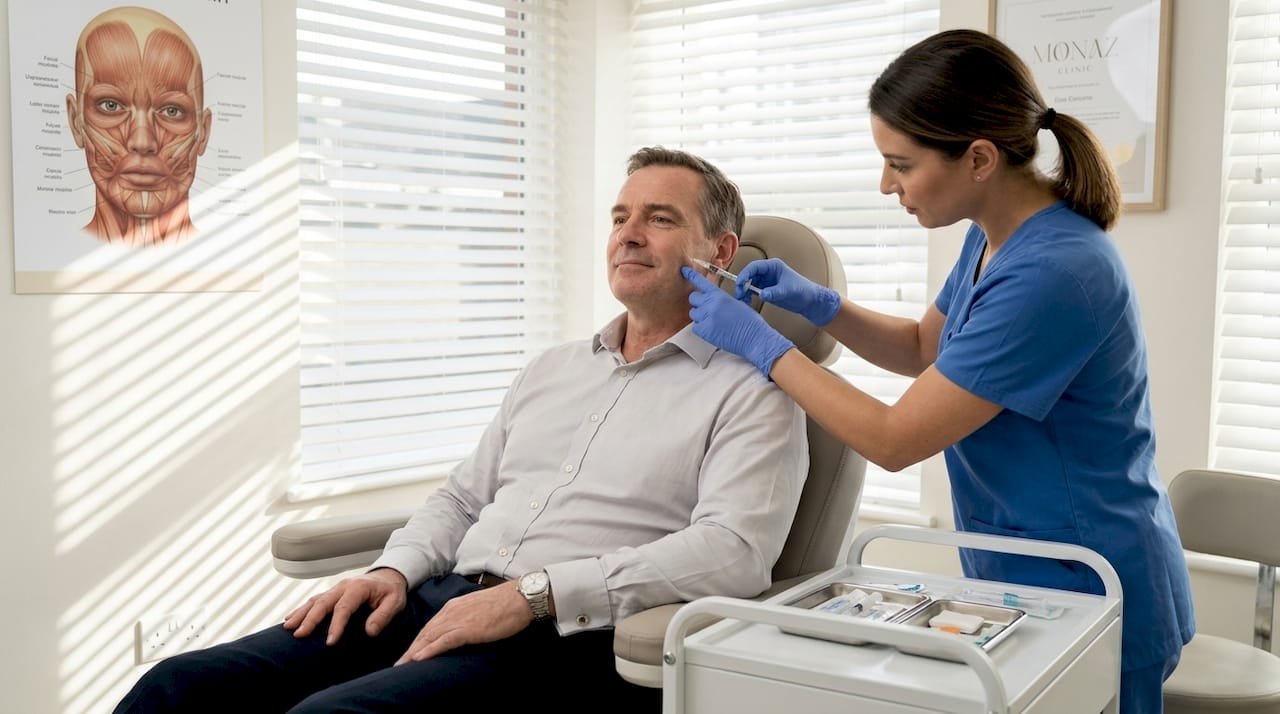
Wrinkle softening treatments work differently by relaxing muscles that create dynamic lines. When you frown, squint, or raise your eyebrows, repeated muscle contractions etch lines into your skin over time. These injections temporarily reduce muscle activity, allowing existing lines to soften whilst preventing new ones from deepening. The effect creates a smoother, more rested appearance without freezing expressions when administered correctly.
| Treatment type | Primary purpose | Typical duration | Recovery time |
|---|---|---|---|
| Dermal fillers | Volume restoration, contouring | 9-18 months | Minimal, 1-2 days |
| Wrinkle softening | Line reduction, expression smoothing | 3-4 months | None to minimal |
| Jawline contouring | Definition, lower face balance | 12-18 months | 1-2 days |
| Cheek enhancement | Midface lift, youthful contours | 12-18 months | 1-3 days |
Ideal candidates for these procedures include women who:
- Notice early signs of volume loss or developing lines
- Want to enhance natural features without surgery
- Seek preventative treatments before ageing signs become pronounced
- Desire subtle improvements that maintain facial harmony
- Have realistic expectations about achievable results
Exploring 7 examples of facial contouring demonstrates how these treatments work together to create balanced results. Understanding 7 jawline contouring tips helps you appreciate the artistry involved in achieving natural definition.
Pro tip: Prioritise treatments that preserve your natural expressions and facial harmony rather than chasing trends. The best results enhance your unique features instead of creating a standardised look.
Safety, longevity, and choosing the right facial reshaping treatment
Safety in non-surgical facial reshaping depends heavily on practitioner expertise and individualised treatment planning. Choosing experienced practitioners and personalised plans is crucial for safe, effective facial reshaping outcomes. Reputable clinics conduct thorough consultations, assess your medical history, and create treatment plans tailored to your anatomy and goals.
Proper safety protocols include using approved products, maintaining sterile techniques, and understanding facial anatomy to avoid complications. Clinics should have emergency protocols in place and practitioners should explain potential side effects honestly. Most complications arise from inexperienced injectors or using substandard products, making practitioner selection your most important safety decision.
Treatment longevity varies based on several factors. Wrinkle softening typically lasts three to four months before muscle activity gradually returns. Dermal fillers last longer, with most products maintaining results for nine to eighteen months depending on the treatment area and individual metabolism. Areas with more movement, like lips, break down products faster than static areas like cheeks.
Maintenance requirements differ by treatment type. Wrinkle softening needs regular appointments every three to four months to maintain smoothness. Fillers require less frequent touch-ups, often once or twice yearly. Some women choose to let treatments gradually fade to reassess their preferences, whilst others maintain consistent schedules for ongoing results.
Key questions to ask your practitioner include:
- What specific products do you use and why?
- How many years of experience do you have with these treatments?
- What results can I realistically expect for my concerns?
- What are the potential side effects and how are complications managed?
- Can I see before and after photos of similar cases?
- What happens if I’m unhappy with results?
- How do you determine appropriate treatment amounts?
These questions help you gauge practitioner expertise and ensure you’re comfortable with their approach. A skilled practitioner welcomes detailed questions and provides thorough, honest answers rather than overselling treatments.
Pro tip: Avoid practitioners who promise dramatic transformations or pressure you into extensive treatments during your first visit. Conservative approaches with gradual enhancement produce the most natural, satisfying results.
How to prepare for your facial reshaping consultation and treatment
Proper preparation enhances your consultation experience and treatment outcomes. Proper consultation and pre-treatment preparation enhance treatment outcomes and client satisfaction by ensuring clear communication and realistic expectations from the start.
Follow these steps to prepare effectively:
- Research your concerns and potential treatments beforehand so you can discuss options knowledgeably during your consultation.
- Compile a list of current medications, supplements, and any medical conditions, as some factors affect treatment suitability or require special precautions.
- Gather reference photos showing looks you admire, but focus on subtle enhancements rather than celebrity transformations that may not suit your features.
- Write down specific concerns and goals you want to address, prioritising them so your practitioner understands what matters most to you.
- Avoid blood-thinning medications and supplements like aspirin, ibuprofen, vitamin E, and fish oil for one week before treatment to minimise bruising risk.
- Arrive with clean skin free from makeup so your practitioner can properly assess your facial structure and skin condition.
- Schedule treatments when you have a few days of social flexibility afterwards in case minor swelling or bruising occurs.
During your consultation, expect a detailed facial assessment where your practitioner examines your bone structure, skin quality, and areas of concern. They should explain which treatments suit your needs, demonstrate injection points, and discuss expected outcomes honestly. This is your opportunity to ask questions and ensure you feel completely comfortable before proceeding.
The treatment itself typically takes fifteen to thirty minutes depending on the number of areas addressed. Most procedures involve minimal discomfort, though practitioners can apply numbing cream if you’re concerned about sensitivity. You’ll receive specific aftercare instructions, but general guidelines include avoiding strenuous exercise for twenty-four hours, staying upright for four hours post-treatment, and applying ice if swelling occurs.
Immediate aftercare basics include:
- Keeping the treatment area clean and avoiding touching it unnecessarily
- Sleeping with your head elevated for the first night to reduce swelling
- Avoiding alcohol, saunas, and intense heat for forty-eight hours
- Staying hydrated to support healing and product integration
- Contacting your practitioner immediately if you notice unusual symptoms
Most women return to normal activities immediately after treatment, though you might prefer scheduling appointments before weekends if you’re concerned about minor swelling or bruising. Results from fillers appear immediately whilst wrinkle softening takes three to seven days to show full effects.
Understanding examples of non-surgical facelifts for women helps you visualise potential outcomes and set realistic expectations. The consultation process should leave you feeling informed, confident, and excited about your treatment plan rather than pressured or uncertain.
Explore facial reshaping treatments at Monaz Clinic London
If you’re ready to enhance your natural beauty with expert non-surgical facial reshaping, Monaz Clinic offers personalised treatments designed specifically for women in London. Located at 96 Harley Street, the clinic specialises in subtle, natural-looking results that respect your unique features whilst addressing ageing concerns.
Every journey begins with a complimentary consultation where Mrs Mona Zirak and her team assess your concerns and create a tailored treatment plan. The clinic’s transparent wrinkle softening price list and dermal fillers price list help you understand costs upfront, with no hidden fees or pressure to commit. Whether you’re interested in subtle cheek enhancement, jawline definition, or softening expression lines, Monaz Clinic London provides safe, effective treatments in a supportive environment dedicated exclusively to women’s aesthetic needs.
Frequently asked questions about facial reshaping
Is facial reshaping safe for all skin types?
Non-surgical facial reshaping is generally safe for all skin types when performed by experienced practitioners. Certain skin conditions or active infections may require postponing treatment, which your practitioner will assess during consultation.
How long do effects of non-surgical facial reshaping last?
Wrinkle softening typically lasts three to four months, whilst dermal fillers maintain results for nine to eighteen months depending on the product and treatment area. Individual metabolism and lifestyle factors influence longevity.
Will treatments look natural or overdone?
Results depend entirely on practitioner skill and treatment philosophy. Conservative approaches that enhance your existing features create natural outcomes, whilst excessive product or poor technique can appear obvious. Choosing experienced practitioners focused on subtle enhancement ensures natural-looking results.
What should I ask during my first consultation?
Inquire about practitioner qualifications, specific products used, realistic outcomes for your concerns, potential side effects, and their approach to creating natural results. Request before and after photos of similar cases and discuss maintenance requirements.
Can facial reshaping help with early signs of ageing?
Absolutely. Non-surgical treatments work particularly well for early ageing signs like fine lines, minor volume loss, and developing folds. Starting treatments earlier often requires less product and produces more natural results than waiting until concerns become pronounced. Understanding the facial contouring guide london helps you identify which early interventions suit your needs.