




Discover how modern lip augmentation delivers natural, safe results in London. Evidence-based guide covering fillers, risks, aftercare, and expert advice.

TL;DR:
- Modern lip fillers can achieve subtle, natural results when performed by skilled practitioners.
- Results typically last 6 to 12 months with high patient satisfaction.
- Choosing an experienced, qualified professional ensures safety and a natural-looking outcome.
The idea that lip fillers always look overdone is one of the most persistent myths in aesthetic medicine. In reality, modern non-surgical lip augmentation, when performed by a skilled and restrained practitioner, can deliver results so subtle that only you will know you’ve had anything done. The techniques, products, and clinical understanding available today are genuinely impressive. This guide walks you through everything you need to know: what lip augmentation involves, how it works, what the evidence says about safety and satisfaction, and how to choose the right experience for you.
Table of Contents
- What is lip augmentation and why consider it?
- How lip augmentation works: fillers, durability, and the natural look
- Risks, safety, and best practices for peace of mind
- What to expect: the appointment, aftercare, and lasting results
- The real secret to beautiful lips: why restraint and expertise matter most
- Explore safe, natural enhancement options at Monaz Clinic
- Frequently asked questions
Key Takeaways
| Point | Details |
|---|---|
| Natural look achievable | Modern lip augmentation methods focus on subtlety and harmony, not just size. |
| Safety comes first | Select experienced professionals and understand common risks and how they are managed. |
| Lasting, satisfying results | HA fillers typically last 6–12 months, with most women reporting high satisfaction. |
| Proper aftercare matters | Following expert aftercare advice helps ensure a smooth recovery and the best results. |
What is lip augmentation and why consider it?
Lip augmentation refers to any procedure that adds volume, definition, or improved shape to the lips. The most popular and widely studied approach is the use of injectable hyaluronic acid (HA) fillers. Hyaluronic acid is a substance naturally found in your body, which means it integrates well with your tissue and can be dissolved if needed. This reversibility is one of the key reasons it has become the gold standard for non-surgical lip enhancement.
Women in London are increasingly drawn to subtle, natural-looking results rather than dramatic volume. The shift in aesthetic preference is significant. The goal today is to restore what time has taken away or to gently balance features that feel slightly off, not to create an entirely new look. Understanding the full range of lip augmentation benefits helps clarify why so many women find it worthwhile.
The motivations for seeking lip augmentation are varied and entirely personal:
- Restoring lost volume: Lips naturally thin with age as collagen and fat diminish.
- Improving definition: The cupid’s bow and lip border can soften over time, making lips appear less distinct.
- Balancing facial proportions: Some women have a naturally thinner upper lip relative to the lower, which a small amount of filler can harmonise.
- Boosting confidence: Feeling more at ease with your appearance has a genuine, positive effect on everyday life.
The evidence supports both the efficacy and the satisfaction rates of HA fillers. HA fillers show patient satisfaction rates between 74% and 90%, with results lasting 6 to 12 months. Furthermore, clinical studies report an 80% response rate at 24 weeks, confirming that the majority of patients experience meaningful, lasting improvement well beyond the initial treatment. These are not trivial figures. They reflect a treatment that genuinely delivers on its promise when performed correctly.
Exploring the full range of lip enhancement options available today shows just how tailored and nuanced modern approaches have become.
How lip augmentation works: fillers, durability, and the natural look
Hyaluronic acid fillers work by physically adding volume beneath the skin’s surface. When injected into specific areas of the lip, the gel-like substance integrates with surrounding tissue, attracting and retaining water molecules. This creates a soft, plump appearance that moves naturally with your expressions. Understanding what lip fillers contain helps demystify the process considerably.
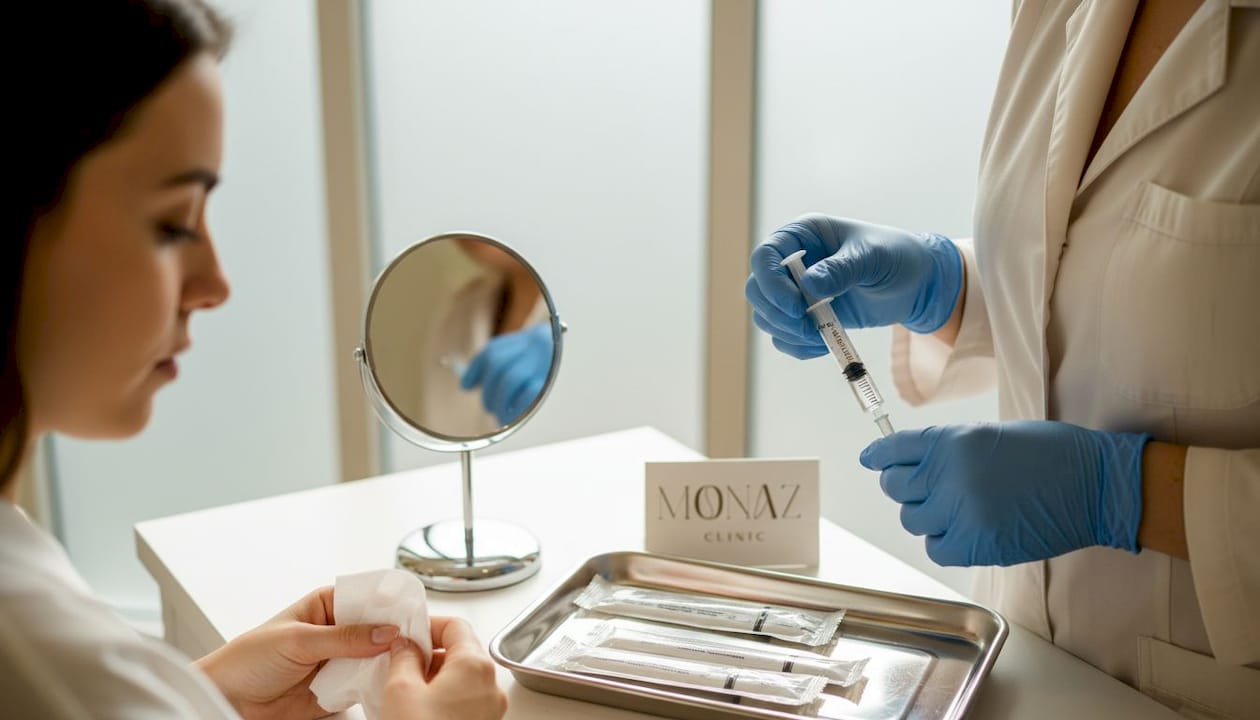
The degree of cross-linking within the filler determines its firmness and longevity. A more cross-linked filler holds its shape longer and suits structural areas, while a softer, less cross-linked product is ideal for delicate lip tissue. An experienced practitioner selects the right product for your anatomy and your goals.
Here is what the clinical evidence tells us about durability and satisfaction:
| Timeframe | Efficacy rate | Patient satisfaction |
|---|---|---|
| Immediately post-treatment | Very high | High |
| 12 weeks | 80%+ | High |
| 24 weeks | 70 to 80% | Moderate to high |
| 12 months | Gradual fade | Maintained with top-up |
Empirical benchmarks using the Modified Lip Fullness Scale (MLFS) confirm that measurable improvement persists well into the second half of the year, with patient satisfaction remaining high throughout. Results from HA fillers typically last 6 to 12 months, with individual variation depending on metabolism and lifestyle.
What does a natural result actually look like? It means lips that appear hydrated and softly defined, proportionate to your face, and entirely consistent with your own features. The types of natural lip enhancement available today are designed precisely around this principle.
The key factors that determine whether your result looks natural are:
- Product selection: The right filler for your lip tissue.
- Injection technique: Precise placement at the correct depth.
- Volume restraint: Less is genuinely more in most cases.
- Practitioner experience: Artistic judgement cannot be replaced by product alone.
Pro Tip: Before booking, ask your practitioner to show you before-and-after photographs of real patients with similar starting points to yours. A practitioner confident in natural results will have plenty to share.
Risks, safety, and best practices for peace of mind
While lip augmentation is one of the most commonly performed aesthetic treatments in the UK, it is still a medical procedure and deserves to be treated as such. Knowing the real risk profile helps you make an informed decision and choose your provider wisely.
Mild side effects are common and temporary. Bruising, swelling, and tenderness are the most frequently reported adverse events, and they typically resolve within a few days to two weeks. These are not signs that something has gone wrong. They are a normal physiological response to injection.
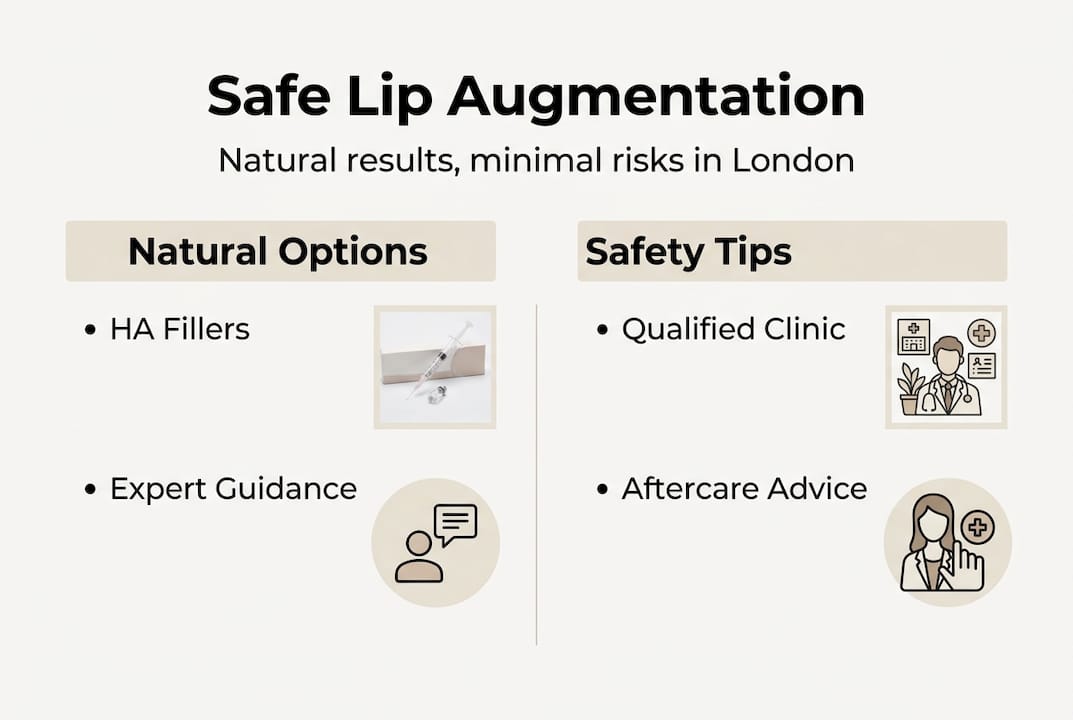
More serious risks, such as vascular occlusion (where filler inadvertently enters or compresses a blood vessel), are rare but real. The good news is that vascular occlusion is largely preventable through the use of cannulas rather than needles, ultrasound guidance in complex cases, and hyaluronidase (an enzyme that dissolves HA filler) as an immediate reversal agent. Knowing your practitioner carries hyaluronidase is non-negotiable.
Needle vs cannula: a comparison
| Factor | Needle | Cannula |
|---|---|---|
| Precision | High | Moderate |
| Bruising risk | Higher | Lower |
| Vascular risk | Moderate | Lower |
| Ideal use | Border definition | Body volume |
Your checklist for safely choosing where to have lip fillers in London:
- Confirm the practitioner is medically qualified (nurse, doctor, or dentist).
- Verify the clinic is overseen by a GMC-registered doctor.
- Ask whether hyaluronidase is kept on-site.
- Ensure a consultation is offered before any treatment is agreed.
- Check that your medical history, medications, and allergies are reviewed.
- Look at genuine patient results, not only stock imagery.
“The risks of lip augmentation are manageable when the right practitioner, technique, and product are in place. Informed patients who ask the right questions are consistently the safest patients.”
Understanding filler side effects in detail gives you the confidence to ask informed questions and recognise what is normal versus what warrants attention.
What to expect: the appointment, aftercare, and lasting results
Knowing what your appointment will involve removes a great deal of anxiety. Here is a clear, step-by-step picture of the experience from start to finish.
Before your appointment, prepare by:
- Disclosing all medications, including blood thinners and supplements such as fish oil or vitamin E, as these increase bruising risk.
- Avoiding alcohol for 24 hours beforehand.
- Noting any previous filler treatments and any reactions you experienced.
- Arriving with a clear idea of the look you want, but remaining open to your practitioner’s guidance.
During the appointment, a topical anaesthetic cream is applied to minimise discomfort. The treatment itself typically takes 15 to 30 minutes. Your practitioner will assess your lip anatomy, mark injection points, and work methodically to achieve your agreed result. You will be able to see progress throughout.
Aftercare essentials make a meaningful difference to your outcome:
- Avoid intense exercise for 24 to 48 hours.
- Keep the area clean and avoid touching or pressing the lips.
- Sleep with your head slightly elevated for the first night.
- Avoid extreme heat, including saunas and hot yoga, for at least a week.
- Stay well hydrated to support HA integration.
Most side effects resolve within two weeks, and satisfaction remains high with proper aftercare. Your final result is best assessed at the two-week mark, once all swelling has fully settled. Detailed filler aftercare tips and guidance on recovering after fillers naturally are worth reviewing before your appointment.
Pro Tip: Apply a cold compress (wrapped in a clean cloth, never directly on skin) to the lips in the hours immediately after treatment. This reduces swelling more quickly and makes the first 48 hours considerably more comfortable.
The real secret to beautiful lips: why restraint and expertise matter most
Here is something that is rarely said plainly: the best lip filler results come from doing less, not more. The most skilled practitioners are not those who inject the most product. They are the ones who know precisely when to stop.
Expert guidance consistently prioritises restraint and facial balance over volume maximisation. A lip that is overfilled loses its natural movement, its softness, and its harmony with the rest of the face. The result looks constructed rather than refreshed.
At Monaz Clinic, we see this as a fundamental principle. Natural results depend far more on the practitioner’s eye and technique than on the product itself. Two injectors using identical filler can produce entirely different outcomes. The difference lies in anatomical knowledge, aesthetic judgement, and the confidence to use less.
When consulting your practitioner, ask them directly: what is your approach to volume? What would you advise against for my face shape? A practitioner who answers thoughtfully, who talks about balance and proportion rather than simply adding, is one worth trusting. Explore what natural lip filler results genuinely look like before making your decision.
Explore safe, natural enhancement options at Monaz Clinic
At Monaz Clinic London, based at 96 Harley Street, we specialise in lip augmentation that prioritises your natural beauty above all else. Every treatment is performed by Mrs Mona Zirak, a medically qualified practitioner, under the oversight of a GMC-registered doctor. Our approach is rooted in restraint, precision, and a genuine commitment to results that look like you, only refreshed.

We offer a full range of evidence-based, non-surgical facial aesthetic treatments tailored exclusively to women. Whether you are considering lip fillers for the first time or exploring other options, our team is here to guide you without pressure. You can see dermal filler prices transparently on our website, and explore other non-surgical treatments to understand the full scope of what we offer. Your consultation is complimentary and entirely obligation-free.
Frequently asked questions
How long do lip fillers really last?
Most HA fillers last 6 to 12 months, depending on the specific product used and how quickly your metabolism breaks it down. A top-up appointment at around the 9 to 12 month mark is typically all that is needed to maintain your result.
What are the main risks of lip fillers?
Common side effects include swelling, bruising, and temporary tenderness, all of which resolve within days to two weeks. Rare but serious risks such as vascular occlusion are significantly reduced when treatment is performed by a qualified, experienced practitioner using appropriate technique.
Does lip augmentation always look fake?
Absolutely not. When performed with restraint and genuine expertise, results prioritise balance and harmony with your natural features, making the outcome subtle and entirely believable. The key is choosing a practitioner whose aesthetic philosophy aligns with natural enhancement.
How quickly will I see results after lip fillers?
Results are visible immediately after treatment, though initial swelling means the final appearance is best assessed at the two-week mark. Side effects resolve within two weeks for the majority of patients, revealing your true, settled result.