


Discover the best facial cream for wrinkles, scientific principles, active ingredients, clinical evidence, safety, and expert skin advice for women in London.
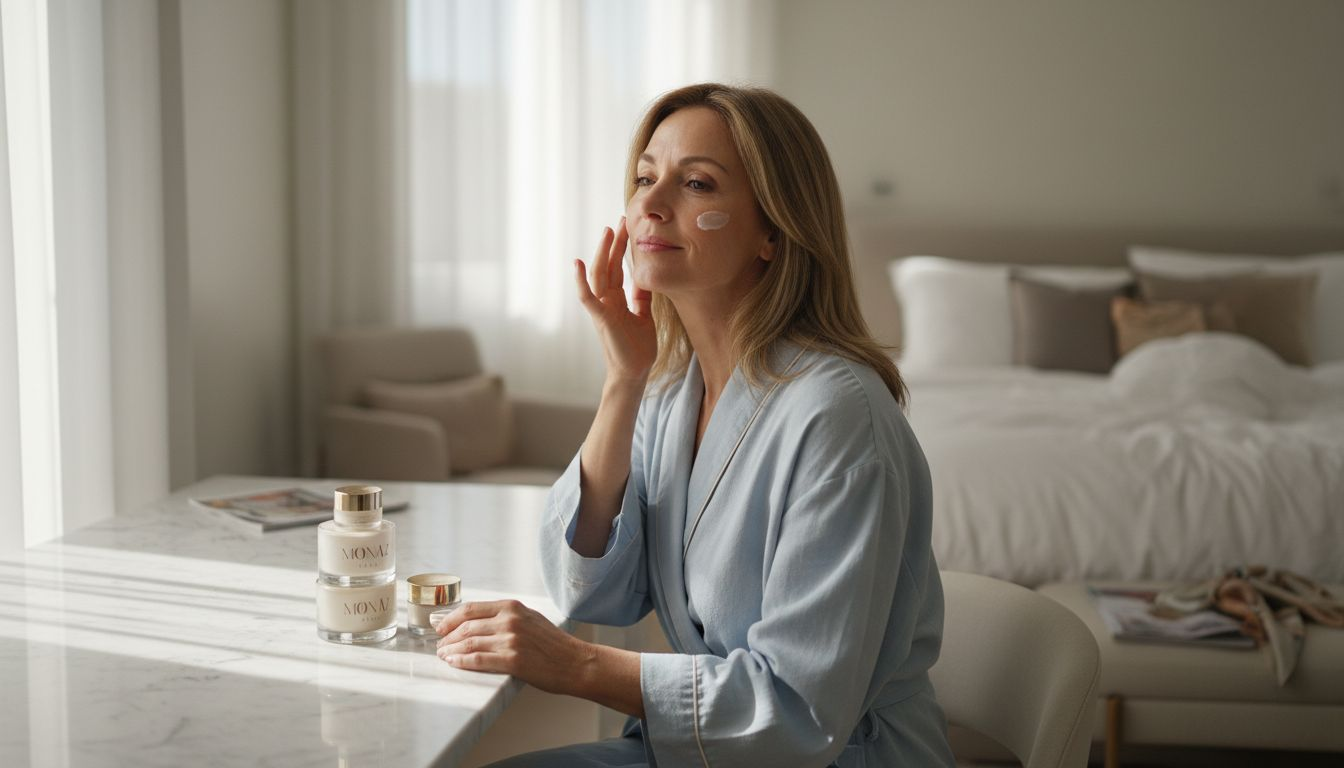
Noticing those first fine lines in the mirror can prompt a search for solutions that feel both effective and gentle. Many women in London want to tackle wrinkles yet still look like themselves, preferring treatments that enhance natural beauty. With so many creams and products available, understanding how these formulas work empowers you to choose confidently and find options that deliver visible results while supporting healthy, radiant skin.
Table of Contents
- How Facial Creams for Wrinkles Work
- Understanding Key Anti-Ageing Ingredients
- Clinical Evidence and Realistic Results
- Choosing Safe and Effective Solutions
- Integrating Creams with Aesthetic Treatments
Key Takeaways
| Point | Details |
|---|---|
| Moisturisation and Repair | Facial creams tackle wrinkles by deeply hydrating the skin, plumping cells, and enhancing barrier function. They contain key ingredients like Hyaluronic Acid and Peptides that support skin elasticity and firmness. |
| Ingredient Efficacy | Effective anti-ageing formulations combine antioxidants, peptides, and hydration agents to address signs of ageing, improving skin texture and appearance. Always conduct patch tests to determine compatibility. |
| Temporary vs. Permanent Effects | Most anti-ageing creams provide only temporary improvements, focusing on surface hydration rather than long-term structural changes. Consistent use is necessary for noticeable results. |
| Professional Integration | Combining facial creams with aesthetic treatments can enhance rejuvenation outcomes. A comprehensive skincare strategy should be developed in consultation with professional practitioners for best results. |
How Facial Creams for Wrinkles Work
Facial creams designed to address wrinkles function through sophisticated mechanisms targeting skin hydration, cellular repair, and protective barrier enhancement. Understanding their scientific approach reveals how these skincare solutions combat visible signs of ageing at a molecular level.
The primary mechanism involves deep moisturisation strategies that temporarily plump skin cells and reduce the appearance of fine lines. Emollient skin creams work by creating a protective film that minimises water loss and improves skin barrier function. These creams contain key ingredients that interact with skin’s natural structures:
- Hydration Agents: Hyaluronic acid and glycerin attract moisture
- Barrier Repair Compounds: Ceramides and fatty acids strengthen skin structure
- Cell-Signalling Molecules: Peptides stimulate collagen production
- Antioxidant Protection: Vitamins C and E neutralise free radical damage
The science behind wrinkle reduction involves multiple sophisticated approaches. Emollient technologies leverage ingredients like paraffin and natural oils to create a protective moisture barrier. These compounds temporarily mask wrinkle depth by improving skin’s overall texture and hydration levels.
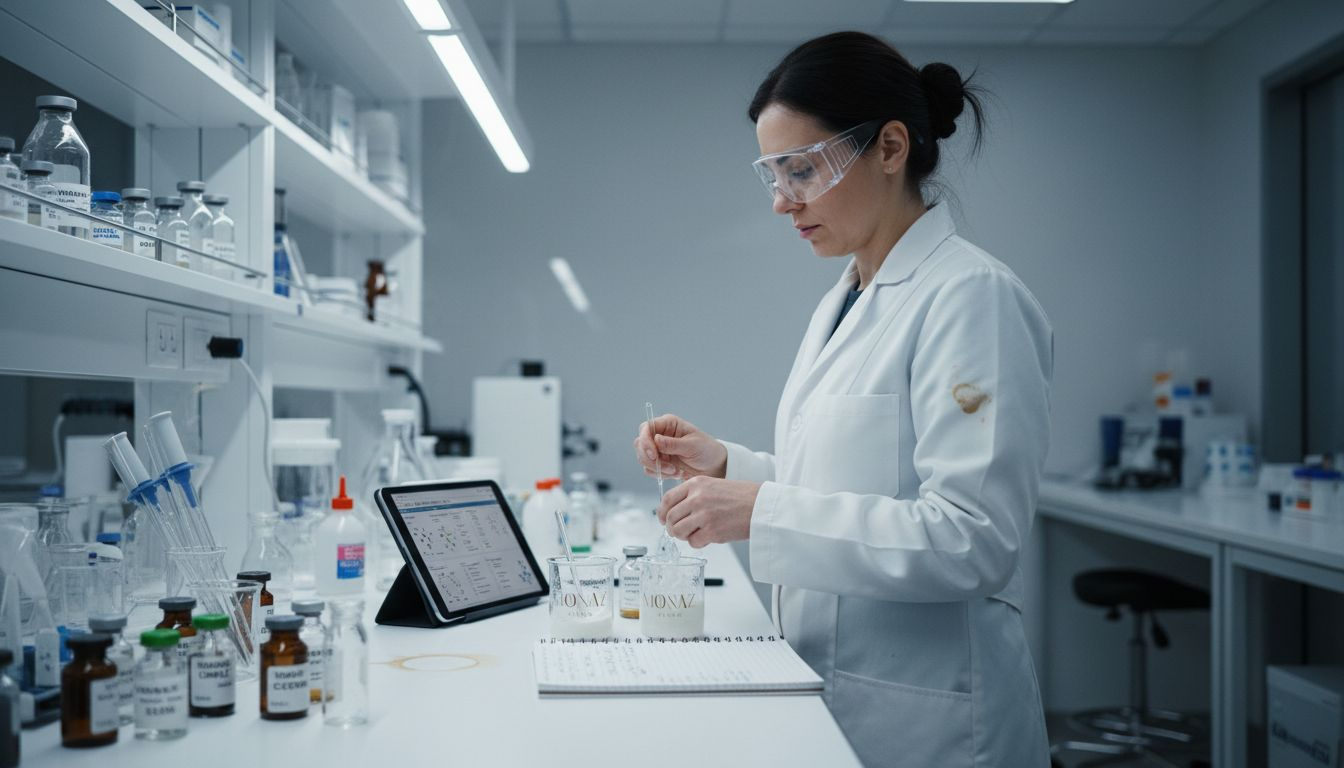
Biochemical interactions between cream ingredients and skin cells trigger complex regenerative processes. Specialised molecules penetrate epidural layers, stimulating natural repair mechanisms that gradually improve skin elasticity and reduce visible ageing signs. Advanced formulations now incorporate cutting-edge ingredients like Matrixyl and Argireline that mimic cellular communication signals, encouraging natural collagen production.
Pro tip: Select facial creams with multiple active ingredients and conduct a patch test to ensure compatibility with your unique skin chemistry.
Understanding Key Anti-Ageing Ingredients
Anti-ageing ingredients represent a sophisticated scientific approach to managing skin’s natural ageing process, focusing on targeted molecular interventions that address multiple signs of skin deterioration. These advanced formulations go beyond simple moisturisation, employing complex biochemical strategies to support skin health and appearance.
Anti-ageing cream ingredients are carefully selected to provide comprehensive skin protection and regeneration. The most effective formulations typically include:
- Antioxidants: Neutralise free radical damage
- Peptides: Stimulate collagen production
- Hyaluronic Acid: Attracts and retains moisture
- Retinoids: Accelerate cellular turnover
- Vitamin C: Brightens and protects skin
- Niacinamide: Reduces inflammation and evens skin tone
The scientific mechanism of these ingredients involves intricate interactions with skin’s cellular structures. Skin protection strategies focus on creating a robust defence against environmental stressors while supporting the skin’s natural regenerative processes. Each ingredient plays a unique role in combating visible signs of ageing, targeting specific concerns such as fine lines, uneven texture, and loss of elasticity.
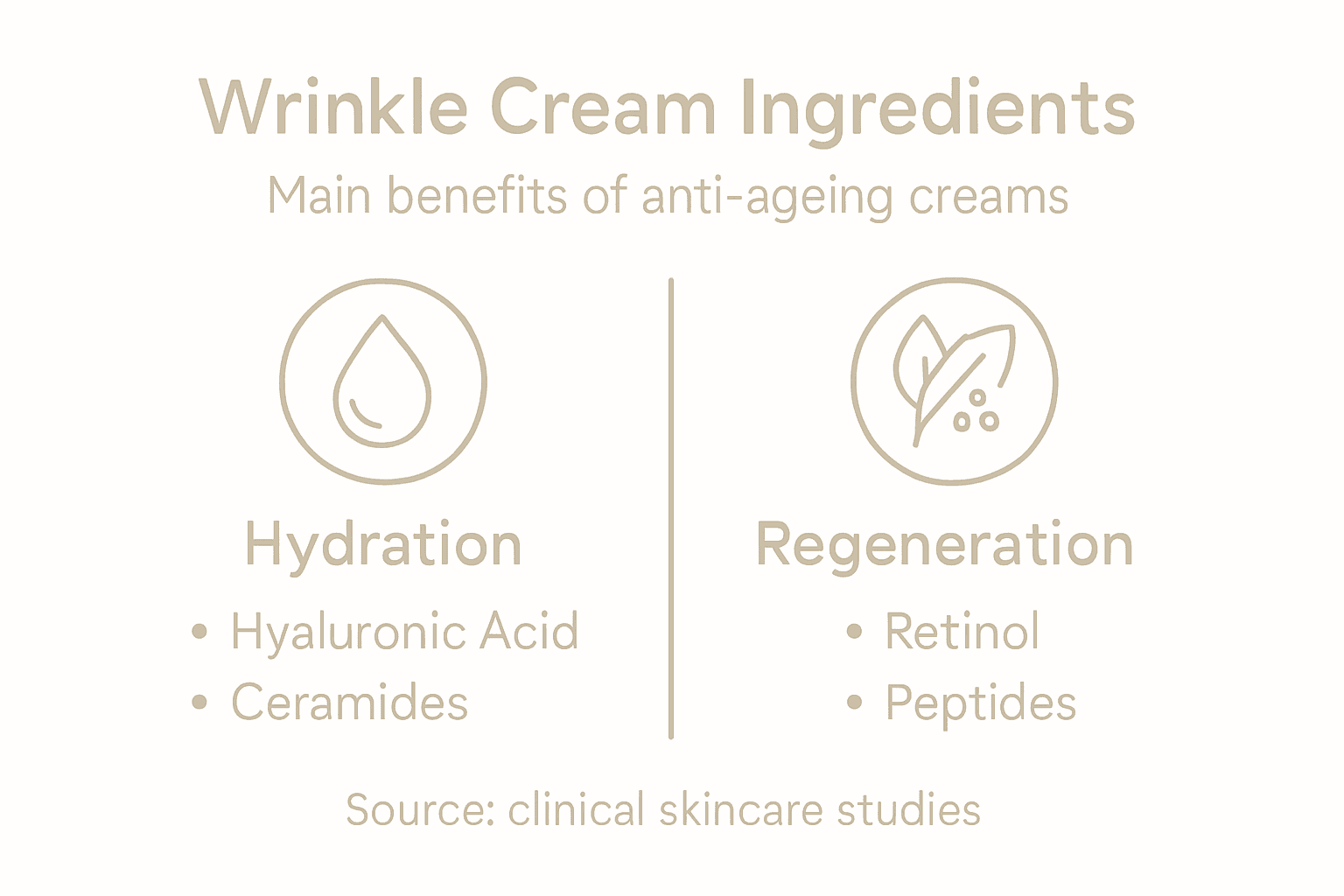
Advanced formulations now incorporate cutting-edge molecular technologies that go beyond traditional skincare approaches. Innovative ingredients like epidermal growth factors and stem cell extracts work at a cellular level to encourage skin renewal, potentially reversing some age-related changes. The most sophisticated anti-ageing creams combine multiple active ingredients that work synergistically, providing a comprehensive approach to skin health and rejuvenation.
Here is a reference guide to advanced anti-ageing ingredients and their key roles:
| Ingredient | Key Function | Notable Benefit |
|---|---|---|
| Hyaluronic Acid | Boosts moisture retention | Plumper, hydrated appearance |
| Peptides | Stimulate collagen synthesis | Improved firmness and texture |
| Retinoids | Accelerate cell turnover | Diminished fine lines |
| Vitamin C | Antioxidant and brightening | More radiant skin tone |
| Niacinamide | Reduces inflammation | Calmer, more even skin |
Pro tip: Rotate your anti-ageing products seasonally and always patch test new formulations to ensure optimal skin compatibility and effectiveness.
Clinical Evidence and Realistic Results
Navigating the landscape of anti-ageing skincare requires a nuanced understanding of scientific evidence and realistic expectations. While many products promise transformative results, clinical research provides a more measured perspective on the actual capabilities of topical treatments in managing skin ageing.
Clinical evidence for emollient treatments consistently demonstrates that most anti-wrinkle creams offer temporary cosmetic improvements rather than permanent solutions. The scientific findings reveal several key insights:
To help clarify how anti-ageing creams function and what to expect, here is a comparison of typical cream mechanisms versus professional treatments:
| Aspect | Facial Creams | Professional Treatments |
|---|---|---|
| Primary Action | Surface hydration and repair | Deep tissue stimulation |
| Effect Longevity | Temporary, use-dependent | Often longer-lasting |
| Reversal Capability | Subtle, mostly superficial | Can cause structural improvement |
| Typical Cost | Moderate, ongoing | High, usually per session |
- Temporary Effects: Visible improvements last only while using the product
- Hydration Focus: Primary mechanism is skin plumping and moisture retention
- Cosmetic Enhancement: Reduces appearance of fine lines, not structural changes
- Limited Long-Term Reversal: Cannot completely stop natural ageing processes
Research from reputable medical institutions highlights the importance of managing expectations. Clinical practice guidelines emphasise that topical treatments primarily function by maintaining skin barrier integrity and providing superficial hydration. The most effective approach involves consistent use, complemented by holistic lifestyle strategies such as sun protection, balanced nutrition, and proper hydration.
Advanced scientific research continues to explore more sophisticated intervention strategies. Emerging studies investigate the potential of epigenetic modulation and cellular regeneration techniques that might offer more substantial anti-ageing benefits. However, current evidence suggests that most over-the-counter creams provide subtle, incremental improvements rather than dramatic transformations.
Pro tip: Combine clinical skincare treatments with a comprehensive approach including diet, hydration, sun protection, and stress management for optimal skin health.
Choosing Safe and Effective Solutions
Selecting the right facial cream requires a strategic approach that balances scientific evidence, personal skin needs, and safety considerations. Navigating the complex world of anti-ageing skincare demands careful evaluation of product ingredients, potential risks, and individual skin characteristics.
NHS guidelines for facial creams recommend a comprehensive selection process that prioritises patient safety and specific skin requirements. When choosing an effective solution, consider these critical factors:
- Skin Type Compatibility: Matches your specific dermatological needs
- Ingredient Safety: Minimal potential for irritation or allergic reactions
- Hydration Properties: Provides adequate moisture without clogging pores
- Clinical Evidence: Supported by scientific research
- Sensitivity Considerations: Hypoallergenic and non-comedogenic formulations
Advanced selection strategies involve understanding potential risks and performance limitations. UK safety guidance emphasises the importance of considering factors beyond cosmetic claims. Key considerations include product composition, potential skin interactions, and individual sensitivities that might impact treatment effectiveness.
Professional dermatological assessments remain the gold standard for personalised skincare recommendations. Modern approaches integrate advanced diagnostic techniques to identify precise skin needs, moving beyond generic solutions. Personalised skincare now involves comprehensive evaluations that consider genetic predispositions, environmental factors, and individual skin microbiome characteristics.
Pro tip: Consult a dermatological professional for a comprehensive skin assessment before investing in high-end anti-ageing products to ensure targeted, safe, and effective treatment.
Integrating Creams with Aesthetic Treatments
Successful skin rejuvenation demands a holistic approach that strategically combines topical skincare with professional aesthetic treatments. Understanding how facial creams complement advanced procedures can significantly enhance overall treatment outcomes and skin health.
Integrated skincare strategies reveal critical considerations for optimal skin treatment coordination. The most effective approaches involve carefully timed and selected skincare interventions that support and extend professional aesthetic treatments:
- Pre-Treatment Preparation: Strengthening skin barrier function
- During Treatment: Minimising inflammation and supporting healing
- Post-Treatment Recovery: Accelerating cellular regeneration
- Long-Term Maintenance: Sustaining treatment results
Professional cosmetic guidance emphasises the importance of comprehensive patient education about treatment interactions. Successful integration requires understanding how different skincare products and aesthetic procedures work synergistically to address specific skin concerns such as wrinkle reduction, texture improvement, and overall skin rejuvenation.
Advanced treatment protocols now recognise that personalised skincare integration goes beyond simple product application. Modern approaches involve detailed skin analysis, genetic predisposition assessment, and tailored treatment plans that consider individual skin microbiome, environmental factors, and specific aesthetic goals.
Pro tip: Consult a professional aesthetic practitioner to develop a comprehensive skincare strategy that precisely coordinates topical treatments with aesthetic procedures.
Discover How Science-Backed Solutions Can Transform Your Skin Today
If you have been struggling with fine lines and wrinkles despite using numerous creams, it is likely because topical treatments often offer only temporary hydration and surface-level improvements. This article highlights the importance of active ingredients like peptides, hyaluronic acid and retinoids which stimulate collagen production and skin repair. At Monaz Clinic, we understand that effective wrinkle reduction requires more than moisturisers. Our expert team combines medical expertise with artistic precision to provide non-surgical treatments that naturally refresh and restore your skin texture and firmness.
Explore tailored options such as anti-wrinkle injections, dermal fillers and skin boosters that work beneath the surface to enhance skin elasticity and reduce visible signs of ageing. Start your personalised journey with a complimentary consultation at our tips – Monaz Clinic | Facial Aesthetic Clinic in London page. The science of skincare meets advanced aesthetics at Monaz Clinic, located in the heart of London. Book now and take confident steps towards radiant, youthful skin.
Frequently Asked Questions
What are the main active ingredients in facial creams for wrinkles?
Facial creams for wrinkles typically include hydration agents like hyaluronic acid, barrier repair compounds such as ceramides, peptides that stimulate collagen production, and antioxidants like vitamins C and E to combat free radical damage.
How do facial creams reduce the appearance of wrinkles?
Facial creams work primarily by providing deep moisture that plumps skin cells, creating a temporary reduction in fine lines. They enhance skin barrier function, promote cellular repair, and engage biochemical processes that improve skin elasticity over time.
Can I expect permanent results from using anti-ageing creams?
No, most anti-ageing creams provide temporary cosmetic improvements rather than permanent solutions. Their effects typically last only while using the product, mainly focusing on hydration and superficial enhancements.
How should I choose an effective facial cream for my skin type?
When selecting a facial cream, consider your skin type compatibility, ingredient safety, hydration properties, and clinical evidence supporting the product. It’s also beneficial to consult a dermatologist for personalized recommendations.
Recommended
- Understanding What is the Best Treatment for Wrinkles – Monaz Clinic London
- Understanding What is the Best Treatment for Wrinkles – Monaz Clinic London
- 7 Top Anti-Ageing Ingredients Every Woman Should Know – Monaz Clinic London
- Understanding Defining Wrinkle Prevention for Aesthetic Care – Monaz Clinic London