



Learn the difference between Botox and dermal fillers for facial rejuvenation in London. Discover uses, results, risks, costs, and treatment suitability.

Choosing how to refresh your appearance can be daunting when so many advanced cosmetic options promise results without surgery. For women living in Central London, understanding the difference between Botox and dermal fillers makes all the difference when weighing up treatments for smoother, more youthful-looking skin. Discover which approach addresses your specific concerns and learn the science behind each, so you can confidently shape your personal beauty strategy.
Table of Contents
- Key Definitions Of Botox And Dermal Fillers
- How Each Treatment Works And Lasts
- Typical Uses For Botox Versus Fillers
- Risks, Recovery And Safety Standards In The UK
- Costs, Results And Choosing The Right Option
Key Takeaways
| Point | Details |
|---|---|
| Understanding Treatments | Botox is effective for dynamic wrinkles, while dermal fillers target static wrinkles and volume loss. |
| Consultation Importance | A personalised consultation with a qualified professional is essential for tailored treatment recommendations. |
| Treatment Longevity | Botox effects last approximately 3-4 months, whereas dermal fillers can last between 6 to 24 months depending on the type. |
| Safety Standards | Ensure practitioners have Level 7 training and follow stringent safety protocols to minimise risks during treatments. |
Key Definitions of Botox and Dermal Fillers
Cosmetic treatments have evolved dramatically, offering non-surgical solutions for facial rejuvenation. Botox and dermal fillers represent two sophisticated approaches to addressing age-related skin changes, each targeting specific aesthetic concerns with precision.
Botox is a purified form of botulinum toxin that temporarily relaxes facial muscles to smooth dynamic wrinkles caused by repeated facial movements. Specifically, it targets areas prone to expression lines such as:
- Forehead lines
- Crow’s feet around the eyes
- Frown lines between the eyebrows
Dermal fillers, by contrast, are gel-like substances injected beneath the skin to restore volume and smooth static wrinkles. These treatments primarily use hyaluronic acid to hydrate and plump skin, enhancing facial contours and addressing age-related volume loss.

Key differences between these treatments include their fundamental mechanisms of action. Botox works by blocking nerve signals to muscles, preventing them from contracting and creating wrinkles. Dermal fillers physically fill areas of volume loss, providing immediate structural support and smoothing deeper lines.
Treatment Applications:
- Botox: Best for dynamic wrinkles caused by muscle movement
- Dermal Fillers: Ideal for static wrinkles and volume restoration
- Can be used individually or in combination for comprehensive facial rejuvenation
Pro tip: Always consult a medically qualified professional who can assess your individual facial anatomy and recommend the most appropriate treatment strategy.
Here is a concise comparison of Botox and dermal fillers highlighting their characteristics and purposes:
| Aspect | Botox | Dermal Fillers |
|---|---|---|
| Primary Action | Relaxes targeted muscles | Restores lost facial volume |
| Best For | Dynamic expression lines | Static folds and contour enhancement |
| Time to Visible Results | 24-72 hours | Immediate (HA), gradual (other types) |
| Longevity | 3-4 months | 6-24 months, varies by type |
| Typical Ingredients | Botulinum toxin A | Hyaluronic acid, CaHA, PLLA, PMMA |
How Each Treatment Works and Lasts
Botox and dermal fillers function through distinctly different mechanisms, offering unique approaches to facial rejuvenation. Understanding their individual processes helps patients make informed treatment decisions.
Botox Treatment Mechanism: Botulinum toxin injections work by blocking acetylcholine to temporarily paralyse muscles responsible for creating dynamic wrinkles. When injected, these treatments specifically target muscles involved in facial expressions like frowning and squinting. The effects typically manifest within 24-72 hours, reaching maximum impact around 1-2 weeks after treatment and lasting approximately 3-4 months.
Dermal Filler Varieties and Durations: Different dermal filler types provide varied results and longevity:
Hyaluronic Acid (HA) Fillers:
- Attract and retain water
- Provide immediate volume
- Lasting 6-18 months
Calcium Hydroxyapatite (CaHA) Fillers:
- Stimulate natural collagen production
- Gradual improvement
- Duration of 12-18 months
Poly-L-Lactic Acid (PLLA) Fillers:
- Collagen-stimulating properties
- Results visible after 3 months
- Can last up to 2 years
Polymethyl Methacrylate (PMMA) Fillers:
- Long-lasting volume restoration
- Microspheres are not absorbed
- Potential multi-year duration
The effectiveness of both treatments depends on multiple factors including injection technique, individual skin characteristics, and specific treatment areas. While Botox focuses on muscle relaxation to reduce dynamic wrinkles, dermal fillers concentrate on restoring volume and smoothing static lines.
Patients should remember that individual results can vary, and a personalised consultation is crucial for understanding potential outcomes.
Pro tip: Consult a qualified aesthetic professional who can assess your unique facial anatomy and recommend the most appropriate treatment combination.
Typical Uses for Botox Versus Fillers
Facial aesthetic treatments offer nuanced solutions for addressing different signs of ageing and skin concerns. Botox and dermal fillers serve distinctly different cosmetic purposes, providing targeted interventions for specific aesthetic challenges.
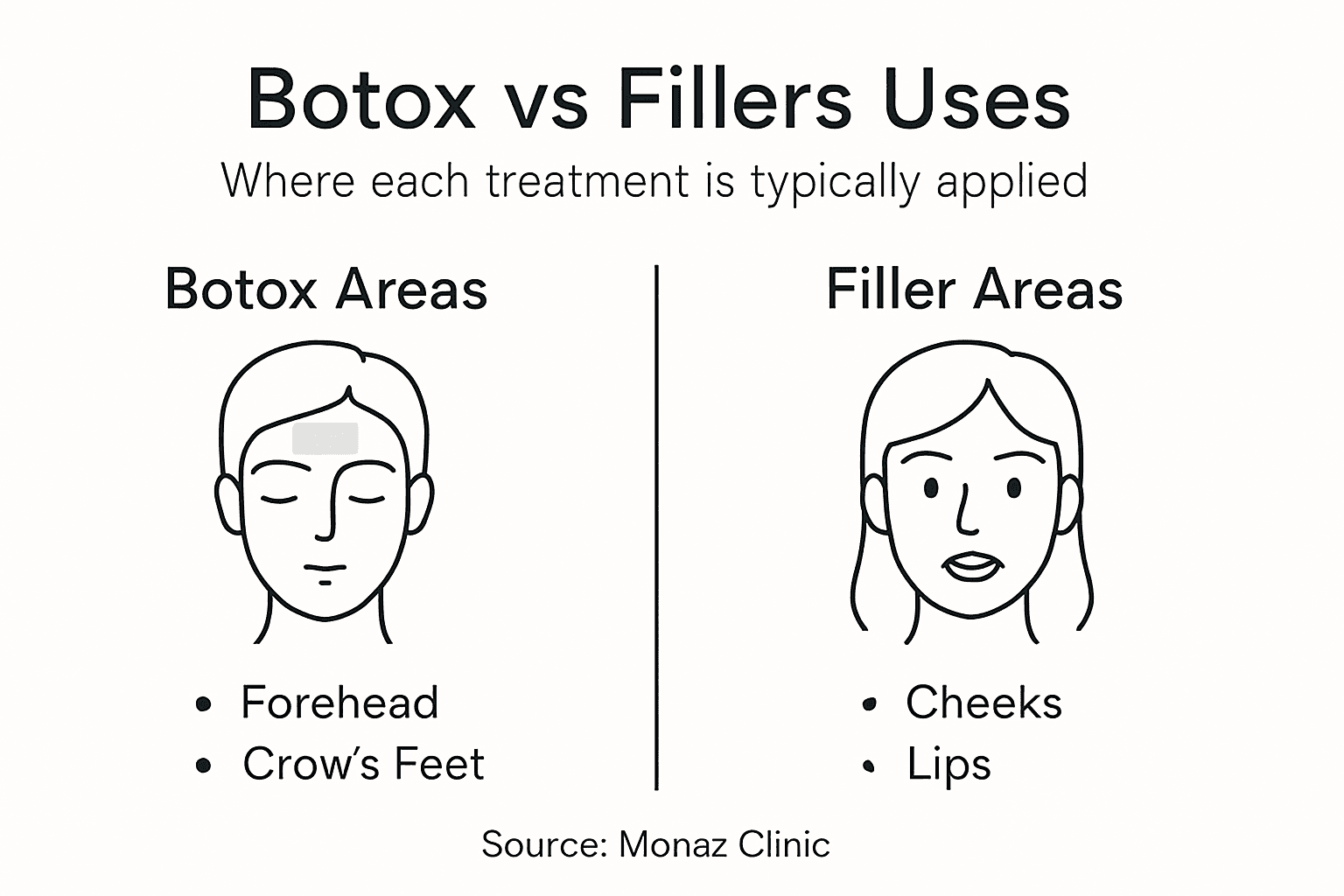
Botox Treatment Applications:
- Reducing dynamic wrinkles caused by repeated facial movements
- Smoothing forehead lines
- Minimising crow’s feet around eye areas
- Softening frown lines between eyebrows
- Addressing medical concerns like:
- Excessive sweating
- Chronic migraine management
Dermal Filler Treatment Applications:
- Restoring lost facial volume
- Enhancing facial contours
- Smoothing deeper static wrinkles
- Defining and augmenting features such as:
- Cheek volume
- Lip shape and fullness
- Jawline definition
- Nasolabial fold reduction
Professional aesthetic practitioners often recommend combining Botox and fillers for comprehensive facial rejuvenation, tailoring treatments to individual aesthetic goals.
While both treatments target age-related changes, they work through fundamentally different mechanisms. Botox temporarily relaxes muscles to prevent wrinkle formation, whereas dermal fillers physically restore volume and smooth skin texture. The choice between treatments depends on specific aesthetic concerns, facial anatomy, and desired outcomes.
Pro tip: Consult a medically qualified aesthetic professional who can provide personalised recommendations based on your unique facial characteristics and aesthetic aspirations.
Risks, Recovery and Safety Standards in the UK
Non-surgical cosmetic procedures demand rigorous safety protocols and professional standards. The UK government is introducing comprehensive licensing schemes to protect patients and ensure high-quality aesthetic treatments.
Potential Risks for Botox and Dermal Fillers:
- Temporary bruising and swelling
- Potential allergic reactions
- Risk of infection
- Asymmetrical results
- Rare complications like vascular occlusion
High-Risk Injection Sites Requiring Extra Caution:
- Upper facial region
- Nasal areas
- Around eye contours
- Jawline and neck regions
Professional practitioners must possess Level 7 training and follow strict safety protocols to minimise potential treatment risks.
Safety standards for aesthetic treatments involve multiple critical components. Practitioners are required to:
- Obtain appropriate professional qualifications
- Maintain comprehensive insurance coverage
- Follow strict infection control procedures
- Use approved medical-grade products
- Provide detailed informed consent documentation
The regulatory landscape emphasises patient protection through mandatory training, professional standards, and continuous professional development. Practitioners must demonstrate competence in understanding potential complications and maintaining emergency response protocols.
Pro tip: Always verify a practitioner’s qualifications, request to see their professional certifications, and confirm they are registered with appropriate medical aesthetic professional bodies before proceeding with any treatment.
The following table summarises key factors impacting treatment success and safety standards for facial aesthetic procedures in the UK:
| Factor | Impact on Outcome | UK Safety Requirement |
|---|---|---|
| Practitioner qualification | Influences procedure accuracy | Level 7 aesthetic training |
| Injection site selection | Affects risk and symmetry | Extra caution for high-risk zones |
| Product quality | Determines treatment durability | Approved medical-grade products |
| Patient consultation | Enables tailored treatment | Mandatory informed consent |
Costs, Results and Choosing the Right Option
Understanding the financial investment and expected outcomes of aesthetic treatments is crucial for making informed decisions. Dermal filler costs in the UK vary significantly depending on several key factors.
Dermal Filler Cost Breakdown:
- Lip fillers: £200 – £400 per ml
- Cheek fillers: £300 – £800 per ml
- Jawline treatments: £300 – £800 per ml
- Full facial rejuvenation: Multiple syringes may be recommended
Factors Influencing Treatment Costs:
- Practitioner’s qualifications
- Clinic location
- Specific treatment area
- Product brand quality
- Complexity of individual treatment plan
Professional aesthetic treatments are an investment in your confidence and appearance, not just a simple cosmetic procedure.
Expected results and duration differ between Botox and dermal fillers. Botox typically lasts 3-4 months, while dermal fillers can maintain results for 6-18 months. The longevity depends on individual factors such as:
- Metabolism rate
- Skin condition
- Age
- Lifestyle factors
- Treatment area
Choosing between Botox and dermal fillers requires a personalised approach. Some patients benefit from combining both treatments for comprehensive facial rejuvenation, addressing different signs of ageing simultaneously.
Pro tip: Schedule a comprehensive consultation with a medically qualified professional who can provide a tailored treatment plan aligned with your specific aesthetic goals and budget.
Discover Your Ideal Facial Rejuvenation Solution at Monaz Clinic
Understanding the difference between Botox and dermal fillers is the first step to achieving a refreshed and natural look that truly reflects your best self. If dynamic expression lines or volume loss are affecting your confidence, knowing which treatment to choose can feel overwhelming. At Monaz Clinic, we specialise in personalised, medically led facial aesthetic solutions designed exclusively for women seeking subtle yet effective rejuvenation. Whether you want to soften fine lines or restore facial contours, our expert team ensures every treatment is tailored precisely to your needs.

Explore trusted guidance and expert advice on facial treatments on our tips – Monaz Clinic | Facial Aesthetic Clinic in London page. Book a complimentary consultation today at Monaz Clinic where your individual facial anatomy and aesthetic goals are carefully assessed. Take the confident step to reveal your natural beauty by partnering with highly qualified practitioners who prioritise safety and exceptional results.
Frequently Asked Questions
What is the main difference between Botox and dermal fillers?
Botox temporarily relaxes facial muscles to reduce dynamic wrinkles, while dermal fillers restore lost volume and smooth static wrinkles by physically filling areas under the skin.
How long do the results of Botox and dermal fillers last?
Botox results typically last 3-4 months, whereas dermal fillers can last from 6 months to 2 years depending on the type and individual factors.
Are there any risks associated with Botox and dermal fillers?
Yes, potential risks include bruising, swelling, allergic reactions, and in rare cases, complications like vascular occlusion. It’s essential to consult a qualified practitioner to minimise these risks.
Can Botox and dermal fillers be used together?
Yes, they can be combined for comprehensive facial rejuvenation, addressing both dynamic and static wrinkles, as well as restoring volume and enhancing facial contours.
Recommended
- Understanding How to Choose Between Fillers and Botox – Monaz Clinic London
- Understanding the Benefits of Dermal Fillers for Facial Aesthetics – Monaz Clinic London
- Understanding the Role of Dermal Fillers in Aesthetics – Monaz Clinic London
- Step by Step Dermal Fillers: Achieve Aesthetic Perfection – Monaz Clinic London