



Botox vs fillers explained: discover definitions, key differences, uses, risks and how to choose the best aesthetic option for natural results in London.

Deciding between Botox and dermal fillers can feel confusing when you want to refresh your look but avoid surgical options. With so many clinics across Central London, women like you want more than just promises—you need clear facts about how these two treatments work and which suits your personal goals. This guide offers a straightforward comparison of Botox and dermal fillers, helping you understand the unique benefits, differences, and what to expect so you can make a confident, informed choice.
Table of Contents
- Understanding Botox and Dermal Fillers
- Key Differences Between Botox and Fillers
- How Treatments Work and Expected Results
- Safety, Risks, and Regulatory Standards in the UK
- Choosing the Best Option for Your Needs
Key Takeaways
| Point | Details |
|---|---|
| Understanding Treatment Mechanisms | Botox relaxes facial muscles to reduce dynamic wrinkles, while dermal fillers restore lost volume and smooth static wrinkles. |
| Duration of Results | Botox effects last approximately 2–6 months, whereas dermal fillers can last from 6 months to 2 years, depending on the type used. |
| Regulatory Considerations | Botox is a prescription-only treatment and must be performed by a qualified medical professional; dermal fillers are moving towards stricter regulations. |
| Personalised Treatment Approach | A comprehensive consultation with a qualified practitioner is essential for tailoring treatments to individual aesthetic goals and skin characteristics. |
Understanding Botox and Dermal Fillers
Aesthetic treatments have transformed the way we approach skin ageing and facial rejuvenation. Botulinum toxin and dermal fillers represent two revolutionary approaches that address different aspects of facial aesthetics, offering women sophisticated solutions for maintaining a youthful appearance.
Botox functions by temporarily relaxing specific facial muscles, effectively reducing the appearance of dynamic wrinkles like forehead lines and crow’s feet. Unlike traditional skincare methods, this treatment targets muscle movement directly, preventing the formation of deep expression lines. Dermal fillers, in contrast, work by adding volume beneath the skin’s surface, restoring lost facial contours and smoothing static wrinkles that remain visible even when the face is relaxed.
The key distinction between these treatments lies in their mechanism of action. While Botox inhibits muscle movement, dermal fillers physically replace lost volume using substances like hyaluronic acid or calcium hydroxylapatite. Each treatment offers unique benefits: Botox provides a smoother, more relaxed facial appearance, whereas fillers can enhance facial structure, plump lips, and restore youthful fullness to cheeks and under-eye areas.
Pro tip: Always consult a medically qualified practitioner who can assess your individual facial anatomy and recommend a personalised treatment plan tailored to your specific aesthetic goals.
Key Differences Between Botox and Fillers
When exploring facial rejuvenation treatments, understanding the nuanced differences between Botox and dermal fillers becomes crucial for making an informed aesthetic decision. Treatment mechanisms and duration vary significantly between these two popular cosmetic interventions, each addressing unique signs of ageing with distinct approaches.
Botox primarily targets dynamic wrinkles caused by repetitive muscle movements, such as forehead lines, frown lines, and crow’s feet. By temporarily paralysing specific facial muscles, it prevents the formation of deep expression lines. In contrast, dermal fillers focus on static wrinkles and volume loss, using substances like hyaluronic acid to physically plump and smooth skin, restoring youthful contours to areas such as cheeks, lips, and nasolabial folds.

The duration of results also distinguishes these treatments. Botulinum toxin treatments typically last two to three months, whereas dermal fillers can provide aesthetic enhancements ranging from six months to two years. This variation depends on factors like the specific type of filler used, treatment area, and individual metabolic rates. Some patients might choose to combine both treatments for comprehensive facial rejuvenation, addressing both muscle-induced and volume-related ageing signs.
Pro tip: Consult a medically qualified aesthetic practitioner who can conduct a personalised facial assessment and recommend a tailored treatment strategy that aligns with your specific aesthetic goals and skin characteristics.
Below is a concise summary comparing Botox and dermal fillers by usage, effect, and longevity:
| Characteristic | Botox | Dermal Fillers |
|---|---|---|
| Targeted Concerns | Dynamic expression wrinkles | Volume loss and static wrinkles |
| Typical Treatment Areas | Forehead, crow’s feet, frown lines | Cheeks, lips, under-eyes, nose folds |
| Mode of Action | Muscle relaxation via nerve signal blockage | Direct volume addition beneath skin |
| Expected Duration | 2–6 months, depending on patient | 6–24 months, depends on filler type |
| Speed of Results | Noticeable within one week | Immediate visible enhancement |
How Treatments Work and Expected Results
Understanding the precise mechanisms of Botox and dermal fillers helps patients make informed decisions about their aesthetic treatments. Nerve signal blocking and volume restoration represent the fundamental principles behind these innovative cosmetic interventions.
Botox operates by strategically interrupting nerve signals to specific facial muscles, causing them to relax and preventing the formation of dynamic wrinkles. The treatment temporarily paralyses muscle groups responsible for repetitive movements that create expression lines, such as forehead furrows and eye area creases. Typically, patients observe initial results within one week of treatment, with muscle relaxation creating a smoother, more refined facial appearance that can last approximately three to six months.
Dermal filler treatments provide a complementary approach, focusing on restoring lost volume and stimulating collagen production beneath the skin’s surface. By introducing substances like hyaluronic acid directly into targeted areas, these treatments can plump skin, smooth deeper wrinkles, and enhance facial contours. The results are more immediate compared to Botox, with effects lasting between six months and two years, depending on the specific filler type and individual metabolic factors. Some patients experience additional benefits such as improved skin hydration and subtle structural enhancements to facial features.
Pro tip: Request a comprehensive facial assessment from your aesthetic practitioner to determine the most suitable combination of Botox and dermal filler treatments tailored to your unique facial structure and aesthetic goals.
Safety, Risks, and Regulatory Standards in the UK
Current aesthetic treatment regulations in the United Kingdom represent a complex landscape of evolving medical standards and patient protection protocols. The aesthetic medicine industry continues to navigate significant challenges in establishing comprehensive practitioner guidelines and ensuring patient safety across diverse treatment options.
Botox is classified as a prescription-only medication, which means only qualified medical professionals can legally prescribe and administer the treatment. This stringent classification requires a face-to-face consultation with a registered medical prescriber, ensuring that patients receive personalised assessments and understand potential risks. Dermal fillers, while currently less strictly regulated, are also moving towards more rigorous professional standards to protect patient well-being.
Emerging government proposals aim to introduce formal licensing schemes that will mandate specific training, professional insurance, and accountability for practitioners. These proposed regulations seek to address current industry gaps by establishing clear competency requirements, ensuring that individuals offering aesthetic treatments possess the necessary medical knowledge and technical expertise to perform procedures safely and effectively. Potential risks associated with these treatments include allergic reactions, infection, asymmetry, and in rare cases, more serious complications, underscoring the critical importance of choosing a highly qualified and experienced practitioner.
Pro tip: Always verify a practitioner’s medical qualifications, professional registrations, and specific training in aesthetic treatments before proceeding with any cosmetic procedure.
The table below highlights important UK safety and regulatory differences for aesthetic treatments:
| Aspect | Botox | Dermal Fillers |
|---|---|---|
| Medical Classification | Prescription-only medicine | Not prescription-only (as of now) |
| Practitioner Requirement | Must be prescribed by medical professional | Moving towards stricter licensing |
| Patient Protections | Mandatory consultation and qualifications | Regulations evolving, not yet standard |
| Common Risks | Bruising, muscle weakness, rare allergy | Swelling, unevenness, mild infection |
Choosing the Best Option for Your Needs
Selecting the most appropriate aesthetic treatment requires careful consideration of your unique facial characteristics, age, skin condition, and specific aesthetic goals. Understanding the nuanced differences between Botox and dermal fillers empowers patients to make informed decisions that align with their individual rejuvenation objectives.
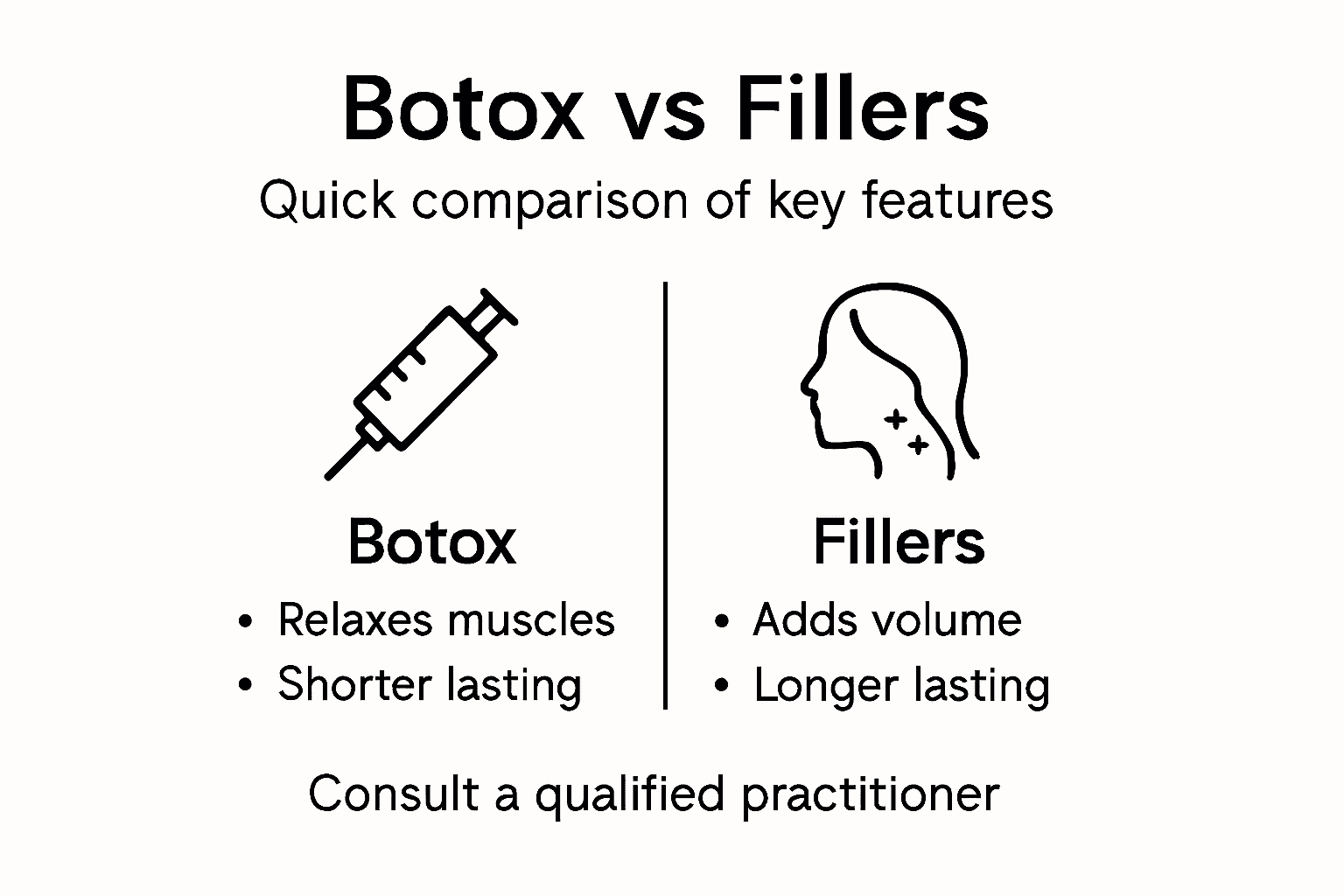
For women experiencing early signs of ageing, such as fine lines around the eyes or forehead, Botox offers an excellent solution by targeting dynamic wrinkles caused by repetitive muscle movements. These treatments work exceptionally well for preventing the deepening of expression lines and creating a smoother, more relaxed facial appearance. Individuals with more pronounced volume loss, including hollow cheeks, thin lips, or deep nasolabial folds, may find dermal fillers more suitable, as they can restore lost volume and provide immediate structural enhancement.
The most effective approach often involves a personalised combination of treatments, tailored to address multiple aspects of facial ageing. Some patients benefit from strategically using both Botox and dermal fillers to achieve comprehensive facial rejuvenation. Factors such as skin elasticity, muscle structure, age, and previous aesthetic interventions play crucial roles in determining the most appropriate treatment strategy. A comprehensive consultation with a medically qualified aesthetic practitioner can help you develop a bespoke treatment plan that considers your unique facial anatomy, desired outcomes, and long-term aesthetic goals.
Pro tip: Consider scheduling a detailed facial assessment with an experienced aesthetic practitioner who can provide a personalised recommendation based on a thorough evaluation of your individual skin characteristics and aesthetic aspirations.
Discover Your Ideal Facial Rejuvenation at Monaz Clinic
Choosing between Botox and dermal fillers involves understanding your unique facial anatomy and aesthetic goals. This article highlights the importance of targeting dynamic wrinkles with Botox and addressing volume loss with fillers, but the challenge lies in selecting the right treatment for your needs. At Monaz Clinic, we specialise in creating bespoke treatment plans tailored exclusively for women, combining clinical expertise with a natural, refined approach to facial aesthetics.
Our team, led by Mrs Mona Zirak and overseen by a GMC-registered medical doctor, offers expert consultations that empower you to make confident decisions. Whether you seek to smooth expression lines or restore youthful volume, our award-winning products and one-on-one care ensure your results look authentic and revitalised. Explore our range of expert advice and personalised tips to support your journey by visiting our tips – Monaz Clinic | Facial Aesthetic Clinic in London.

Embrace a professional, medically grounded experience in Central London’s historic Harley Street. Reveal your best self today by scheduling a complimentary consultation at Monaz Clinic and get expert guidance on whether Botox, dermal fillers, or a personalised combination will best address your ageing concerns.
Frequently Asked Questions
What is the primary difference between Botox and dermal fillers?
Botox primarily targets dynamic wrinkles caused by muscle movements, while dermal fillers add volume and address static wrinkles by restoring lost facial contours.
How long do the results of Botox and dermal fillers typically last?
Botox results generally last between two to six months, whereas dermal fillers can provide enhancements ranging from six months to two years, depending on the type of filler used.
Are there any risks associated with Botox and dermal fillers?
Yes, potential risks include bruising, allergic reactions, infection, and asymmetry. It is crucial to consult a qualified practitioner to ensure safety and minimise complications.
Can Botox and dermal fillers be used together?
Yes, many patients benefit from combining Botox and dermal fillers for comprehensive facial rejuvenation, addressing both dynamic and volume-related signs of ageing.
Recommended
- Understanding How to Choose Between Fillers and Botox – Monaz Clinic London
- Step by Step Dermal Fillers: Achieve Aesthetic Perfection – Monaz Clinic London
- Understanding What Are Facial Fillers and Their Benefits – Monaz Clinic London
- Long-Lasting Filler Options: Complete Expert Guide – Monaz Clinic London