




How do facial fillers work? Learn about the science, procedure steps, types, safety protocols, risks, and natural-looking benefits for women in London.

Fine lines and changing contours can affect the way you feel about your reflection, especially as the years pass. Many British women seek ways to refresh their appearance without drastic changes. By exploring advanced injectable treatments like dermal fillers, you will discover how targeted, non-surgical solutions can restore volume, soften lines, and enhance facial features while keeping your natural expression beautifully intact.
Table of Contents
- What Are Facial Fillers And How They Work
- Types Of Fillers And Their Unique Effects
- How Fillers Restore Volume And Shape
- The Procedure: From Consultation To Results
- Safety, Risks And Practitioner Expertise
- Benefits Of Fillers For Subtle Rejuvenation
Key Takeaways
| Point | Details |
|---|---|
| Facial Fillers Purpose | Facial fillers are non-surgical treatments aimed at restoring volume, enhancing contours, and reducing facial lines. |
| Types and Benefits | Different types of fillers, such as Hyaluronic Acid and Calcium Hydroxyapatite, offer unique benefits tailored to individual aesthetic needs. |
| Procedure Overview | The treatment process includes a thorough consultation, precise injection techniques, and post-care to ensure optimal results and patient safety. |
| Importance of Practitioner Expertise | Selecting a qualified practitioner is crucial for safety and achieving desired aesthetic outcomes, as they should possess extensive knowledge and experience in facial anatomy. |
What Are Facial Fillers and How They Work
Facial fillers are advanced injectable treatments designed to restore volume, soften lines, and enhance facial contours. These sophisticated cosmetic solutions provide a non-surgical approach to addressing age-related volume loss and facial rejuvenation.
Facial fillers work through several key mechanisms, primarily by replacing lost volume and stimulating the body’s natural regenerative processes. Dermal fillers are injectable substances that can address multiple aesthetic concerns:
- Volume Restoration: Replenish lost facial volume in cheeks, temples, and jawline
- Line Reduction: Soften static wrinkles and deep facial lines
- Facial Contouring: Enhance and define facial features like lips and cheekbones
- Skin Hydration: Attract moisture and improve overall skin texture
The primary ingredients in facial fillers vary, each offering unique benefits. Common types include:
- Hyaluronic Acid (HA): A naturally occurring substance that attracts water, providing immediate hydration and volume
- Calcium Hydroxyapatite (CaHA): Stimulates collagen production for gradual, long-lasting improvements
- Poly-L-Lactic Acid (PLLA): Encourages natural collagen synthesis
- Polymethyl Methacrylate (PMMA): Provides structural support for more permanent results
Facial fillers are scientifically engineered to mimic and enhance the body’s natural structural components, offering a nuanced approach to facial rejuvenation.
The injection process involves carefully placed, precise treatments targeting specific facial areas. Skilled practitioners use advanced techniques to ensure natural-looking results that respect your unique facial anatomy. Treatment duration typically ranges from six to eighteen months, depending on the filler type and individual metabolic factors.
Pro tip: Always consult a medically qualified practitioner who understands facial anatomy and can recommend the most suitable filler for your specific aesthetic goals.
Types of Fillers and Their Unique Effects
Dermal fillers represent a diverse range of injectable treatments, each designed with specific properties to address unique aesthetic concerns. Dermal fillers include multiple sophisticated formulations that offer tailored solutions for facial rejuvenation and enhancement.
The primary types of facial fillers can be categorised based on their composition and mechanism of action:
Hyaluronic Acid (HA) Fillers
- Provide immediate volume and hydration
- Naturally bind water molecules
- Offer temporary results lasting 6-18 months
- Ideal for fine lines, lip augmentation, and facial contouring
Calcium Hydroxyapatite (CaHA) Fillers
- Stimulate natural collagen production
- Provide structural support
- Excellent for deeper lines and volume restoration
- Results can last up to 12-15 months
Poly-L-Lactic Acid (PLLA) Fillers
- Gradual collagen stimulation
- Works over several months
- Best for overall skin texture improvement
- Provides subtle, long-lasting rejuvenation
Polymethyl Methacrylate (PMMA) Fillers
- Semi-permanent solution
- Contains microspheres for structural support
- Ideal for deep wrinkles and volume loss
- Longest-lasting filler option
Each filler type offers a unique approach to facial rejuvenation, with specific benefits tailored to individual aesthetic goals.
The selection of an appropriate filler depends on multiple factors, including skin condition, treatment area, desired outcome, and individual metabolic characteristics. Experienced practitioners carefully assess these elements to recommend the most suitable filler type for optimal results.
Here’s a summary of key dermal filler types and their distinctive features:
| Filler Type | Primary Benefit | Duration | Typical Use Area |
|---|---|---|---|
| Hyaluronic Acid (HA) | Immediate hydration and volume | 6–18 months | Lips, fine lines, cheek contour |
| Calcium Hydroxyapatite (CaHA) | Collagen stimulation | Up to 15 months | Deep folds, volume loss |
| Poly-L-Lactic Acid (PLLA) | Gradual texture improvement | Over 2 years | Skin texture, subtle lift |
| Polymethyl Methacrylate (PMMA) | Permanent support | Several years | Severe wrinkles, structural support |
Pro tip: Always discuss your complete medical history and aesthetic expectations with a qualified practitioner to ensure the most appropriate filler selection for your specific needs.
How Fillers Restore Volume and Shape
Fillers restore facial volume through sophisticated scientific mechanisms that address age-related volume loss and structural changes. These advanced injectable treatments work by physically replacing lost volume and stimulating the body’s natural regenerative processes, effectively combating the signs of facial ageing.
The volume restoration process involves multiple critical mechanisms:
Immediate Volume Replacement
- Directly fill lost facial volume
- Provide instant structural support
- Smooth out wrinkles and fine lines
- Restore youthful facial contours
Collagen Stimulation
- Encourage natural protein production
- Improve skin elasticity and firmness
- Support long-term skin health
- Create gradual, natural-looking improvements
Volumetric Restoration Techniques:
Water Attraction Method
- Hyaluronic acid fillers draw moisture into treatment areas
- Create plump, hydrated skin appearance
- Provide immediate visual enhancement
Structural Scaffolding
- Calcium-based fillers create supportive frameworks
- Rebuild underlying facial structures
- Offer long-lasting volume restoration
The art of facial restoration lies not just in adding volume, but in understanding and respecting individual facial architecture.
Practitioners carefully map facial anatomy to determine precise injection points, ensuring natural-looking results that harmonise with each individual’s unique facial structure. This personalised approach allows for subtle yet transformative volume restoration that maintains natural facial expressions and movement.

Pro tip: Choose a practitioner who conducts comprehensive facial assessments and understands the nuanced art of volume restoration, prioritising your individual aesthetic goals.
The Procedure: From Consultation to Results
The dermal filler procedure follows a comprehensive, patient-centred approach designed to ensure safety, personalisation, and optimal aesthetic outcomes. Each step is carefully orchestrated to address individual patient needs and aesthetic goals.
The treatment journey unfolds through several critical stages:
Initial Consultation Stages:
- Comprehensive medical history review
- Detailed discussion of aesthetic expectations
- Facial anatomy assessment
- Treatment suitability evaluation
- Personalised treatment plan development
Procedural Steps:
Pre-Treatment Preparation
- Skin cleansing and sterilisation
- Topical anaesthetic application
- Precise injection site marking
Injection Technique
- Use of pre-filled sterile syringes
- Careful product placement
- Strategic depth and volume management
- Minimal intervention approach
Immediate Post-Injection Care
- Gentle massage of treated areas
- Initial result assessment
- Compression to minimise potential bruising
Precision, expertise, and patient comfort form the cornerstone of an exceptional aesthetic treatment experience.
The entire procedure typically takes between 30-60 minutes, with most patients experiencing minimal discomfort. Practitioners employ advanced techniques to ensure natural-looking results that enhance individual facial characteristics without appearing artificial or overdone.
Pro tip: Document your aesthetic journey with before and after photographs, and maintain open communication with your practitioner about your healing process and aesthetic goals.
Safety, Risks and Practitioner Expertise
Dermal fillers require careful consideration of safety protocols and potential risks, demanding exceptional practitioner expertise and patient understanding. While these treatments offer remarkable aesthetic improvements, informed decision-making is crucial to ensuring optimal outcomes.
Potential risks associated with dermal filler treatments include:
Immediate Complications
- Bruising and swelling
- Temporary redness
- Minor discomfort
- Potential allergic reactions
Advanced Potential Risks
- Infection
- Vascular occlusion
- Asymmetry
- Granuloma formation
- Rare instances of skin necrosis
Critical Safety Considerations:
Medical History Evaluation
- Comprehensive patient screening
- Assessment of underlying health conditions
- Medication interaction analysis
- Allergy testing
Practitioner Qualifications
- GMC-registered medical professionals
- Advanced anatomical knowledge
- Specialised aesthetic training
- Current professional certifications
Treatment Area Risks
- Higher risk zones: forehead, nose, lips
- Careful mapping of facial vasculature
- Precision injection techniques
- Minimal intervention approach
Expert practitioners understand that safety transcends technical skill—it requires genuine patient care and comprehensive risk management.
Patients should prioritise practitioners who demonstrate transparency about potential complications, maintain rigorous sterilisation protocols, and provide comprehensive pre and post-treatment support. Understanding these nuances ensures a safer, more predictable aesthetic enhancement experience.
The following table outlines crucial practitioner qualities for safe and effective filler treatments:
| Practitioner Quality | Why It Matters | Patient Benefit |
|---|---|---|
| GMC Registration | Confirms medical standards | Assures proper care and conduct |
| Advanced Anatomy Knowledge | Enables safe injection placement | Reduces risk of complications |
| Specialised Aesthetics Training | Ensures tailored treatment plans | Improves result accuracy |
| Ongoing Certification | Demonstrates up-to-date practice | Enhances treatment reliability |
Pro tip: Always request evidence of your practitioner’s medical qualifications, request a detailed consultation, and discuss a comprehensive risk management strategy before proceeding with any aesthetic treatment.
Benefits of Fillers for Subtle Rejuvenation
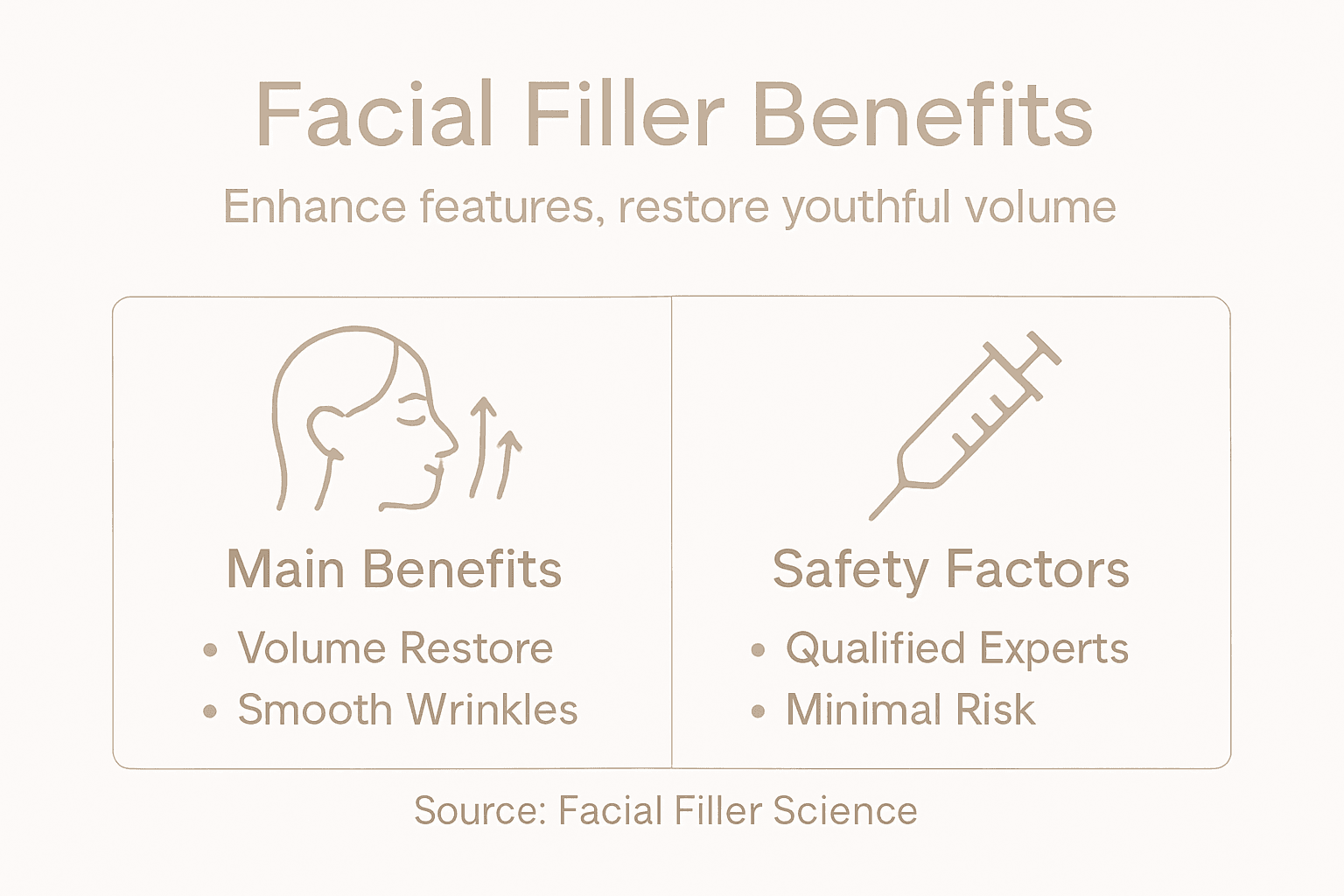
Dermal fillers offer a nuanced approach to facial rejuvenation, providing natural-looking enhancements that restore youthful vitality without dramatic transformations. These sophisticated treatments allow women to refresh their appearance with understated elegance and precision.
Key aesthetic benefits include:
Volume Restoration
- Replenish lost facial volume
- Soften age-related hollowing
- Restore natural facial contours
- Enhance facial symmetry
Skin Quality Improvement
- Boost hydration levels
- Stimulate collagen production
- Improve skin elasticity
- Reduce fine lines and wrinkles
Targeted Rejuvenation Areas:
Facial Contours
- Cheek enhancement
- Jawline definition
- Chin refinement
- Temple volume restoration
Specific Feature Refinement
- Lip volume and shape
- Under-eye hollows
- Nasolabial fold softening
- Subtle facial balancing
Subtle rejuvenation is an art form, where less truly becomes more.
The transformative power of dermal fillers lies in their ability to work harmoniously with individual facial anatomy. Skilled practitioners understand that the goal is not to dramatically alter appearance, but to gently restore and enhance natural beauty.
Pro tip: Discuss your aesthetic goals comprehensively during consultation, emphasising your desire for subtle, natural-looking enhancements.
Discover Safe and Natural Facial Rejuvenation at Monaz Clinic
If you are looking to restore youthful volume and enhance your natural features without surgery, understanding how facial fillers work is the first step. This article highlights important aspects such as volume restoration, collagen stimulation, and the significance of expert practitioner care. At Monaz Clinic, we address common concerns like softening lines and defining contours with precision. We combine medical expertise and artistic skill to deliver subtle, harmonious results that respect your individual facial anatomy.

Ready to embrace a refreshed and natural appearance? Visit tips – Monaz Clinic | Facial Aesthetic Clinic in London to explore our specialised dermal filler treatments tailored exclusively for women. Take advantage of a complimentary consultation where we listen, assess, and craft your personalised plan. Start your journey today at Monaz Clinic and experience trusted care led by medically qualified professionals committed to your safety and wellbeing.
Frequently Asked Questions
What are facial fillers and how do they work?
Facial fillers are injectable treatments designed to restore volume, soften lines, and enhance facial contours. They work by replacing lost volume and stimulating the body’s regenerative processes, using various substances like hyaluronic acid, calcium hydroxyapatite, and others.
What types of facial fillers are available?
The primary types of facial fillers include Hyaluronic Acid (HA) fillers for immediate volume, Calcium Hydroxyapatite (CaHA) fillers for collagen stimulation, Poly-L-Lactic Acid (PLLA) fillers for gradual improvements, and Polymethyl Methacrylate (PMMA) fillers for more permanent results.
What should I expect during a facial filler procedure?
The procedure typically involves an initial consultation to review your medical history and aesthetic goals, followed by pre-treatment preparation, the injection process, and immediate post-injection care. Sessions usually last between 30-60 minutes, with minimal discomfort reported.
Are there any risks associated with facial fillers?
While dermal fillers are generally safe, potential risks include bruising, swelling, allergic reactions, infection, and, in rare cases, vascular occlusion and skin necrosis. It is crucial to choose a qualified practitioner and discuss your medical history thoroughly to mitigate these risks.
Recommended
- Understanding What Are Facial Fillers and Their Benefits – Monaz Clinic London
- Understanding the Role of Dermal Fillers in Aesthetics – Monaz Clinic London
- Understanding the Benefits of Dermal Fillers for Facial Aesthetics – Monaz Clinic London
- How Fillers Work: Complete Guide for London Women – Monaz Clinic London