




Discover how do I get rid of wrinkles on my forehead naturally with proven steps. Learn effective routines, professional options, and how to check results.

Deep forehead lines can stand out in busy Central London meetings or social gatherings, making you seek gentle, natural ways to smooth your skin. Understanding how your skin’s texture, elasticity, and underlying muscle activity contribute to wrinkle formation is the first step towards a fresher, more confident look. This guide highlights how clinical skin assessment and targeted non-surgical treatments can help you achieve subtler, personalised results while prioritising your comfort and individuality.
Table of Contents
- Step 1: Assess Current Forehead Skin Condition
- Step 2: Establish a Tailored Skincare Routine
- Step 3: Incorporate Targeted Lifestyle Changes
- Step 4: Explore Non-Surgical Cosmetic Treatments
- Step 5: Verify Visible Improvement in Forehead Wrinkles
Quick Summary
| Essential Takeaway | Clear Explanation |
|---|---|
| 1. Assess Forehead Skin Condition | Evaluate skin texture, elasticity, and wrinkle depth to tailor effective wrinkle reduction strategies. |
| 2. Design a Tailored Skincare Routine | Incorporate active ingredients like Retinoids and Antioxidants to improve skin health and elasticity in specific ways. |
| 3. Implement Lifestyle Changes | Focus on hydration, nutrition, sleep, and stress management to support skin regeneration and reduce wrinkles. |
| 4. Explore Non-Surgical Treatments | Consider options like Microneedling and muscle modulation for additional support in wrinkle reduction. |
| 5. Track Progress Regularly | Use photography and professional assessments to objectively measure improvements and adjust your approach accordingly. |
Step 1: Assess Current Forehead Skin Condition
Identifying your forehead skin’s current state is crucial for developing an effective natural wrinkle reduction strategy. By conducting a thorough and systematic evaluation, you can understand the specific characteristics of your skin and determine the most appropriate interventions.
To assess your forehead skin condition effectively, follow these comprehensive steps:
- Examine skin texture: Look closely in a well-lit mirror for subtle changes in skin smoothness
- Check skin elasticity: Gently pinch and release a small area of forehead skin, observing how quickly it returns to its original position
- Measure wrinkle depth: Observe horizontal lines and 11 lines between eyebrows, noting their prominence when your face is relaxed and when making expressions
A detailed clinical skin assessment involves evaluating multiple parameters that reveal early signs of aging. This process helps understand how biomechanical changes in facial muscles and connective tissue contribute to wrinkle formation.
Pay special attention to areas showing reduced skin mobility or decreased elasticity. Understanding these subtle changes allows you to develop targeted strategies for maintaining skin health and preventing further wrinkle progression.
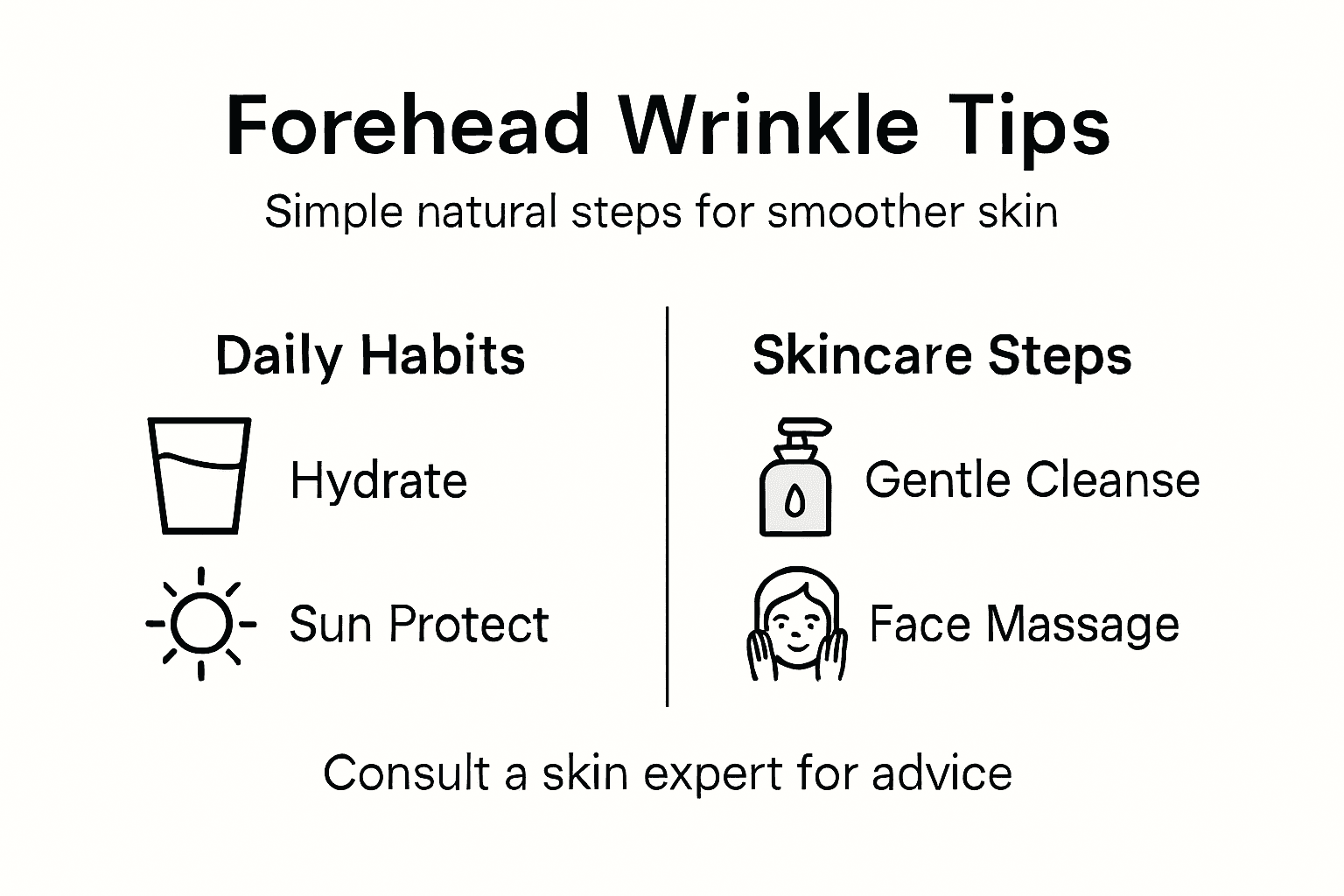
Here’s a summary of how different skin assessment parameters relate to forehead wrinkle development:
| Assessment Parameter | Key Significance | Impact on Wrinkle Formation |
|---|---|---|
| Skin Texture | Reveals fine lines and roughness | Early detection of surface ageing |
| Elasticity | Indicates collagen levels | Lower elasticity increases wrinkle risk |
| Wrinkle Depth | Shows prominence of dynamic lines | Deeper lines signal advanced ageing |
| Skin Mobility | Assesses tissue flexibility | Reduced mobility slows skin recovery |
Comprehensive skin assessment is the foundation for personalised natural wrinkle reduction approaches.
Expert Tip: Use natural daylight and a magnifying mirror for the most accurate skin evaluation.
Step 2: Establish a Tailored Skincare Routine
Designing a personalised skincare routine that specifically targets forehead wrinkles requires strategic selection of active ingredients and consistent application techniques. Your goal is to create a regimen that addresses your unique skin characteristics and supports natural wrinkle reduction.
Focus on incorporating scientifically proven topical anti-aging agents that can improve skin texture and elasticity:
- Retinoids: Boost collagen production and accelerate cell turnover
- Antioxidants: Protect against environmental damage and free radical formation
- Peptides: Support skin’s natural protein rebuilding processes
- Niacinamide: Enhance skin barrier function and reduce inflammation
A comprehensive routine should include multiple layers of targeted skincare, addressing hydration, protection, and repair. Consider your skin’s specific needs when selecting products, paying attention to ingredients that promote skin health and reduce the appearance of wrinkles.
Your skincare routine is a personalised journey of understanding and nurturing your skin’s unique requirements.
Expert Tip: Introduce new skincare products gradually and patch test to ensure compatibility with your skin.

Step 3: Incorporate Targeted Lifestyle Changes
Addressing forehead wrinkles requires more than topical treatments. Your daily habits and lifestyle choices play a critical role in supporting skin health and preventing premature aging. Lifestyle modifications impact skin biomechanics significantly, influencing how your skin ages and maintains its elasticity.
Key lifestyle interventions to support natural wrinkle reduction include:
- Hydration: Drink at least 2 litres of water daily
- Nutrition: Consume antioxidant-rich foods like berries, leafy greens, and fatty fish
- Sun Protection: Use broad-spectrum SPF 50 sunscreen daily
- Stress Management: Practice meditation or deep breathing techniques
- Sleep Hygiene: Aim for 7-8 hours of quality sleep nightly
- Facial Movement: Minimise repetitive facial expressions that create deep lines
Your lifestyle choices interact dynamically with your skin’s natural regeneration processes. By implementing these targeted changes, you create an internal environment that supports skin health and reduces the likelihood of developing pronounced forehead wrinkles.
Small, consistent lifestyle modifications can dramatically transform your skin’s long-term appearance and resilience.
Expert Tip: Consider keeping a lifestyle and skin journal to track how different habits impact your skin’s appearance and texture.
Step 4: Explore Non-Surgical Cosmetic Treatments
Taking a holistic approach to forehead wrinkle reduction involves understanding advanced non-surgical options that complement your natural skincare routine. Advanced aesthetic treatments offer targeted interventions to stimulate skin renewal and minimise the appearance of fine lines.
Consider these professional non-surgical treatments that can help reduce forehead wrinkles:
- Microneedling: Stimulates collagen production and skin regeneration
- Intense Pulsed Light (IPL): Improves skin texture and reduces pigmentation
- Muscle Modulation: Temporarily relaxes muscle movements causing wrinkle formation
- Photodynamic Therapy: Targets skin cellular regeneration
- Skin Tightening Procedures: Uses advanced technologies to improve skin elasticity
- Injectable Biostimulators: Encourage natural collagen production
Each treatment offers unique benefits, and the most effective approach involves a personalised consultation to determine the most suitable options for your specific skin concerns. Professional practitioners can help you understand how these treatments can be integrated into your overall skincare strategy.
To help select the most appropriate cosmetic treatment, here’s a comparison of non-surgical options for forehead wrinkles:
| Treatment Type | Primary Mechanism | Typical Result | Downtime Required |
|---|---|---|---|
| Microneedling | Stimulates collagen synthesis | Smoother, firmer skin | Minimal, a few days |
| IPL Therapy | Targets pigmentation and texture | More even skin tone | Short, mild redness |
| Muscle Modulation | Temporarily relaxes muscles | Reduced dynamic wrinkles | None to brief |
| Biostimulators | Enhances natural collagen | Gradual rejuvenation | Usually none |
Non-surgical treatments provide subtle, natural-looking improvements that enhance your skin’s inherent beauty.
Expert Tip: Always seek treatments from medically qualified professionals who understand the nuanced approach to natural aesthetic enhancement.
Step 5: Verify Visible Improvement in Forehead Wrinkles
Tracking your progress is crucial in understanding the effectiveness of your natural wrinkle reduction strategy. Clinical evaluation methods provide objective skin assessment to help you monitor subtle changes in your forehead’s appearance and texture.
Implement these comprehensive tracking techniques:
- Photography: Take consistent, well-lit progress photos from the same angle
- Measurement Tools: Use skin elasticity measurement devices
- Professional Assessment: Schedule periodic consultations with skincare professionals
- 3D Imaging: Utilise advanced imaging technologies to track skin vector changes
- Digital Tracking: Maintain a detailed skin journal documenting texture and line progression
- Comparative Analysis: Compare current skin condition with baseline photographs
Your tracking approach should be systematic and objective, focusing on measurable changes rather than subjective impressions. Regular monitoring allows you to understand how your chosen interventions are influencing your skin’s appearance and adjust your strategy accordingly.
Consistent and scientific tracking transforms your skincare journey from guesswork to a data-driven approach.
Expert Tip: Consider using standardised lighting and positioning when taking progress photographs to ensure accurate comparison.
Discover Expert Solutions for Natural Forehead Wrinkle Reduction
Struggling with forehead wrinkles despite careful lifestyle changes and skincare routines can be frustrating. This article highlights the importance of a personalised approach that includes detailed skin assessment and targeted treatments to restore smoothness and elasticity. If you want to move beyond temporary fixes and explore medically grounded, natural-looking results, Monaz Clinic offers expert non-surgical cosmetic treatments designed exclusively for women.
Explore our range of professional options alongside your natural skincare efforts with confidence. Visit our tips page to learn more about effective strategies and find inspiration. Book a complimentary consultation now to receive personalised advice from Mrs. Mona Zirak and her skilled team at our Harley Street clinic. Start your journey to reveal your best self today by scheduling your appointment at Monaz Clinic. Let us help you achieve lasting forehead wrinkle improvement that complements your natural beauty.
Frequently Asked Questions
How can I assess the current condition of my forehead skin?
To assess your forehead skin’s condition, examine its texture, check elasticity by gently pinching the skin, and measure the depth of wrinkles. Take time to observe these characteristics in a well-lit mirror to understand what targeted strategies you might need to implement.
What ingredients should I include in my skincare routine to reduce forehead wrinkles?
Incorporate scientifically proven ingredients like Retinoids, Antioxidants, Peptides, and Niacinamide into your skincare routine. These ingredients can enhance skin elasticity and texture when applied consistently over time, potentially leading to noticeable improvements within a few weeks.
What lifestyle changes can help minimise forehead wrinkles?
To minimise forehead wrinkles, focus on staying hydrated, consuming antioxidant-rich foods, using sunscreen daily, managing stress, and getting quality sleep. Implementing these changes can create an environment that supports skin health, leading to visible improvements over several months.
What non-surgical treatments can support natural wrinkle reduction?
Non-surgical treatments like Microneedling, Intense Pulsed Light (IPL) therapy, and muscle modulation can be effective in reducing forehead wrinkles. Consider these options in consultation with a professional who can tailor them to your specific skin needs.
How do I track improvements in my forehead wrinkles?
To track improvements, take consistent progress photos, measure skin elasticity, and maintain a detailed journal of your skin’s texture and line progression. Conducting regular assessments can help you evaluate the effectiveness of your natural wrinkle reduction strategy over time.
Recommended
- What is Best for Forehead Wrinkles? Understanding Solutions – Monaz Clinic London
- How to Get Rid of 11 Lines on Forehead Naturally – Monaz Clinic London
- Forehead Wrinkle Solutions: Complete Guide for Women – Monaz Clinic London
- How Do You Get Rid of Forehead Lines Naturally in London – Monaz Clinic London