

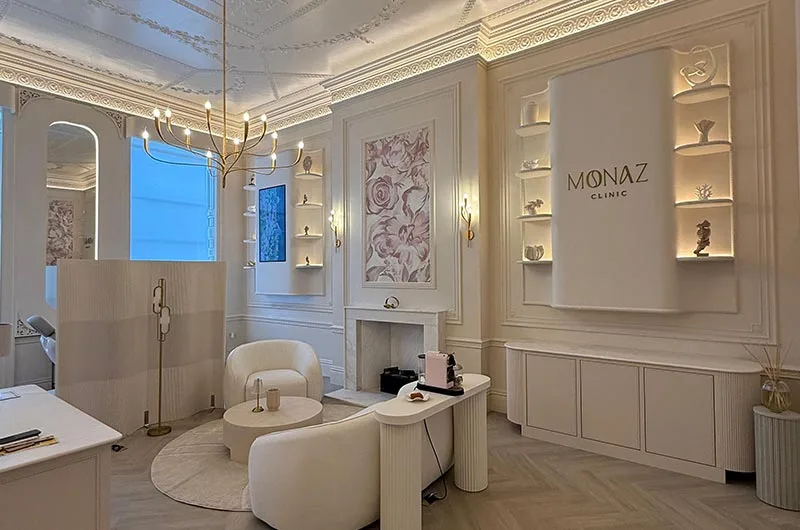


Learn how to research facial aesthetics clinics in London safely. Verify credentials, assess consultations, and find a medically led clinic for natural results.

TL;DR:
- Choosing a regulated, qualified clinic minimizes serious risks like vascular occlusion, infection, and nerve damage.
- Verify clinic credentials through official registers like CQC, GMC, NMC, Save Face, and JCCP before booking.
- An in-person consultation ensures proper assessment, realistic expectations, and safe treatment planning.
Choosing a facial aesthetics clinic in London is one of the most consequential decisions you can make for your skin, your safety, and your confidence. The city offers hundreds of options, from Harley Street specialists to pop-up studios advertising on Instagram, and the quality gap between them is enormous. Picking the wrong provider can lead to complications that are difficult and costly to reverse. This guide walks you through every stage of the research process, from checking credentials to evaluating consultations, so you can find a clinic that delivers natural, safe results you will genuinely feel good about.
Table of Contents
- Why thorough research matters for facial aesthetics
- Initial checks: registration, accreditation, and hygiene
- Experience, consultation, and realistic expectations
- Reviews, before-and-after photos, and safety protocols
- What most guides miss about researching clinics in London
- Next steps: find a trusted London aesthetics clinic
- Frequently asked questions
Key Takeaways
| Point | Details |
|---|---|
| Check registrations | Always confirm your clinic and practitioner appear on CQC, GMC, NMC, Save Face, or JCCP registers. |
| In-person consultation | Meet your practitioner face to face to discuss qualifications, expected results, and aftercare. |
| Review real results | Scrutinise patient reviews and before-after photos to confirm transparent, natural outcomes. |
| Safety over style | Prioritise clinics with medical oversight and clear safety protocols, not fleeting social trends. |
Why thorough research matters for facial aesthetics
London’s facial aesthetics sector is one of the most active in Europe, yet parts of it remain poorly regulated. Anyone can legally inject fillers in England without medical training, and the consequences of this gap are well documented. Understanding the landscape before you book is not overcautious. It is essential.
The scale of the problem is significant. 3 out of 5 London Botox clinics broke the law on prescribing, and the same data suggests that 80% of complaints could be prevented with proper enforcement. These are not edge cases. They reflect a widespread pattern of corners being cut, often by providers who appear professional on the surface.
The risks of choosing an unqualified practitioner include:
- Vascular occlusion, where filler blocks a blood vessel, potentially causing tissue damage or blindness
- Infection and abscess formation from poor hygiene or non-sterile products
- Asymmetry and overfilling that creates an unnatural appearance difficult to correct
- Delayed allergic reactions that require medical management
- Nerve damage from injections placed without anatomical knowledge
You can read more about complications and risks in aesthetics to understand what responsible clinics do to prevent them.
The contrast between clinic types is stark. Here is a quick comparison of what separates safer, medically led clinics from higher-risk providers:
| Feature | Medical-led clinic | Unregulated provider |
|---|---|---|
| Practitioner qualification | Doctor, nurse, or dentist | No requirement |
| Prescribing process | In-person, legal | Often remote or absent |
| Complication protocol | Formal, documented | Rarely in place |
| Product traceability | CE-marked, traceable | Unknown source |
| Aftercare | Structured follow-up | Typically none |
Trendy clinics and social media advertisers often prioritise aesthetics over ethics. A glossy feed does not indicate clinical competence. The NHS advice on cosmetic procedures is clear: choosing a qualified, registered practitioner is the single most important step you can take. Guidance on choosing reputable clinics can help you identify what to look for before you even pick up the phone.
Now that the potential consequences are clear, here is how to start your research the right way.
Initial checks: registration, accreditation, and hygiene
Once you have understood the risks and importance of standards, begin your research with these essential checks. Credentials should be verifiable, not merely claimed on a website.
The NHS recommends that you verify clinic and practitioner registration with one or more of the following bodies:
- CQC (Care Quality Commission): The independent regulator for health and social care in England. Search the CQC official register to confirm whether a clinic is registered and what its most recent inspection rating was.
- GMC (General Medical Council): Confirms whether a doctor is licensed to practise in the UK.
- NMC (Nursing and Midwifery Council): Confirms registration for nurse practitioners.
- Save Face: A government-approved register of accredited practitioners who meet strict safety and hygiene standards.
- JCCP (Joint Council for Cosmetic Practitioners): A voluntary register that sets education and practice standards for aesthetic professionals.
Accredited clinics will display their registration details openly, both on their website and in clinic. If you cannot find this information easily, treat it as a warning sign.
Hygiene standards are equally important. A reputable clinic will use single-use, sterile equipment, maintain a clinical environment, and hold professional indemnity insurance. Save Face accreditation specifically requires practitioners to meet hygiene, safety, and aftercare standards.
| Check | Where to verify | Why it matters |
|---|---|---|
| CQC registration | cqc.org.uk | Confirms regulated premises |
| GMC/NMC listing | gmc-uk.org / nmc.org.uk | Confirms medical qualification |
| Save Face accreditation | saveface.co.uk | Hygiene and safety standard |
| JCCP membership | jccp.org.uk | Education and ethics standard |
Pro Tip: When you call a clinic to enquire, ask directly: “Is your practitioner registered with the GMC, NMC, or Save Face?” A confident, immediate answer is a good sign. Hesitation or vague reassurances are not.
Avoid clinics that offer home or mobile treatments, operate exclusively through social media, or advertise group event bookings with voucher-style discounts. These are consistent markers of providers who do not meet regulated standards. For further guidance, our article on how to find accredited clinics and aesthetics best practices covers this in greater detail.
Experience, consultation, and realistic expectations
After vetting clinics on credentials, the next step is to engage directly and gauge professionalism. The consultation is where you learn whether a practitioner is genuinely focused on your wellbeing or simply interested in making a sale.
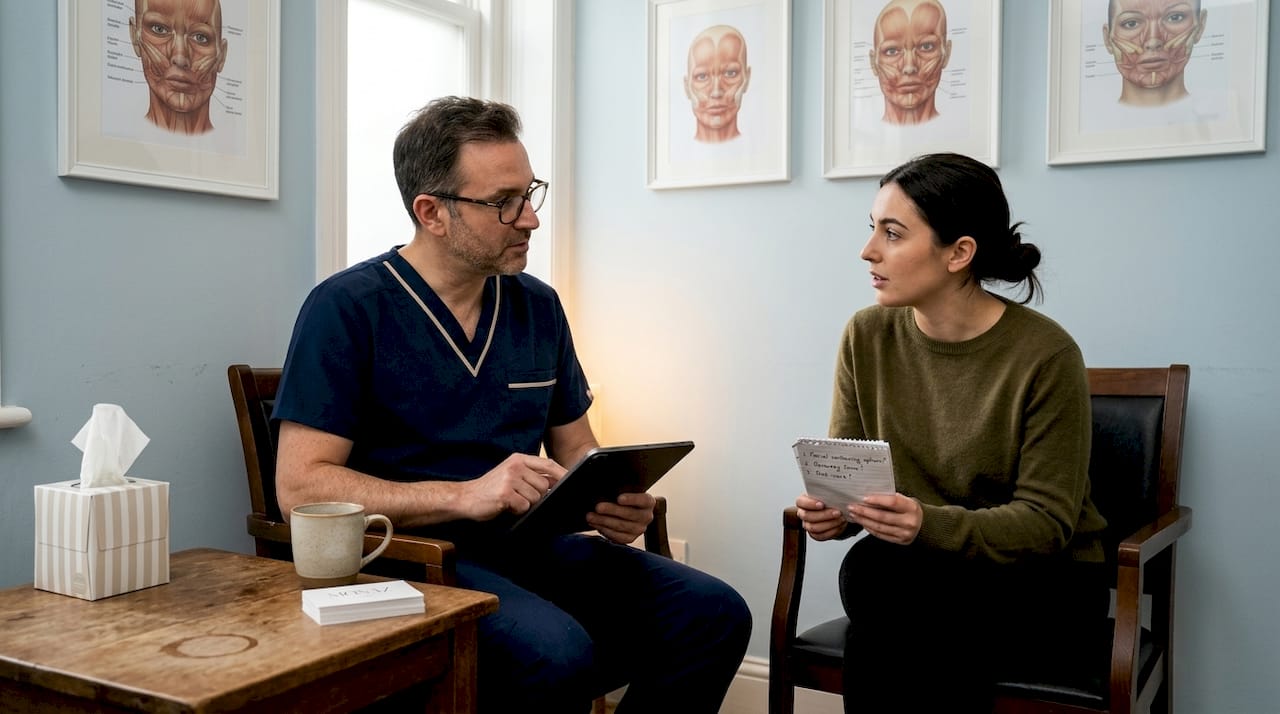
A proper in-person consultation is not optional. Since June 2025, remote prescribing for fillers and Botox has been illegal in England. Any clinic offering to prescribe or treat you without seeing you face to face is operating outside the law. Walk away.
During your consultation, work through these steps:
- Ask about qualifications directly. Request to see evidence of medical registration and any specialist aesthetic training.
- Discuss complication management. A skilled practitioner will explain what they would do if something went wrong, including access to reversal agents such as hyaluronidase for filler dissolving.
- Assess the pressure dynamic. Are you being encouraged to add treatments you did not ask about? Ethical practitioners do not upsell aggressively.
- Ask about aftercare. A responsible clinic provides written aftercare guidance and offers a follow-up appointment.
- Request realistic outcomes. Be wary of anyone who promises dramatic transformation. Subtle, harmonious improvement is the goal of skilled aesthetic medicine.
“A good practitioner will spend as much time listening as they do advising. If the consultation feels rushed or one-sided, that tells you something important about how your treatment will be managed.”
The consultation advice from NHS reinforces that you should use this appointment to assess qualifications and aftercare before committing to anything. Our guides on the consultation process in aesthetics and the role of consultation explain what a genuinely thorough appointment should cover.
Pro Tip: Bring a list of questions written down in advance. This helps you stay focused and ensures you leave with all the information you need, regardless of how confident or reassuring the practitioner seems.
For a broader overview of what to expect, our article on safe consultation pathways is a useful starting point.
Reviews, before-and-after photos, and safety protocols
Complementing credentials and consultation quality, reviews and visual evidence help finalise your decision. They offer a window into the real patient experience, which no amount of clinic marketing can replicate.
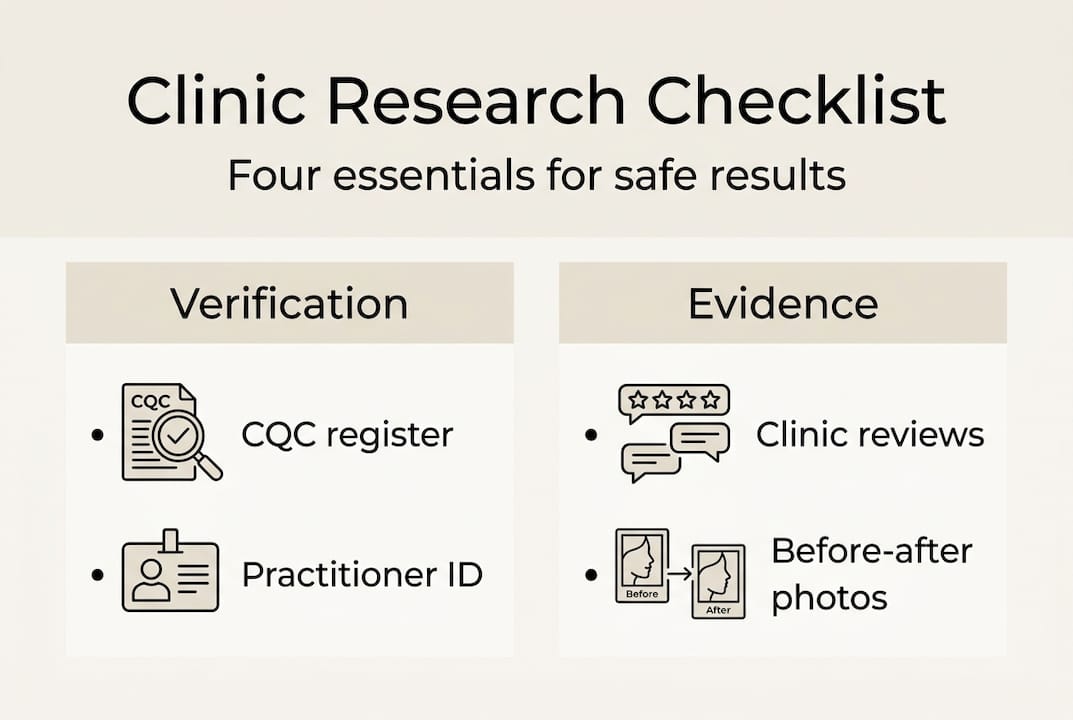
When reading reviews, look beyond star ratings. Specific mentions of safety, clear communication, and honest aftercare are far more telling than generic praise. Check independent reviews on Google and Trustpilot, and look for patterns across multiple entries rather than relying on a single glowing testimonial.
Key things to look for in reviews:
- Mentions of the consultation experience, not just the result
- References to follow-up care and how concerns were handled
- Honest accounts of recovery and any side effects
- Consistency over time, rather than a sudden spike of five-star reviews
- Responses from the clinic to any negative feedback, which indicate professionalism
Before-and-after photographs are valuable, but they must be interpreted carefully. Ask the clinic for unfiltered, clinic-taken images of real patients who had the same procedure you are considering. Heavily edited social media posts are not a reliable indicator of actual results.
Here is a quick comparison of what credible versus misleading visual evidence looks like:
| Evidence type | Credible indicator | Red flag |
|---|---|---|
| Before-and-after photos | Consistent lighting, no filters | Heavy editing, dramatic transformations |
| Review platform | Google, Trustpilot | Only on clinic’s own website |
| CQC rating | Displayed prominently | Not mentioned or hidden |
| Complication protocol | Documented, explained | “We’ve never had a problem” |
Established clinics will have clear, documented protocols for managing complications and will offer follow-up appointments as standard. Ask directly: “What happens if I have a reaction or I am unhappy with the result?” The answer reveals a great deal about how the clinic operates.
For guidance on what a skilled assessment involves, our article on facial assessment for natural results is worth reading alongside signs you may benefit from aesthetics. Together, they help you approach your research with realistic, well-informed expectations.
What most guides miss about researching clinics in London
Most clinic research guides focus on checklists. Credentials, reviews, CQC ratings. These matter, but they do not capture the subtler signals that separate genuinely excellent clinics from merely compliant ones.
The regulatory picture is still evolving. The industry has long pushed for self-regulation, while government data shows that fillers account for two-thirds of all aesthetic complaints. This tension places extra responsibility on you as a patient to go beyond box-ticking.
What we have observed, working with women across London, is that the most trustworthy clinics share a particular quality: they are comfortable saying no. They decline to treat patients who are not suitable. They recommend fewer procedures, not more. They speak plainly about what is achievable and what is not. This kind of honesty is not always commercially convenient, but it is a reliable marker of ethical practice.
Brand-new clinics and home or mobile setups carry higher risk, not necessarily because of bad intent, but because they lack the infrastructure, experience, and accountability that established medical environments provide. The benefits of facial aesthetics are real and meaningful, but they are best realised through practitioners who prioritise long-term skin health over short-term results.
Next steps: find a trusted London aesthetics clinic
Now that you know how to choose wisely, here is a safe starting point for your next aesthetic journey.
At Monaz Clinic, 96 Harley Street, every treatment is led by Mrs Mona Zirak, a medically qualified practitioner, and overseen by a GMC-registered doctor. We offer transparent pricing, a complimentary no-pressure consultation, and a full range of medical-grade treatments designed exclusively for women. Whether you are considering anti-wrinkle injections and want to review the wrinkle softening price list, exploring volume restoration through our dermal fillers price list, or looking into a specific concern such as forehead lines treatment, we are here to guide you safely and honestly every step of the way.
Frequently asked questions
How do I check if a facial aesthetics clinic is regulated?
Search for the clinic and practitioner on the CQC, GMC, NMC, Save Face, or JCCP registers online. All legitimate registrations are publicly searchable at no cost.
What are warning signs of a risky aesthetics clinic?
Avoid clinics that offer mobile or home services, lack visible credentials, or promote treatments primarily through social media vouchers and group events.
Why is an in-person consultation essential before treatment?
It allows you to assess qualifications and aftercare directly and understand realistic outcomes before committing. Remote prescribing for Botox and fillers is also now illegal in England.
Are before-and-after photos reliable when choosing a clinic?
They are helpful, but ask for unfiltered, clinic-taken photos of real patients who had the same procedure you are considering, rather than relying on social media posts.
What makes medical-led clinics safer for facial aesthetics?
Doctors, nurses, and dentists follow strict clinical standards, are trained to manage complications, and are professionally accountable, making them significantly safer than unregulated providers.
Recommended
- Complete Guide to Best Practices for Facial Aesthetics – Monaz Clinic London
- How to Select a Cosmetic Clinic for Facial Aesthetics – Monaz Clinic London
- How to Select Aesthetic Clinic for Your Facial Needs – Monaz Clinic London
- Understanding Safe Cosmetic Treatments for Facial Aesthetics – Monaz Clinic London