




Discover how to treat frown lines naturally with this step-by-step guide for smoother, youthful skin, focusing on safe, non-surgical options and lasting results.
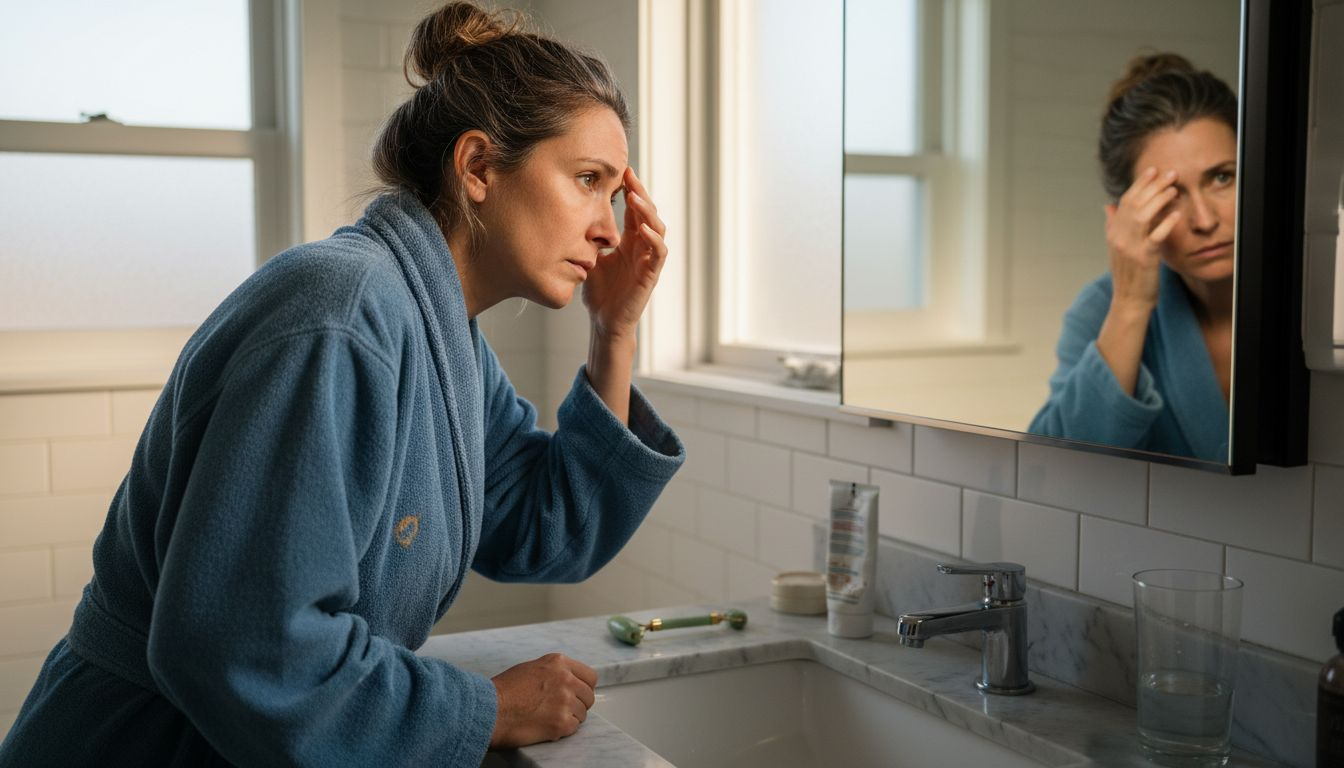
Frown lines often seem to appear overnight, leaving many women in Central London searching for ways to smooth their skin without losing their natural expression. The story behind these lines runs deeper than age alone, shaped by facial movements, lifestyle, and how your unique skin type responds over time. By focusing on a truly personalised assessment and understanding how frown lines develop, you can make informed decisions about safe, non-surgical treatments that match your needs and deliver the subtle, natural results you value.
Table of Contents
- Step 1: Assess Your Frown Lines And Skin Type
- Step 2: Prepare Your Skin For Targeted Treatment
- Step 3: Select The Most Effective Non-Surgical Options
- Step 4: Experience Expert-Led In-Clinic Procedures
- Step 5: Review Results And Refine Your Skincare Routine
Quick Summary
| Key Insight | Explanation |
|---|---|
| 1. Assess frown lines carefully | Examine your frown lines’ depth and triggers to understand your skin’s needs clearly. |
| 2. Identify your specific skin type | Determine whether your skin is oily, dry, combination, or sensitive for tailored treatments. |
| 3. Prepare skin before treatment | Cleanse, hydrate, and protect your skin to enhance treatment effectiveness and moisture levels. |
| 4. Consider both topical and professional treatments | Mix skincare products with professional options to achieve the best results for your frown lines. |
| 5. Regularly review and refine your routine | Assess progress and adjust your skincare as required to maintain improvements and skin health. |
Step 1: Assess your frown lines and skin type
Before exploring any treatment options, you need to understand what you’re working with. This means looking honestly at your frown lines—where they sit, how deep they run, and what triggers them—alongside understanding your skin’s unique characteristics. Getting this assessment right will shape every decision you make moving forward, whether you choose natural skincare approaches or eventually explore professional treatments.
Start by examining your frown lines in natural daylight, ideally near a window where you can see without harsh shadows or bright overhead lights. Look between your eyebrows where these vertical creases typically form. Are they visible only when you frown, or do they remain even when your face is relaxed? This distinction matters considerably. Frown lines that appear only during movement are generally shallower and respond well to preventative approaches, whilst those present at rest indicate deeper etching caused by repeated expressions, loss of skin elasticity, and lifestyle factors such as sun exposure and smoking. Understanding how frown lines develop helps you target the root cause rather than just treating the symptom.
Now assess your skin type, which plays a significant role in how your skin will respond to any treatment. Your skin falls into one of several categories: oily, dry, combination, or sensitive. You can determine this by observing how your skin behaves throughout the day. Does it feel tight and uncomfortable, particularly after cleansing? That suggests dry skin. Does it become shiny and congested, especially across the T-zone, by mid-afternoon? That points to oily skin. Many women find their skin behaves differently across their face—oily in some areas and dry in others—which is combination skin. If your skin reacts quickly to products with redness, irritation, or discomfort, you likely have sensitive skin. Your moisture levels and elasticity also matter here. Press gently on your cheek with your fingertip, then release. Does the skin bounce back immediately, or does the indentation linger? Quick recovery suggests good elasticity, whilst slower recovery indicates that your skin may benefit from targeted hydration and support.
Consider also how your skin reacts to environmental factors and products you’ve used before. Have certain ingredients caused irritation? Does your skin feel more reactive during winter months? These observations inform which natural approaches will work best for your individual situation. Women in Central London often find their skin responds differently to seasonal changes and environmental stressors, so pay attention to these patterns. Once you’ve documented these details about your frown lines and skin type, you’ll have a clear picture of where you stand and what your skin actually needs rather than what you think it should need.
Here is a quick guide to understanding different skin types and how they influence frown line treatments:
| Skin Type | Typical Behaviours | Impact on Frown Line Treatment |
|---|---|---|
| Oily | Shiny T-zone, prone to congestion | Responds well to lightweight products |
| Dry | Feels tight, may flake | Needs richer hydration and gentle care |
| Combination | Oily in parts, dry elsewhere | Requires tailored multi-zone approach |
| Sensitive | Easily irritated, redness common | Prefers minimal, soothing ingredients |
Professional tip Take photographs of your frown lines from the same angle in consistent lighting each week so you can track subtle changes over time, making it easier to evaluate whether your chosen approach is actually working.
Step 2: Prepare your skin for targeted treatment
With a clear understanding of your frown lines and skin type, you’re ready to prepare your skin properly. This preparation phase is crucial because skin that’s well hydrated, properly cleansed, and protected responds far more effectively to any treatment you choose, whether that’s natural skincare approaches or professional interventions. Think of this as creating the optimal foundation for your skin to heal and improve.
Start with a cleansing routine tailored specifically to your skin’s needs. If you have dry skin, avoid harsh foaming cleansers that strip away natural oils; instead, opt for gentle, creamy formulas that remove impurities without leaving your skin feeling tight. For oily or combination skin, you can use slightly more active cleansers, but still prioritise gentleness over aggressive scrubbing. The goal is to remove dirt, makeup, and environmental pollutants without compromising your skin’s natural barrier. Cleanse twice daily, morning and evening, but avoid over cleansing as this can trigger irritation and actually increase oil production. After cleansing, pat your skin dry gently rather than rubbing, which can cause unnecessary friction and inflammation around delicate areas like the space between your eyebrows where frown lines form.
Next, introduce hydration as a cornerstone of your preparation routine. Consistent moisturising and sun protection strengthen your skin’s resilience and prepare it for targeted treatments. Apply moisturiser to damp skin immediately after cleansing, as this helps lock in hydration more effectively. Choose a formula appropriate for your skin type; dry skin benefits from richer creams, whilst oily skin typically needs lightweight, non-comedogenic gels. Pay particular attention to the area between your eyebrows and your forehead, as these regions often lose hydration more quickly. Once your skin feels hydrated and comfortable, add a broad-spectrum sun protection factor of at least SPF 30 into your daily routine. Sun exposure accelerates the breakdown of collagen and elastin, which directly worsens frown lines, so this step genuinely matters for long-term improvement.

Consider incorporating a gentle exfoliant into your routine once or twice weekly, but only after your skin has settled into its new cleansing and moisturising schedule. Exfoliation removes dead skin cells that can dull your complexion and prevent skincare products from penetrating effectively. Choose either a chemical exfoliant with gentle acids like glycolic or lactic acid, or a physical exfoliant with soft particles, but not both simultaneously. Avoid aggressive scrubbing or over-exfoliating, as this can damage your skin barrier and increase sensitivity. If you notice any irritation, redness, or increased dryness, reduce the frequency or discontinue temporarily. Your skin should feel smoother and look brighter after exfoliation, not inflamed or uncomfortable.
As your skin becomes more balanced and healthy over the next two to four weeks, you’ll likely notice the area between your eyebrows looks fresher and finer lines appear less pronounced. This improved skin quality creates an excellent foundation for pursuing further treatment whether you choose to continue with natural approaches or explore professional options.
Professional tip Photograph your skin in the same lighting conditions weekly to objectively track improvements in hydration, texture, and fine line appearance, helping you evaluate whether your preparation routine is genuinely working before investing in additional treatments.
Step 3: Select the most effective non-surgical options
Now that your skin is properly prepared, you can explore the non-surgical treatments that will genuinely address your frown lines. The landscape of options available today is far broader than most people realise, ranging from topical ingredients you can use at home to professional treatments administered by qualified practitioners. Understanding what each option does and how it works will help you make an informed choice that aligns with your goals, timeline, and comfort level.
Begin by considering topical skincare ingredients that target frown lines directly. Retinol and retinoids are among the most researched and effective options for reducing fine lines and improving skin texture. These vitamin A derivatives work by stimulating collagen production and accelerating cell turnover, which gradually smooths the appearance of frown lines over time. Start with a low concentration if your skin is sensitive, applying it just two or three times weekly, then gradually increase frequency as your skin adapts. Peptides are another powerful ingredient that signal your skin to produce more collagen and elastin, essentially supporting your skin’s natural ability to repair itself from within. Vitamin C serums brighten the complexion and provide antioxidant protection against further damage from environmental stressors. Hyaluronic acid draws moisture deep into your skin, plumping fine lines temporarily and improving skin hydration that makes lines appear less pronounced. Niacinamide (also called vitamin B3) strengthens your skin barrier, reduces inflammation, and can actually help regulate oil production if you have combination skin. These ingredients work best when used consistently over several weeks or months, so patience is genuinely important here.
If you’re seeking faster or more noticeable results, professional non-surgical treatments offer excellent options. Treatments like non-invasive facial aesthetics solutions can address frown lines more effectively than topical approaches alone. Professional treatments range from injectable solutions that relax the muscles causing frown lines to microneedling techniques that stimulate collagen remodelling deep within your skin. Some treatments work by smoothing the skin surface, whilst others address the underlying muscle contractions responsible for creating these lines in the first place. The choice depends on your specific goals, the depth of your frown lines, and how quickly you want to see results. A consultation with a qualified practitioner will help you understand which treatments suit your particular situation and skin type.
When evaluating options, consider the timeline you’re working with. Topical ingredients require consistent use over weeks or months before visible improvements emerge, making them ideal if you’re comfortable with gradual change and prefer a preventative approach. Professional treatments often show results within days or weeks, though full effects can take longer as collagen remodelling occurs. Some treatments are temporary and require repeat appointments, whilst others provide longer lasting results. Your budget, lifestyle, and personal preference for invasiveness should all factor into your decision. Many women find that combining approaches works best, starting with excellent skincare whilst exploring professional options for more dramatic improvements.
Below you will find a comparison of topical and professional non-surgical options for treating frown lines:
| Approach | Timeline for Results | Ideal For | Typical Cost Range |
|---|---|---|---|
| Topical Ingredients | 6-12 weeks | Gradual improvement seekers | £20–£90 per product |
| Injectable Treatments | 3-14 days | Quick, visible results | £150–£350 per session |
| Microneedling | 2-4 weeks | Texture, collagen stimulation | £100–£300 per session |
| Combined Approach | Varies | Balanced, long-term results | £120+ (products & clinic) |
Before committing to any treatment, arrange a proper consultation where you can discuss your concerns openly and ask detailed questions about what to expect. A qualified practitioner will assess your skin, explain which treatments address your specific frown lines most effectively, and discuss realistic outcomes. This conversation is invaluable for ensuring you choose an approach that genuinely aligns with your expectations rather than pursuing something simply because it’s trendy or worked for someone else.
Professional tip Request before and after photographs from any clinic showing results on women with similar frown line depth and skin type to yours, as this gives you far more realistic expectations than generic marketing images.
Step 4: Experience expert-led in-clinic procedures
If you’ve decided to explore professional treatment options, understanding what happens during an in-clinic procedure will help you feel confident and prepared. Expert-led treatments administered by qualified practitioners offer precision and safety that at-home approaches simply cannot match. The experience begins well before you arrive at the clinic and continues long after you leave, with each stage carefully designed to ensure you achieve natural-looking results that genuinely enhance your appearance.
Your journey starts with a detailed consultation where a qualified practitioner assesses your frown lines, facial structure, and skin characteristics in person. During this consultation, the practitioner will examine how facial muscle dynamics and skin elasticity affect your specific frown lines, helping determine which treatment option suits you best. This is your opportunity to discuss your concerns openly, ask questions about what to expect, and share any medical history or previous treatments. A thorough practitioner will explain exactly what the procedure involves, how long it takes, what results you can realistically expect, and when those results will become visible. They’ll also discuss any temporary effects you might experience afterwards, such as mild redness or sensitivity. This conversation ensures you enter the procedure with clear expectations rather than vague hopes.
When the actual procedure begins, you’ll be made comfortable in a professional treatment room designed for safety and relaxation. The practitioner will cleanse your skin and may apply a topical numbing agent, depending on the treatment type. Most professional treatments for frown lines are remarkably quick, often taking just fifteen to thirty minutes. During the procedure, you’ll remain conscious and able to communicate if anything feels uncomfortable. The practitioner will work methodically, assessing results as they progress to ensure balance and natural appearance. You may feel slight pressure or mild sensations, but discomfort is minimal with proper technique and appropriate numbing. Throughout the procedure, the focus remains on creating results that look natural rather than obvious or overdone, which is particularly important for frown lines where subtlety matters greatly.
After your procedure, the practitioner will provide clear aftercare instructions tailored to the specific treatment you received. Some treatments allow you to return to normal activities immediately, whilst others require brief restrictions on exercise, makeup application, or sun exposure. Most women find they can return to work the same day. Results develop gradually over days or weeks as your skin responds to the treatment, rather than appearing instantly. Follow-up appointments typically occur weeks or months later, allowing the practitioner to assess how your skin has responded and make any refinements necessary to optimise your results. This commitment to follow-up care reflects a genuine focus on your satisfaction rather than simply completing a one-off procedure.
Choosing a clinic matters considerably. Look for practitioners who are medically qualified, registered with relevant governing bodies, and genuinely focused on natural results. A practitioner at Monaz Clinic on Harley Street will conduct thorough assessments, explain procedures clearly, and prioritise your safety and satisfaction throughout your treatment journey. The professionalism and expertise of the practitioner you choose directly influences the quality of your results, so invest time in selecting someone you genuinely trust.
Professional tip Schedule your procedure for a time when you don’t have important meetings or events for at least a few days, giving any minor temporary effects time to settle before you need to look your absolute best.
Step 5: Review results and refine your skincare routine
As weeks pass following your treatment or after establishing your natural skincare approach, taking time to genuinely assess your progress becomes essential. This review phase isn’t vanity; it’s about understanding what’s working, what needs adjustment, and how to maintain your improved skin long term. Reviewing your results objectively allows you to make informed decisions about your ongoing skincare rather than relying on feeling or guesswork.
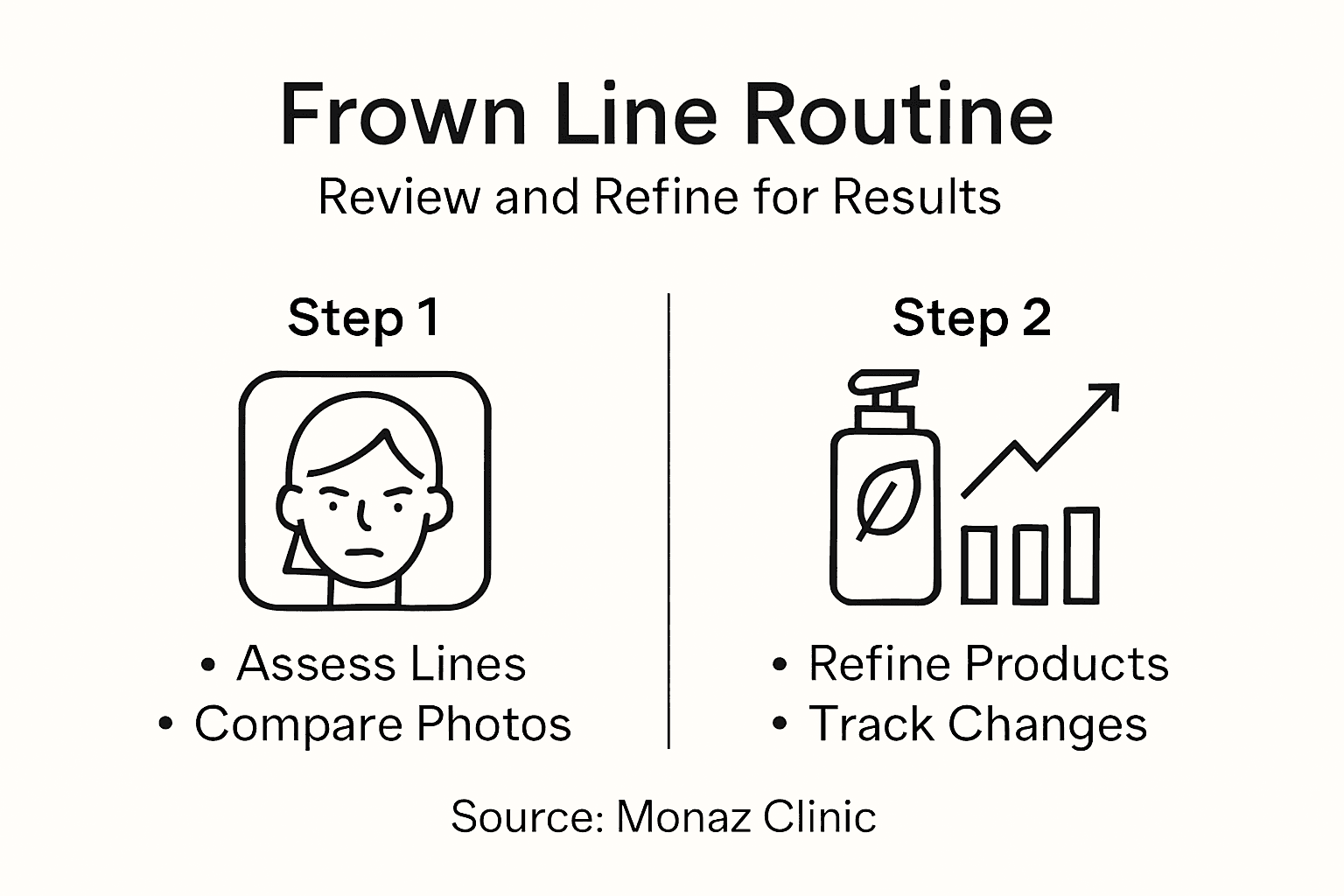
Start by comparing your current skin to where you began. Pull out those photographs you took during Step 1 or early in your skincare journey, and examine them side by side with your skin now. Look specifically at the depth of your frown lines between your eyebrows. Are they noticeably shallower? Has the space between them smoothed out? Beyond frown lines, assess your overall skin texture and radiance. Does your skin look more hydrated? Are fine lines around your eyes less visible? Has your complexion become more even toned? Write down your observations rather than relying on memory, as this creates an objective record you can reference over time. Most women find they see gradual improvement that only becomes obvious when comparing photos from weeks or months apart, as daily changes feel nearly imperceptible.
Once you’ve assessed your results, refine your skincare routine based on how your skin has responded. If you’ve been using topical ingredients and see good progress, continue with the same routine but consider whether you could optimise it further. If you used retinol twice weekly and experienced no irritation, perhaps you’re ready to increase to three times weekly for potentially faster results. If you saw minimal improvement, you might need a higher concentration or different active ingredient. Adjusting routines based on skin response and seasonal changes helps sustain improvements and prevents frown lines from returning. If you had a professional treatment, your practitioner will have guided you on maintenance. Some treatments require touch-up appointments at specific intervals to maintain results, whilst others provide longer lasting effects that only need refinement over time. Follow their guidance closely, as they understand how your skin responded to the treatment.
Consider also whether your skincare routine should evolve with the seasons or as your skin changes over time. Many women find their skin becomes drier during winter months, requiring richer moisturisers or more frequent hydrating serums. Summer might demand stronger sun protection and potentially lighter textures that won’t feel heavy in heat. If you’re addressing frown lines naturally, consistent sun protection and lifestyle management are fundamental to preventing wrinkles from worsening or returning. This means applying SPF daily, reapplying after swimming or perspiring, and genuinely protecting your skin from preventable damage. Think of sun protection not as optional extra but as the foundation that allows all your other skincare efforts to work effectively.
Beyond your skincare products, assess whether your lifestyle supports skin health. Are you sleeping adequately? Dehydration accelerates skin ageing visibly. Are you managing stress, which can trigger inflammation and worsen skin conditions? Are you smoking or exposed to secondhand smoke, which directly worsens frown lines? Sometimes the most impactful improvements come not from better skincare products but from better habits. Review your results honestly, celebrate genuine improvements you’ve achieved, and use those successes to motivate continued commitment to your routine. Skin improvement isn’t a destination you reach and then abandon; it’s an ongoing practice that requires consistent care and regular assessment.
Professional tip Keep a simple skincare journal noting which products you use daily, any skin changes you notice, and how your frown lines appear, allowing you to identify patterns and determine which elements genuinely contribute to your best skin.
Unlock Naturally Smoother Skin with Expert Guidance at Monaz Clinic
If you are looking for effective ways to treat your frown lines naturally and want personalised support beyond skincare routines and home treatments the expert team at Monaz Clinic can help you achieve your goals. We understand the specific challenges of smoothing those stubborn lines between the eyebrows and restoring skin’s elasticity while maintaining a natural appearance. Our medically qualified practitioners provide non-surgical facial aesthetic solutions designed to complement your natural beauty and enhance your confidence.

Explore trusted advice and proven techniques tailored to your unique skin type and condition by visiting our tips – Monaz Clinic | Facial Aesthetic Clinic in London. Ready to take the next step in your skincare journey book your complimentary consultation today at Monaz Clinic and experience expert care at our Harley Street clinic where every treatment is designed to help you Reveal Your Best Self.
Frequently Asked Questions
How can I naturally reduce the appearance of frown lines?
To naturally reduce frown lines, focus on a consistent skincare routine that includes hydrating and exfoliating products. Use ingredients like hyaluronic acid and retinol, applying them regularly to help improve skin texture and firmness over the course of 6-12 weeks.
What steps should I take to prepare my skin before treating frown lines?
Before treating frown lines, start by cleansing your skin gently to remove impurities and then apply a hydrating moisturiser to lock in moisture. Aim to use a broad-spectrum sunscreen daily as well, to protect your skin from sun damage that can exacerbate frown lines.
How often should I exfoliate my skin to improve frown lines?
Exfoliate your skin once or twice a week to remove dead skin cells, which can help enhance the effectiveness of your skincare products. Choose a gentle chemical exfoliant or a mild physical exfoliant to maintain skin health without causing irritation.
What ingredients should I look for in products targeting frown lines?
When selecting products to treat frown lines, look for ingredients like retinol, peptides, and niacinamide, which are known to boost collagen production and improve skin elasticity. Incorporate these ingredients gradually to allow your skin to adjust and optimise results over a few weeks.
How long does it take to see improvement in frown lines naturally?
Natural treatments for frown lines can take approximately 6-12 weeks to show visible improvement, depending on your skin type and the consistency of your routine. Commit to daily skincare practices and reassess your skin’s appearance every few weeks to track any positive changes.