




Discover expert steps to prepare your skin before non-surgical aesthetic treatments. Reduce bruising, improve results, and arrive ready for your procedure.

TL;DR:
- Proper skin preparation reduces bruising, sensitivity, and extends treatment results.
- Follow a gentle skincare, hydration, and sleep routine in the week before treatment.
- Avoid sun exposure, aggressive skin treatments, blood thinners, and stress on the day of the procedure.
How well you prepare your skin before a non-surgical aesthetic procedure can be just as important as the treatment itself. Many women arrive for their first injectable or filler appointment without realising that their skincare routine, supplements, and even sleep the night before all play a role in the outcome. Poor preparation can increase bruising, heighten sensitivity, and reduce how long results last. The good news is that most of these risks are entirely within your control. This guide walks you through every stage of preparation, from the week before to the morning of your appointment, so you can approach your treatment with confidence and get the results you deserve.
Table of Contents
- Why preparation matters before aesthetics
- Checklist: What to do (and avoid) the week before treatment
- The night before and day of your procedure
- Common mistakes and what to do instead
- Our expert perspective: Why pre-treatment routines make all the difference
- Seek professional guidance for beautiful, safe results
- Frequently asked questions
Key Takeaways
| Point | Details |
|---|---|
| Preparation reduces risk | Proper skin prep minimises swelling, bruising, and overall complications from aesthetic treatments. |
| Review your products | Stop harsh or active products and always inform your clinician about all medications and allergies. |
| Clean skin is essential | Arrive at your appointment without makeup or heavy products to lower infection risk and maximise results. |
| Avoid last-minute treatments | Skip waxing, tanning, and new skincare days before your procedure to avoid irritation or adverse reactions. |
Why preparation matters before aesthetics
Non-surgical treatments such as anti-wrinkle injections, dermal fillers, and skin boosters involve introducing substances into the skin. That means your skin’s condition at the time of treatment genuinely matters. Arriving well-prepared reduces the risk of bruising, swelling, and post-procedure complications, and it gives your practitioner a much cleaner canvas to work with.
Professional guidelines, including those from BAPRAS on injectables, consistently emphasise that preparation directly affects the safety and success of non-surgical procedures. This is not a formality. It is a clinical reality.
“The best outcomes from aesthetic treatments are rarely down to luck. They reflect a combination of skilled technique and a well-prepared patient.”
Think of it this way: even the most experienced injector on Harley Street cannot fully compensate for skin that is inflamed, dehydrated, or compromised by recent exfoliation. Preparation sets the conditions for success.
Before your appointment, there are several key areas to review with your clinician:
- Current medications, including prescription drugs and over-the-counter anti-inflammatories such as ibuprofen or aspirin
- Supplements such as fish oil, vitamin E, and garlic, which can increase bleeding risk
- Recent skin treatments, including chemical peels, laser, or microneedling
- Known allergies, particularly to lidocaine or any filler components
- Active skin conditions such as cold sores, eczema flares, or acne in the treatment area
When you review preparing for cosmetic treatments in advance, you give yourself the best possible foundation. Skipping this step is one of the most common reasons clients feel disappointed, even when their treatment is carried out by a skilled professional. The result is not just about technique. It is about the full picture.
Now that we understand the importance of getting this step right, let us break down exactly what you need to do before your appointment.
Checklist: What to do (and avoid) the week before treatment
The seven days leading up to your procedure are your window of opportunity. Small, consistent actions during this period can meaningfully reduce your risk of bruising and improve how your skin responds.
Here are the top three things to do in the days before your appointment:
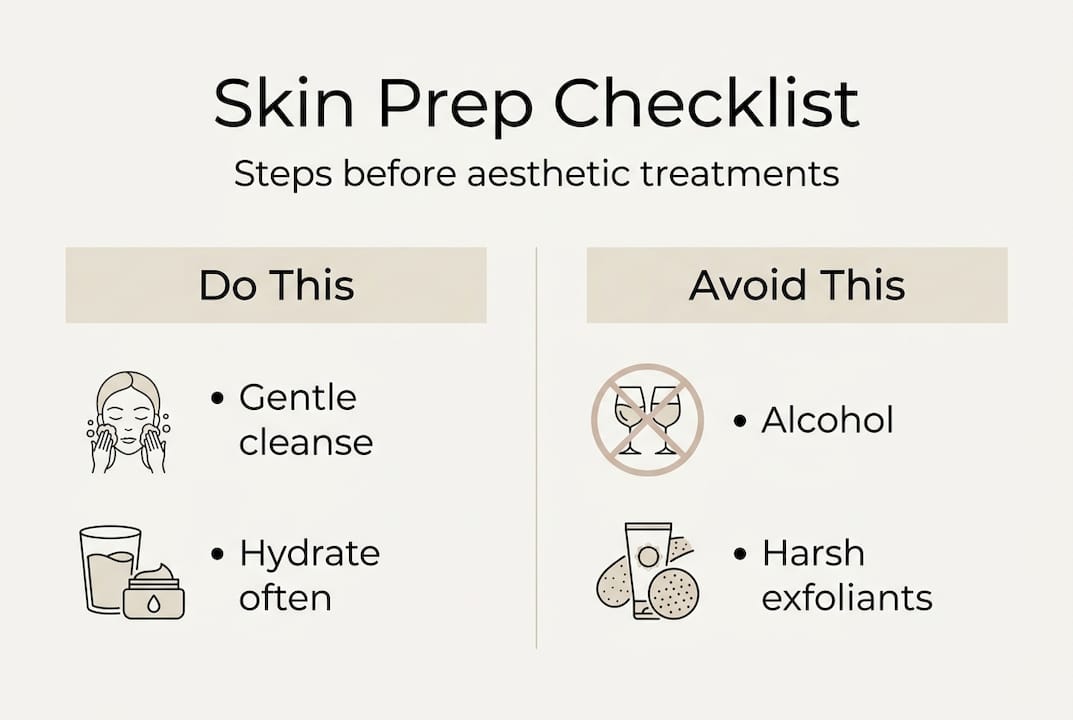
- Hydrate consistently. Drink at least 1.5 to 2 litres of water daily. Well-hydrated skin is more resilient and recovers faster.
- Cleanse gently. Switch to a mild, fragrance-free cleanser and apply a broad-spectrum SPF every morning to keep the skin barrier strong.
- Sleep well. Aim for seven to eight hours per night. Fatigue increases inflammation and can make the skin more reactive.
As BAPRAS guidance on injectables makes clear, prescription medications, certain supplements, and over-the-counter anti-inflammatories can all affect your risk profile. Always discuss these with your provider before making any changes.
The table below summarises what to include and what to pause during the week before treatment:
| Category | Beneficial | Avoid |
|---|---|---|
| Skincare actives | Gentle hyaluronic acid serum, SPF | Retinol, AHA, BHA, vitamin C |
| Supplements | Vitamin D (if prescribed) | Fish oil, vitamin E, garlic, ginkgo |
| Medications | As prescribed by your doctor | Ibuprofen, aspirin (unless essential) |
| Lifestyle | Gentle walking, good sleep | Intense exercise, alcohol, smoking |
| Skin treatments | Light moisturising | Chemical peels, waxing, laser |
Following best practices for facial aesthetics means understanding that what you stop doing is just as important as what you start. Retinol and acids increase skin cell turnover and sensitivity. Using them close to your treatment date can leave skin more prone to irritation and slower to settle post-procedure.
If you are booked for fillers specifically, reviewing a dermal filler checklist can help you feel fully prepared and informed before you arrive.
Pro Tip: Apply a gentle, non-comedogenic moisturiser morning and evening during the week before your treatment. Plump, hydrated skin responds more smoothly to injectables and tends to show less post-treatment redness.
Having explored why this matters, it is time to act. Here is your essential preparation checklist to carry you through to the final hours.
The night before and day of your procedure
With the week’s prep done, it is important not to let last-minute mistakes undermine your efforts. The final 24 hours before your treatment deserve just as much attention.
The night before, prioritise rest above everything else. A full night’s sleep reduces cortisol levels and keeps inflammation low, both of which matter when your skin is about to undergo a procedure. Avoid alcohol entirely. Even a single glass of wine the evening before can thin the blood and increase bruising significantly.
On the morning of your appointment, follow this approach:
- Cleanse your face with a gentle, fragrance-free wash and do not apply any makeup, serums, or active skincare
- Stay well hydrated by drinking water with your breakfast
- Eat a light meal beforehand to keep blood sugar stable and reduce the chance of feeling lightheaded
- Avoid caffeine in excess, as it can heighten sensitivity and contribute to a raised heart rate during treatment
- Bring your medical history, including a written list of all medications, supplements, and any known allergies
As BAPRAS confirms, effective pre-treatment habits contribute to reduced complications and improved outcomes. This is particularly relevant on the day itself, when skin condition is at its most visible to your practitioner.

| Good habit | What to avoid |
|---|---|
| Clean, product-free skin | Foundation, concealer, or SPF on arrival |
| Light, balanced breakfast | Skipping meals or eating heavily |
| 1 to 2 glasses of water | Excessive caffeine or alcohol |
| Restful sleep the night before | Late nights or disrupted sleep |
| Written allergy and medication list | Relying on memory alone |
Understanding which skincare ingredients to avoid in the lead-up to your appointment is one of the simplest ways to protect your results. When in doubt, less is always more on the day of your procedure.
Common mistakes and what to do instead
Even with the best intentions, simple errors can undo your preparation. These are the most frequent slip-ups we see, and what to do instead to ensure the safest, best results.
Sun exposure in the days before treatment. Sunburnt or UV-damaged skin is inflamed and far more reactive. Instead: wear a broad-spectrum SPF 50 daily from the week before and avoid prolonged sun exposure entirely in the 48 hours prior.
Waxing or having a facial peel close to your appointment. Both strip or sensitise the skin barrier, increasing the risk of irritation and infection at injection sites. Instead: schedule any waxing or peels at least two weeks before your treatment date.
Failing to disclose medications or supplements. This is one of the most serious mistakes. Undisclosed blood thinners or supplements can lead to unexpected bruising or, in rare cases, more significant complications. Instead: write everything down and share it honestly at your consultation.
Trying DIY ‘prep hacks’ from social media. Applying raw ingredients, ice packs, or unverified topicals based on social media advice can irritate or compromise the skin before treatment. Instead: follow the guidance given by your clinician and stick to simple, gentle skincare.
Arriving stressed or rushed. Stress raises cortisol, which increases inflammation. Instead: allow extra time to travel, arrive calmly, and give yourself a few minutes to settle before your appointment.
Expert guidance on reducing risks consistently stresses that appropriate preparation is one of the most effective ways to lower the chance of complications from non-surgical procedures.
For further support after your appointment, reading about caring for skin after injectables and following a structured injectable aftercare guide will help you protect your results in the days that follow.
Pro Tip: If you are ever unsure whether something is safe to do before your treatment, contact your clinic directly. A quick message or call is always better than guessing.
Our expert perspective: Why pre-treatment routines make all the difference
In our experience at Monaz Clinic, the clients who are happiest with their results are almost always the ones who prepared thoughtfully. That is not a coincidence.
When a practitioner assesses your skin at the start of an appointment, the condition of that skin tells a story. Dehydrated, sensitised, or recently exfoliated skin requires more caution, which can limit what is achievable in a single session. Calm, well-nourished skin allows for more precise work and a more comfortable experience.
There is a persistent myth in aesthetics that treatments are a quick fix. They are not. They are a collaboration between your practitioner’s skill and your body’s ability to respond well. Post-consultation safe administration is only effective when the groundwork has been laid.
We have seen clients reduce their bruising noticeably simply by pausing fish oil supplements and avoiding alcohol for one week. We have seen filler settle more evenly in clients who arrived hydrated and rested. These are not dramatic interventions. They are small, consistent choices that compound into significantly better outcomes.
Building a personalised skincare routine in the weeks before your treatment is one of the most valuable investments you can make in your results.
Seek professional guidance for beautiful, safe results
Preparation is the foundation, but the quality of your treatment depends equally on the expertise and care of the clinic you choose.

At Monaz Clinic, 96 Harley Street, every client begins with a complimentary, no-pressure consultation. We review your medical history, discuss your goals, and create a treatment plan tailored specifically to you. Whether you are considering forehead lines treatment or exploring our full range of dermal fillers, we are here to guide you safely and confidently. You can also review our wrinkle softening prices to plan your journey with full transparency. We would love to hear from you.
Frequently asked questions
Can I use my regular skincare before a non-surgical treatment?
Avoid retinol, acids, and harsh exfoliants in the days before your procedure. Stick to gentle, hydrating skincare unless your practitioner advises otherwise, as certain topical ingredients can increase skin sensitivity at the treatment site.
Should I avoid makeup on the day of my procedure?
Yes, you should arrive with completely clean, makeup-free skin. This is standard best practice before non-surgical treatments and significantly lowers the risk of infection at injection sites.
How long before my treatment should I stop taking blood-thinning medications or supplements?
Consult your clinician well in advance, but most practitioners suggest pausing non-essential blood thinners around one week prior. Always seek medical approval before pausing any prescribed medication.
Can I go to the gym before or after my treatment?
Skip strenuous exercise immediately before your appointment and for at least 24 hours afterwards. Excess heat and exertion can increase swelling and compromise your results in the early recovery period.
Recommended
- How to Prepare for Cosmetic Treatments Naturally and Safely – Monaz Clinic London
- When to Start Facial Treatments: Your Ideal Guide – Monaz Clinic London
- How to Choose Facial Aesthetic Treatments for Stunning Results – Monaz Clinic London
- 7 Essential Aesthetic Skin Treatments List for Ladies – Monaz Clinic London