




Discover what really happens at a London aesthetics clinic, from consultation to aftercare. Learn how to check credentials, understand risks, and feel confident before your first appointment.

TL;DR:
- A thorough consultation includes skin analysis, medical history, goals, and realistic outcome discussions.
- Always verify practitioner registration and clinic accreditation to ensure safety and high standards.
- Proper aftercare and understanding potential side effects are crucial for safe and effective treatment results.
Many women arrive at their first aesthetic appointment expecting something close to a beauty salon visit: quick, simple, and over in minutes. The reality at a reputable London clinic is quite different, and that difference is precisely what keeps you safe. High-standard practitioners follow a structured, medically informed process that covers everything from your skin and facial anatomy to your personal goals and medical history. This guide walks you through every stage, from your initial consultation to post-treatment support, so you arrive informed, confident, and ready to make the right decision for yourself.
Table of Contents
- Understanding your consultation: What really happens
- Safety matters: How to check practitioner and clinic credentials
- Risks and realities: Side effects, complications, and your peace of mind
- What happens after your treatment: Aftercare and support
- The truth few talk about: What ‘clinic experience’ really means
- Discover safe, supportive facial rejuvenation in London
- Frequently asked questions
Key Takeaways
| Point | Details |
|---|---|
| Consultation is in-depth | High-quality clinics provide thorough initial assessments with time for questions and no rush. |
| Check credentials | Always verify practitioner registrations and clinic accreditations before making decisions. |
| Know the risks | Mild side effects are common, but rare complications highlight the importance of expert care and support. |
| Aftercare matters | Proper aftercare advice keeps results natural and recovery smooth. |
Understanding your consultation: What really happens
Before booking a treatment, you’ll start with a consultation. Far from a brief chat, a thorough consultation at a quality London clinic is an in-depth clinical assessment that sets the foundation for everything that follows.
Your practitioner will examine your skin condition, facial structure, and the specific areas you’d like to address. This is not a one-size-fits-all conversation. As part of a facial assessment explained process, your bone structure, muscle movement, skin laxity, and volume distribution are all considered before any treatment is discussed.
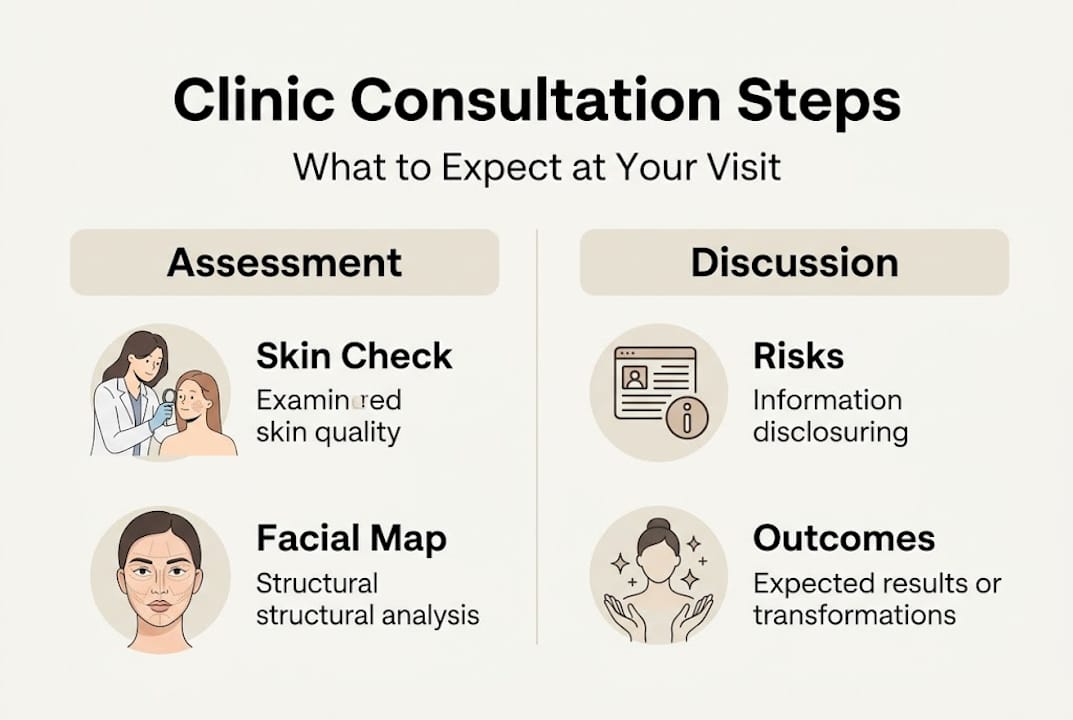
Medical history matters enormously here. You’ll be asked about allergies, current medications, previous aesthetic treatments, and any underlying health conditions. This is not box-ticking. It directly shapes what is safe and appropriate for you. A facial assessment checklist approach ensures nothing is overlooked.
Your practitioner will then explain the procedures being considered, including realistic outcomes, potential risks, and what aftercare involves. A safe cosmetic consultation means you leave with clear answers, not sales pressure.
| Consultation stage | What it covers |
|---|---|
| Skin and facial assessment | Structure, laxity, volume, symmetry |
| Medical history review | Allergies, medications, prior treatments |
| Goal-setting discussion | Your concerns and realistic expectations |
| Procedure explanation | Steps, risks, outcomes, aftercare |
| Decision time | No pressure, cooling-off period offered |
Ethical clinics never push for same-day treatments. The NHS advises that consultations should include a full assessment of your skin, facial structure, medical history, goals, and expectations, with a cooling-off period strongly recommended before proceeding.
Key questions to ask at your consultation:
- What treatment do you recommend, and why?
- What results are realistically achievable for me?
- What are the risks specific to my anatomy?
- What happens if I experience a complication?
- What aftercare will I need to follow?
Pro Tip: If a clinic skips the medical history questions or offers to treat you immediately without a prior consultation, treat that as a serious warning sign. A cautious practitioner is a skilled one.
Safety matters: How to check practitioner and clinic credentials
Once you understand the consultation process, it’s time to check who you’ll trust with your facial aesthetic journey. Not all clinics or practitioners operate to the same standard, and the difference can significantly affect your safety.
In the UK, practitioners should be registered with a recognised regulatory body. Doctors must appear on the GMC register, dentists with the GDC, and nurses with the NMC. You can verify registration online in minutes. This is a non-negotiable first step.
Beyond individual registration, look for clinic-level accreditations. Save Face, BCAM (British College of Aesthetic Medicine), and JCCP (Joint Council for Cosmetic Practitioners) are respected bodies that indicate a commitment to professional standards. A clinic registered with the Care Quality Commission (CQC) has also met independent regulatory requirements.
Use this comparison to guide your research:
| Check | What to look for | Red flag |
|---|---|---|
| Practitioner registration | GMC, GDC, or NMC listed | No verifiable registration |
| Clinic accreditation | Save Face, BCAM, JCCP | No professional body affiliation |
| Products used | CE-marked or FDA-approved | Unbranded or unknown products |
| Complication protocol | Clear plan, medical access | Vague or dismissive answers |
| Consultation approach | Thorough, no pressure | Hard-sell tactics, group events |
An aesthetics consultation guide can help you prepare the right questions before you attend. For injectable treatments specifically, a dermal filler checklist is a practical tool to ensure you’ve covered every important point.
Warning signs to watch for:
- Treatments offered at group events or parties
- Staff without verifiable medical qualifications
- Pressure to book or pay on the day
- Unusually low prices with no explanation of products used
- No mention of risks or complications during the consultation
Pro Tip: Search the practitioner’s name on the GMC, GDC, or NMC register before your appointment. It takes under two minutes and gives you genuine peace of mind.
Post-2023 regulatory changes in England have introduced stricter licensing requirements for non-surgical cosmetic procedures, including age restrictions and mandatory practitioner assessments. These changes exist for good reason: they protect you.
Risks and realities: Side effects, complications, and your peace of mind
After checking credentials, it’s vital to understand what side effects and outcomes to expect. Realistic preparation reduces anxiety and, importantly, helps you act quickly if something needs attention.
Most non-surgical treatments carry a predictable range of mild after-effects. Redness, swelling, and bruising at the treatment site are the most common and typically resolve within a few days. These are not cause for alarm. They are a normal part of your body’s response.
Rarer but more serious complications do exist, and a responsible practitioner will discuss them with you. These include:
- Infection at the injection site
- Asymmetry or uneven results
- Lumps or product migration
- Temporary drooping (associated with anti-wrinkle injections)
- Vascular occlusion, a rare but urgent complication where filler blocks a blood vessel
“Understanding the difference between expected mild reactions and signs of a serious complication is one of the most important things you can take away from your consultation.”
For hyaluronic acid (HA) fillers, complications can often be reversed using an enzyme called hyaluronidase, which dissolves the product. This is one reason why choosing HA-based fillers from a qualified practitioner matters. The risks of non-surgical procedures are well-documented: BCAM reports that fillers account for 87% of aesthetic complications, with over 3,000 cases per year requiring correction, the vast majority of which are mild and manageable.
Clinic marketing often emphasises minimal downtime and natural results, which is fair. But NHS guidance rightly stresses that vetting your practitioner is the single most important factor in reducing risk. The aesthetic industry has seen 8.4% annual growth, but NHS data also shows a rising burden from complications linked to unregulated providers.
Knowing the side effects of fillers before you attend helps you ask better questions. Understanding risks and realities means you’re not caught off guard. And reading about best dermal filler advice from qualified practitioners helps you set sensible expectations from the start.
What happens after your treatment: Aftercare and support
With risks managed, the recovery and support phase is where a good clinic truly shows its commitment to you. Aftercare is not an afterthought. It is a structured part of your treatment plan.
Immediately after your procedure, you may notice mild swelling, tenderness, or slight redness. Your practitioner will observe you briefly before you leave and confirm you feel comfortable. This is standard practice at any reputable clinic.
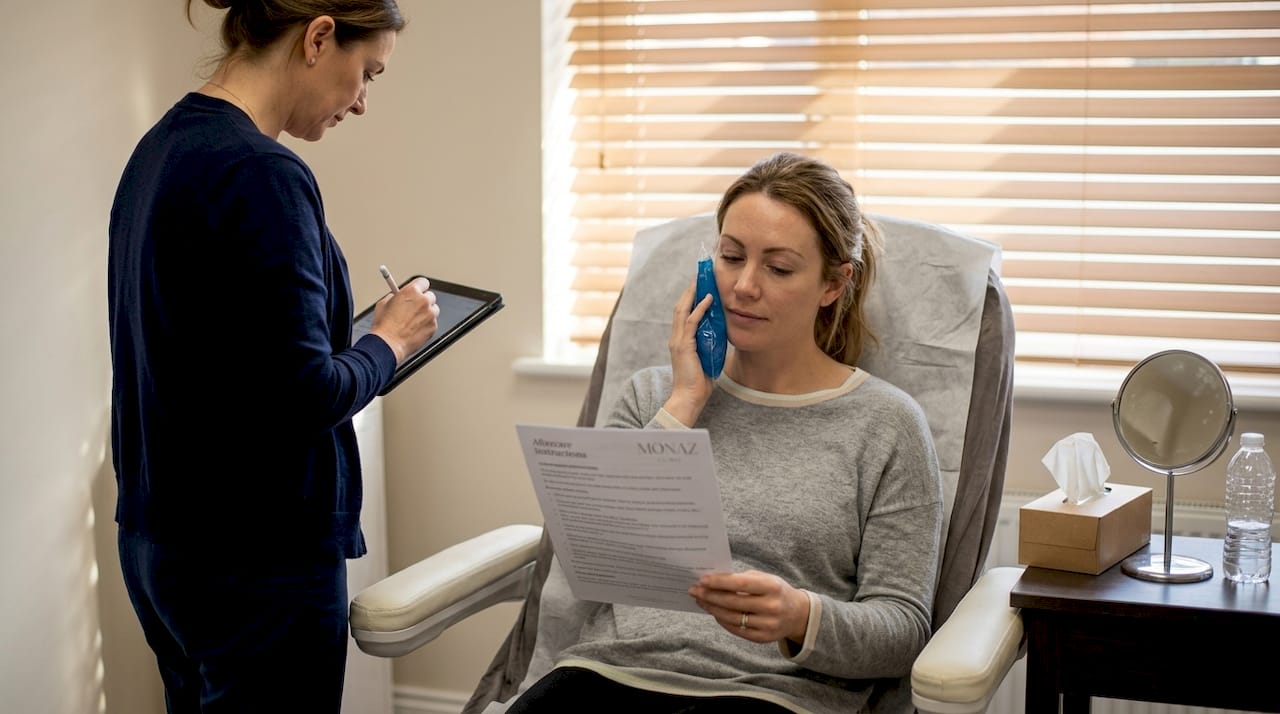
You will receive clear written aftercare instructions before you go home. Following these carefully makes a genuine difference to your results and your recovery. NHS guidance confirms that a thorough consultation includes advice on aftercare and self-management, so you always know when to contact the clinic.
Typical aftercare steps following injectable treatments:
- Avoid touching or applying pressure to the treated area for at least 24 hours.
- Stay out of direct sunlight and avoid saunas or steam rooms for 48 hours.
- Avoid strenuous exercise for 24 to 48 hours post-treatment.
- Keep the area clean and do not apply heavy makeup for the first 24 hours.
- Stay well hydrated, particularly after skin booster or filler treatments.
- Contact the clinic immediately if you notice unusual pain, skin colour changes, or vision disturbances.
Most women return to their normal social activities within 24 to 72 hours. Some treatments, such as Profhilo or microneedling, may involve slightly more visible redness for a few days, but this settles quickly.
Pro Tip: Take a photograph of the treated area before you leave the clinic and again at 48 hours. This gives both you and your practitioner a clear reference point if you have any questions about your results.
For detailed guidance, aftercare tips for fillers covers what to expect day by day. If you’re wondering about longevity, understanding how long dermal fillers last helps you plan your next appointment with confidence.
The truth few talk about: What ‘clinic experience’ really means
There is something the aesthetics industry rarely says plainly: the quality of your experience is not measured by how quickly you walk out with results. It is measured by how thoroughly you were listened to, how honestly risks were explained, and how supported you felt throughout.
Social media before-and-after images show transformations. They rarely show the 45-minute consultation, the medical history form, the cooling-off period, or the follow-up call at day three. Those invisible steps are where genuine expertise lives.
A practitioner who slows down, asks careful questions, and occasionally advises you to wait or reconsider is not being obstructive. They are doing their job well. Caution is not a barrier to good results. It is the foundation of them.
Unregulated pop-up clinics and social media-driven practitioners cut corners precisely in these areas. The patient pays the price, sometimes literally, when complications arise and there is no medical support available. True clinical standards prioritise your time, your safety, and your right to make an informed decision without pressure.
Discover safe, supportive facial rejuvenation in London
If this guide has helped clarify what a high-standard aesthetic journey actually involves, you are already better prepared than most first-time visitors to London clinics.
At Monaz Clinic, 96 Harley Street, every appointment begins with a complimentary, no-pressure consultation led by Mrs Mona Zirak and overseen by a GMC-registered doctor. We explain your options clearly, discuss realistic outcomes, and never rush your decision. Whether you’re curious about wrinkle softening costs, considering treating forehead lines, or exploring dermal fillers prices, we’re here to guide you with honesty and expertise. Reach out to us whenever you feel ready.
Frequently asked questions
How long does a consultation at a London clinic usually take?
A first consultation generally lasts between 30 and 45 minutes, allowing enough time for a full assessment and discussion of your skin, goals, and any questions you have.
Can I have a treatment on the same day as my consultation?
Ethical clinics strongly advise a cooling-off period, so same-day treatments are rare for first-time visitors and not considered best practice.
What are the most common side effects after non-surgical treatments?
Mild redness, swelling, and bruising are the most common side effects and usually resolve within a few days without any intervention.
What qualifications should I look for in a practitioner?
Look for GMC, GDC, or NMC registration alongside accreditations such as Save Face, BCAM, or JCCP, all of which you can verify independently before booking.
Is aftercare really important for non-surgical aesthetic treatments?
Yes. Proper aftercare reduces complications and supports safe healing. Your practitioner should provide clear aftercare advice before you leave the clinic.