




Discover when to start facial treatments with our step-by-step guide for ladies in London. Achieve natural, radiant results tailored to your needs.

Over 60 percent of people admit they feel unsure about how to begin their facial aesthetics journey. With treatment options growing every year, knowing where to start can make a dramatic difference in your results. Building the right plan begins with understanding your own needs and timelines. Whether you want brighter skin, smoother texture, or youthful glow, this step-by-step guide breaks down every detail so you can make confident, informed choices at every stage.
Table of Contents
- Step 1: Identify Personal Skin Goals And Concerns
- Step 2: Research Recommended Facial Treatments By Age
- Step 3: Consult A Qualified Facial Aesthetics Practitioner
- Step 4: Evaluate Lifestyle And Seasonal Timing
- Step 5: Schedule And Prepare For Your First Treatment
- Step 6: Monitor Results And Plan Future Sessions
Quick Summary
| Key Point | Explanation |
|---|---|
| 1. Identify your skin goals and concerns | Understand your unique skin characteristics to develop a personalized treatment plan. |
| 2. Research age-appropriate treatments | Investigate suitable skincare approaches for each decade to maximize effectiveness. |
| 3. Consult a qualified practitioner | Ensure you choose a well-trained professional to receive safe and effective treatments. |
| 4. Consider lifestyle and seasonal timing | Evaluate your schedule and seasonal impact to plan treatments for optimal results. |
| 5. Monitor results and plan future sessions | Track your skin’s progress to adapt treatments according to changing needs and goals. |
Step 1: Identify personal skin goals and concerns
Identifying your personal skin goals and concerns is the foundation of any successful skincare strategy. By understanding your unique skin characteristics and objectives, you can create a targeted treatment approach that delivers meaningful results.
Begin by conducting a comprehensive self assessment of your skin. According to AAD, this process involves examining several key factors. First, determine your primary skin concerns such as uneven texture, fine lines, hyperpigmentation, acne, or general signs of aging. Take time to observe your skin in natural light and note specific areas that trouble you.

As recommended by NHS Healthier Together, consulting a professional can provide deeper insights into your skin’s unique needs.
 Consider scheduling a consultation with a skincare expert who can perform a detailed skin analysis. During this assessment, they can help you identify underlying issues that might not be immediately visible and recommend personalized treatment strategies.
Pro tip: Document your skin observations with photographs taken in consistent lighting. This allows you to track changes and improvements over time and provides valuable reference points for your skincare professional.
The next step involves translating these observations into clear, actionable skin goals. Whether you want to reduce acne scarring, improve overall skin tone, or address specific aging concerns, having a precise vision will guide your treatment journey.
Step 2: Research recommended facial treatments by age
Researching recommended facial treatments by age helps you understand which skincare approaches are most appropriate for your specific life stage. This targeted research ensures you invest in treatments that genuinely address your skin’s evolving needs.
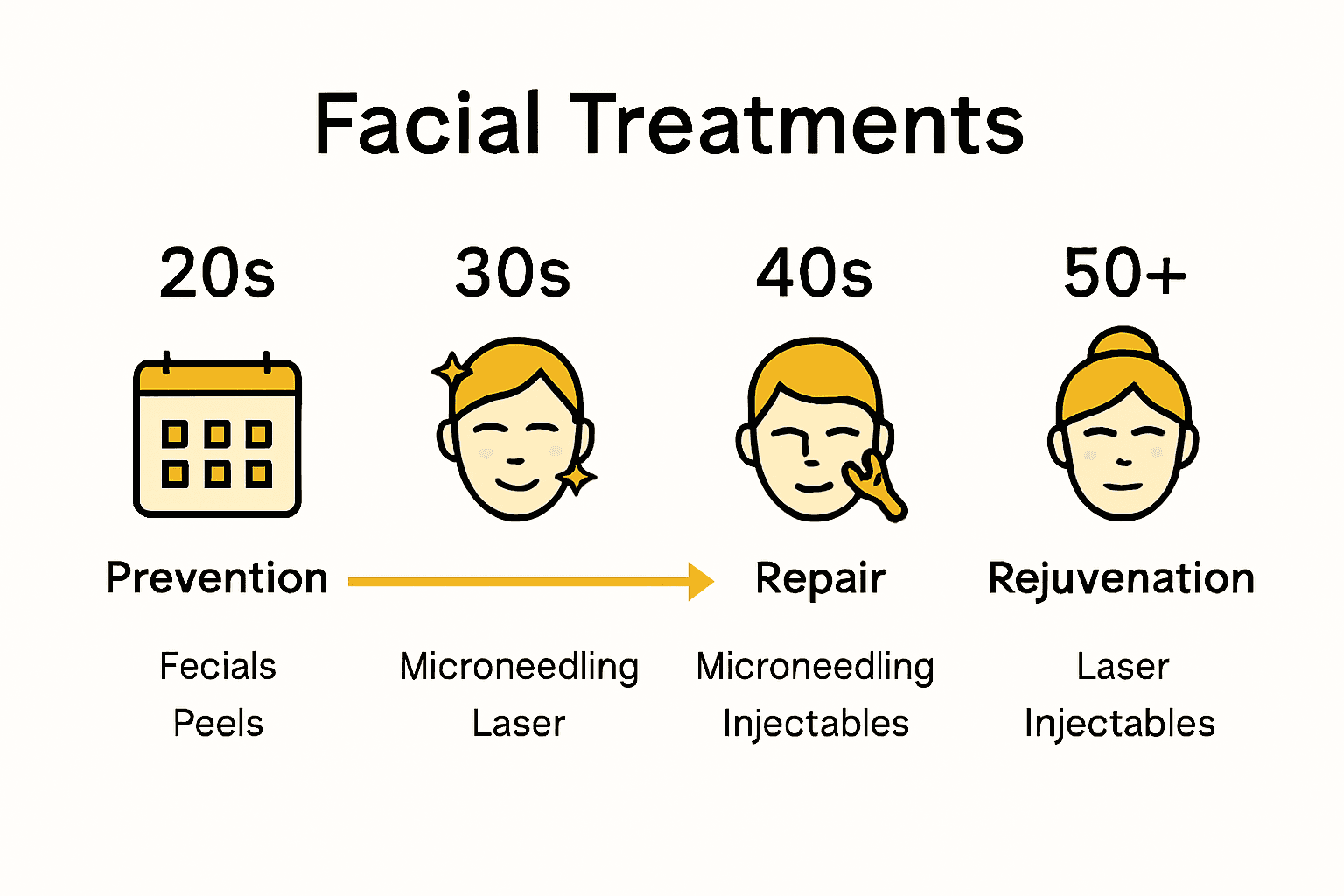
According to AAD, different decades require distinct skincare strategies. In your 20s, focus on preventative treatments that protect and maintain skin health. This might include gentle hydrating treatments, basic chemical peels, and comprehensive sun protection protocols. As AAD notes for individuals in their 40s and 50s, the focus shifts towards more intensive rejuvenation and repair treatments.
When researching treatments, consider consulting professional resources like most popular facial treatments that provide age appropriate recommendations. Look for treatments that address your specific skin concerns while considering factors like recovery time, potential side effects, and long term skin health.
Pro tip: Create a comprehensive timeline of potential treatments for each decade. This proactive approach allows you to plan and budget for skincare investments strategically.
Remember that while research provides valuable guidance, a personalised consultation with a skincare professional will offer the most accurate recommendations tailored to your unique skin profile.
Step 3: Consult a qualified facial aesthetics practitioner
Consulting a qualified facial aesthetics practitioner is a critical step in ensuring safe, effective, and personalised treatment. This consultation will help you understand the most appropriate approaches for your unique skin needs and aesthetic goals.
According to NHS, selecting the right practitioner requires careful research and verification. Begin by checking professional credentials, including medical qualifications, specific aesthetic training certifications, and current professional memberships. Understanding the role of consultation can provide deeper insights into what makes a consultation comprehensive and trustworthy.
The UK Government emphasizes the legal requirements for practitioners administering aesthetic treatments. Look for professionals who can demonstrate current licensing, ongoing training, and a transparent approach to potential risks and outcomes.
Pro tip: Prepare a list of questions about the practitioner’s experience, treatment approaches, and potential side effects. A reputable professional will welcome open dialogue and provide clear, detailed answers.
Remember that a good consultation is a two-way conversation. Your comfort, understanding, and confidence in the practitioner are just as important as their technical qualifications.
Step 4: Evaluate lifestyle and seasonal timing
Evaluating your lifestyle and understanding seasonal impacts on skin health are crucial steps in planning effective facial treatments. This strategic approach helps you time your aesthetic interventions for optimal results and minimise potential complications.
According to AAD, lifestyle factors play a significant role in skin health and treatment effectiveness. Consider your work schedule, social commitments, and potential recovery times when planning treatments. AAD further emphasizes how seasonal changes can dramatically influence skin condition and treatment outcomes.
Winter and autumn typically offer ideal conditions for more intensive facial treatments due to reduced sun exposure and lower outdoor activity levels. During these seasons, your skin experiences less environmental stress, allowing for better healing and reduced risk of pigmentation issues.
Pro tip: Create a treatment calendar that accounts for your personal and professional commitments. Schedule more invasive treatments during periods of minimal social and work obligations to ensure comfortable recovery.
Remember that your unique lifestyle rhythm will ultimately determine the most suitable timing for your facial aesthetic treatments. A personalised approach always yields the best results.
Step 5: Schedule and prepare for your first treatment
Scheduling and preparing for your first facial treatment requires careful planning and informed decision making. This step transforms your aesthetic goals from concept to practical reality, ensuring a smooth and successful experience.
According to NHS, preparation begins with a comprehensive consultation and understanding the entire treatment process. Contact the clinic to schedule a preliminary appointment where you can discuss your specific goals, review potential treatment options, and understand the expected outcomes. How to Choose Facial Aesthetic Treatments can provide additional guidance on making informed decisions.
The UK Government emphasizes the importance of being fully informed about legal and medical considerations. Prior to your treatment, compile a detailed medical history, current medications, and any skin sensitivities to discuss with your practitioner.
Pro tip: Schedule your treatment during a period when you can allow for proper recovery and minimal stress. Avoid booking treatments immediately before significant social or professional events.
Remember that thorough preparation is the foundation of a successful aesthetic treatment experience.
Step 6: Monitor results and plan future sessions
Monitoring your facial treatment results and strategically planning future sessions is crucial for maintaining optimal skin health and achieving your long-term aesthetic goals. This ongoing process ensures you continue to see progressive improvements and address any emerging skin concerns.
According to NHS, post-procedure monitoring involves carefully assessing treatment outcomes and understanding potential changes in your skin. Document your results through photographs taken in consistent lighting, noting texture, tone, and any subtle transformations. Understanding the Role of Consultation can provide additional insights into tracking your aesthetic journey.
The UK Government emphasizes the importance of professional guidance in planning subsequent treatments. Schedule a follow up consultation to review your results, discuss any concerns, and develop a personalised treatment roadmap that adapts to your skin’s evolving needs.
Pro tip: Create a detailed treatment journal documenting each session, including observations, practitioner recommendations, and your personal skin response. This record becomes an invaluable tool for future aesthetic planning.
Remember that skin health is a dynamic journey. Remain flexible and open to adjusting your treatment strategy as your skin and aesthetic goals evolve.
Discover Your Perfect Timing for Facial Treatments at Monaz Clinic
Understanding when to start facial treatments can feel overwhelming as you navigate personal skin goals and changing needs. Whether you are focused on preventing early signs of ageing or seeking rejuvenation tailored to your current stage, it is natural to want expert guidance that respects your unique lifestyle and skin concerns. This article highlights the importance of identifying your skin goals, researching age-appropriate treatments, and consulting a qualified professional to ensure safe and effective results.
Take control of your skin journey today by exploring our expert advice in the tips – Monaz Clinic | Facial Aesthetic Clinic in London section. At Monaz Clinic, set in a historic building on Harley Street, we provide carefully personalised, non-surgical treatments for women led by medically qualified practitioners. Book your complimentary consultation now at Monaz Clinic and start revealing your best self with confidence and care.
Frequently Asked Questions
When is the right time to start facial treatments?
Starting facial treatments can vary based on your skin concerns and goals. Generally, it’s ideal to begin in your late teens or early twenties to focus on prevention. Assess your skin type and concerns to decide if you’re ready to start treatments now.
How do I identify my skin goals before starting treatments?
To identify your skin goals, conduct a thorough self-assessment of your skin. Look for specific concerns like acne, uneven texture, or signs of aging, then document these findings to clarify your treatment objectives.
What should I expect during my first consultation for facial treatments?
During your first consultation, expect to discuss your skin concerns, goals, and medical history in detail with a qualified practitioner. Prepare a list of questions about potential treatment options and share any relevant skin sensitivities.
How can I track the results of my facial treatments over time?
Tracking your treatment results involves documenting your skin’s progress through consistent photographs and notes. Take pictures under the same lighting conditions every few weeks to observe changes and improvements in texture and tone.
What lifestyle factors should I consider when planning facial treatments?
Consider your work schedule, social life, and seasonal changes when planning facial treatments. For example, scheduling more intensive treatments in winter can help minimize recovery stress due to less outdoor activity and sunlight exposure.
How often should I plan follow-up sessions after my initial treatment?
Follow-up sessions vary based on individual skin responses but generally should be scheduled every 3 to 6 months. Monitor your skin’s reaction to treatment and consult with your practitioner to develop a personalized follow-up plan.
Recommended
- How to Choose Facial Aesthetic Treatments for Stunning Results – Monaz Clinic London
- How to Choose Facial Aesthetic Treatments for Stunning Results – Monaz Clinic London
- 7 Most Popular Facial Treatments for Radiant Skin – Monaz Clinic London
- 7 Most Popular Facial Treatments for Radiant Skin – Monaz Clinic London
- How to Embrace Natural Beauty Naturally for Sensitive Skin – Pure Light Botanical Beauty