



Why treat fine lines? This comprehensive guide covers causes, proven treatments, aesthetic benefits, and safety tips for women in London.
Did you know that over 80 percent of visible skin aging is caused by factors outside of genetics? Fine lines are often the first signs women notice as their skin starts to change, sometimes as early as their late twenties. These small creases reflect deeper shifts happening within the skin. By understanding what triggers fine line formation and how different treatments work, women can take steps to maintain smoother, more youthful skin for longer.
Table of Contents
- Understanding Fine Lines and Their Causes
- Common Fine Line Treatments for Women
- Benefits of Early Fine Line Intervention
- Risks and Safety Considerations
- Comparing Fine Line Treatments and Alternatives
Key Takeaways
| Point | Details |
|---|---|
| Understanding Fine Lines | Fine lines are early indicators of skin aging caused by intrinsic factors and accelerated by environmental influences like UV exposure and smoking. |
| Importance of Early Intervention | Proactive skincare strategies can significantly slow the progression of fine lines by preserving skin structure and hydration. |
| Diverse Treatment Options | Non-surgical treatments, including photodynamic therapy and advanced topical solutions, offer effective, personalized approaches to manage fine lines. |
| Safety Considerations | Thorough consultations with professionals, including skin assessments and understanding treatment risks, are essential for safe and effective fine line intervention. |
Understanding Fine Lines and Their Causes
Fine lines represent subtle changes in skin texture that emerge as natural signs of aging, reflecting complex biological processes happening beneath the surface. These delicate surface markers are not simply cosmetic concerns but intricate signals revealing how our skin transforms over time.
According to research from University of Manchester, intrinsic aging fundamentally alters skin’s structural composition, leading to the gradual breakdown of elastic fibers. This microscopic transformation generates those initial fine lines women begin noticing in their late twenties and early thirties.
External environmental factors dramatically accelerate fine line development. Research Online highlights two primary external catalysts for premature skin aging: UV radiation and smoking. Prolonged sun exposure breaks down collagen and elastin proteins, causing skin to lose its natural elasticity and resilience. Smoking further compounds this damage by restricting blood flow and introducing harmful toxins that degrade skin’s regenerative capabilities.
Key contributing factors to fine line formation include:
- Decreased collagen production
- Reduced skin hydration
- Repeated facial muscle movements
- Genetic predisposition
- Hormonal changes
Understanding these underlying mechanisms empowers women to make informed skincare decisions, potentially slowing fine line progression through targeted prevention and strategic treatments. Fine Line Treatment: Everything You Need to Know provides additional insights into managing these early signs of skin aging effectively.
Common Fine Line Treatments for Women
Non-surgical treatments offer sophisticated approaches for addressing fine lines, providing women with diverse options to maintain youthful skin without invasive procedures. Modern aesthetic medicine has dramatically expanded treatment possibilities, enabling personalised solutions tailored to individual skin concerns.
Photodynamic therapy emerges as an innovative approach in fine line management. According to research from University of Manchester, this advanced treatment technique shows promising potential for skin rejuvenation. The therapy utilises specific light wavelengths to stimulate collagen production and promote cellular renewal, effectively targeting the underlying structural changes that contribute to fine line formation.
Topical treatments represent another critical strategy for fine line reduction. Research Information highlights the importance of targeted skincare interventions. These treatments typically incorporate scientifically formulated ingredients designed to enhance skin hydration, support collagen synthesis, and protect against environmental damage.
Key fine line treatment approaches include:
Here’s a comparison of common fine line treatment approaches:
| Treatment Type | Key Benefits | Potential Side Effects |
|---|---|---|
| Dermal fillers | Immediate smoothing Volume restoration | Bruising Swelling |
| Micro-needling | Collagen boost Minimal downtime | Temporary redness Mild discomfort |
| Chemical peels | Improved texture Brightening | Peeling Temporary sensitivity |
| Botulinum toxin injections | Reduced muscle movement Smoothens lines | Bruising Muscle weakness |
| Photodynamic therapy | Stimulates renewal Non-invasive | Redness Photosensitivity |
| Advanced topical skincare | Hydration Preventative effect | Irritation Allergic reactions |
- Dermal fillers
- Micro-needling
- Chemical peels
- Botulinum toxin injections
- Advanced topical skincare formulations
When considering fine line treatments, consulting with a professional becomes paramount. How to Treat Crow’s Feet Naturally can provide additional insights into targeted treatment strategies for specific facial areas, helping women make informed decisions about their skincare journey.
Benefits of Early Fine Line Intervention
Proactive skincare represents a strategic approach to maintaining youthful skin, with early intervention offering significant long-term advantages. By addressing fine lines at their initial stages, women can potentially slow down the visible aging process and preserve their skin’s natural resilience and appearance.
Research from the University of Manchester emphasizes the critical importance of targeting elastic fibers during the early stages of skin aging. The study reveals that interventions implemented before significant structural changes occur can dramatically mitigate the progression of fine lines and wrinkles. This proactive approach allows for more effective prevention rather than attempting to reverse extensive damage later.
Photodynamic therapy emerges as a promising early intervention technique. According to Manchester Research, this innovative treatment shows remarkable potential in preventing skin aging markers. By stimulating cellular regeneration and supporting collagen production early, women can maintain skin elasticity and reduce the likelihood of deep, permanent wrinkle formation.
Key benefits of early fine line intervention include:
- Preserving natural skin structure
- Preventing accelerated collagen breakdown
- Maintaining skin hydration and elasticity
- Reducing long-term aesthetic aging signs
- Boosting overall skin confidence
How to Treat Crow’s Feet Naturally offers additional insights into targeted early intervention strategies, helping women understand the nuanced approaches to maintaining youthful, radiant skin.
Risks and Safety Considerations
Aesthetic treatments require careful evaluation of potential risks and safety factors, ensuring women make informed decisions about their skincare interventions. Understanding the potential complications and contraindications is crucial for maintaining both skin health and personal well-being.
Research from the University of Manchester highlights the importance of comprehensive safety assessments in aesthetic treatments. The study emphasizes that while photodynamic therapy shows promising results, patients must be thoroughly screened for potential side effects, including temporary skin sensitivity, redness, and potential photosensitivity reactions.
Systematic review findings from Bristol Research Information underscore the critical nature of understanding treatment-specific risks. Different fine line interventions carry unique safety considerations, ranging from potential allergic reactions to temporary skin irritation or more complex physiological responses.
Key safety considerations for fine line treatments include:
- Individual skin sensitivity assessment
- Potential allergic reaction screening
- Comprehensive medical history review
- Understanding potential side effect profiles
- Post-treatment care and monitoring
How to Treat Crow’s Feet Naturally provides additional guidance on navigating the complex landscape of aesthetic treatments, emphasizing the importance of professional consultation and personalized approach to skin health.
Comparing Fine Line Treatments and Alternatives
Aesthetic interventions for fine lines represent a sophisticated spectrum of treatments, each offering unique advantages and considerations for women seeking to preserve their skin’s youthful appearance. Understanding the nuanced differences between various approaches enables more informed decision-making about personal skincare strategies.
Research from the University of Manchester provides compelling insights into treatment comparisons, particularly highlighting photodynamic therapy’s potential as an alternative to traditional fine line interventions. The study reveals that innovative light-based treatments can offer comparable, and sometimes superior, results to conventional methods, with potentially fewer side effects and more targeted cellular regeneration.
A systematic review from Bristol Research Information offers a comprehensive framework for evaluating treatment efficacy. By comparing multiple approaches, the research underscores the importance of personalized treatment plans that consider individual skin characteristics, age, and specific fine line manifestations.
Key treatment comparison categories include:
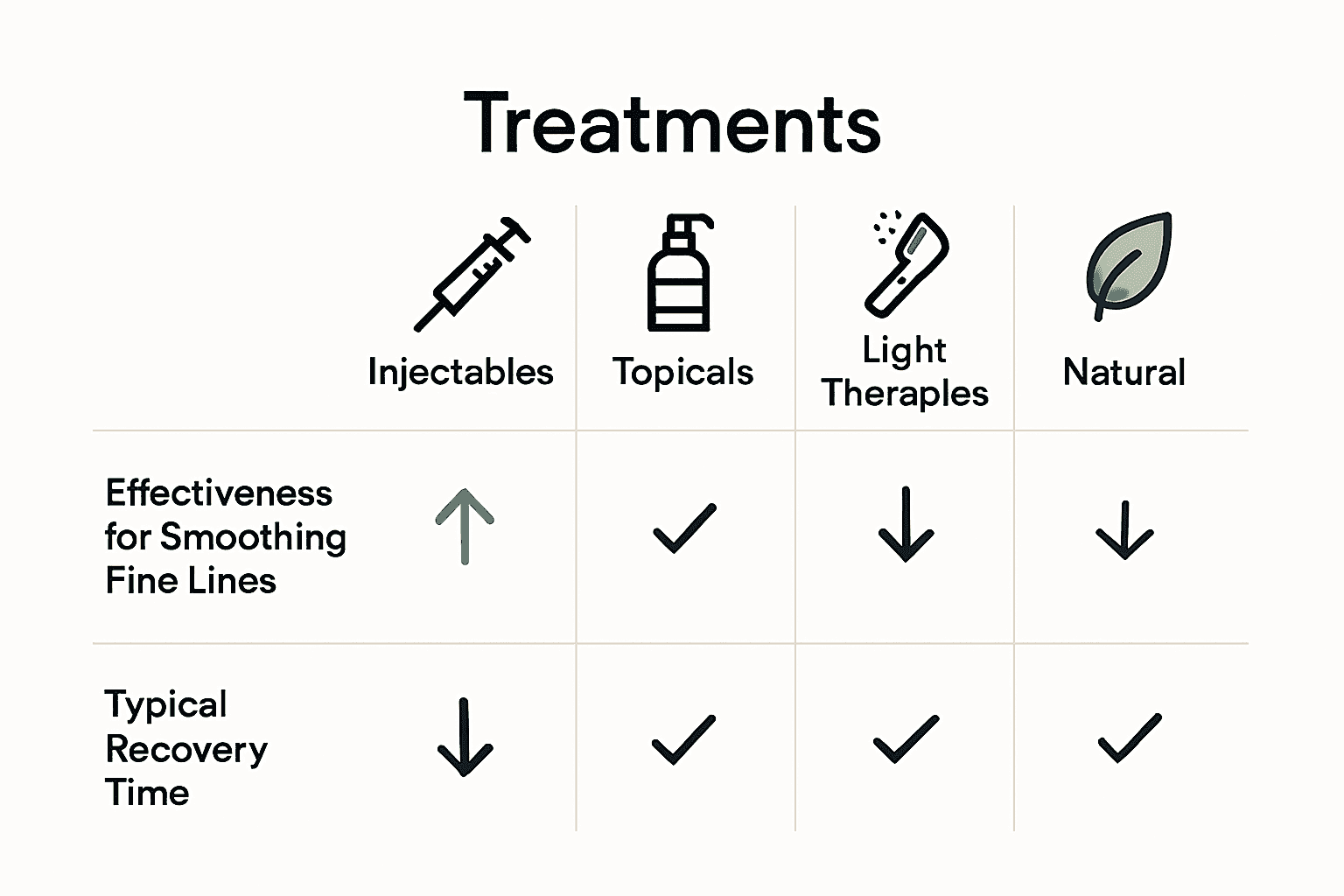
- Invasive surgical procedures
- Non-invasive injectable treatments
- Topical skincare interventions
- Light and energy-based therapies
- Natural holistic approaches
7 Top Non-Invasive Treatments for Facial Aesthetics provides additional context for understanding the evolving landscape of aesthetic treatments, helping women navigate the complex world of fine line interventions with confidence and clarity.
Reveal Your Best Self by Taking Control of Fine Lines Today
Fine lines are subtle signals of your skin’s changing needs. They reflect the natural ageing process and external stresses like sun exposure and lifestyle factors that can accelerate visible signs of ageing. If you recognise the frustration of early fine lines or desire to maintain your skin’s natural resilience and youthful appearance, Monaz Clinic offers expert solutions tailored just for you. From advanced non-surgical treatments to personalised skincare advice, we understand how important it is to address these concerns with care and precision.

Explore our tips – Monaz Clinic | Facial Aesthetic Clinic in London to learn practical steps and treatments designed to support your skin at every stage. Our dedicated team led by medically qualified professionals ensures each treatment delivers natural-looking results, helping you stay confident in your skin. Don’t wait for lines to deepen and cause more concern. Visit Monaz Clinic now to book a complimentary consultation and start your journey towards smoother, healthier skin with personalised expert care.
Frequently Asked Questions
What causes fine lines to develop on my skin?
Fine lines are primarily caused by intrinsic aging, which leads to the breakdown of collagen and elastic fibers, along with external factors like UV exposure and smoking that accelerate skin aging.
What are some effective treatments for fine lines?
Effective treatments include dermal fillers, micro-needling, chemical peels, botulinum toxin injections, photodynamic therapy, and advanced topical skincare formulations, each with unique benefits and potential side effects.
Why is early intervention important for treating fine lines?
Early intervention can slow down the aging process by preserving skin structure, preventing collagen breakdown, maintaining hydration and elasticity, and reducing the appearance of deeper wrinkles later on.
Are there any risks associated with fine line treatments?
Yes, aesthetic treatments can have risks such as temporary skin irritation, allergic reactions, and the need for post-treatment care. It’s essential to consult with a professional to assess individual sensitivities and medical history.