




How long fillers last explained. Learn about types, how longevity varies by area, key factors affecting results, and tips to maintain a youthful look.

Fine lines around the eyes and mouth often show up before we expect, leaving many women wondering about lasting solutions for smoother, youthful skin. In Central London, facial fillers have become a trusted approach for restoring lost volume and definition without surgery. With options like hyaluronic acid and calcium hydroxyapatite, women can experience both instant enhancement and gradual collagen stimulation. This guide explains how fillers work, compares different types, and explores how long results last in areas like lips and cheeks.
Table of Contents
- What Are Fillers And How Do They Work?
- Types Of Facial Fillers And Their Longevity
- Longevity By Area: Lips, Cheeks, And More
- What Influences How Long Fillers Last
- Maximising Results And Planning Top-Ups
Key Takeaways
| Point | Details |
|---|---|
| Understanding Fillers | Dermal fillers are non-surgical treatments that restore volume and enhance facial contours, using various materials like Hyaluronic Acid and Calcium Hydroxyapatite. |
| Types and Longevity | Different fillers cater to specific aesthetic needs, with durations varying from 6 months to 2 years, depending on the filler type and treatment area. |
| Factors Influencing Longevity | The effectiveness of fillers is affected by metabolic rate, lifestyle choices, and the practitioner’s skill, highlighting the importance of personalised approaches. |
| Maintenance Tips | To maximise results, schedule regular top-ups every 6-12 months and adhere to a consistent skincare routine post-treatment. |
What Are Fillers And How Do They Work?
Dermal fillers represent an innovative non-surgical approach to facial rejuvenation, designed to restore lost volume and enhance natural facial contours. Injectable fillers are specialised substances strategically placed beneath the skin to address age-related volume loss, smooth wrinkles, and redefine facial features.
These cosmetic treatments utilise different materials to achieve specific aesthetic goals. The most common types include hyaluronic acid (HA), which attracts and retains moisture, calcium hydroxyapatite (CaHA) that stimulates collagen production, and synthetic polymers like poly-L-lactic acid (PLLA). Each filler type works uniquely: HA fillers provide immediate volume, CaHA gradually improves skin texture, while PLLA stimulates long-term collagen regeneration.
The injection process involves carefully placing these volumising substances in targeted facial areas such as cheeks, temples, lips, and around the mouth. Dermal fillers can address multiple concerns including fine lines, deep wrinkles, lip enhancement, and facial asymmetry. Skilled practitioners assess individual facial anatomy to determine the most appropriate filler type and injection technique, ensuring natural-looking results that respect each woman’s unique facial structure.
Pro tip: Always consult a medically qualified professional who can assess your specific facial characteristics and recommend the most suitable filler treatment for your aesthetic goals.
Types Of Facial Fillers And Their Longevity
Facial fillers represent a diverse range of cosmetic treatments, each offering unique characteristics and duration of effectiveness. Dermal filler types can be categorised based on their primary ingredients, mechanism of action, and anticipated longevity, providing tailored solutions for different aesthetic concerns.
The most prevalent types include hyaluronic acid (HA) fillers, which provide instant volume and hydration, typically lasting between 6 to 18 months. Calcium hydroxyapatite (CaHA) fillers stimulate collagen production and improve skin texture, with results persisting around 12 to 18 months. Hybrid fillers combining HA and CaHA offer both immediate volumising effects and gradual collagen regeneration. More specialised options like poly-L-lactic acid (PLLA) fillers induce long-term collagen growth, with effects potentially extending up to two years.
FDA-approved dermal fillers range from temporary to semi-permanent solutions. Polymethyl methacrylate (PMMA) represents a more permanent option, consisting of microspheres suspended in collagen that provide enduring structural support. Each filler type demands careful consideration of individual skin characteristics, desired aesthetic outcomes, and potential longevity expectations.
Here is a comparison of the main dermal filler types and their ideal uses:
| Filler Type | Best For | Key Benefit |
|---|---|---|
| Hyaluronic acid (HA) | Lips, fine lines | Instant volume boost |
| Calcium hydroxyapatite | Cheeks, folds | Collagen stimulation |
| Poly-L-lactic acid | Hollow areas | Long-term regeneration |
| PMMA | Jawline, deep folds | Permanent support |
Pro tip: Consult a qualified aesthetic professional who can comprehensively assess your unique facial structure and recommend the most appropriate filler type tailored to your specific aesthetic goals and skin requirements.
Longevity By Area: Lips, Cheeks, And More
Facial fillers demonstrate remarkable versatility, with their effectiveness and duration varying significantly depending on the specific area of treatment. Dermal filler longevity is intrinsically linked to the unique characteristics of each facial region, influenced by factors such as skin thickness, muscle movement, and metabolic activity.
In areas with significant structural support like cheeks and jawlines, thicker fillers can provide more enduring results, typically lasting between 12 to 24 months. These regions accommodate deeper injections and experience less constant movement, allowing fillers to maintain their volumising effect for extended periods. Conversely, high-movement areas such as the lips undergo more rapid filler metabolisation. Lip fillers generally last between 6 to 12 months, reflecting the constant dynamic muscle activity from speaking, eating, and expressing emotions.

Understanding the nuanced longevity of fillers across different facial zones helps patients set realistic expectations. Regions like temples, nasolabial folds, and under-eye areas each present unique characteristics that impact filler persistence. Factors such as individual metabolism, lifestyle, skincare routine, and the specific type of filler used will ultimately determine the precise duration of aesthetic enhancements.
Pro tip: Schedule a comprehensive consultation with an experienced aesthetic professional who can provide personalised insights into how different facial areas might respond to specific filler treatments.
What Influences How Long Fillers Last
The longevity of dermal fillers is not a straightforward equation, but rather a complex interaction of multiple physiological and lifestyle factors. Filler duration depends on a sophisticated interplay between individual metabolic processes, injection techniques, and personal health characteristics.
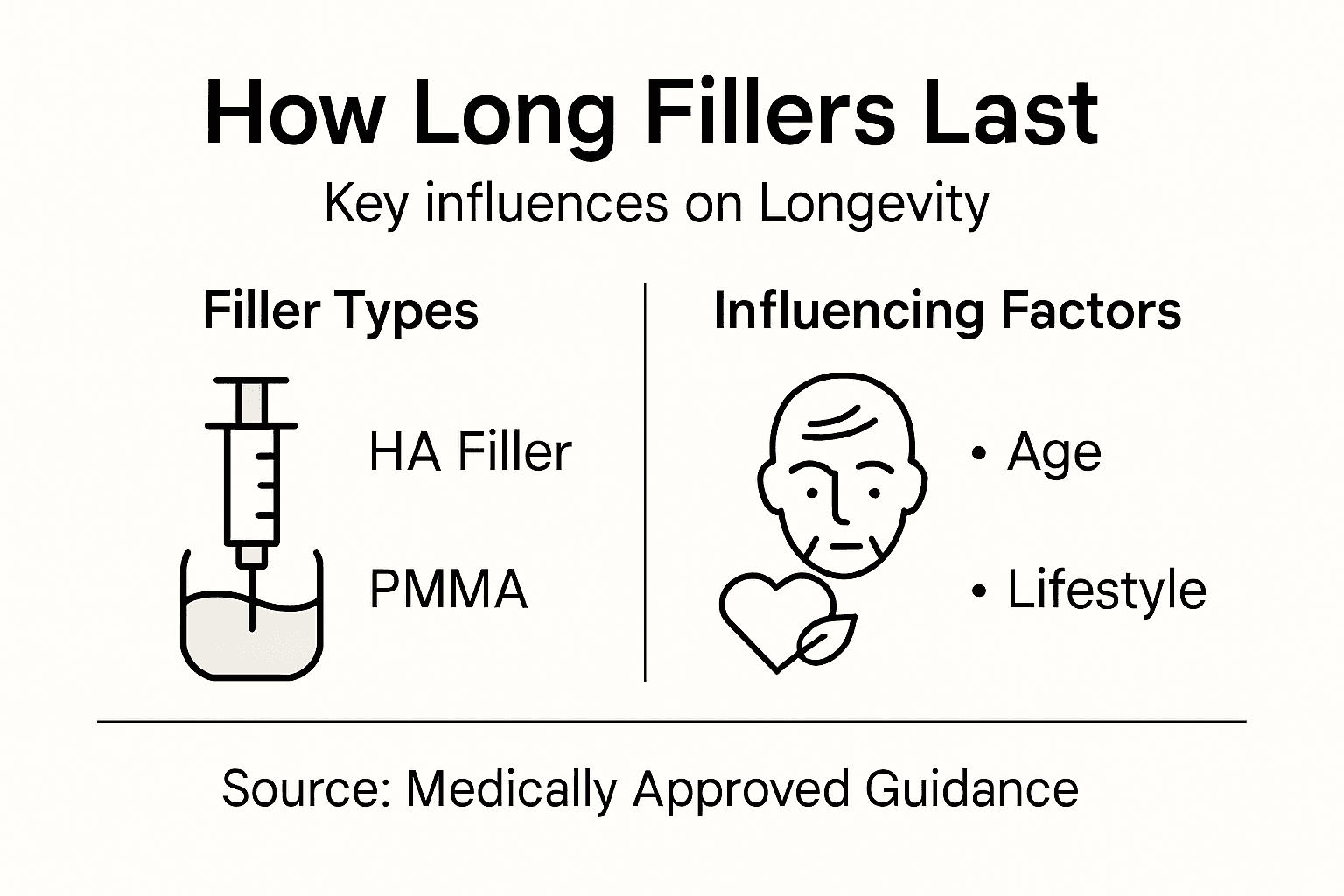
Key influencing factors include the specific molecular composition of the filler, which determines how quickly it integrates with body tissues. Metabolic rate plays a crucial role, with faster metabolisms potentially breaking down fillers more rapidly. Lifestyle choices significantly impact filler persistence: smoking, excessive sun exposure, high-intensity physical activity, and poor skincare routines can accelerate filler degradation. The skill of the aesthetic practitioner is equally paramount, as precise injection depth and technique can dramatically extend the effective duration of the treatment.
Individual physiological variations create a unique response profile for each woman. Factors such as age, hormonal balance, skin elasticity, and overall health contribute to how long fillers maintain their volumising effect. Some women may find their fillers lasting substantially longer or shorter than average, underscoring the importance of personalised aesthetic approaches. Complementary treatments like strategic applications can potentially synergise with fillers to enhance and prolong aesthetic results.
Factors below illustrate what can shorten or extend filler results:
| Influencing Factor | Effect on Longevity | Practical Advice |
|---|---|---|
| Fast metabolism | Reduces filler lifespan | Consider more frequent top-ups |
| Sun exposure | Accelerates product breakdown | Use high-factor sunscreen |
| Precise injection technique | Extends duration | Choose an expert practitioner |
| Consistent skincare | Maintains results | Follow tailored regimen |
Pro tip: Maintain a consistent skincare routine and discuss your specific lifestyle factors with your aesthetic professional to develop a tailored approach that maximises your filler longevity.
Maximising Results And Planning Top-Ups
Dermal filler maintenance strategies require a sophisticated approach that balances professional expertise with personal skincare commitment. Achieving optimal and sustained aesthetic results goes beyond the initial treatment, demanding strategic planning and ongoing care.
The cornerstone of maximising filler longevity involves selecting precise injection techniques and understanding individual skin response. Advanced practitioners utilise specialised methods such as cannula injections, which minimise tissue trauma and promote more uniform product distribution. Strategic top-up scheduling, typically every 6 to 12 months, allows for gradual volume restoration while maintaining a natural appearance. Aftercare protocols play a critical role: patients must protect treated areas from excessive pressure, limit intense physical activities, and shield skin from prolonged sun exposure immediately following treatment.
Individual physiological factors significantly influence filler maintenance. Age, skin elasticity, metabolic rate, and lifestyle choices contribute to how long aesthetic enhancements remain effective. Optimal filler results emerge from a collaborative approach between the patient and aesthetic professional, incorporating personalised treatment plans that adapt to changing skin characteristics and aesthetic goals.
Pro tip: Create a comprehensive skincare diary documenting your filler treatments, noting specific areas treated, product used, and individual healing responses to help your aesthetic professional develop increasingly refined future treatments.
Take Control of Your Dermal Filler Journey with Expert Care
Understanding how long fillers last and the factors that influence their longevity can feel overwhelming. If you are looking for natural-looking results that respect your unique facial anatomy and want to maximise the benefits of your treatment, Monaz Clinic offers personalised solutions designed just for you. We focus on tailored approaches that consider your lifestyle, skin type, and aesthetic goals to ensure your fillers maintain their optimal effect for as long as possible.

Discover how our medically qualified team, led by Mrs Mona Zirak, can help you reveal your best self with precision and care at our Harley Street clinic. Book your complimentary consultation today at Monaz Clinic and explore our range of non-surgical cosmetic treatments designed exclusively for women. Take the first step towards confidently planning your filler top-ups and maintenance with experts who understand what every woman should know about dermal filler longevity.
Frequently Asked Questions
How long do different types of fillers typically last?
Most fillers vary in longevity based on their composition. Hyaluronic acid (HA) fillers last between 6 to 18 months, calcium hydroxyapatite (CaHA) fillers last about 12 to 18 months, while poly-L-lactic acid (PLLA) fillers can extend effects up to two years. Permanent options like PMMA fillers provide lasting structural support.
What factors influence how long fillers last?
The longevity of fillers is influenced by multiple factors including skin characteristics, metabolic rate, lifestyle choices (such as sun exposure and smoking), and the skill of the practitioner. Individual physiological responses and the specific filler used also play significant roles.
How does the area of treatment affect filler longevity?
Filler longevity can vary by facial area due to factors like skin thickness and movement. For example, fillers in thicker areas like cheeks typically last 12 to 24 months, while fillers in high-movement areas like lips usually last 6 to 12 months due to more frequent muscle activity.
What can I do to maximise the longevity of my fillers?
To maximise the results of your fillers, choose a skilled practitioner, follow aftercare protocols, and maintain a consistent skincare routine. Scheduling regular top-ups every 6 to 12 months can also help sustain the desired aesthetic results.