




What filler for tear trough: discover the science behind hyaluronic acid, detail procedure steps, risks, and how safe, natural results are achieved.

Waking up to tired eyes and persistent under-eye hollows can leave you feeling less confident, even when you are well rested. For many women in London, treating this delicate area safely while achieving a natural, refreshed look is a top priority. This guide offers clear insight into the science behind tear trough fillers, why precision and practitioner expertise truly matter, and how modern techniques ensure results that look subtle yet transformative.
Table of Contents
- Understanding Tear Trough Fillers And Anatomy
- Types Of Dermal Fillers For Tear Trough
- How Tear Trough Fillers Work Scientifically
- Steps Of The Tear Trough Filler Procedure
- Safety, Risks And Practitioner Standards
- Benefits, Alternatives And Common Misconceptions
Key Takeaways
| Point | Details |
|---|---|
| Anatomical Complexity | The tear trough area has intricate layers, making precise knowledge essential for effective treatment. |
| Filler Selection | Hyaluronic acid fillers are preferred for their safety and predictability in tear trough applications. |
| Personalised Approach | Each patient’s unique anatomy necessitates tailored assessments prior to treatment. |
| Safety Considerations | Practitioners must have advanced training in facial anatomy and risk management to ensure patient safety. |
Understanding Tear Trough Fillers and Anatomy
The tear trough region represents a complex and delicate area of facial anatomy that demands precise understanding and expert intervention. Located beneath the eye, this anatomical zone experiences significant age-related changes involving volume loss, tissue descent, and structural modifications that can dramatically impact facial aesthetics.
The anatomical complexity of the tear trough involves multiple tissue layers, including skin, subcutaneous fat, muscle, and periosteum. Advanced ultrasound imaging reveals intricate vascular relationships within these tissues, highlighting the critical importance of understanding precise anatomical landmarks before any aesthetic intervention.
Key anatomical considerations for tear trough treatment include:
- Thin and delicate skin structure
- Rich vascular network with significant variation between individuals
- Complex interaction between orbital fat pads and surrounding connective tissues
- Proximity to critical neurovascular structures
Filler placement requires exceptional precision, with practitioners needing to navigate these intricate layers while minimising potential complications. Innovative injection techniques using blunt cannulas along specific anatomical tangents have emerged as sophisticated approaches to customise treatment and enhance patient safety.
The periorbital region’s unique characteristics mean that standard dermal filler approaches cannot be uniformly applied. Each patient’s anatomy demands a personalised assessment, considering factors like:
- Individual fat pad distribution
- Skin thickness
- Underlying bone structure
- Degree of volume loss
Pro tip: Always request a comprehensive facial assessment that maps your specific anatomical variations before considering tear trough treatments.
Types of Dermal Fillers for Tear Trough
The selection of dermal fillers for tear trough treatment is a nuanced process that requires deep understanding of product characteristics and facial anatomy. Hyaluronic acid (HA) fillers dominate this specialised treatment landscape, offering unique properties that make them particularly suitable for this delicate facial region.
HA fillers are preferred due to several critical advantages:
- Smooth, natural-looking consistency
- Lower risk of lumpiness
- High biocompatibility
- Reversibility in case of complications
- Gradual, controlled integration with existing facial tissues
Rheological properties play a crucial role in determining filler suitability. Advanced practitioners evaluate filler viscosity and elasticity to ensure optimal movement and aesthetic outcomes in the tear trough area.
Beyond hyaluronic acid options, practitioners may occasionally consider alternative filler types, though with significant caution. These include:
- Calcium hydroxylapatite fillers
- Poly-L-lactic acid injectables
- Collagen-stimulating substances
Each filler type presents unique challenges in the tear trough region, with HA consistently demonstrating the most predictable and safe profile for this sensitive anatomical area.
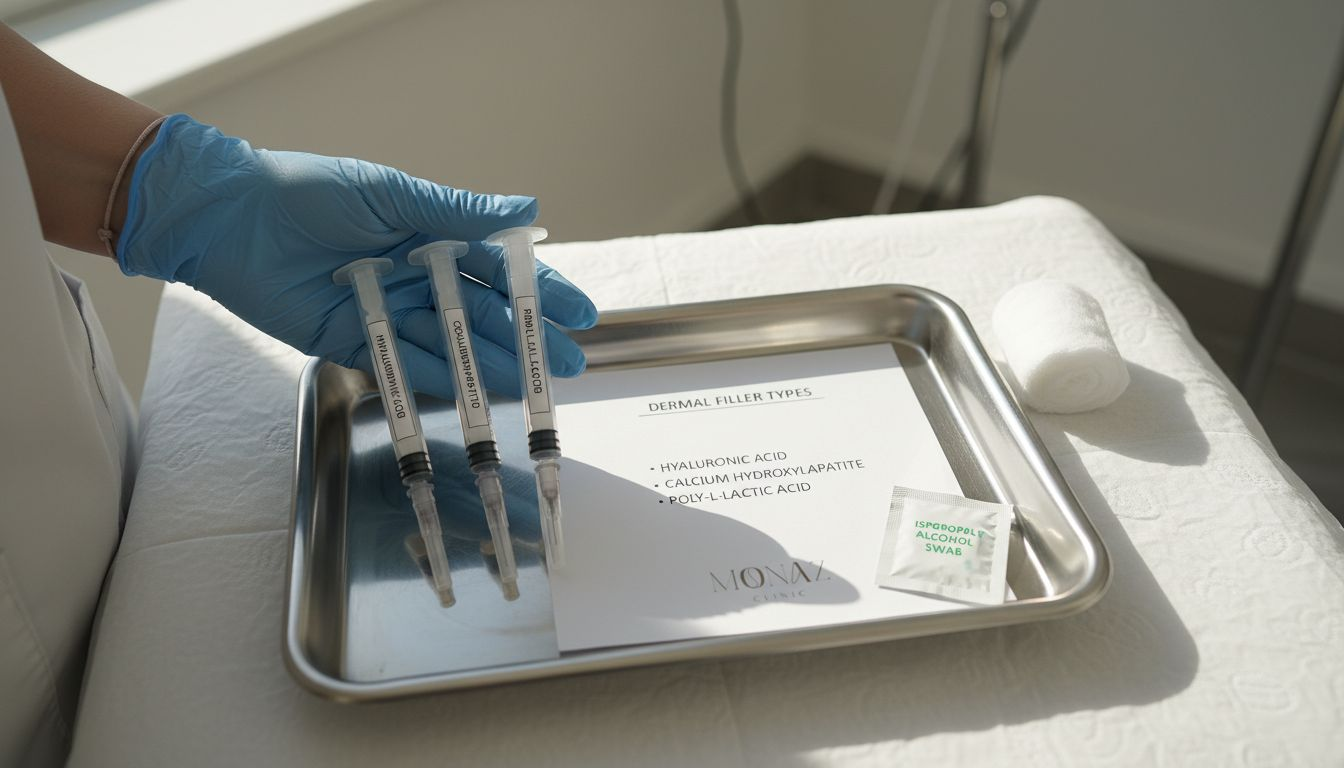
Here’s a summary of filler types and their properties relevant to tear trough treatment:
| Filler Type | Key Properties | Suitability for Tear Trough | Reversibility |
|---|---|---|---|
| Hyaluronic Acid | Smooth, biocompatible, elastic | Highly recommended | Easily reversed |
| Calcium Hydroxylapatite | Firmer, longer-lasting, less adaptable | Used rarely, potential risks | Not easily reversed |
| Poly-L-lactic Acid | Stimulates collagen, gradual results | Limited use, unpredictable results | Not reversible |
| Collagen Stimulators | Natural collagen boost, gradual | Not routinely used, unpredictable | Not reversible |
Pro tip: Always request a detailed consultation where your practitioner explains the specific filler properties and how they match your individual facial anatomy.
How Tear Trough Fillers Work Scientifically
Tear trough fillers operate through a sophisticated biological mechanism designed to restore volume and rejuvenate the delicate under-eye region. Understanding the science behind facial fillers reveals a complex interplay between injectable substances and human tissue dynamics.
The primary scientific principles underlying tear trough treatment involve:
- Volumetric restoration of lost tissue
- Stimulation of collagen production
- Hydration of dermal layers
- Mechanical support for surrounding facial structures
- Biomechanical integration with existing tissues
Molecular interactions play a crucial role in how dermal fillers function. When hyaluronic acid-based fillers are strategically injected, they immediately begin attracting and binding water molecules, creating an instantaneous volumising effect. This process not only fills hollow areas but also provides structural support to the delicate periorbital region.
The filler’s mechanism involves multiple sophisticated stages:
- Initial mechanical volume replacement
- Gradual tissue hydration
- Subtle tissue remodelling
- Stimulation of natural regenerative processes
Pro tip: Request a comprehensive consultation that explains how specific filler properties will interact uniquely with your individual facial anatomy.
Steps of the Tear Trough Filler Procedure
Tear trough filler treatments require meticulous planning and precise execution to achieve optimal aesthetic outcomes. Anatomical considerations guide the intricate procedural steps for safely restoring volume to the delicate under-eye region.
The comprehensive procedure typically involves several critical stages:
- Initial comprehensive facial assessment
- Detailed anatomical mapping of the tear trough
- Precise measurement of tissue volume loss
- Selection of appropriate filler type
- Customised treatment plan development
Preparation and consultation form the foundation of a successful tear trough treatment. Practitioners conduct a thorough evaluation of facial structure, skin quality, and individual aesthetic goals to determine the most appropriate intervention strategy.
The actual injection process follows a systematic approach:
- Cleansing and sterilising the treatment area
- Applying topical anaesthetic
- Marking precise injection points
- Careful filler placement using advanced techniques
- Gentle massage to ensure even distribution
- Post-procedure assessment and aftercare instructions
Pro tip: Request photographic documentation of your pre-treatment facial anatomy to track subtle transformations and understand your unique structural characteristics.
Safety, Risks and Practitioner Standards
The tear trough treatment demands exceptional clinical precision due to the region’s complex anatomical landscape. Advanced practitioner protocols prioritise patient safety and risk management in this intricate aesthetic intervention.
Potential risks associated with tear trough treatments include:
- Vascular occlusion
- Retrobulbar haemorrhage
- Infection
- Asymmetrical results
- Inflammatory responses
- Potential visual disturbances
Practitioner qualifications represent the most critical safety factor. Practitioners must demonstrate comprehensive understanding of:
- Detailed facial anatomy
- Vascular mapping techniques
- Emergency complication management
- Advanced injection methodologies
- Patient selection criteria
Proper training and continuous professional development are non-negotiable when performing delicate facial aesthetic procedures.
Risk mitigation strategies involve meticulous patient screening, utilising advanced injection techniques like blunt cannula methods, and maintaining immediate access to reversal agents such as hyaluronidase. Professional standards mandate ongoing education, comprehensive insurance coverage, and transparent communication about potential treatment outcomes.

Pro tip: Always verify your practitioner’s credentials, specialized training, and experience specifically in tear trough treatments before proceeding with any procedure.
Benefits, Alternatives and Common Misconceptions
Tear trough treatments offer nuanced aesthetic solutions beyond simple volume restoration. Individualized treatment approaches recognise the complexity of under-eye rejuvenation and challenge traditional cosmetic assumptions.
Key benefits of tear trough treatments include:
- Natural-looking facial rejuvenation
- Subtle volume replacement
- Improved skin hydration
- Reduced appearance of dark circles
- Enhanced facial symmetry
- Minimal recovery time
Realistic expectations are fundamental to successful outcomes. Patients must understand that results are:
- Temporary (typically 9-18 months)
- Dependent on individual anatomy
- Requiring periodic maintenance
- Variable based on practitioner skill
- Influenced by lifestyle factors
Alternative approaches for under-eye concerns encompass:
To clarify expectations, here’s how tear trough filler results and maintenance compare to alternative treatments:
| Treatment Type | Result Longevity | Recovery Time | Maintenance Required |
|---|---|---|---|
| Tear Trough Fillers | 9–18 months | Short, minimal | Periodic top-up needed |
| Lower Eyelid Blepharoplasty | Several years | Moderate, surgical | Rarely needed |
| Platelet-rich Plasma | 6–12 months | Minimal | Regular sessions |
| Skin-boosting Therapies | Varies, up to months | Minimal | Frequent sessions |
- Surgical fat repositioning
- Lower eyelid blepharoplasty
- Combination treatments
- Skin-boosting therapies
- Platelet-rich plasma interventions
Not all under-eye concerns can be resolved through a single treatment modality.
Common misconceptions often mislead potential patients, suggesting that tear trough fillers are a universal solution. In reality, each treatment requires careful, personalised assessment to determine the most appropriate intervention.
Pro tip: Seek multiple professional consultations to understand the full range of potential treatment options tailored to your specific anatomical characteristics.
Discover Expert Tear Trough Filler Treatments Tailored to Your Unique Anatomy
Struggling with under-eye hollows and unsure which filler matches your delicate tear trough area? This article highlights the importance of precise anatomical knowledge and scientifically chosen fillers to achieve natural, safe results without compromising your facial harmony. If you value personalised care that respects your skin’s complex structure and want to avoid common risks like vascular complications or uneven outcomes, our expert team at Monaz Clinic offers exactly that.

Explore our comprehensive guidance in the tips – Monaz Clinic | Facial Aesthetic Clinic in London section and start your journey to refreshed, radiant eyes today. With medical precision led by Mrs Mona Zirak, a medically qualified practitioner, we provide a safe environment where advanced tear trough filler techniques restore your youthful volume naturally. Book your complimentary consultation now at Monaz Clinic to understand how scientifically proven treatments can transform your look with subtlety and safety.
Frequently Asked Questions
What types of fillers are suitable for tear trough treatments?
Hyaluronic acid (HA) fillers are the most recommended for tear trough treatments due to their smooth consistency, biocompatibility, and lower risk of lumpiness. Alternatives like calcium hydroxylapatite and poly-L-lactic acid are rarely used due to higher risks and unpredictable results.
How do tear trough fillers work scientifically?
Tear trough fillers restore volume by attracting water molecules to create an immediate volumising effect. They stimulate collagen production, hydrate dermal layers, and provide mechanical support, integrating with existing tissues over time.
What are the potential risks involved with tear trough fillers?
Potential risks include vascular occlusion, infection, asymmetrical results, and other complications. It’s crucial to choose an experienced practitioner who understands the anatomy of the area to minimise these risks.
How long do the effects of tear trough fillers last?
The effects of tear trough fillers typically last between 9 to 18 months, depending on individual anatomy, lifestyle factors, and the specific product used. Regular maintenance may be required to sustain the desired results.
Recommended
- Tear Trough Filler: Complete Guide for London Women – Monaz Clinic London
- Tear Trough Treatment (Under-Eye Hollows) – Monaz Clinic London
- Understanding the Benefits of Dermal Fillers for Facial Aesthetics – Monaz Clinic London
- Understanding What Are Facial Fillers and Their Benefits – Monaz Clinic London