




Complete tear trough filler guide covering preparation, advanced injection techniques, aftercare, and expected results for natural under-eye rejuvenation in London.

Tired, hollow under-eyes can make you look exhausted even when you feel rested. Tear trough filler offers a minimally invasive solution to restore volume and smooth the delicate under-eye area, creating a refreshed appearance without surgery. This comprehensive guide walks you through every stage of the treatment process, from understanding the causes of under-eye hollows to achieving subtle, natural results that enhance your features. You’ll learn what to expect during preparation, the precise injection technique, and essential aftercare to maximise your outcomes safely.
Table of Contents
- Understanding Tear Trough Hollowing And Treatment Goals
- Preparing For Your Tear Trough Filler Treatment
- Performing The Tear Trough Filler Injection Step By Step
- Post-Treatment Care And Expected Results
- Explore Tear Trough Filler Treatments At Monaz Clinic London
- How Long Does Tear Trough Filler Last?
- Is Tear Trough Filler Safe?
- What Should I Avoid After Tear Trough Filler?
- Can Tear Trough Filler Go Wrong?
- Does Tear Trough Filler Hurt?
- When Will I See Results From Tear Trough Filler?
Key takeaways
| Point | Details |
|---|---|
| Volume restoration | Tear trough filler addresses hollowness and shadows under the eyes caused by age-related volume loss. |
| Advanced technique | The three-point tangent method using a blunt cannula improves safety and precision during filler placement. |
| High satisfaction | Hyaluronic acid fillers demonstrate a 91% satisfaction rate with minimal complication risk when properly administered. |
| Essential aftercare | Following post-treatment guidelines for 24 to 48 hours optimises results and reduces swelling or bruising. |
| Lasting effects | Results typically sustain for six months or longer, with gradual volume restoration creating subtle enhancement. |
Understanding tear trough hollowing and treatment goals
The delicate under-eye area ages differently than other facial regions. Under-eye ageing occurs due to ligament laxity, volume loss in the midface, thinning of the skin, and decreased collagen production. These anatomical changes create a visible groove or depression between the lower eyelid and upper cheek, casting shadows that make you appear tired or older than you feel.
Understanding these underlying causes helps practitioners tailor treatment for natural-looking results. When the orbital retaining ligament loosens with age, fat pads beneath the eyes shift downward, creating hollowness. Simultaneously, the midface loses volume, deepening the contrast between the lower lid and cheek. These structural changes require careful assessment before treatment begins.
Tear trough filler aims to restore lost volume and smooth the transition between the lower eyelid and cheek. The goal is never to overfill or create an unnatural appearance. Instead, subtle enhancement rejuvenates the under-eye area whilst maintaining your unique facial characteristics. Practitioners focus on:
- Filling the hollow groove to reduce shadowing
- Smoothing the junction between lid and cheek for seamless contours
- Restoring volume gradually to avoid overcorrection
- Maintaining natural eye shape and expression
Realistic expectations form the foundation of patient satisfaction. Tear trough filler cannot eliminate all fine lines or completely reverse decades of ageing, but it significantly improves the tired appearance many women experience. The treatment works best for mild to moderate hollowing, and understanding your specific anatomy ensures the most appropriate technique. For comprehensive information about various under eye treatments overview, exploring all available options helps you make informed decisions.
Successful outcomes depend on matching treatment goals with realistic possibilities. During consultation, practitioners assess skin thickness, bone structure, existing volume loss, and overall facial harmony. This personalised approach ensures the filler enhances your natural beauty rather than creating an artificial look.
Preparing for your tear trough filler treatment
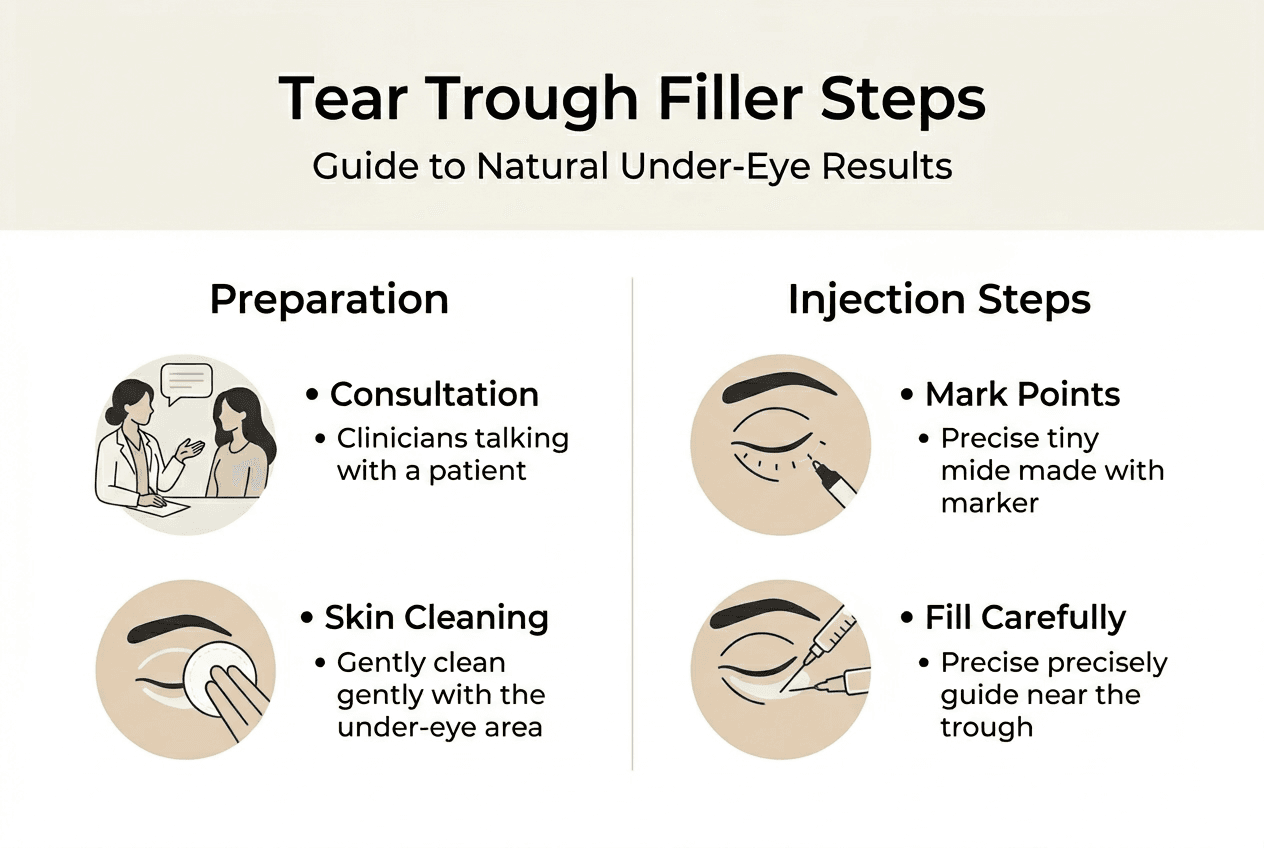
Proper preparation ensures safety, comfort, and optimal results. Your journey begins with a thorough consultation where your practitioner assesses suitability and discusses your aesthetic goals. This initial meeting establishes realistic expectations and identifies any contraindications that might affect treatment.
Choosing the appropriate filler type is crucial for under-eye treatment. Hyaluronic acid-based products remain the gold standard because they integrate smoothly with delicate tissue and can be dissolved if necessary. Your practitioner will select a filler with suitable viscosity for the thin under-eye skin, typically opting for softer formulations that blend naturally without creating visible lumps.
A new three-point tangent technique using a blunt cannula improves placement precision and reduces trauma compared to traditional methods. This innovative approach minimises bruising and vascular complications whilst delivering filler along carefully mapped paths. Understanding tear trough filler science and safety principles helps you appreciate why technique matters as much as product selection.
Before your appointment, review medications and supplements that might increase bleeding risk. Your practitioner will advise temporarily avoiding:
- Aspirin and anti-inflammatory medications
- Blood-thinning supplements like fish oil, vitamin E, and ginkgo biloba
- Alcohol consumption for 24 hours before treatment
- Strenuous exercise on the day of your appointment
Pro Tip: Schedule your treatment at least two weeks before important events to allow any minor swelling or bruising to resolve completely.
The treatment area requires careful preparation on the day of your appointment. Your practitioner cleanses the skin thoroughly with antiseptic solution and may apply topical numbing cream for comfort. Some filler products contain lidocaine, providing additional anaesthesia during injection.
| Material | Purpose | Specification |
|---|---|---|
| Hyaluronic acid filler | Volume restoration | Low viscosity, 0.5-1.0ml per side |
| Blunt cannula | Safe filler delivery | 25G or 27G, flexible tip |
| Antiseptic solution | Infection prevention | Chlorhexidine or alcohol-based |
| Topical anaesthetic | Patient comfort | 20-30 minute application |
| Sterile gauze | Site preparation | Single-use, medical grade |
Following dermal filler preparation steps systematically reduces complications and improves outcomes. Your practitioner maps injection points along the three tangent lines, marking entry sites that allow smooth filler distribution beneath the tear trough. This meticulous planning phase determines treatment success.
Photographic documentation before treatment provides an objective baseline for comparing results. These images also help practitioners assess symmetry and plan injection volumes precisely. Preparing mentally for the procedure matters too, as relaxation improves comfort and allows your practitioner to work with greater precision.
Performing the tear trough filler injection step by step
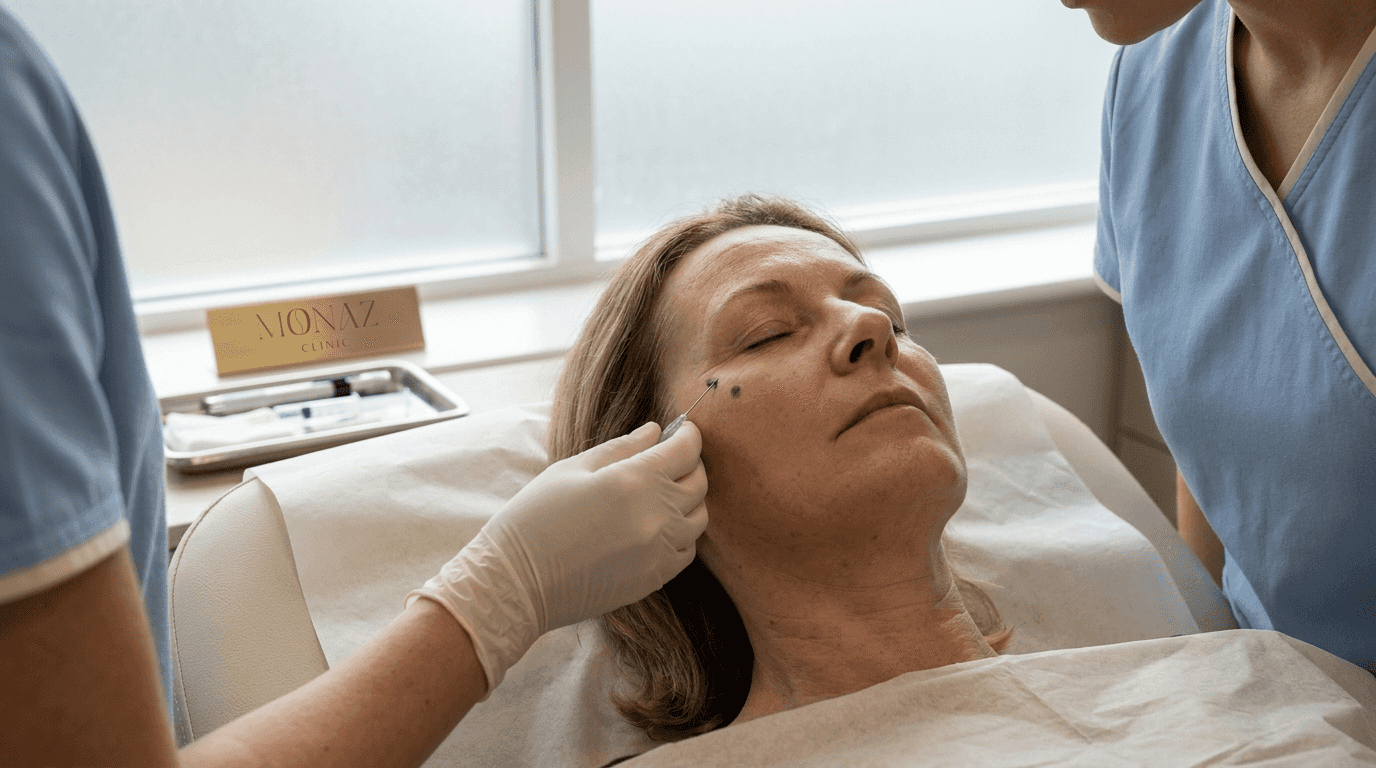
The injection procedure follows a systematic sequence designed to maximise safety and achieve natural contours. Your practitioner begins by cleansing the treatment area again immediately before injection, ensuring sterility throughout the process.
- Mark the three tangent lines along each orbital rim, identifying optimal entry points for the blunt cannula.
- Create a small entry point using a sharp needle, typically at the lateral aspect of the tear trough.
- Insert the blunt cannula carefully through this entry point, advancing it along the pre-marked tangent line.
- Inject small amounts of hyaluronic acid filler gradually as the cannula withdraws, depositing product in the supraperiosteal plane.
- Repeat the process for the remaining two tangent lines per orbit, ensuring even distribution.
- Assess symmetry continuously, comparing both sides and adjusting volumes as needed.
- Apply gentle massage to distribute filler evenly and smooth any irregularities.
The three-point tangent technique using a blunt cannula safely delivers filler along tailored paths per orbit, reducing the risk of intravascular injection. The blunt tip pushes blood vessels aside rather than piercing them, significantly improving safety compared to sharp needle techniques.
During injection, your practitioner maintains constant awareness of anatomical landmarks. The angular artery and infraorbital vessels run through this region, making precise placement essential. The supraperiosteal plane, directly above the bone, provides the safest and most effective location for tear trough filler. Placing product too superficially causes visible lumps or a bluish tint called the Tyndall effect.
Pro Tip: Minimal movement during injection helps your practitioner work with precision, so try to remain still and relaxed throughout the brief procedure.
The volume injected typically ranges from 0.5 to 1.0 millilitres per side, though individual needs vary based on the degree of hollowing. Conservative volumes prevent overcorrection, which can create an unnatural puffy appearance. Hyaluronic acid fillers have a 91% satisfaction rate with low complication risk when practitioners use appropriate volumes and techniques.
| Technique | Entry points | Cannula type | Complication risk | Result naturalness |
|---|---|---|---|---|
| Three-point tangent | 3 per orbit | Blunt, flexible | Very low | Excellent |
| Serial puncture | Multiple | Sharp needle | Moderate | Good |
| Single entry fan | 1 per orbit | Blunt cannula | Low | Very good |
Comparing techniques reveals why the three-point tangent method offers advantages for tear trough treatment. Traditional serial puncture using sharp needles creates multiple entry points, increasing bruising and vascular risk. The single entry fan technique works well but may not distribute filler as evenly across the entire tear trough length.
Throughout the procedure, your practitioner evaluates natural contours and facial harmony. The goal is seamless integration between the lower eyelid and cheek, eliminating the hollow groove whilst preserving your unique eye shape. Understanding the complete tear trough filler procedural guide helps you appreciate the expertise required for optimal outcomes.
Following natural-looking filler tips ensures results enhance rather than alter your appearance. Subtle enhancement respects your natural anatomy, creating refreshed eyes that don’t draw attention to the treatment itself. The entire injection process typically takes 15 to 30 minutes, though careful technique matters more than speed.
Post-treatment care and expected results
Immediate aftercare significantly influences your final outcome. Following your practitioner’s guidance minimises complications and helps you achieve the best possible results from your tear trough filler treatment.
For the first 24 to 48 hours after injection, avoid activities that increase blood flow to the face. This includes:
- Strenuous exercise or heavy lifting
- Hot baths, saunas, or steam rooms
- Facial massages or aggressive skincare
- Sleeping face down or pressing on the treated area
- Consuming alcohol or blood-thinning medications
Applying cold compresses gently to the under-eye area reduces swelling and bruising. Use a clean, soft cloth wrapped around ice rather than applying ice directly to skin. Limit compress application to 10 minutes at a time, several times during the first day.
Some swelling is normal and expected, particularly in the delicate under-eye tissue. Most patients experience mild puffiness that resolves within two to three days. Bruising occurs less frequently with the blunt cannula technique but may still appear in some cases. Arnica supplements or topical preparations may help bruising fade more quickly.
“Proper aftercare is not optional. Following post-treatment guidelines protects your investment and ensures the beautiful, natural results you desire whilst minimising any risk of complications.”
Expect subtle improvements immediately after treatment, with final results becoming apparent once initial swelling subsides. The filler integrates with surrounding tissue over the following week, creating smooth, natural contours. Your under-eye area appears refreshed and less shadowed, with a more rested appearance overall.
High patient satisfaction and measurable volume increase can be maintained at six months with proper aftercare. Results typically last approximately six months, though longevity varies based on individual metabolism, filler type, and lifestyle factors. Some patients enjoy results lasting eight to twelve months, particularly with non-cross-linked hyaluronic acid formulations.
Maintaining results requires periodic touch-up treatments. Many patients schedule appointments every six to nine months to sustain their refreshed appearance. Over time, maintenance treatments may require smaller volumes as tissue quality improves with repeated hyaluronic acid exposure.
Recognise warning signs that require immediate medical attention. Whilst rare, serious complications can occur. Contact your practitioner immediately if you experience:
- Severe pain that worsens rather than improves
- Vision changes or eye pain
- Skin colour changes, particularly blanching or darkening
- Excessive swelling that increases after the first 48 hours
Following a comprehensive filler aftercare guide helps you navigate the recovery period confidently. Most patients return to normal activities within 24 hours, with only minor precautions needed for the first few days. The convenience of minimal downtime makes tear trough filler an attractive option for busy women seeking facial rejuvenation.
Explore tear trough filler treatments at Monaz Clinic London
Achieving natural, refreshed under-eyes requires both technical expertise and artistic vision. At Monaz Clinic, we specialise in tear trough treatments that honour your unique facial anatomy whilst delivering subtle rejuvenation. Our practitioners combine advanced injection techniques with a deep understanding of female facial aesthetics.

Located at 96 Harley Street in central London, we offer tear trough treatment under-eye hollows in a private, supportive environment designed exclusively for women. Every treatment begins with a complimentary consultation where we listen to your concerns and create a personalised plan that aligns with your aesthetic goals. Our philosophy centres on refreshing and restoring, never altering or freezing your natural expressions. Explore our dermal fillers price list and wrinkle softening price list to understand the investment in your confidence and wellbeing.
How long does tear trough filler last?
Tear trough filler effects typically sustain for six months or longer, depending on the specific product used and your individual metabolism. Results typically last around six months, sometimes longer with certain fillers. Hyaluronic acid naturally breaks down over time as your body metabolises the product. Factors affecting longevity include your age, lifestyle, skin quality, and the volume initially injected. Many patients schedule maintenance appointments every six to nine months to preserve their refreshed appearance consistently.
Is tear trough filler safe?
When performed by trained professionals using advanced techniques, tear trough filler is generally safe with minimal risks. Hyaluronic acid fillers show low overall complication rates and high satisfaction when practitioners follow proper protocols. The three-point tangent technique using a blunt cannula significantly reduces the risk of vascular complications compared to traditional sharp needle methods. Choosing a qualified practitioner who understands facial anatomy and follows strict safety guidelines is essential. Following preparation and aftercare instructions further minimises any potential complications.
What should I avoid after tear trough filler?
Avoid heavy exercise, alcohol consumption, and touching the treated area for 24 to 48 hours after your appointment to reduce bruising and swelling. Strenuous activities increase blood flow to the face, potentially causing more pronounced swelling or displacing filler before it settles. Similarly, avoid hot environments like saunas, steam rooms, or very hot showers during the first two days. Sleeping with your head slightly elevated helps minimise morning puffiness. Follow your clinic’s specific aftercare tips for fillers London guidance carefully, as individual recommendations may vary based on your treatment details.
Can tear trough filler go wrong?
Whilst complications are rare with proper technique, tear trough filler can occasionally produce unwanted results. Common issues include temporary swelling, bruising, or asymmetry that typically resolve within days. More serious but rare complications include vascular occlusion, where filler blocks blood flow, or the Tyndall effect, causing a bluish tint from superficial placement. Choosing an experienced practitioner who uses the safest injection techniques dramatically reduces these risks. Hyaluronic acid fillers offer the advantage of reversibility, as they can be dissolved with hyaluronidase if necessary. Proper patient selection, conservative volumes, and meticulous injection technique prevent most complications.
Does tear trough filler hurt?
Most patients experience minimal discomfort during tear trough filler treatment. Topical numbing cream applied before the procedure significantly reduces sensation, and many filler products contain lidocaine for additional anaesthesia. The blunt cannula technique causes less discomfort than traditional sharp needle methods because it creates fewer entry points and glides through tissue rather than piercing it repeatedly. You may feel slight pressure or a dull sensation as the cannula advances, but sharp pain is uncommon. Any discomfort typically lasts only during the brief injection process, which takes 15 to 30 minutes. Most patients describe the experience as very tolerable.
When will I see results from tear trough filler?
You’ll notice immediate improvement in under-eye hollowing right after treatment, though initial swelling may mask the final result. Once swelling subsides over two to three days, your true outcome becomes apparent. The filler continues integrating with surrounding tissue during the first week, creating increasingly natural contours. Final results are typically visible within seven to ten days after treatment. Some patients experience minor asymmetry initially that resolves as swelling settles evenly. Patience during the first week allows the filler to settle properly, revealing the subtle, refreshed appearance you desire.