




Explore dermal filler science, procedure steps, safety standards and real-life benefits. Learn how fillers restore and refresh without harsh alteration.

Lines and facial hollows often appear before we feel ready for them, making everyday reflections seem less familiar. As more British women search for gentle ways to soften these changes, the truth about dermal fillers becomes essential. This guide brings clarity by breaking down the science behind injectable gels that add volume and addressing common myths, so you can approach facial rejuvenation with confidence at a trusted London clinic.
Table of Contents
- Dermal Fillers Explained And Common Myths
- Types Of Dermal Fillers And Their Differences
- How Fillers Work Beneath The Skin
- Procedure Steps And Patient Safety Protocols
- Risks, Costs, And What To Avoid
Key Takeaways
| Point | Details |
|---|---|
| Understanding Fillers | Dermal fillers restore facial volume but do not permanently alter bone structure or stop ageing. Choose based on specific concerns and desired outcomes. |
| Importance of Technique | Professional administration and practitioner skill are vital for achieving natural-looking results. Avoid providers lacking proper qualifications. |
| Expectations and Longevity | Results develop gradually over weeks, with longevity varying by filler type and individual metabolism. Be prepared for potential maintenance treatments. |
| Safety and Risks | Ensure the clinic follows rigorous safety protocols and provides thorough informed consent to mitigate risks associated with fillers. |
Dermal fillers explained and common myths
Dermal fillers are injectable gels that add volume to the face, addressing lines, folds, and areas where the skin has lost elasticity over time. Unlike anti-wrinkle injections that relax muscles, fillers work by physically restoring volume to create a softer, more youthful appearance. Understanding how they work—and what they don’t do—is essential for setting realistic expectations.
How dermal fillers actually work
Dermal filler substances come in several types, each with different mechanisms. The most common are hyaluronic acid fillers, which act like a sponge, attracting and holding water to plump the skin from within. They’re temporary, typically lasting 6 to 18 months depending on the specific product and how quickly your body metabolises it.
Other types work differently. Calcium hydroxyapatite stimulates your own collagen production whilst providing immediate volume. Poly-L-lactic acid works slowly, building collagen over weeks for gradual, long-lasting results. Polymethyl methacrylate fillers are semi-permanent and work through a combination of mechanisms.
The key point: fillers don’t change your bone structure or permanently alter your face. They fill space where volume is lost, creating definition and softness that complements your natural anatomy.
Common myths debunked
Myth 1: Fillers look obviously fake
When administered correctly by a qualified practitioner, fillers create subtle enhancement. The goal is always natural-looking results that refresh your appearance without looking “done.” Over-correction happens when practitioners prioritise volume over proportion—this isn’t a filler issue, it’s a technique issue.
Myth 2: Once you start, you have to keep getting them
Fillers are not addictive. Your body gradually absorbs them, and your face simply returns to its original state. You’re not locked into ongoing treatment—it’s entirely your choice to continue or stop.
Myth 3: Fillers feel lumpy or uncomfortable
Quality fillers integrate smoothly with your tissue. You shouldn’t feel lumps or have difficulty with facial expressions. If you do, this suggests either an unsuitable filler type or technique, not a problem with fillers themselves.
Myth 4: All fillers last the same length of time
Duration varies significantly. Hyaluronic acid typically lasts 6–18 months, whilst collagen-stimulating fillers can last 12–24 months or longer. Your metabolism, filler type, and injection placement all influence longevity.
What fillers can and cannot do
- Can do: restore lost volume, soften lines and folds, enhance lips, define cheekbones, smooth nasolabial folds, treat under-eye hollows, improve acne scars
- Cannot do: tighten loose skin, replace weight loss, permanently alter your face, stop ageing, treat very deep wrinkles alone (often combined with anti-wrinkle injections)
Professional administration is the difference between natural enhancement and obvious overfilling. Your practitioner’s skill matters more than the product itself.
Realistic expectations matter
Results appear gradually as swelling subsides over 2–4 weeks. Some people see full effects even later. The best outcome comes from conservative initial treatment—adding more is easier than removing it.
Safety depends on qualified practitioners who understand facial anatomy, injection depth, and product selection. At a reputable clinic, risks remain rare, though temporary bruising and swelling are normal.
Pro tip: During your consultation, ask your practitioner to show before-and-after photos of patients with similar concerns—not the most dramatic transformations, but natural, subtle results that match your goals.
Types of dermal fillers and their differences
Not all fillers work the same way. Each type has a distinct composition, mechanism of action, and timeline for results. Choosing the right one depends on your specific concerns, desired outcome, and how quickly you want to see improvement. Understanding these differences helps you make an informed decision with your practitioner.
Hyaluronic acid fillers
Hyaluronic acid (HA) is a naturally occurring substance your skin produces naturally. It holds water molecules, so HA fillers work by hydrating and plumping the skin from within. Results appear immediately, making them ideal if you want quick visual improvement before an event.
These fillers are temporary, typically lasting 6 to 18 months depending on how quickly your body metabolises them and which specific product is used. Because they’re reversible and temporary, many people choose them for their first filler treatment. They work well for fine lines, lips, cheeks, and under-eye hollows.
Calcium hydroxyapatite fillers
Calcium hydroxyapatite is a mineral compound found naturally in your bones. It provides immediate volume whilst stimulating your skin’s own collagen production. You get both instant results and gradual improvement as your collagen rebuilds over weeks.
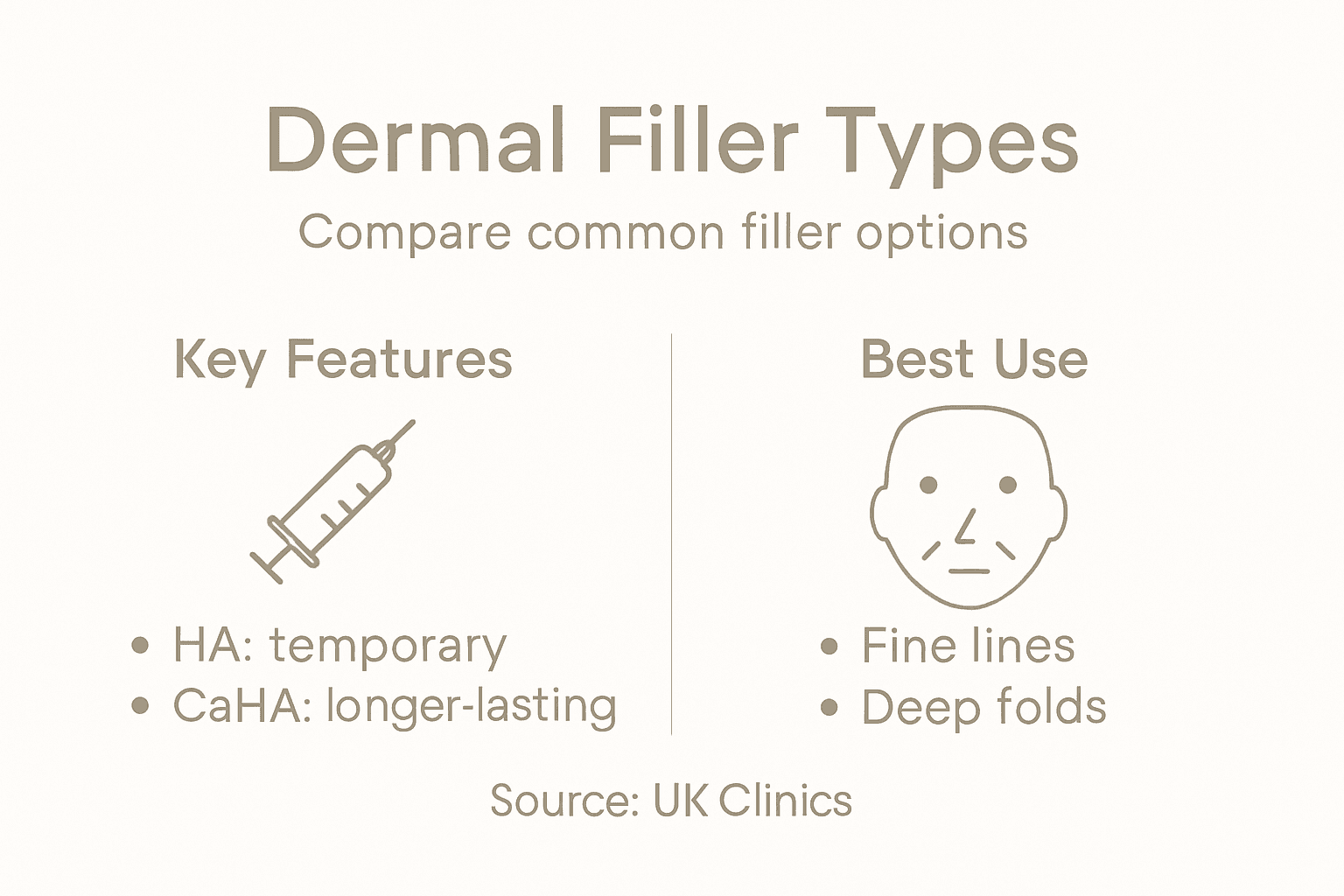
This type lasts longer than HA—typically 12 to 18 months or more. It’s particularly effective for deeper lines and areas needing stronger structural support, such as the cheeks and nasolabial folds. The dual-action mechanism makes it popular for women seeking both immediate and progressive results.
Poly-L-lactic acid fillers
Poly-L-lactic acid works entirely differently. Rather than filling space directly, it stimulates your body to produce new collagen over several months. Results build gradually, so you won’t see dramatic improvement immediately—but the enhancement develops naturally and can last 2 years or longer.
This approach suits people who prefer subtle, progressive changes rather than obvious transformation. It’s particularly effective for overall facial volume loss and can address multiple areas in a single treatment course. The gradual process feels more natural to many patients.
Polymethyl methacrylate fillers
Polymethyl methacrylate (PMMA) provides the longest-lasting results. These fillers combine instant volume with semi-permanent structural support, lasting 3 years or more. They’re best reserved for deep wrinkles, severe scarring, or specific areas where longevity matters most.
Because they’re semi-permanent, they require careful consideration and expert technique. They’re not suitable for every area or patient, and reversal isn’t straightforward.
Hybrid and combination fillers
Some modern fillers combine multiple components—for example, blending hyaluronic acid with calcium hydroxyapatite. These hybrid formulations offer versatility, delivering both immediate volume and gradual collagen stimulation in one treatment.
Here’s a concise summary comparing how the main dermal filler types differ in onset, reversibility, and key safety considerations:
| Filler Type | Onset of Results | Reversibility | Main Safety Consideration |
|---|---|---|---|
| Hyaluronic Acid | Immediate effect | Fully dissolvable with enzyme | Lowest rate of severe complications |
| Calcium Hydroxyapatite | Instant + gradual improvement | Not easily reversible | May cause nodules if injected superficially |
| Poly-L-lactic Acid | Gradual over months | Not reversible after placement | Needs careful gradual dosing |
| PMMA | Immediate and long-lasting | Semi-permanent, hard to remove | Higher risk of long-term issues |
| Hybrid | Immediate and long-term | Depends on component ratios | Unique to each formulation |
Quick comparison table
| Filler Type | Duration | How It Works | Best For |
|---|---|---|---|
| Hyaluronic Acid | 6–18 months | Hydrates and plumps | First-time users, lips, fine lines |
| Calcium Hydroxyapatite | 12–18+ months | Volume + collagen stimulation | Deep lines, cheekbones, structure |
| Poly-L-Lactic Acid | 18–24+ months | Gradual collagen building | Overall volume loss, subtle results |
| PMMA | 3+ years | Semi-permanent structure | Deep wrinkles, scarring, longevity |
| Hybrid | Varies | Combination approach | Versatile concerns, multiple benefits |
The “best” filler isn’t universal—it’s the one matched to your specific goals, concerns, and timeline by a skilled practitioner.
Why type matters for natural results
Understanding filler mechanisms helps explain why certain products work better for certain areas. Softer fillers suit delicate zones like lips and tear troughs, whilst firmer formulations provide better support for cheekbones and jawlines.
Your practitioner should recommend based on anatomy, not preference. The right choice creates harmony with your natural features rather than appearing like volume was simply added.
Pro tip: Ask your practitioner which filler type they recommend and why it suits your specific areas of concern—this reveals whether they’re customising treatment or using a one-size-fits-all approach.
How fillers work beneath the skin
Dermal fillers work through injection—a practitioner places the product beneath the skin’s surface where it can address volume loss, smooth wrinkles, and support facial structure. The exact mechanism depends on what the filler is made from. Understanding this science helps you see why results look and feel natural when administered correctly.
The injection placement matters
Fillers aren’t simply injected anywhere. Proper placement is critical for natural results. The practitioner must understand facial anatomy—where bone lies, where nerves and blood vessels travel, and which tissue layers need support.
Most fillers are injected into the dermis (the deeper skin layer) or into soft tissue beneath it. Shallow injections suit delicate areas like lips and tear troughs. Deeper placement provides structural support for cheekbones, jawlines, and nasolabial folds. This anatomical knowledge is what separates subtle, natural results from obvious overfilling.
How hyaluronic acid works
Hyaluronic acid (HA) is a hydrophilic molecule, meaning it attracts and binds water. When injected, HA molecules draw moisture into the area, plumping the skin from within. You see results immediately because the volume effect happens right away.
The water-binding property creates a cushioning effect that smooths wrinkles and adds definition. Over time, your body gradually absorbs the HA, which is why results fade gradually rather than disappearing suddenly. This temporary nature makes HA ideal for testing whether you like filler results before committing to longer-lasting options.
Collagen-stimulating fillers
Calcium hydroxyapatite and poly-L-lactic acid work differently. Rather than filling space directly, these fillers create a biological scaffold that encourages your body’s own collagen production. Your skin responds by building new collagen fibres around the filler particles.
This process takes weeks to months, so results develop gradually. The benefit is twofold: you get initial volume from the filler itself, plus ongoing improvement as your collagen rebuilds. When the filler eventually dissolves, you’re left with new collagen that provides lasting structure.
Why injection depth matters
Injection depth determines how the filler integrates with surrounding tissue:
- Superficial injections (upper dermis): suited for fine lines and delicate features
- Mid-dermal injections: balance between smoothing lines and providing volume
- Deep injections (subcutaneous): structural support for cheekbones, chin, jawline
- Periosteal injections (near bone): maximum lift and definition for larger areas
A skilled practitioner adjusts depth based on your anatomy and concerns, not a one-size-fits-all approach.
The following table summarises the factors influencing dermal filler longevity and how they may affect an individual’s outcome:
| Factor Affecting Longevity | Effect on Result | Example |
|---|---|---|
| Filler composition | Longer-lasting fillers remain visible longer | PMMA lasts over 3 years |
| Injection depth | Deeper injections break down slower | Cheekbone fillers last longer than lip fillers |
| Individual metabolism | Faster metabolism shortens duration | Athletes may see faster fading |
| Treatment area | High-movement zones reduce longevity | Lip fillers fade quicker than cheeks |
The role of technique
Technique determines whether results look natural or obvious. A practitioner should use layering—injecting at multiple depths—to build definition gradually rather than adding bulk in one spot. They should also inject with restraint, leaving room for swelling to settle naturally.
Overcorrection creates the “done” look. Undercorrection allows subtle enhancement that respects your natural anatomy. The best results balance improvement with preservation of your unique facial character.
Healing and integration
After injection, your body begins integrating the filler. Swelling peaks around 24 to 48 hours, then gradually subsides over 2 to 4 weeks. What you see immediately isn’t your final result—it’s the result plus temporary swelling.
As swelling reduces and your body adjusts to the filler, you’ll see the true effect emerge. Some people see final results weeks later. This is why patience matters; judging results before healing completes leads to unnecessary touch-ups.
Professional technique and anatomical knowledge are what transform filler from obvious volume into natural-looking rejuvenation.
Pro tip: Ask your practitioner to explain exactly where they’ll inject and why—specific anatomical references (“lateral cheekbone support,” “tear trough depth,” etc.) indicate they’re planning customised placement, not applying a template.
Procedure steps and patient safety protocols
A filler procedure is straightforward when delivered by qualified practitioners who follow rigorous safety protocols. Understanding what happens during treatment and what safeguards protect you helps build confidence and realistic expectations about the experience.
Before treatment begins
Your appointment starts with a thorough consultation. The practitioner discusses your concerns, examines your face, and explains which areas will be treated and why. This is your opportunity to ask questions and express any hesitations.
Informed consent is not a formality—it’s a legal and ethical requirement. You receive detailed information about potential risks, what results to expect, and realistic timelines. A reputable clinic provides this in writing before proceeding. Never rush this step; understanding risks is essential to making an informed choice.
The practitioner should explain exactly which product they’re using and why it suits your needs. They should show you the product packaging and verify you have no allergies to its components.
The treatment process
The procedure follows a consistent pattern:
- Skin cleansing – The treatment area is thoroughly cleaned with an antiseptic solution to minimise infection risk.
- Topical anaesthetic application – A numbing cream is applied for 10–15 minutes to reduce discomfort during injection.
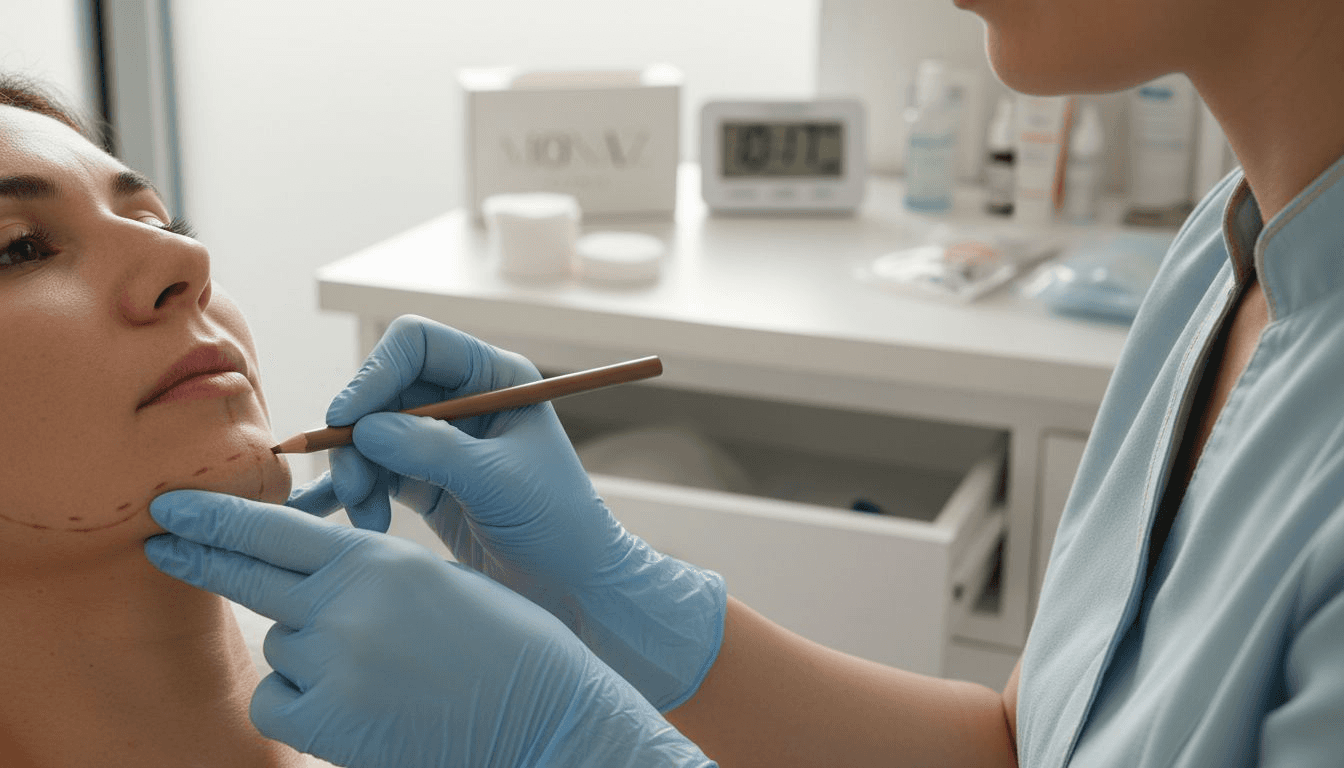
- Marking treatment points – The practitioner marks injection sites to ensure symmetry and precise placement.
- Injection technique – Filler is carefully injected using either a needle or blunt cannula, depending on the area and filler type.
- Massage and assessment – After injection, the area is gently massaged to distribute filler evenly and check for symmetry.
- Ice application – Cold is applied to reduce immediate swelling and discomfort.
The entire procedure typically takes 15 to 45 minutes depending on how many areas are treated.
Safety standards and hygiene
Qualified practitioners are essential. Your clinician should be medically trained and licensed, with specific training in facial anatomy and injection techniques. At a reputable clinic, a GMC-registered doctor oversees all treatments.
Strict hygiene protocols include:
- Sterile, single-use needles and equipment
- Hand hygiene and glove use
- Cleaned and disinfected treatment rooms
- Proper sharps disposal
- Emergency medications on hand (adrenaline for allergic reactions)
Informed consent protocols detail specific risks including pain, bruising, infection, and rare complications like vascular occlusion. Understanding these before treatment helps you recognise normal healing from genuine complications.
What to expect after treatment
Mild swelling and redness are normal and typically fade within hours to 24 hours. Bruising may appear and can last 5 to 7 days. Avoid intense exercise, heat exposure, and alcohol for 24 hours post-treatment, as these increase swelling.
Results develop gradually as initial swelling subsides. Full results usually appear within 2 to 4 weeks. Don’t judge results before this healing window closes.
Recognising complications
Serious complications are rare but require immediate attention. Contact your clinic urgently if you experience:
- Severe, spreading pain or swelling
- Skin discolouration or blanching
- Vision changes
- Difficulty breathing or swallowing
- Signs of infection (pus, fever, increasing redness)
A reputable clinic provides emergency contact information and clear protocols for addressing concerns.
Safety depends on three factors: qualified practitioner, rigorous protocols, and your informed participation in aftercare.
Pro tip: Before booking, ask the clinic about their emergency protocols, staff qualifications, and whether a GMC-registered doctor is available on-site during treatments—this reveals their commitment to patient safety.
Risks, costs, and what to avoid
Dermal fillers are safe when administered by qualified practitioners, but like any injectable treatment, they carry potential risks. Understanding these risks, realistic pricing, and what to avoid helps you make decisions that protect your health and investment.
Common risks and side effects
Most side effects are temporary and mild. Bruising, swelling, and redness typically fade within days to a week. Some people experience tenderness or slight asymmetry initially, which usually resolves as swelling subsides.
Rarer complications require attention. Infection can occur if sterile protocols are breached—signs include increasing redness, pus, or fever. Allergic reactions are uncommon but possible, particularly with certain filler types. Vascular occlusion happens when filler accidentally enters a blood vessel, blocking blood flow and potentially causing tissue damage.
Very rare but serious complications include facial paralysis or blindness from injection into sensitive structures. These emphasise why anatomical knowledge and proper technique are non-negotiable.
Medical history matters
Certain conditions increase complication risk. If you take blood thinners (aspirin, warfarin, anticoagulants) or antiplatelet medications, inform your practitioner—these increase bruising and bleeding risk.
Pregnancy, active infections, or autoimmune conditions require careful consideration. Allergies to filler components must be disclosed. A thorough medical history consultation isn’t bureaucracy—it’s essential protection.
Understanding UK pricing
Filler costs vary considerably based on type, quantity, and clinic location. Temporary hyaluronic acid fillers typically cost £300–£600 per syringe in the UK. Collagen-stimulating fillers cost more, usually £400–£800 per treatment. Semi-permanent fillers range from £500–£1,000 or more.
Price differences reflect product quality, practitioner expertise, and clinic standards. Suspiciously cheap treatments often indicate corner-cutting on safety or product authenticity.
Red flags to avoid
Unregulated practitioners pose significant risk. Never book with anyone without medical qualifications or proper licensing. Verify credentials through GMC registration if they claim medical training.
Permanent fillers carry substantially higher risks of granulomas, migration, and chronic inflammation. Avoid these unless you understand and accept the consequences.
Other warning signs include:
- No informed consent process or pressure to proceed quickly
- Refusal to disclose product names or ingredients
- Treatment in unregulated venues (salons, unlicensed premises)
- Practitioners who won’t discuss risks or complications
- Unusually low prices with no clear explanation
- No emergency protocols or aftercare support
- Lack of GMC oversight or medical supervision
What reputable clinics provide
A trustworthy clinic offers detailed consultations with time for questions. They perform patch tests if allergies are suspected. They provide written aftercare instructions and clear emergency contact information.
They maintain certified premises with proper sterilisation, emergency medications, and trained staff. They keep detailed records of treatments and follow-up care. They’re transparent about costs, with no hidden fees.
Cheapest rarely equals best in aesthetic treatments. The smallest price difference between clinics reflects the largest difference in safety and skill.
Managing expectations about costs
Multiple syringes may be needed for comprehensive results—budget accordingly. Results require maintenance; temporary fillers need top-ups every 6–18 months. Budget for ongoing costs if you wish to maintain results long-term.
Some clinics offer loyalty discounts or package pricing for multiple areas. Ask about these, but never let cost savings drive decisions about safety or practitioner choice.
Pro tip: Request itemised quotes in writing before booking, including product name, syringe quantity, practitioner qualifications, and aftercare support—this transparency reveals whether a clinic prioritises your informed decision-making.
Discover the Best Dermal Filler for Your Natural Look
Choosing the right dermal filler to achieve subtle, natural results can feel overwhelming. This article addresses common challenges such as selecting the ideal filler type, understanding how fillers work beneath the skin, and dispelling myths about overfilled or unnatural appearances. If your goal is to restore lost volume while enhancing your natural anatomy with safe, tailored treatments, you are in the right place.
At Monaz Clinic, located at 96 Harley Street in the centre of London, we specialise in personalised dermal filler treatments designed exclusively for women. Led by Mrs Mona Zirak, a medically qualified practitioner under GMC supervision, our approach focuses on enhancing your unique features rather than altering them. We prioritise natural outcomes by combining expert knowledge of facial anatomy with advanced injection techniques discussed in this article.
Ready to explore the best filler options for your individual concerns? Visit our tips – Monaz Clinic | Facial Aesthetic Clinic in London to learn more about our expert advice and treatment insights.

Take the first step towards a refreshed and harmonious appearance with a complimentary consultation at Monaz Clinic. Our team listens carefully to your goals and tailors treatment plans that respect your natural beauty. Book your private appointment today for expert guidance on the safest and most effective dermal filler solutions.
Frequently Asked Questions
What are the different types of dermal fillers available?
The main types of dermal fillers include hyaluronic acid fillers, calcium hydroxyapatite fillers, poly-L-lactic acid fillers, and polymethyl methacrylate fillers. Each type has its mechanism of action, longevity, and suitable applications based on individual needs.
How do I choose the right dermal filler for natural results?
Choosing the right filler depends on your specific concerns, the areas being treated, and your desired outcomes. Consult with a qualified practitioner who can assess your facial anatomy and recommend the best product based on your goals.
How long do dermal fillers typically last?
The longevity of dermal fillers varies by type. Hyaluronic acid fillers usually last between 6 to 18 months, while calcium hydroxyapatite can last 12 to 18 months. Poly-L-lactic acid may last 18 to 24 months or longer, and polymethyl methacrylate fillers can last over 3 years.
Can dermal fillers achieve natural-looking results?
Yes, when administered by a skilled practitioner, dermal fillers can produce natural-looking enhancements. The goal is to restore volume and definition subtly without creating an exaggerated or