




Best face fillers explained—discover types, how they work, safety protocols, science behind them, and tailored solutions for subtle facial rejuvenation.

Finding ways to refresh your features without resorting to dramatic surgical changes can feel confusing. Women across London are discovering how face fillers restore lost volume and smooth fine lines, working with the body’s natural processes for subtle enhancement. This guide helps you understand how modern dermal fillers achieve gentle rejuvenation, what makes them unique, and how to choose the safest, most suitable options for your skin.
Table of Contents
- What Are Face Fillers And How Do They Work?
- Types Of Facial Fillers And Key Differences
- The Science Behind Dermal Filler Effects
- Safety, Suitability And Uk Regulations
- Comparing Face Fillers To Other Treatments
Key Takeaways
| Point | Details |
|---|---|
| Understanding Different Fillers | Various dermal fillers, such as Hyaluronic Acid and Calcium Hydroxyapatite, serve unique purposes and durations, making informed selection crucial. |
| Consult Qualified Practitioners | Always seek aesthetic treatments from credentialed professionals to ensure safety and tailored results. |
| Non-Invasive Benefits | Dermal fillers provide immediate volumetric restoration with minimal downtime compared to surgical options, offering a fresh, youthful look. |
| Regulatory Importance | UK regulations mandate strict standards for practitioner qualifications and product safety, prioritising patient protection in aesthetic treatments. |
What Are Face Fillers and How Do They Work?
Face fillers represent a sophisticated aesthetic treatment designed to restore volume, enhance facial contours, and address visible signs of ageing. Injectable dermal fillers are gel-like substances strategically placed beneath the skin to replenish lost tissue and create a more youthful appearance.
The primary mechanisms of facial fillers involve using specialised substances that interact with the skin’s underlying structure. These advanced treatments typically employ different materials, each with unique properties:
- Hyaluronic Acid (HA) Fillers: Attract and retain water, providing immediate hydration and volume
- Calcium Hydroxyapatite (CaHA) Fillers: Stimulate natural collagen production for gradual skin texture improvement
- Poly-L-Lactic Acid Fillers: Promote long-term collagen regeneration with effects lasting up to two years
- Polymethyl Methacrylate (PMMA) Fillers: Offer permanent structural support and continuous collagen stimulation
The injection process involves carefully placing these substances in targeted areas to achieve specific aesthetic goals. Practitioners can address multiple concerns, including smoothing facial lines, enhancing cheek volume, defining lip shape, and reducing the appearance of acne scars. The treatment’s versatility allows for personalised approaches tailored to individual facial anatomy and desired outcomes.
Modern facial fillers provide nuanced results by working with the body’s natural regenerative processes. Unlike more invasive surgical interventions, these minimally invasive treatments offer immediate improvements with minimal downtime. Patients can expect subtle yet transformative enhancements that restore a refreshed, natural-looking appearance.
Pro tip: Always consult a medically qualified professional who can assess your specific facial structure and recommend the most appropriate filler type for your unique aesthetic goals.
Types of Facial Fillers and Key Differences
Aesthetic medicine offers a diverse range of dermal filler technologies designed to address various skin concerns and rejuvenation goals. Understanding the unique characteristics of each filler type is crucial for selecting the most appropriate treatment for individual aesthetic needs.
The primary facial filler categories include:
Hyaluronic Acid (HA) Fillers:
- Provide immediate volume and hydration
- Duration: 6-18 months
- Best for: Fine lines, lip enhancement, and subtle facial contouring
Calcium Hydroxyapatite (CaHA) Fillers:
- Stimulate natural collagen production
- Duration: 12-18 months
- Best for: Deep wrinkles and facial volume restoration
Poly-L-Lactic Acid (PLLA) Fillers:
- Promote gradual collagen regeneration
- Duration: Up to two years
- Best for: Long-term structural improvements
Polymethyl Methacrylate (PMMA) Fillers:
- Offer permanent structural support
- Duration: Permanent/long-lasting
- Best for: Significant volume replacement and permanent correction
Each filler type has distinct molecular structures and interactions with facial tissues, allowing practitioners to create highly personalised treatment plans. The selection depends on multiple factors, including skin condition, desired outcome, treatment area, and individual aging patterns.

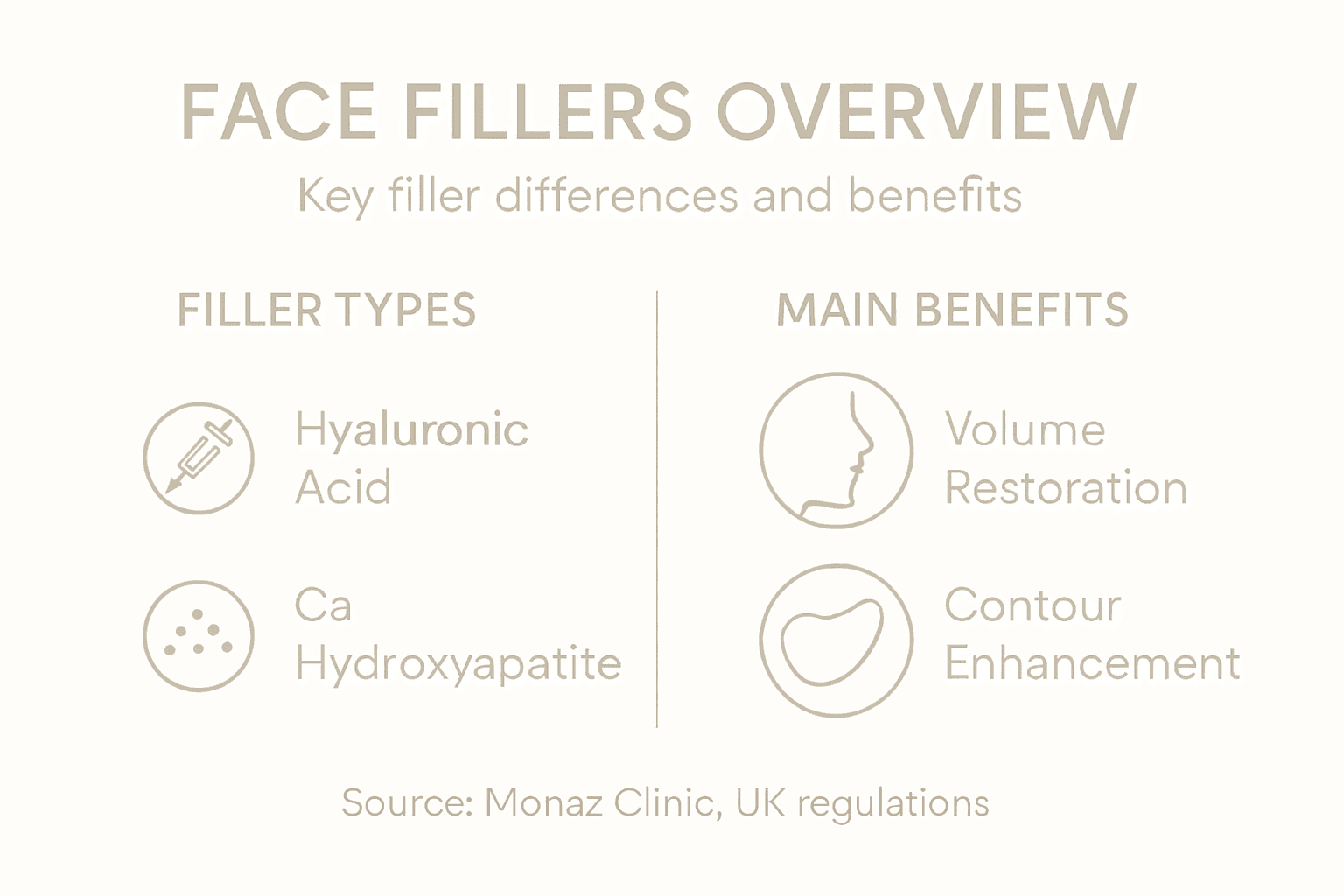
Here is a summary comparing key types of facial fillers by core characteristic:
| Filler Type | Typical Longevity | Main Benefit | Suitability |
|---|---|---|---|
| Hyaluronic Acid (HA) | 6–18 months | Immediate hydration & volume | Fine lines, natural look |
| Calcium Hydroxyapatite | 12–18 months | Gradual collagen boost | Deep wrinkles, volume |
| Poly-L-Lactic Acid (PLLA) | Up to 2 years | Sustained collagen creation | Structural improvements |
| PMMA | Permanent/long-lasting | Structural support, longevity | Major volume loss |
The advanced technologies behind these fillers enable nuanced approaches to facial rejuvenation. Unlike invasive surgical interventions, modern dermal fillers provide sophisticated, customisable solutions that work harmoniously with the body’s natural regenerative processes.
Pro tip: Consult a specialised aesthetic professional who can conduct a comprehensive facial assessment and recommend the most suitable filler type for your unique skin characteristics and aesthetic goals.
The Science Behind Dermal Filler Effects
Dermal fillers represent a sophisticated intersection of medical science and aesthetic innovation, designed to address complex aging processes through advanced biomaterial technologies. These injectable treatments work at the cellular level to restore and rejuvenate facial tissues by compensating for age-related structural changes.
The scientific mechanisms behind dermal fillers are multifaceted:
Volumetric Restoration:
- Directly replace lost facial volume
- Counteract natural collagen and fat depletion
- Restore youthful facial contours
Biomolecular Interactions:
- Stimulate natural collagen production
- Enhance skin hydration and elasticity
- Promote cellular regeneration
Molecular Hydration Processes:
- Hyaluronic acid attracts water molecules
- Create sustained tissue volume
- Improve overall skin quality
Tissue Biostimulation:
- Activate fibroblast activity
- Release regenerative cellular signals
- Support long-term structural improvements
The intricate scientific process involves precise biomaterial interactions that go beyond simple volume replacement. Different filler compositions interact uniquely with facial tissues, triggering specific physiological responses that gradually restore skin architecture and appearance.
Modern dermal filler technologies represent a nuanced approach to aesthetic medicine, combining advanced material science with a deep understanding of human tissue regeneration. By working harmoniously with the body’s natural processes, these treatments offer sophisticated solutions for managing the visible signs of aging.
Pro tip: Always consult a medically qualified professional who can explain the specific scientific mechanisms most relevant to your unique skin characteristics and aesthetic goals.
Safety, Suitability and UK Regulations
Dermal filler treatments in the United Kingdom are subject to rigorous regulatory standards designed to protect patient safety and ensure high-quality aesthetic interventions. Medical device regulations overseen by the Medicines and Healthcare products Regulatory Agency (MHRA) provide comprehensive guidelines for practitioner qualifications, product standards, and patient protection.
Key regulatory considerations for patients include:
Practitioner Qualifications:
- Must be registered with General Medical Council (GMC)
- Demonstrate specialist aesthetic medicine training
- Maintain current professional insurance
- Possess verified clinical credentials
Clinic Standards:
- Registered with Care Quality Commission (CQC)
- Maintain sterile treatment environments
- Follow strict infection control protocols
- Provide comprehensive patient consultation
Product Safety Requirements:
- Must have UKCA or CE marking
- Undergo continuous safety surveillance
- Meet stringent manufacturing standards
- Require detailed ingredient transparency
Patient Protection Protocols:
- Mandatory comprehensive pre-treatment consultation
- Detailed risk assessment and informed consent
- Clear aftercare and potential complication guidelines
- Professional follow-up procedures
The UK’s regulatory framework emphasises patient safety through a multi-layered approach that scrutinises both medical practitioners and aesthetic treatment technologies. These comprehensive guidelines ensure that dermal filler treatments meet the highest standards of medical practice and patient care.
Patients should always prioritise treatments from certified professionals who demonstrate transparency, medical expertise, and a commitment to individualised care. Understanding these regulatory standards empowers individuals to make informed decisions about their aesthetic treatments.
Pro tip: Request to see your practitioner’s GMC registration and professional qualifications before proceeding with any aesthetic treatment.
Comparing Face Fillers to Other Treatments
Aesthetic treatments offer diverse approaches to managing facial aging, with each method presenting unique benefits and limitations. Injectable treatments vary significantly in their mechanisms, duration, and specific aesthetic goals, making personalised consultation crucial for optimal results.
Key comparative aspects of facial aesthetic treatments include:
Anti-Wrinkle Injections:
- Target dynamic muscle movement
- Reduce expression-related wrinkles
- Typically last 3-6 months
- Prevent muscle contractions
Dermal Fillers:
- Restore lost volume
- Provide immediate structural enhancement
- Duration ranges from 6-24 months
- Physically fill and lift tissue
Surgical Interventions:
- Permanent structural changes
- More invasive procedure
- Longer recovery periods
- Significant cost investment
Skin Resurfacing Treatments:
- Address skin texture
- Stimulate collagen production
- Minimal invasiveness
- Gradual aesthetic improvements
While each treatment offers distinct advantages, many practitioners recommend combining complementary approaches for comprehensive facial rejuvenation. The strategic selection depends on individual skin characteristics, aesthetic goals, and physiological response to different interventions.
The table below compares facial fillers with other popular aesthetic treatments:
| Treatment Type | Procedure Invasiveness | Typical Recovery | Best For |
|---|---|---|---|
| Dermal Fillers | Minimally invasive | Minimal downtime | Volume loss, contour enhancement |
| Anti-Wrinkle Injections | Minimally invasive | 1–2 days | Expression wrinkles |
| Surgery (e.g. facelift) | Highly invasive | Several weeks | Pronounced sagging, major change |
| Skin Resurfacing | Non/minimally invasive | Few days (mild redness) | Texture, minor surface issues |
Modern aesthetic medicine emphasises personalised, nuanced treatments that respect individual facial anatomy and natural aging processes. The goal is not to dramatically alter appearance, but to subtly refresh and restore youthful characteristics with minimal intervention.
Pro tip: Always request a comprehensive consultation that explores multiple treatment options tailored specifically to your unique facial structure and aesthetic objectives.
Discover Safe and Subtle Face Filler Solutions Tailored for Women
If you are seeking to refresh your natural beauty while addressing volume loss and ageing signs described in this article, Monaz Clinic offers expert, medically guided dermal filler treatments designed exclusively for women. Our approach respects your unique facial anatomy with carefully selected fillers that restore youthful contours without altering your natural expression. We understand your desire for safe, effective treatments backed by science and delivered in a private, supportive environment.

Explore our specialised range of Dermal Fillers at Monaz Clinic, located at 96 Harley Street London, where you benefit from comprehensive assessment and personalised treatment plans. Act now to secure your complimentary consultation and take confident steps towards enhanced natural radiance. Visit us at Monaz Clinic and begin your journey to subtle, lasting facial rejuvenation today.
Frequently Asked Questions
What are the key benefits of using face fillers?
Face fillers help restore lost volume, enhance facial contours, and diminish the appearance of fine lines and wrinkles, providing a more youthful appearance with minimal downtime.
How long do the effects of different types of face fillers last?
The longevity of face fillers varies: Hyaluronic Acid fillers typically last 6-18 months, Calcium Hydroxyapatite fillers last 12-18 months, Poly-L-Lactic Acid fillers can last up to 2 years, and PMMA fillers provide permanent support.
Are there any safety concerns associated with face fillers?
Yes, it is crucial to ensure that treatments are carried out by qualified practitioners following UK regulations to minimise risks. Potential side effects can include swelling, bruising, or allergic reactions; thus, comprehensive consultations are important.
How do dermal fillers compare to surgical interventions?
Dermal fillers are minimally invasive with immediate results and minimal downtime, whereas surgical interventions involve more significant procedures with longer recovery times and permanent changes, making fillers a less invasive option for volume restoration.
Recommended
- Understanding What Are Facial Fillers and Their Benefits – Monaz Clinic London
- How Facial Fillers Work: Science, Safety and Benefits – Monaz Clinic London
- Understanding the Role of Dermal Fillers in Aesthetics – Monaz Clinic London
- Understanding the Benefits of Dermal Fillers for Facial Aesthetics – Monaz Clinic London