


Discover how cheek enhancement delivers natural results through expert techniques, dermal fillers, and personalised treatment plans for women in London seeking subtle facial rejuvenation.

Many women in London assume cheek enhancement means dramatic, obvious changes to their face. This misconception keeps some from exploring treatments that could restore youthful contours and balance their features. In reality, modern cheek enhancement offers a spectrum of results, from barely-there refinement to elegant definition. This guide explores how non-surgical methods deliver natural-looking outcomes tailored to your unique facial structure, helping you make informed decisions about treatment options available in London’s aesthetic landscape.
Table of Contents
- What Is Cheek Enhancement And Why Is It Popular In London?
- Methods And Materials Used For Defining Cheek Enhancement
- Achieving Natural, Defined Cheek Contours: Technique And Considerations
- Cost, Aftercare And What To Expect From Your Cheek Enhancement Journey
- Discover Cheek Enhancement At Monaz Clinic London
- Frequently Asked Questions About Cheek Enhancement
Key takeaways
| Point | Details |
|---|---|
| Subtle or defined looks | Cheek enhancement can provide barely noticeable refinement or more pronounced contouring based on your aesthetic goals. |
| Multiple non-surgical methods | Dermal fillers remain the primary approach, with various formulations offering different longevity and effects. |
| Restores youthful contours | Treatment focuses on replacing lost volume and rebalancing facial proportions rather than creating artificial features. |
| Fully customisable treatment | Clinicians tailor injection techniques, product selection, and placement to suit individual facial anatomy and desired outcomes. |
What is cheek enhancement and why is it popular in London?
Cheek enhancement addresses volume loss and contour changes that occur naturally with age. As facial fat pads shift and bone resorption progresses, the mid-face can appear hollow or flattened. This treatment restores fullness to the cheek area, lifting sagging tissue and creating a more youthful, refreshed appearance without surgery.
London’s aesthetic scene has witnessed remarkable growth in demand for subtle facial rejuvenation. Women increasingly seek treatments that enhance rather than transform, prioritising natural movement and expression over frozen or overdone results. The capital’s discerning clientele values discretion, making cheek enhancement particularly appealing for its ability to deliver noticeable improvement whilst maintaining authenticity.
Several factors drive this popularity. First, the treatment offers immediate visible results with minimal downtime, fitting seamlessly into busy London lifestyles. Second, it addresses multiple concerns simultaneously, from hollowed mid-faces to undefined bone structure. Third, the non-surgical nature means reversibility and adjustability, allowing gradual refinement over multiple sessions if desired.
Women typically pursue cheek enhancement for these primary reasons:
- Restoring volume lost through ageing, creating a lifted, more youthful appearance
- Improving facial balance by adding definition to flat or underdeveloped cheekbones
- Addressing asymmetry where one cheek appears less full than the other
- Enhancing overall facial contours to complement other features harmoniously
- Achieving a refreshed look without the recovery time associated with surgical procedures
The treatment suits women at various life stages. Younger patients may seek subtle contouring to enhance naturally flat cheeks, whilst those in their forties and beyond often aim to replace lost volume and counteract gravitational effects. The key lies in customisation, ensuring results align with individual facial anatomy and aesthetic preferences rather than following a one-size-fits-all approach.
Methods and materials used for defining cheek enhancement
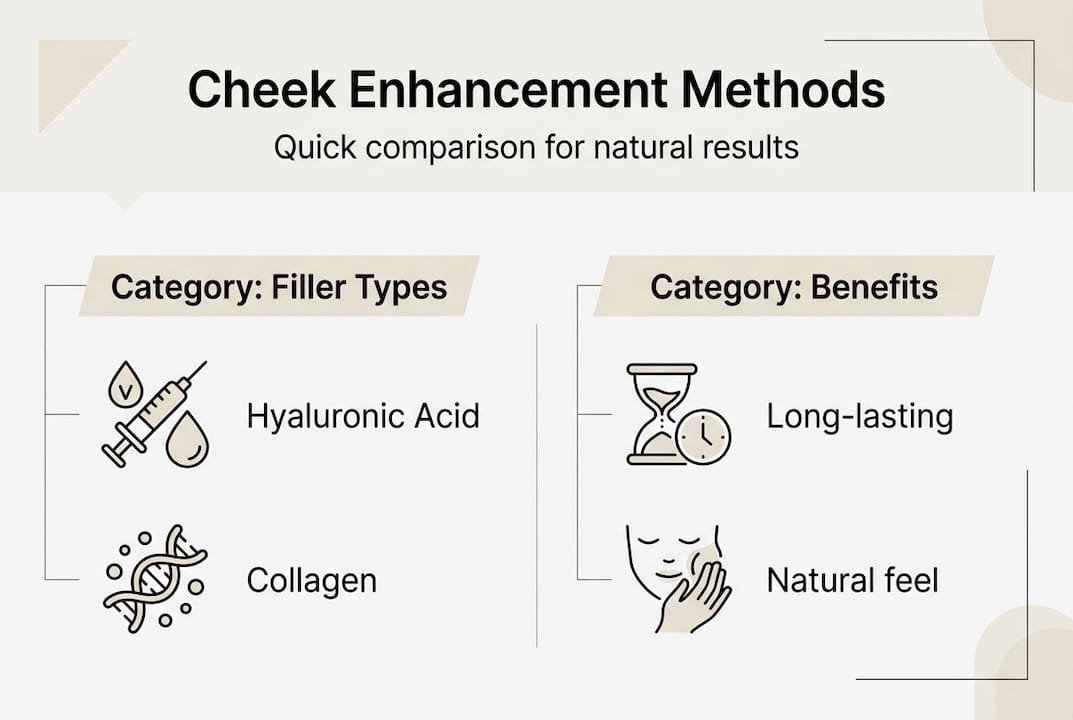
Dermal fillers represent the gold standard for non-surgical cheek enhancement, offering versatility and proven safety profiles. These injectable gels restore volume beneath the skin’s surface, supporting tissue and creating the desired contour. Dermal fillers deliver natural and adaptable results tailored to individual facial anatomy, making them the preferred choice for practitioners and patients alike.
Hyaluronic acid fillers dominate the market due to their biocompatibility and reversibility. This naturally occurring substance attracts moisture, providing not only volume but also subtle hydration to the treated area. Different formulations vary in particle size, cross-linking density, and cohesivity, allowing clinicians to select products based on the specific outcome required. Thicker, more robust fillers suit deep structural support, whilst softer formulations work better for superficial contouring.
Several filler types serve distinct purposes in cheek enhancement:
- High G-prime fillers provide substantial lift and projection for significant volume restoration
- Medium viscosity products offer balanced support suitable for most enhancement goals
- Lower viscosity fillers integrate smoothly for subtle refinement and natural movement
- Calcium hydroxylapatite options stimulate collagen production alongside immediate volumising effects
Longevity varies considerably between products. Hyaluronic acid fillers typically last 12 to 18 months in the cheek area, though some advanced formulations extend beyond two years. Factors affecting duration include metabolic rate, muscle activity, and the specific product used. Calcium-based fillers may persist slightly longer but lack the reversibility of hyaluronic acid options.
| Filler type | Primary benefit | Typical longevity | Best suited for |
|---|---|---|---|
| High G-prime HA | Maximum lift and structure | 18-24 months | Significant volume loss |
| Medium viscosity HA | Balanced enhancement | 12-18 months | Moderate contouring needs |
| Soft HA | Natural integration | 9-12 months | Subtle refinement |
| Calcium hydroxylapatite | Collagen stimulation | 15-24 months | Structural support |
Emerging treatments include polynucleotide therapy and collagen-stimulating injectables, though these remain complementary rather than primary cheek enhancement methods. These biostimulators work gradually, improving skin quality and encouraging natural collagen production over several months.
Customisation determines success. Clinicians assess facial proportions, skin thickness, bone structure, and aesthetic goals before selecting products. A woman seeking barely-there refinement receives different treatment than someone wanting pronounced cheekbone definition. The artistry lies in understanding how different fillers behave within varied facial contexts, ensuring results appear intentional yet effortless.
Pro Tip: Schedule a detailed consultation where your clinician explains which specific filler products they recommend for your facial structure and why, ensuring you understand the rationale behind their treatment plan before proceeding.
Achieving natural, defined cheek contours: technique and considerations
Precise technique separates natural-looking enhancement from obvious intervention. Achieving natural results requires practitioners to focus on enhancing facial balance rather than overfilling, respecting anatomical landmarks and working with existing bone structure rather than against it.
Successful cheek enhancement follows a methodical approach:
- Comprehensive facial assessment examining bone structure, soft tissue distribution, and existing asymmetries from multiple angles
- Photographic documentation capturing baseline appearance for comparison and treatment planning purposes
- Detailed discussion of aesthetic goals, ensuring alignment between patient expectations and achievable outcomes
- Product selection based on the degree of enhancement required and individual tissue characteristics
- Precise marking of injection points along the zygomatic arch and malar prominence areas
- Controlled injection using appropriate techniques such as linear threading, fanning, or bolus placement depending on the desired effect
- Immediate assessment and potential adjustment to ensure symmetry and natural contour
Pre-treatment assessment proves crucial. Clinicians evaluate not only the cheeks in isolation but their relationship to surrounding features. A perfectly enhanced cheek that creates imbalance with the chin or temples fails to achieve true aesthetic harmony. This holistic view ensures enhancement complements your entire facial architecture.
Injection techniques vary based on the specific area and product used. Deep placement along the bone provides structural lift, whilst more superficial injection creates surface contour. Many practitioners employ a layered approach, building volume gradually from deep to superficial planes. This multi-level technique produces more natural results than single-depth placement, allowing the filler to integrate seamlessly with existing tissue.
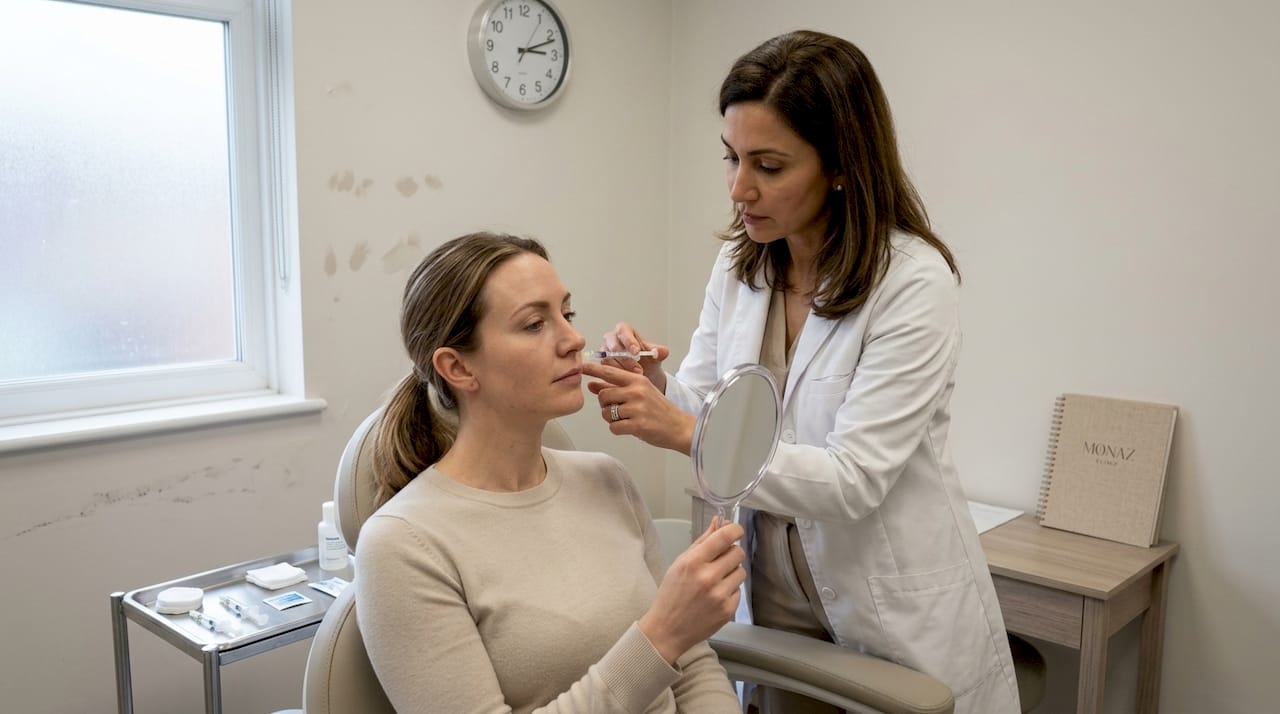
Immediate results appear once treatment concludes, though minor swelling may temporarily exaggerate the effect. Most patients notice the final outcome within two weeks as any swelling subsides and the product settles into its optimal position. The cheeks may feel slightly firm initially, softening over the following days as the filler integrates with surrounding tissue.
Recovery requires minimal disruption to daily activities. You can typically return to work immediately, though some practitioners recommend avoiding strenuous exercise for 24 hours. Minor bruising or tenderness at injection sites resolves within a few days. Sleeping elevated the first night helps minimise swelling.
Pro Tip: Bring reference photos showing the degree of enhancement you find appealing, but discuss realistic adaptations for your unique facial structure rather than expecting identical replication of another person’s results.
Natural balance enhances overall confidence and appearance far more effectively than exaggerated features that draw attention to the treatment itself rather than your inherent beauty.
Communication throughout the process ensures your vision translates into reality. Express concerns about looking overdone, and request conservative initial treatment with the option to add more later if desired. Reputable clinicians appreciate patients who prioritise subtlety, as this aligns with best practice principles.
Cost, aftercare and what to expect from your cheek enhancement journey
Understanding the financial commitment helps you plan appropriately. In London, cheek enhancement costs vary by clinic and product but generally range within accessible price points for non-surgical treatments, reflecting the expertise required and product quality used.
Typical investment ranges from £300 to £800 per session, depending on the amount of product required and the specific filler selected. Premium formulations with extended longevity command higher prices but may prove more economical long term due to less frequent maintenance. Most women require one to two syringes initially, with subsequent top-up sessions potentially needing less product.
| Treatment aspect | Details | Notes |
|---|---|---|
| Initial session cost | £400-£800 | Varies by product and volume needed |
| Treatment duration | 30-45 minutes | Includes consultation and application |
| Results longevity | 12-24 months | Depends on product and individual metabolism |
| Maintenance frequency | Annually or biannually | Based on how quickly filler metabolises |
| Downtime required | Minimal to none | Most resume normal activities immediately |
Aftercare significantly influences both immediate comfort and long-term results. Following these guidelines maximises your investment:
- Avoid touching or massaging the treated area for 24 hours to allow proper product settling
- Sleep elevated on your back the first night to minimise swelling and prevent filler migration
- Skip intense exercise, saunas, and steam rooms for 48 hours as heat can exacerbate swelling
- Apply cold compresses gently if swelling occurs, avoiding direct pressure on injection sites
- Stay well hydrated to support the hyaluronic acid’s moisture-attracting properties
- Avoid alcohol for 24 hours as it can increase bruising and prolong swelling
- Attend your scheduled follow-up appointment for assessment and any minor adjustments needed
Successful outcomes manifest as improved facial balance without obvious intervention. Your cheeks should appear naturally fuller with enhanced definition that harmonises with your other features. Friends may comment that you look well-rested or refreshed rather than identifying specific changes. This subtlety indicates proper technique and appropriate product selection.
Standard follow-up typically occurs two weeks post-treatment, allowing time for swelling to resolve and filler to settle completely. Your clinician assesses symmetry, contour, and overall aesthetic outcome during this appointment. Minor adjustments can address any areas requiring refinement, though most patients find initial results satisfactory.
Maintenance sessions become necessary as the body gradually metabolises the filler. Most women schedule top-up treatments every 12 to 18 months, though individual variation exists. Some find results persist beyond two years, whilst others metabolise product more quickly. Factors including age, metabolism, muscle activity, and lifestyle influence longevity.
Repeat treatments often require less product than initial sessions since some structural support remains. This makes maintenance more economical whilst preserving the enhanced contours you’ve achieved. Consistency in scheduling prevents complete reversion to the pre-treatment state, making each subsequent session more efficient.
Discover cheek enhancement at Monaz Clinic London
If you’re considering cheek enhancement treatment, Monaz Clinic offers specialised expertise in non-surgical facial aesthetics exclusively for women. Located at 96 Harley Street, our clinic combines medical precision with an artistic approach to deliver results that refresh rather than transform.
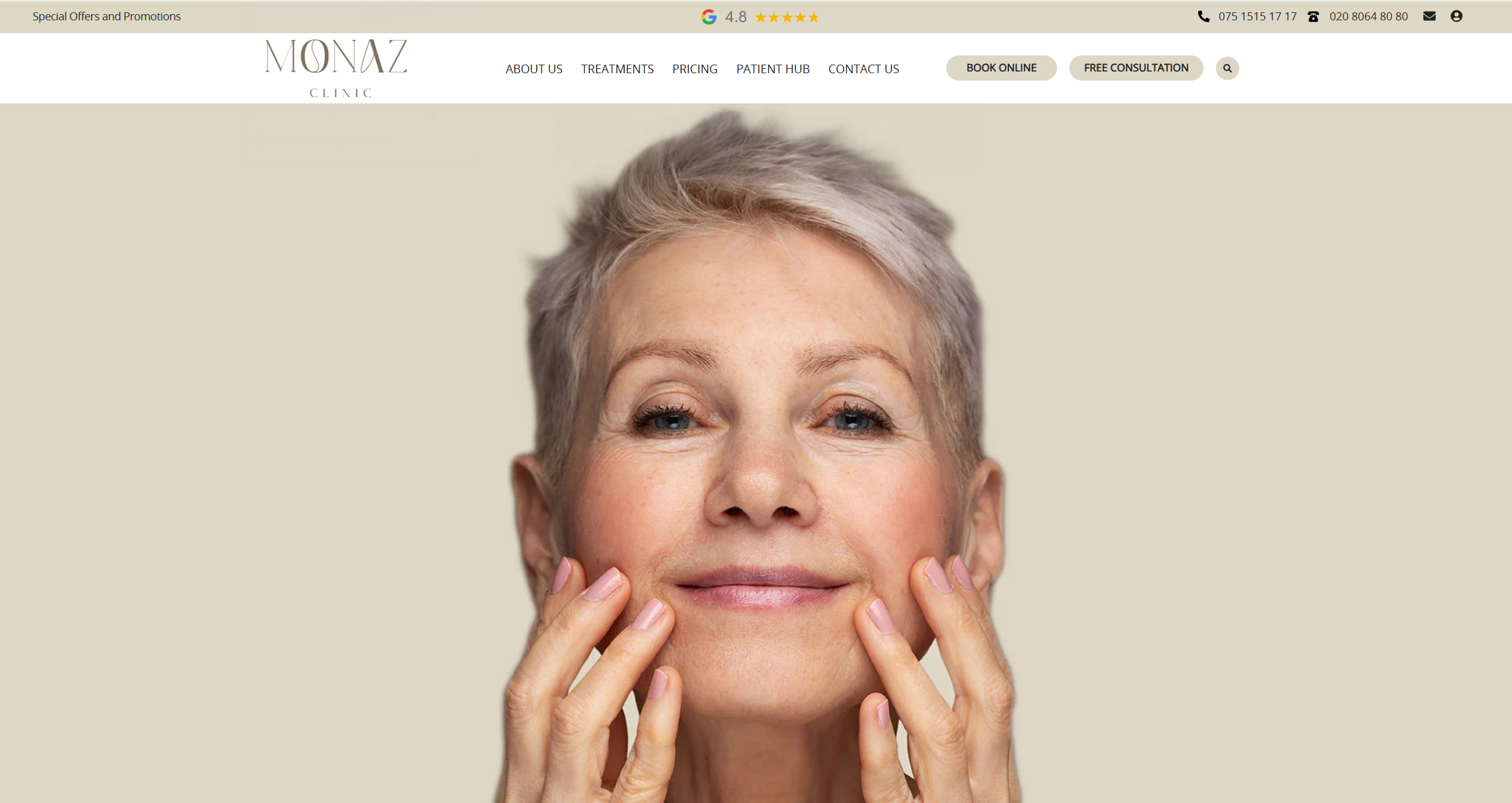
Our philosophy centres on respecting your natural anatomy whilst addressing the specific concerns that brought you to consider treatment. Whether you’re looking to restore lost volume, enhance definition, or achieve better facial balance, we create personalised treatment plans that align with your aesthetic goals and comfort level.
Beyond cheek enhancement, we offer comprehensive facial rejuvenation services including dermal fillers for lips, jawline, and temples, as well as anti-wrinkle treatments and advanced skin boosters. Many women combine cheek enhancement with complementary procedures for harmonious overall results. Our transparent dermal fillers price list and wrinkle softening price list help you plan your aesthetic journey with confidence.
Every appointment begins with a complimentary, no-pressure consultation where we listen to your concerns, assess your facial structure, and discuss realistic outcomes. This collaborative approach ensures you feel informed and comfortable throughout your treatment journey.
Frequently asked questions about cheek enhancement
What is cheek enhancement and who is it suitable for?
Cheek enhancement uses dermal fillers to restore volume and definition to the mid-face area. It suits women experiencing age-related volume loss, those with naturally flat cheeks seeking more definition, or anyone wanting to improve facial balance. Most healthy adults make good candidates, though a consultation determines individual suitability.
How long do results typically last?
Results generally persist 12 to 24 months depending on the specific filler used, your metabolism, and lifestyle factors. Higher density products tend to last longer, whilst individual metabolic rates influence how quickly your body breaks down the filler. Regular maintenance sessions preserve your enhanced contours.
Are cheek enhancement treatments painful?
Most patients report minimal discomfort during treatment. Many modern fillers contain local anaesthetic, and practitioners can apply topical numbing cream beforehand. You may feel pressure and slight pinching during injection, but the process remains tolerable for the vast majority. Any tenderness subsides within hours.
What risks or side effects should I know about?
Common temporary effects include mild swelling, bruising, redness, and tenderness at injection sites, typically resolving within days. Serious complications remain rare when treatment is performed by qualified practitioners using approved products. Choosing an experienced clinician significantly minimises risks whilst ensuring optimal aesthetic outcomes.
How can I maintain results after treatment?
Maintain results by scheduling follow-up sessions before filler completely metabolises, typically every 12 to 18 months. Protect your skin with daily SPF to prevent premature ageing. Stay hydrated and maintain a stable weight, as significant fluctuations can affect facial volume. Follow all aftercare instructions and attend scheduled review appointments for natural cheek enhancement results.
Can cheek enhancement look natural or does it always appear obvious?
Properly executed cheek enhancement appears completely natural when tailored to your facial anatomy and aesthetic goals. The key lies in conservative product placement, appropriate filler selection, and respecting your existing bone structure. Subtle enhancement that harmonises with your features will leave you looking refreshed rather than obviously treated.