


Dynamic wrinkles explained, including causes, types, cosmetic treatment options for women, and natural-looking facial rejuvenation at Monaz Clinic Harley Street.

Nearly 90 percent of people notice the first signs of ageing as dynamic wrinkles develop on their forehead or around their eyes. For many British individuals, these early lines often signal a deeper concern about facial ageing and confidence. Understanding what really causes dynamic wrinkles helps you make smarter choices about skincare and aesthetic treatments, offering practical steps that can keep your skin looking smooth and youthful for longer.
Table of Contents
- What Are Dynamic Wrinkles and Their Causes
- Distinguishing Dynamic From Static Wrinkles
- How Facial Movements Create Wrinkles
- Popular Treatments for Dynamic Wrinkles
- Achieving Natural Results With Aesthetics
Key Takeaways
| Point | Details |
|---|---|
| Understanding Dynamic Wrinkles | Dynamic wrinkles are caused by repetitive facial muscle contractions, becoming more pronounced over time as skin elasticity decreases. |
| Differences Between Wrinkle Types | Dynamic wrinkles appear during expressions, whereas static wrinkles are visible at rest, stemming from structural skin changes. |
| Treatment Options | Botulinum toxin injections are the primary treatment, complemented by topical treatments and lifestyle modifications for holistic care. |
| Natural Aesthetic Results | Achieving natural outcomes involves precise treatment techniques that respect individual facial dynamics, preventing the ‘frozen’ look. |
What Are Dynamic Wrinkles and Their Causes
Dynamic wrinkles represent a unique category of facial lines emerging from repetitive muscular movements and expressions. Unlike static wrinkles which remain visible at rest, these lines develop through consistent facial muscle contractions that gradually etch patterns into the skin’s surface. Understanding their formation provides crucial insights into facial ageing processes and aesthetic interventions.
The primary mechanism behind dynamic wrinkles involves the repeated folding and creasing of skin during emotional and muscular expressions. When muscles contract, they pull the overlying skin in specific directions, creating temporary lines that eventually become permanent with sustained repetition. Common areas susceptible to dynamic wrinkles include the forehead, around the eyes (known as crow’s feet), and between the eyebrows (glabellar lines). Understanding anti-wrinkle injection techniques can help mitigate these visible signs of ageing.
Causal factors contributing to dynamic wrinkle development extend beyond simple muscular movements. Genetic predisposition, skin elasticity, collagen production, sun exposure, lifestyle habits, and individual facial muscle patterns all influence how quickly and prominently these lines emerge. Individuals with more expressive facial movements or those experiencing higher stress levels tend to develop dynamic wrinkles earlier and more dramatically. Factors like smoking, inadequate hydration, poor nutrition, and lack of skincare routines can accelerate the wrinkle formation process, making proactive skin management essential for maintaining a youthful appearance.
Recognising dynamic wrinkles involves observing how facial lines change during expression versus at rest. These wrinkles initially appear only during muscle movement but progressively become more permanent as skin loses its natural elasticity and resilience. Aesthetic professionals can assess the depth, pattern, and progression of dynamic wrinkles to recommend personalised treatment strategies that help restore skin smoothness and prevent further age-related changes.
Distinguishing Dynamic From Static Wrinkles
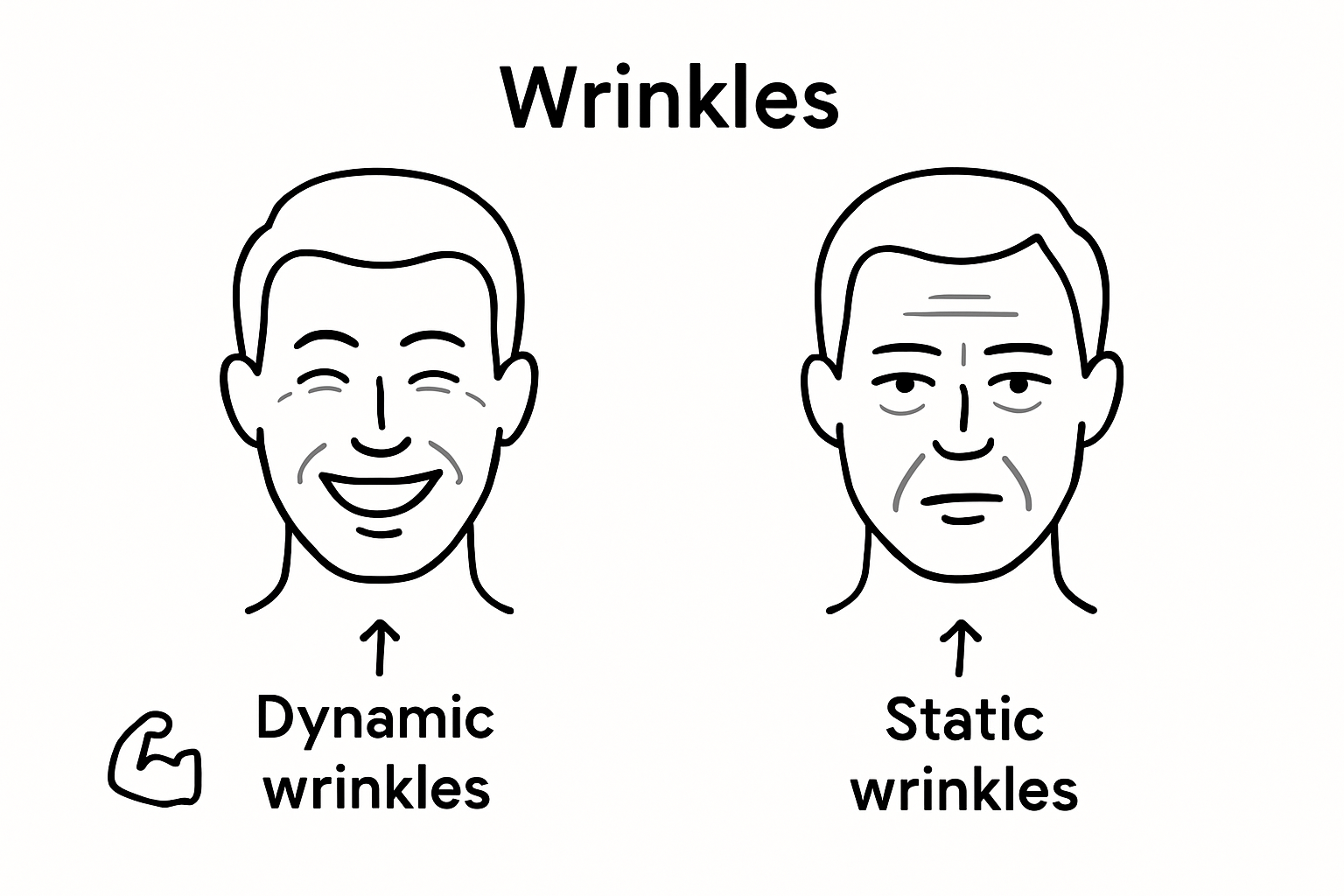
Distinguishing between dynamic and static wrinkles represents a critical aspect of understanding facial ageing and aesthetic interventions. While both types of wrinkles contribute to visible signs of ageing, they originate from fundamentally different mechanisms and require distinct approaches for management and treatment. Dynamic wrinkles emerge through muscular movements and expressions, whereas static wrinkles develop as a result of cumulative skin changes over time.
Dynamic wrinkles manifest during facial expressions and muscle contractions, appearing as temporary lines that gradually become more permanent. These wrinkles typically form in areas of frequent movement such as around the eyes, forehead, and between the eyebrows. In contrast, static wrinkles remain visible even when facial muscles are completely relaxed, reflecting deeper structural changes in skin composition. Comprehensive wrinkle treatment strategies can help address both dynamic and static wrinkle formations effectively.

The progression from dynamic to static wrinkles occurs through a complex interplay of biological factors. As skin loses collagen and elastin with age, repeated muscular movements create more lasting impressions in the skin’s surface. Factors like sun exposure, genetics, lifestyle habits, and skincare routines significantly influence this transformation. Young skin can quickly bounce back from muscular movements, but as skin loses its natural resilience, dynamic wrinkles become increasingly permanent, eventually transitioning into static wrinkles that are visible regardless of facial expression.
Dermatological assessment plays a crucial role in distinguishing these wrinkle types. Professionals evaluate wrinkle characteristics by observing skin behaviour during rest and movement, assessing depth, pattern, and skin elasticity. Understanding these nuanced differences allows for more targeted and personalised treatment approaches, helping individuals maintain smoother, more youthful-looking skin through tailored interventions that address both dynamic and static wrinkle formations.
How Facial Movements Create Wrinkles
The intricate relationship between facial muscle contractions and wrinkle formation represents a fascinating biological process of skin mechanics and ageing. Mechanical buckling of skin during muscle movements triggers a complex series of structural changes that gradually etch permanent lines into our facial landscape. When facial muscles contract, they generate significant compressive forces that temporarily distort skin’s smooth surface, creating momentary creases and folds.
These muscular contractions produce what specialists call expressional lines, which initially appear and disappear rapidly during emotional or physical expressions. Repetitive movements in specific facial regions progressively weaken skin’s elastic properties, causing these temporary lines to become increasingly pronounced. Key areas susceptible to dynamic wrinkle formation include the forehead, around the eyes (crow’s feet), and between the eyebrows, where muscle activity is most frequent and intense. Best treatment approaches for wrinkle prevention can help mitigate these persistent muscular impacts.
Multiple physiological factors contribute to how facial movements transform into permanent wrinkles. Collagen and elastin degradation, reduced skin hydration, cumulative sun exposure, and individual genetic predispositions all influence how quickly and dramatically facial movements create lasting impressions. Younger skin possesses remarkable resilience, quickly bouncing back from muscular contractions, whereas mature skin loses this regenerative capacity, making repeated expressions more likely to leave permanentmarks.
Understanding the biomechanical process of wrinkle formation empowers individuals to make informed skincare decisions. Professionals recommend strategies such as controlled facial muscle relaxation, targeted skincare routines, and preventative aesthetic treatments to minimise the impact of repetitive facial movements. By comprehending how muscle contractions progressively transform skin’s structural integrity, one can adopt more proactive approaches to maintaining a smooth, youthful facial appearance.
Popular Treatments for Dynamic Wrinkles
Treatment options for dynamic wrinkles have evolved significantly, offering sophisticated approaches to managing facial ageing and preserving skin’s youthful appearance. Understanding comprehensive anti-wrinkle treatment strategies reveals multiple interventions designed to address the underlying muscular movements that create these expressive lines. The primary goal of these treatments is to relax facial muscles, reduce repetitive contractions, and prevent the progressive deepening of wrinkles.
Botulinum toxin injections represent the most prevalent and widely recognised treatment for dynamic wrinkles. These neuromuscular relaxants temporarily interrupt nerve signals to specific facial muscles, preventing excessive contractions that contribute to wrinkle formation. Practitioners strategically administer these injections in areas prone to dynamic wrinkles, including the forehead, around the eyes, and between the eyebrows. Advanced anti-wrinkle injection techniques allow for precise muscle targeting, ensuring natural-looking results that maintain facial expressiveness while minimising wrinkle development.
Beyond injectable treatments, complementary approaches play crucial roles in managing dynamic wrinkles. Topical treatments containing retinoids, peptides, and antioxidants can support skin’s structural integrity, enhancing collagen production and improving overall skin resilience. Professional skincare treatments such as chemical peels, microneedling, and advanced facial therapies provide additional mechanisms for reducing the appearance of dynamic wrinkles by stimulating cellular regeneration and improving skin texture.
A holistic approach to dynamic wrinkle management encompasses more than clinical interventions. Lifestyle modifications including proper hydration, sun protection, balanced nutrition, stress management, and consistent skincare routines can significantly mitigate the progression of dynamic wrinkles. Individualised treatment plans, developed through comprehensive consultations with aesthetic professionals, ensure that each person receives targeted interventions tailored to their unique facial dynamics and skin characteristics.
Achieving Natural Results With Aesthetics
Achieving natural-looking aesthetic results requires a sophisticated understanding of facial anatomy, muscular dynamics, and personalised treatment approaches. Precise techniques for targeting dynamic wrinkles demand expert knowledge to ensure treatments enhance rather than transform an individual’s inherent facial characteristics. The artistry of aesthetic interventions lies in subtle modifications that preserve unique facial expressions while minimising visible signs of ageing.
The cornerstone of natural aesthetic results involves strategic muscle relaxation and selective treatment. Practitioners must carefully assess facial muscle movements, understanding how different muscle groups interact to create expressions. Personalising facial aesthetic approaches allows for tailored interventions that respect individual facial architecture. This approach prevents the stereotypical ‘frozen’ appearance often associated with aesthetic treatments, instead focusing on gentle refinement that maintains natural mobility and emotional expressiveness.
Technical precision plays a crucial role in achieving understated aesthetic outcomes. Experienced practitioners employ micro-dosing techniques, using minimal quantities of neuromuscular relaxants to create subtle improvements. By targeting specific muscle groups responsible for dynamic wrinkle formation, professionals can effectively reduce line visibility without compromising the patient’s ability to convey genuine emotions. Advanced injection methods allow for nuanced application, ensuring that facial movements remain fluid and authentic.
A holistic approach to natural aesthetic results extends beyond clinical interventions. Comprehensive consultations that explore an individual’s aesthetic goals, facial structure, and lifestyle contribute to more personalised outcomes. Practitioners consider factors such as skin quality, facial symmetry, muscle dynamics, and natural ageing patterns to develop bespoke treatment strategies. This patient-centred methodology ensures that aesthetic enhancements appear seamless, supporting each person’s unique beauty while addressing their specific concerns about dynamic wrinkle formation.
Restore Youthful Expression by Managing Dynamic Wrinkles
Dynamic wrinkles develop from repeated facial muscle movements and can progressively impact your natural appearance by forming deeper lines over time. If you have noticed those fine lines forming during expressions around your forehead, eyes, or between the eyebrows you are not alone. These expressional wrinkles reveal a common challenge in maintaining smooth youthful skin amid natural facial movements.
At Monaz Clinic, we understand how important it is to treat dynamic wrinkles with precision to preserve your unique facial expressions while reducing visible signs of ageing. Our expert team offers tailored solutions that relax targeted muscles and support skin resilience for natural-looking results in a safe and professional environment with a personal touch.
Discover effective ways to protect your skin and learn about advanced non-surgical treatments by exploring our tips – Monaz Clinic | Facial Aesthetic Clinic in London section.

Take control of ageing caused by dynamic wrinkles today. Visit Monaz Clinic to schedule a complimentary consultation and find personalised treatments designed for your skin’s needs and lifestyle. Reveal your best self with expert care and confidence.
Frequently Asked Questions
What are dynamic wrinkles and how do they form?
Dynamic wrinkles are facial lines that develop due to repetitive muscular movements and expressions. They are initially temporary lines that become permanent as facial muscles contract over time, especially in areas like the forehead, around the eyes, and between the eyebrows.
How do dynamic wrinkles differ from static wrinkles?
Dynamic wrinkles emerge during facial expressions, becoming more pronounced with age and repeated movements, while static wrinkles remain visible even at rest, indicating deeper structural changes in the skin
What treatments are available for dynamic wrinkles?
Treatment options for dynamic wrinkles include botulinum toxin injections, which relax facial muscles to reduce wrinkle formation, as well as topical treatments with retinoids and professional skincare therapies like chemical peels and microneedling.
How can I prevent the formation of dynamic wrinkles?
Preventing dynamic wrinkles involves maintaining good hydration, protecting your skin from sun exposure, following a healthy diet, managing stress, and adhering to a consistent skincare routine. Consulting with aesthetic professionals for personalised treatment plans can also aid in prevention.
Recommended
- Understanding What is the Best Treatment for Wrinkles – Monaz Clinic London
- Understanding What is the Best Treatment for Wrinkles – Monaz Clinic London
- Dynamic Wrinkle Treatment: Everything You Need to Know – Monaz Clinic London
- Understanding Defining Wrinkle Prevention for Aesthetic Care – Monaz Clinic London