


Facial assessment checklist at Monaz Clinic: learn key steps, assessment types, patient safety, and how to achieve natural results in London aesthetics.
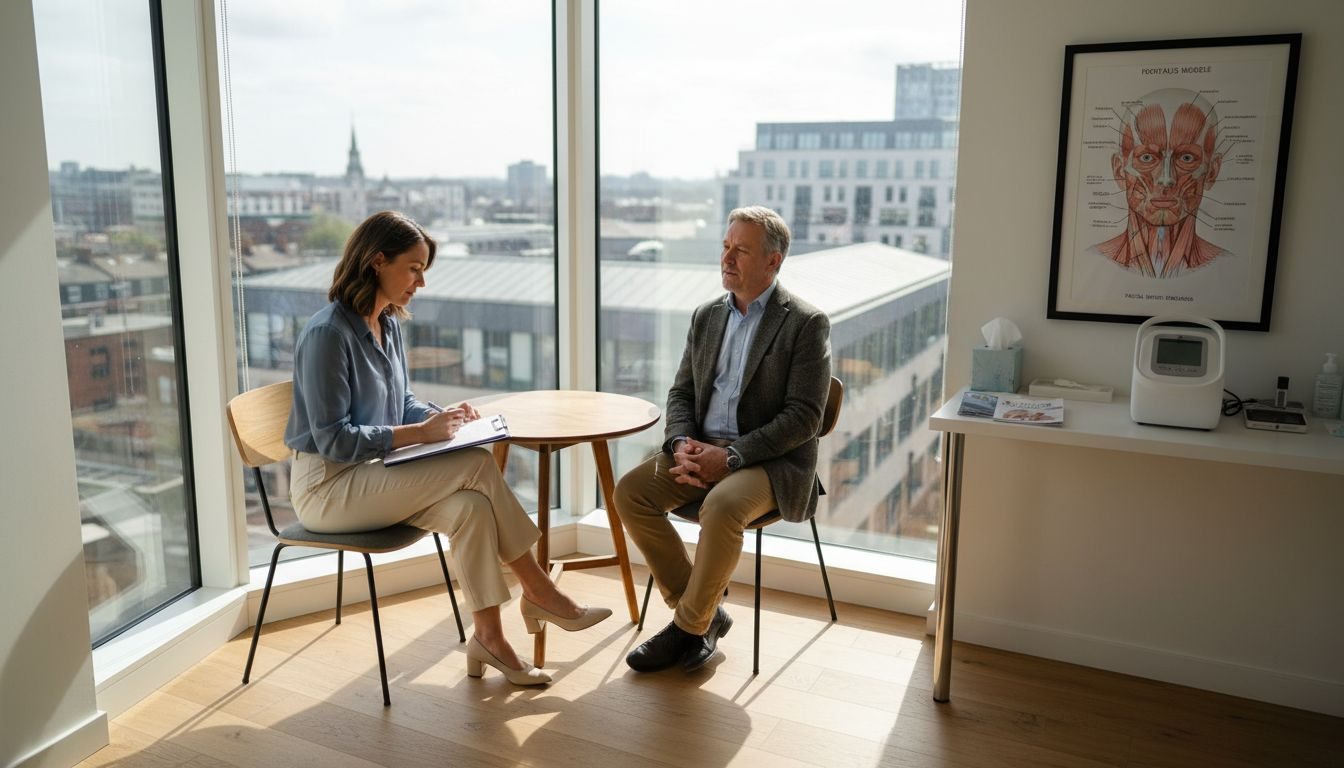
Most british women believe subtle, natural beauty stands out more than dramatic changes. In Central London, women balancing busy lives want facial aesthetic treatments that enhance rather than transform. Understanding the science behind facial assessments can be the secret to choosing safe, effective, and personalised procedures. Discover how evidence-based checklists and expert guidance ensure every treatment supports your unique features while meeting the highest standards of british care.
Table of Contents
- Defining the Facial Assessment Checklist
- Essential Components of Facial Evaluation
- Types of Facial Assessment Techniques
- Patient Safety and Ethical Considerations
- Achieving Natural Results Through Personalised Plans
Key Takeaways
| Point | Details |
|---|---|
| Comprehensive Facial Assessment | A systematic checklist is essential for evaluating aesthetic and medical characteristics of facial structures. |
| Personalised Treatment Plans | Tailored strategies enhance natural beauty while respecting individual characteristics and aesthetic goals. |
| Ethical Considerations | Prioritising patient safety, informed consent, and professional integrity is crucial in aesthetic practice. |
| Integration of Techniques | Employing various assessment methods guarantees a holistic understanding of an individual’s facial anatomy. |
Defining the Facial Assessment Checklist
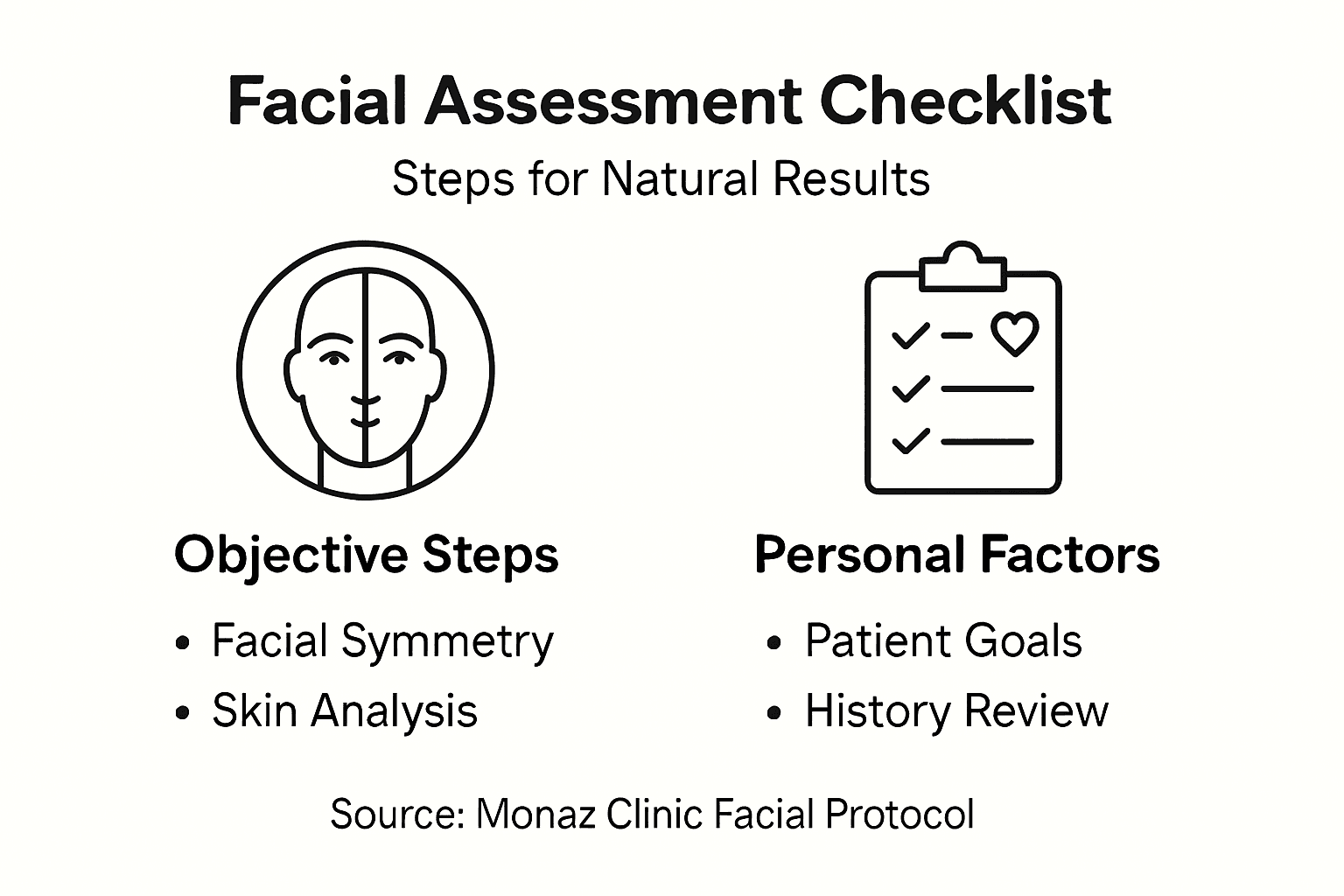
A facial assessment checklist represents a systematic approach to evaluating aesthetic and medical characteristics of an individual’s facial structure. Developed through rigorous clinical research, these checklists enable practitioners to conduct comprehensive examinations that go beyond superficial observations. Comprehensive facial assessment techniques have become essential tools in modern medical aesthetics, providing a structured methodology for understanding unique facial characteristics.
The core purpose of a facial assessment checklist involves multiple critical dimensions of evaluation. These typically include:
- Facial symmetry and proportions
- Skin texture and quality
- Volume distribution and potential areas of enhancement
- Underlying bone structure
- Muscle dynamics and movement patterns
- Potential age-related changes
- Specific aesthetic or medical concerns
Precision is paramount in these assessments. Medical professionals utilise standardised protocols to ensure objective and consistent evaluations that can guide personalised treatment plans. Structured facial recognition methods help practitioners develop targeted strategies that respect individual facial anatomy and aesthetic goals.
Professional facial assessments move beyond simple visual inspection, incorporating advanced diagnostic techniques that consider multiple physiological factors. By examining facial features holistically, practitioners can develop nuanced treatment approaches that enhance natural beauty while maintaining individual characteristics.
Pro tip: Always request a comprehensive, personalised facial assessment that considers your unique facial structure and aesthetic goals before any cosmetic procedure.
Essential Components of Facial Evaluation
Comprehensive facial evaluation encompasses multiple sophisticated assessment parameters that enable practitioners to develop personalised treatment strategies. Critical patient evaluation standards require meticulous examination of an individual’s unique facial characteristics, ensuring precise and tailored aesthetic approaches.
The key components of a thorough facial assessment include:
- Detailed medical and aesthetic history
- Comprehensive skin texture analysis
- Facial symmetry and proportion assessment
- Structural bone and soft tissue evaluation
- Muscle movement and dynamic expression analysis
- Age-related changes and structural considerations
- Individual aesthetic goals and expectations
Practitioners must employ a systematic approach that considers both objective measurements and subjective aesthetic principles. Advanced facial recognition protocols help healthcare professionals develop nuanced understanding of facial anatomy, enabling treatments that enhance natural beauty while respecting individual characteristics.
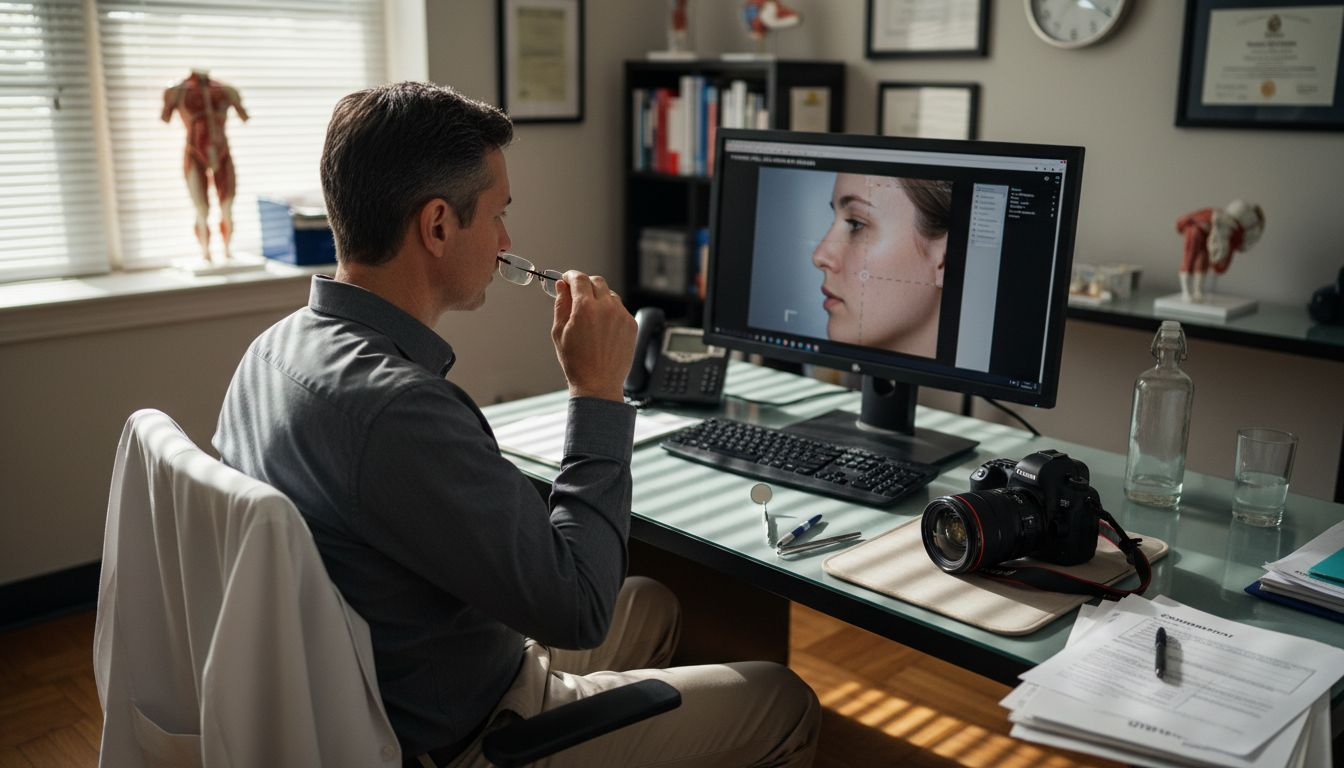
Successful facial evaluations integrate clinical precision with artistic sensibility. By examining facial features holistically, practitioners can develop treatment plans that address specific concerns while maintaining the unique essence of an individual’s appearance. This balanced approach ensures outcomes that look refined, natural, and harmonious with the patient’s inherent facial structure.
Pro tip: Request a comprehensive consultation that includes detailed photography and digital imaging to support a thorough and accurate facial assessment.
Types of Facial Assessment Techniques
Facial assessment techniques have evolved significantly, encompassing a range of sophisticated methodologies that provide comprehensive insights into an individual’s unique facial characteristics. Advanced facial recognition approaches now integrate cutting-edge technologies that transform traditional evaluation methods, enabling practitioners to develop precise and personalised treatment strategies.
The primary types of facial assessment techniques can be categorised into several key approaches:
Clinical Manual Examination
- Physical palpation and visual inspection
- Measurement of facial proportions and symmetry
- Detailed skin texture and tone assessment
Photographic and Digital Methods
- High-resolution digital photography
- Comparative angle and proportion analysis
- Sequential imaging for tracking changes
Advanced Technological Techniques
- 3D facial mapping
- Surface electromyography
- Machine learning-based facial expression analysis
- Facial recognition algorithms for precise anatomical evaluation
Each assessment technique offers unique advantages, allowing practitioners to build a comprehensive understanding of facial structure, muscle dynamics, and potential aesthetic interventions. The integration of multiple assessment methods ensures a holistic approach that considers both objective measurements and individual aesthetic nuances.
The following table contrasts three primary facial assessment technique categories to provide insight into their unique applications:
| Technique Type | Core Advantage | Typical Tools Used |
|---|---|---|
| Clinical Manual | Immediate tactile feedback | Visual inspection, palpation instruments |
| Photographic/Digital | Precise documentation | High-resolution cameras, imaging software |
| Advanced Technological | Detailed 3D analysis | 3D scanners, AI algorithms, EMG sensors |
Modern facial assessment transcends traditional visual examination, leveraging technological innovations to provide unprecedented precision. By combining clinical expertise with advanced diagnostic tools, practitioners can develop treatment strategies that respect and enhance an individual’s natural facial characteristics.
Pro tip: Request a multi-modal assessment that combines different evaluation techniques to ensure the most comprehensive and accurate facial analysis.
Patient Safety and Ethical Considerations
Patient safety represents the cornerstone of responsible aesthetic practice, requiring meticulous attention to comprehensive ethical standards and professional protocols. Patient safety protocols demand a holistic approach that prioritises individual well-being, informed consent, and transparent communication throughout the facial assessment process.
Key ethical considerations in facial assessment encompass several critical dimensions:
Patient Autonomy
- Comprehensive informed consent
- Transparent explanation of procedures
- Respecting patient’s right to decline
Professional Integrity
- Maintaining professional boundaries
- Providing unbiased treatment recommendations
- Protecting patient confidentiality
Clinical Responsibility
- Continuous professional development
- Rigorous safety monitoring
- Immediate disclosure of potential risks
Professional practice standards mandate that practitioners approach each assessment with utmost respect for patient dignity, ensuring that every interaction is grounded in medical ethics, compassion, and individual care. This requires a nuanced understanding of both clinical protocols and human sensitivity.
Ethical facial assessment extends beyond technical competence, demanding emotional intelligence and a genuine commitment to patient well-being. Practitioners must create an environment of trust, where patients feel empowered to express concerns, ask questions, and make fully informed decisions about their aesthetic journey.
Here is a summary of essential ethical principles guiding patient safety in facial assessment:
| Ethical Principle | Real-World Example | Practitioner Responsibility |
|---|---|---|
| Informed Consent | Explaining procedure details and outcomes | Ensure patient fully understands risks |
| Confidentiality | Protecting patient records and images | Maintain secure, private information |
| Clinical Integrity | Offering unbiased treatment advice | Avoid unnecessary or unsafe procedures |
Pro tip: Always request a detailed explanation of potential risks and expected outcomes during your initial consultation, and do not hesitate to ask for clarification on any aspect of the proposed treatment.
Achieving Natural Results Through Personalised Plans
Creating natural-looking aesthetic results demands a sophisticated approach that goes far beyond standardised treatments. Natural enhancement methods require practitioners to develop intricate, tailored strategies that respect each individual’s unique facial architecture and aesthetic aspirations.
A truly personalised treatment plan encompasses several fundamental components:
Individual Facial Analysis
- Comprehensive facial structure evaluation
- Assessment of skin quality and texture
- Understanding genetic predispositions
- Identifying subtle asymmetries
Customisation Strategies
- Precise treatment volume calculations
- Gradual, progressive intervention approach
- Harmonising treatments with natural facial dynamics
- Respecting individual aesthetic preferences
Outcome-Focused Planning
- Establishing realistic expectations
- Developing staged treatment protocols
- Continuous monitoring and adjustment
- Preserving intrinsic facial characteristics
Successful personalised plans require practitioners to view aesthetic interventions as an artistic endeavour, blending medical expertise with nuanced understanding of individual beauty. The goal is not transformation, but subtle enhancement that allows a person’s inherent features to shine with renewed confidence.
Every facial treatment should be as unique as the individual receiving it. This means moving beyond generic approaches and embracing a holistic perspective that considers emotional well-being, lifestyle factors, and personal aesthetic vision alongside clinical considerations.
Pro tip: Request a comprehensive consultation that includes detailed imaging and a thorough discussion of your specific aesthetic goals to ensure a truly personalised treatment approach.
Experience Expert Facial Assessments for Truly Natural Results
Understanding your unique facial structure is the first step to achieving natural-looking enhancements. This article highlights the importance of a detailed facial assessment checklist that examines symmetry, skin texture, muscle dynamics and more. You deserve a personalised approach that respects these nuances while setting clear expectations for your aesthetic journey.
At Monaz Clinic, we combine clinical precision with artistic insight to craft bespoke treatment plans tailored exclusively for women. Our expert team led by Mrs Mona Zirak ensures every consultation is thorough and compassionate, reflecting the values discussed here around patient safety and ethical care. Discover more tips on achieving natural enhancements through a structured facial evaluation by visiting our tips – Monaz Clinic | Facial Aesthetic Clinic in London.
Ready to reveal your best self with a careful, personalised facial assessment? Book your complimentary consultation today to experience Harley Street’s trusted facial aesthetics clinic. Let us guide you on a journey where every treatment respects your individual beauty and delivers confident, natural results. Visit Monaz Clinic to take your next step or explore more about our expert approaches on our homepage.
Frequently Asked Questions
What is a facial assessment checklist?
A facial assessment checklist is a systematic tool used by practitioners to evaluate the aesthetic and medical characteristics of an individual’s facial structure, enabling comprehensive examinations beyond superficial observations.
Why is precision important in facial assessments?
Precision is crucial in facial assessments as it ensures objective and consistent evaluations that guide personalised treatment plans, enhancing natural beauty while respecting individual characteristics.
What are the key components involved in a thorough facial evaluation?
Key components include medical and aesthetic history, skin texture analysis, facial symmetry assessment, evaluation of facial structure, muscle dynamics, age-related changes, and individual aesthetic goals.
How can I ensure a natural-looking result from my facial treatment?
To achieve natural-looking results, request a personalised treatment plan that involves a comprehensive facial analysis, customisation strategies, and outcome-focused planning, ensuring that the treatments harmonise with your natural facial dynamics.