




Learn proven non-surgical treatments to reduce static wrinkles in London. Expert guide covering Profhilo®, radiofrequency, and skin boosters with realistic expectations.

Have you noticed creases etched into your forehead or around your mouth even when your face is completely relaxed? These are static wrinkles, and they’re one of the most common ageing concerns for women seeking to maintain their natural appearance. This guide walks you through proven non-surgical treatments available in London to reduce these persistent lines, from understanding their causes to choosing the right approach for your skin.
Table of Contents
- Understanding Static Wrinkles And Why They Form
- Preparing For Static Wrinkles Treatment
- Executing Non-Surgical Treatments For Static Wrinkles
- Verifying Results And Managing Expectations After Treatment
- Explore Professional Wrinkle Treatments At Monaz Clinic London
- Frequently Asked Questions
Key takeaways
| Point | Details |
|---|---|
| Static wrinkles differ from dynamic lines | They remain visible at rest, requiring different treatment approaches than expression lines. |
| Preparation maximises treatment success | Optimising skin health and setting realistic expectations improves outcomes significantly. |
| Multiple non-surgical options exist | Profhilo®, radiofrequency, skin boosters, and anti-wrinkle injections each offer distinct benefits. |
| Results require patience and maintenance | Improvements develop over weeks to months and need ongoing care to sustain. |
| Psychological benefits accompany physical changes | Successful treatments often improve self-confidence and perceived age reduction. |
Understanding static wrinkles and why they form
Knowing what causes static wrinkles helps you choose the most effective treatment. Static wrinkles are creases visible even when your face is at rest, contrasting sharply with dynamic wrinkles that only appear during expressions like smiling or frowning. Understanding this distinction is crucial because different types of facial wrinkles respond to different treatments.
The biological mechanism behind static wrinkles involves repetitive movement, structural decline, and loss of skin elasticity. Every time you raise your eyebrows or squint, you create temporary creases. Over years, these repeated movements combine with declining collagen and elastin production to etch permanent lines into your skin. Think of it like repeatedly folding a piece of paper in the same spot until the crease remains visible even when the paper lies flat.
Lifestyle factors accelerate this process considerably. Smoking, poor sleep, and chronic stress all contribute to static wrinkle formation by impairing your skin’s natural repair mechanisms. Smoking restricts blood flow to the skin, depriving it of oxygen and nutrients. Poor sleep prevents cellular regeneration, whilst chronic stress elevates cortisol levels that break down collagen faster than your body can rebuild it.
Research reveals a surprising insight about wrinkle perception. The number of wrinkles affects perceived age more significantly than their specific location. This means reducing wrinkle quantity across your face matters more than targeting one particular area. You don’t need perfect skin to look younger, but addressing multiple wrinkle sites strategically can create noticeable improvements.
Pro tip: Photograph your face in natural lighting before treatment begins. Take images from the front and both sides with your face relaxed. These baseline photos help you track subtle improvements that you might otherwise miss when looking in the mirror daily.
Addressing static wrinkles requires understanding that they represent accumulated damage rather than temporary expression. Unlike dynamic wrinkle treatments that work primarily by relaxing muscles, static wrinkle solutions must rebuild skin structure, restore volume, or stimulate collagen production to achieve visible results.
Preparing for static wrinkles treatment
Proper preparation significantly influences treatment outcomes and your satisfaction with results. Start by honestly assessing your current skin health, including hydration levels, elasticity, and any existing sun damage. Gently pinch the skin on the back of your hand and release it. If the skin snaps back immediately, your elasticity is good. If it takes a moment to flatten, your skin may benefit from hydration-focused treatments before or alongside wrinkle reduction procedures.
Your lifestyle habits directly impact treatment effectiveness. If you smoke, quitting or reducing consumption before treatment helps your skin respond better and maintain results longer. Improving your sleep patterns to achieve seven to eight hours nightly gives your body the time it needs to repair skin cells. Managing stress through exercise, meditation, or other techniques lowers cortisol levels that otherwise accelerate collagen breakdown.
Setting realistic expectations prevents disappointment and improves satisfaction. Non-surgical treatments can significantly soften static wrinkles but won’t erase them completely or turn back time by decades. Most patients see a 30 to 50 percent improvement in wrinkle depth and skin texture rather than total elimination. Understanding this realistic outcome range helps you appreciate the genuine improvements you’ll achieve.
Consulting a licensed professional creates a personalised treatment plan tailored to your specific concerns. During your consultation, discuss your medical history, current medications, and any allergies. Be honest about your goals and ask questions about expected outcomes, potential side effects, and treatment timelines. A qualified practitioner will examine your skin, assess wrinkle severity, and recommend suitable options based on your unique needs.
Before your first treatment session, follow any pre-treatment instructions carefully:
- Avoid alcohol for 24 hours before injections to reduce bruising risk
- Stop taking blood-thinning supplements like vitamin E or fish oil one week prior
- Arrive with clean skin free from makeup or skincare products
- Stay well hydrated in the days leading up to treatment
- Schedule treatments when you can avoid intense sun exposure afterwards
Pro tip: Book your initial consultation at least two weeks before any important events. This timing allows for treatment, initial recovery, and a follow-up appointment if needed, ensuring you look your best when it matters most.
Preparing mentally is equally important. Research shows that understanding the treatment process reduces anxiety and improves overall satisfaction. Read about the specific procedure you’re considering, watch educational videos from reputable sources, and speak with others who’ve had similar treatments to build realistic mental models of what to expect.
Executing non-surgical treatments for static wrinkles
London offers several evidence-based non-surgical options for reducing static wrinkles, each working through different mechanisms. Understanding how each treatment functions helps you make informed decisions about which approach suits your needs and goals.
Profhilo® treatment involves injecting stabilised hyaluronic acid into specific points on your face. Unlike dermal fillers that add volume to specific areas, Profhilo® stimulates collagen production and improves overall skin quality. Clinical research shows that Profhilo® reduced wrinkles and pore size in treated patients. The treatment typically requires two sessions spaced four weeks apart, with results developing gradually over two to three months. Most patients need maintenance treatments every six to nine months.

Anti-wrinkle injections work by temporarily relaxing the muscles beneath your skin. Whilst these injections excel at preventing dynamic wrinkles from deepening into static lines, they offer limited benefit for already established static wrinkles. However, they can prevent existing static wrinkles from worsening by reducing the repetitive movements that deepen them further. Effects appear within three to seven days and last three to four months on average.
Radiofrequency treatments use controlled heat energy to stimulate collagen production deep within your skin. Studies confirm that radiofrequency technology improves facial skin wrinkles and laxity effectively. The heat triggers your body’s natural healing response, prompting it to produce fresh collagen and elastin over several months. Most protocols involve four to six sessions spaced two to four weeks apart. Results emerge gradually and can continue improving for up to six months after your final session.
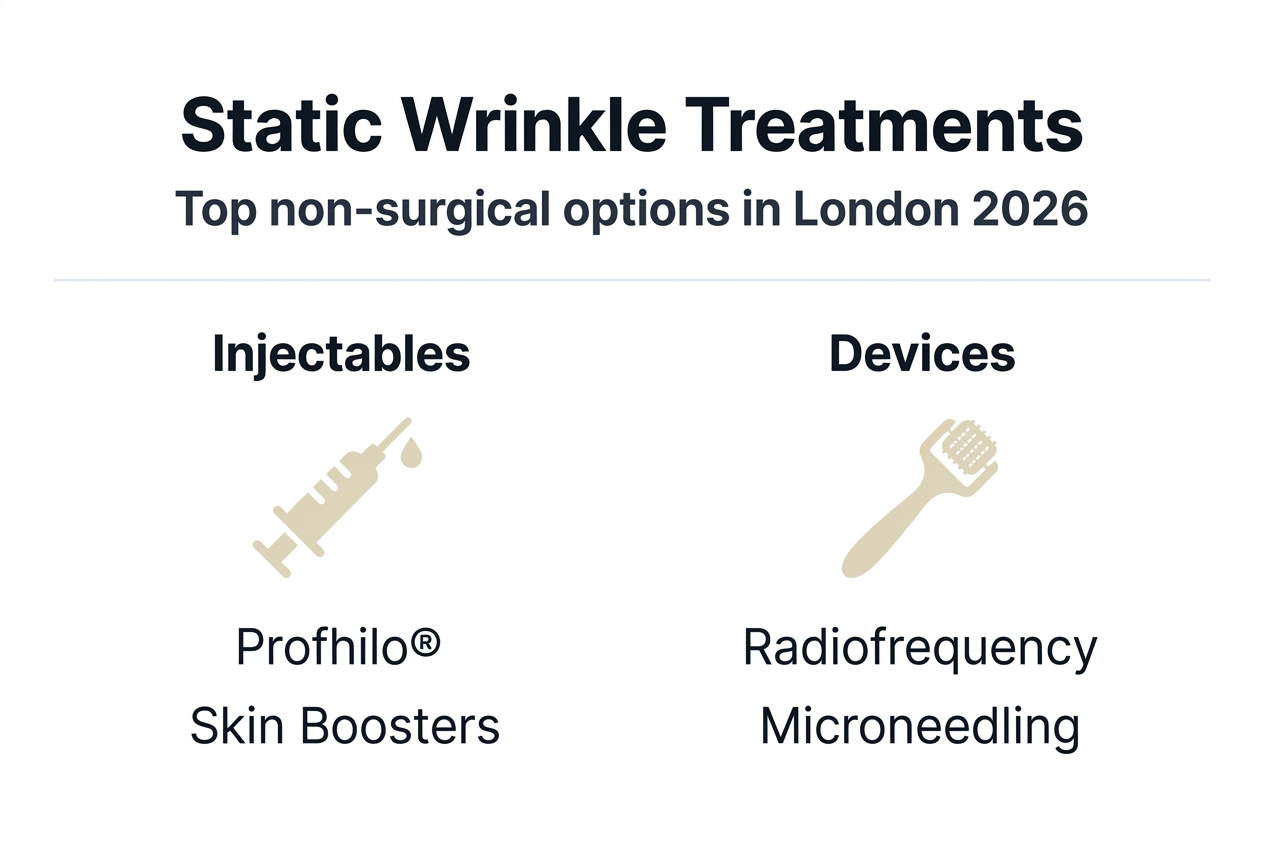
Skin boosters deliver hydrating ingredients directly into your skin through multiple micro-injections. These treatments improve skin texture and elasticity, potentially softening the appearance of static wrinkles by plumping the surrounding tissue. Different formulations exist, with some containing hyaluronic acid, amino acids, or vitamins. Treatment protocols vary but typically involve two to three sessions initially, followed by maintenance treatments every four to six months.
Here’s how these treatments compare:
| Treatment | Primary Benefit | Typical Sessions | Recovery Time | Duration of Results |
|---|---|---|---|---|
| Profhilo® | Collagen stimulation, skin quality | 2 initial, then maintenance | Minimal, 1-2 days | 6-9 months |
| Anti-wrinkle injections | Muscle relaxation, prevention | Single, repeat every 3-4 months | None | 3-4 months |
| Radiofrequency | Deep collagen remodelling | 4-6 sessions | None to minimal | 6-12 months |
| Skin boosters | Hydration, texture improvement | 2-3 initial, then maintenance | 1-2 days | 4-6 months |
Pro tip: Combining treatments often yields superior results to single approaches. For example, pairing Profhilo® with radiofrequency addresses both skin quality and deeper structural concerns. Discuss combination protocols with your practitioner to create a comprehensive treatment strategy.
The treatment process follows these general steps:
- Your practitioner cleanses your skin and may apply numbing cream for comfort
- They mark injection points or treatment areas based on your facial anatomy
- The chosen treatment is administered following established protocols
- You receive post-treatment care instructions specific to your procedure
- Follow-up appointments are scheduled to assess progress and plan next steps
After treatment, expect some redness, minor swelling, or small bumps at injection sites. These effects typically resolve within 24 to 48 hours. Avoid touching treated areas, intense exercise, and extreme temperatures for the first 24 hours. Most people return to normal activities immediately, though you might want to avoid important social events for a day or two.
Verifying results and managing expectations after treatment
Assessing treatment effectiveness requires patience and realistic expectations. Most non-surgical wrinkle treatments don’t produce instant results. Improvements develop gradually as your skin responds to the treatment stimulus. For Profhilo® and radiofrequency treatments, noticeable changes typically emerge four to eight weeks after treatment as new collagen forms and skin structure improves.
Monitor your progress by comparing photos taken before treatment with images captured at regular intervals. Take these comparison photos in identical lighting conditions, from the same angles, and with the same facial expression. Subtle improvements become more apparent when viewed side by side rather than relying solely on mirror observations.
Research reveals a concerning reality about patient satisfaction. Studies show that 54.5% of patients expressed dissatisfaction with treatment outcomes, often stemming from unrealistic expectations or incomplete correction. This high dissatisfaction rate underscores the critical importance of setting appropriate expectations during your initial consultation. Understanding that treatments soften rather than eliminate wrinkles helps you appreciate the genuine improvements you achieve.
Despite satisfaction challenges, treatments can deliver meaningful psychological benefits. The same research found that wrinkle treatments produced statistically significant improvements in psychological scores and ageing assessment. Women who underwent treatment reported feeling more confident and perceived themselves as looking younger, even when physical changes were subtle. These psychological benefits often matter as much as the visible improvements.
Maintaining your results requires ongoing effort:
- Protect your skin from sun damage with daily SPF 30 or higher
- Maintain a consistent skincare routine with antioxidants and retinoids
- Stay hydrated by drinking adequate water throughout the day
- Continue healthy lifestyle habits including quality sleep and stress management
- Schedule maintenance treatments as recommended by your practitioner
Follow-up consultations play a vital role in managing expectations and planning future treatments. Your practitioner can assess your results objectively, discuss any concerns, and adjust your treatment plan as needed. Regular check-ins ensure you’re on track to achieve your long-term aesthetic goals whilst maintaining natural-looking results.
Pro tip: Don’t chase perfection by seeking excessive treatments too quickly. Overfilling or over-treating creates unnatural results and can actually make you look older. Trust the gradual process and give each treatment adequate time to work before considering additional procedures.
If you’re managing static wrinkles on your forehead specifically, remember that this area often requires a combination approach for optimal results. Forehead lines may respond well to muscle-relaxing injections paired with skin quality treatments like Profhilo® to address both dynamic and static components.
Explore professional wrinkle treatments at Monaz Clinic London
If you’re ready to address static wrinkles with expert guidance, Monaz Clinic offers advanced non-surgical treatments tailored specifically for women seeking natural-looking improvements. Located at 96 Harley Street in central London, the clinic provides a supportive environment where your wellbeing takes priority.

Monaz Clinic specialises in treatments that respect your natural anatomy, including Profhilo®, dermal fillers, and skin boosters administered by qualified professionals. Mrs Mona Zirak, a medically qualified practitioner, leads the team with oversight from a GMC-registered doctor, ensuring safe, personalised care throughout your treatment journey.
Every appointment begins with a complimentary consultation where practitioners listen to your concerns, assess your skin, and create a customised treatment plan. Transparent pricing and detailed treatment information help you make confident decisions about your aesthetic goals. The clinic’s philosophy focuses on refreshing and restoring your appearance rather than altering or freezing your natural features. Whether you’re interested in exploring dermal fillers or other options, booking a consultation connects the knowledge you’ve gained here with professional application for optimal results.
Frequently asked questions
Can static wrinkles disappear completely with non-surgical treatments?
Non-surgical treatments can significantly reduce static wrinkles but rarely eliminate them completely. Most patients achieve 30 to 50 percent improvement in wrinkle depth and skin texture. Combining multiple treatment approaches, such as pairing Profhilo® with radiofrequency therapy, typically yields better outcomes than single treatments alone.
How many sessions are usually needed to see visible improvement?
Most treatments require multiple sessions for optimal results. Profhilo® typically needs two initial sessions four weeks apart, whilst radiofrequency treatments usually involve four to six sessions spaced two to four weeks apart. Your specific protocol depends on wrinkle severity, skin condition, and chosen treatment modality.
Are the results permanent or will wrinkles return?
Results from non-surgical wrinkle treatments are not permanent. Effects typically last between three to twelve months depending on the treatment type. Profhilo® results last six to nine months, anti-wrinkle injections last three to four months, and radiofrequency results can persist six to twelve months. Maintenance treatments and healthy lifestyle choices help prolong benefits.
What lifestyle changes support wrinkle treatment effectiveness?
Avoid smoking, as it restricts blood flow and impairs skin repair. Prioritise seven to eight hours of quality sleep nightly to support cellular regeneration. Manage stress through exercise or meditation to lower collagen-degrading cortisol levels. Always use broad-spectrum sunscreen with SPF 30 or higher to prevent further UV damage that accelerates wrinkle formation.
Do different facial areas respond differently to static wrinkle treatments?
Yes, treatment effectiveness varies by location. Forehead lines often respond well to muscle-relaxing injections combined with skin quality treatments. Areas with thinner skin, like around the eyes, may require gentler approaches. Your practitioner should assess each area individually and recommend tailored treatment protocols based on skin thickness, underlying muscle activity, and wrinkle severity.
Recommended
- 7 Essential Anti-Ageing Treatments List for London Women – Monaz Clinic London
- Best Facial Wrinkle Treatments for Women in London – Monaz Clinic London
- How to Improve Facial Contours Naturally in London – Monaz Clinic London
- 7 Essential Anti-Ageing Treatments List for Ladies in London – Monaz Clinic London