



Static wrinkles forehead: learn what causes them, treatment options for women in London, and how non-surgical therapies can softly manage signs of ageing.

Noticing lines that linger across your forehead even when your face is relaxed can be unsettling, especially when you want to maintain a vibrant yet natural look. These are called static forehead wrinkles, and for many women in London, their presence can make you feel as if your appearance no longer matches how you feel inside. This guide offers insight into what static forehead wrinkles are, why they form, and highlights non-surgical solutions focused on subtle and natural rejuvenation.
Table of Contents
- What Are Static Forehead Wrinkles?
- Why Forehead Wrinkles Form Over Time
- Distinguishing Static And Dynamic Lines
- Non-Surgical Solutions For Forehead Wrinkles
- Benefits And Safety Of Anti-Wrinkle Injections
- Maximising Results While Maintaining Natural Expression
Key Takeaways
| Point | Details |
|---|---|
| Understanding Static Forehead Wrinkles | Static forehead wrinkles are permanent lines that persist regardless of facial muscle movement, resulting from long-term skin changes. |
| Factors Contributing to Wrinkle Formation | Key factors include reduced collagen, decreased hydration, and cumulative sun damage, all exacerbated by age and hormonal changes. |
| Differentiating Wrinkle Types | Static lines are deep and permanent, while dynamic lines emerge during facial expressions but can become static with time. |
| Non-Surgical Treatment Options | Non-surgical interventions, like anti-wrinkle injections and dermal fillers, offer effective solutions to manage forehead wrinkles with minimal recovery time. |
What Are Static Forehead Wrinkles?
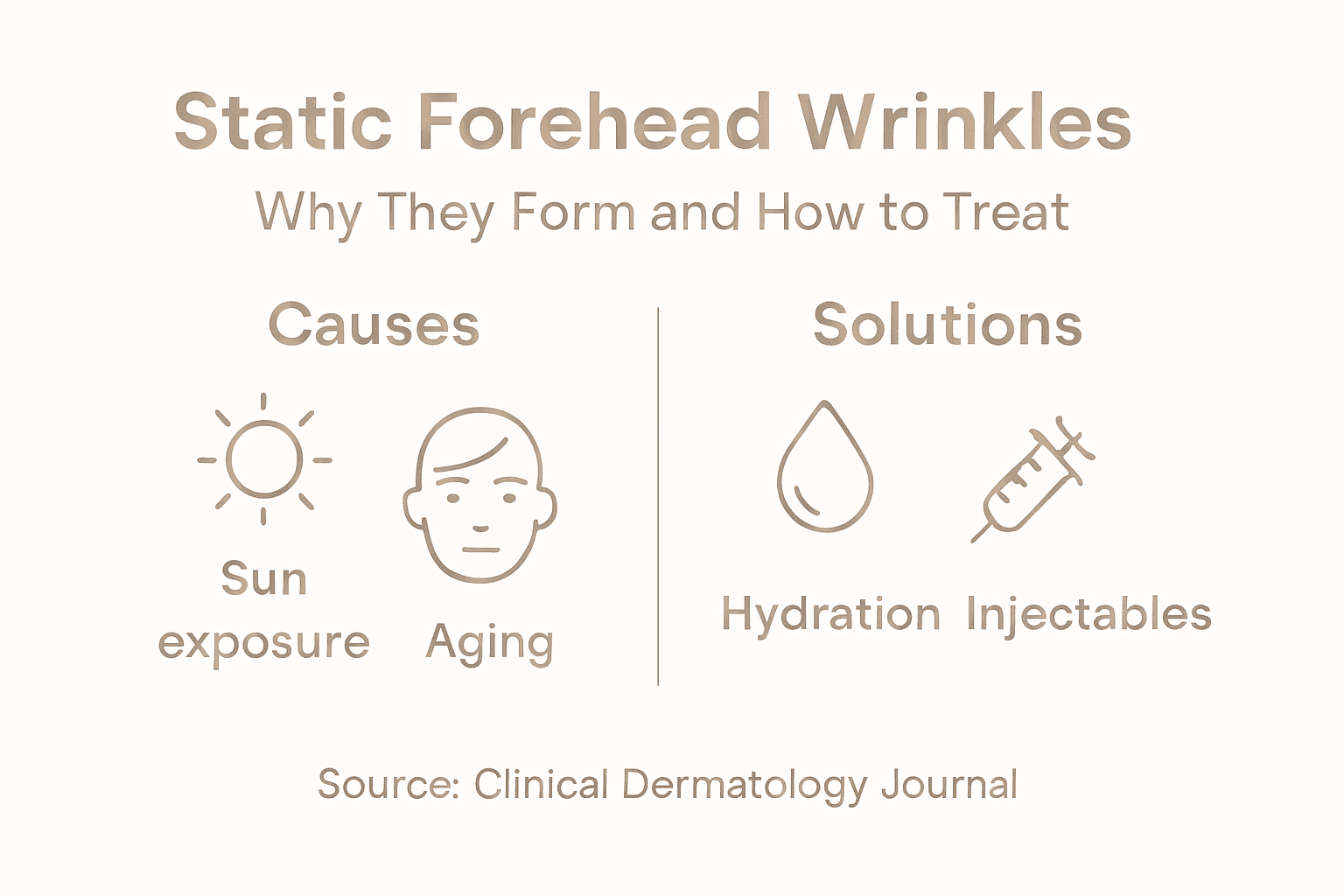
Static forehead wrinkles represent permanent lines etched into the skin that remain visible even when facial muscles are completely relaxed. These distinctive marks differentiate themselves from dynamic wrinkles by their constant presence, reflecting deeper structural changes within the skin’s architecture.
Understanding static forehead wrinkles requires exploring their fundamental characteristics:
- Permanently visible lines across the forehead
- Independent of facial muscle movement
- Result from long-term skin structural transformations
- More pronounced with increasing age
- Often deeper and more defined than dynamic lines
Research indicates that wrinkle quantity impacts perceived age more significantly than their specific location. Static forehead wrinkles emerge through complex physiological processes involving multiple factors such as collagen degradation, reduced skin elasticity, and cumulative sun exposure.
The formation of these wrinkles involves intricate biological mechanisms. Repeated muscle contractions, combined with diminishing skin elasticity, gradually create permanent indentations. As we age, our skin’s natural regenerative capabilities decline, making these lines progressively more prominent and resistant to temporary interventions.
Skin Transformation Factors contributing to static forehead wrinkles include:
- Reduced collagen production
- Decreased skin hydration
- Cumulative UV radiation damage
- Genetic predisposition
- Hormonal changes
Pro tip: Monitor your skin’s hydration and use daily sun protection to minimise early static wrinkle development.
Why Forehead Wrinkles Form Over Time
Forehead wrinkles emerge through a complex interplay of biological aging processes and environmental influences that gradually transform skin structure and appearance. Wrinkle formation involves intricate physiological changes that accumulate over decades, creating permanent lines across the forehead.
The primary mechanisms driving forehead wrinkle development include:
- Diminishing collagen and elastin production
- Reduced skin hydration
- Cumulative cellular damage
- Repeated muscle contractions
- Progressive loss of skin volume
Intrinsic Aging Factors play a critical role in forehead wrinkle formation. As we age, our body’s natural regenerative capabilities decline, leading to decreased cellular repair and reduced protein synthesis. The skin becomes progressively thinner, less elastic, and more prone to permanent line formation.
Extrinsic Aging Triggers further accelerate wrinkle development through external influences:
- Prolonged sun exposure
- Environmental pollution
- Chronic stress
- Poor nutritional habits
- Inadequate skincare routines
Hormonal changes also significantly contribute to forehead wrinkle progression. Reduced oestrogen levels during perimenopause and menopause lead to decreased skin moisture, elasticity, and collagen production, making wrinkles more pronounced and persistent.
Pro tip: Implement a comprehensive skincare routine that includes daily sun protection, hydration, and targeted anti-aging treatments to minimise premature forehead wrinkle development.
Distinguishing Static and Dynamic Lines
Clinical assessment of facial lines reveals a critical distinction between static and dynamic wrinkles that significantly impacts understanding skin aging and potential treatment approaches. Static lines represent permanent skin changes, while dynamic lines emerge through active facial muscle movements.
Key characteristics of static and dynamic lines include:
Here’s a concise comparison of static and dynamic forehead lines to clarify their differences:
| Characteristic | Static Lines | Dynamic Lines |
|---|---|---|
| Visibility | Present at rest | Only during expressions |
| Structural change | Permanent, deep | Temporary, superficial |
| Treatment focus | Skin structure | Muscle relaxation |
| Progression risk | Increases with age | Can turn static over time |
- Static lines: Visible at rest, independent of muscle movement
- Dynamic lines: Appear only during facial expressions
- Static lines: Permanent skin structural changes
- Dynamic lines: Temporary muscle-induced creases
- Static lines: Deeper and more persistent
Physiological Mechanisms underlying these line types differ substantially. Dynamic lines initially form from repetitive muscle contractions, creating temporary skin folding during expressions like frowning or raising eyebrows. Over time, these repeated movements can transform dynamic lines into permanent static wrinkles as skin loses elasticity and collagen support.
The diagnostic process for distinguishing these lines involves careful observation of skin behaviour:
- Assess skin appearance at complete facial rest
- Evaluate skin changes during active facial movements
- Measure depth and persistence of line formation
- Consider skin elasticity and underlying tissue changes
- Examine collagen and elastin degradation patterns
Hormonal changes and environmental factors accelerate the progression from dynamic to static lines. Reduced skin hydration, cumulative UV damage, and decreased cellular regeneration contribute to this transformation, making early intervention crucial for managing skin aging.
Pro tip: Photograph your facial expressions at different angles to track the evolution of dynamic lines into potential static wrinkles.
Non-Surgical Solutions for Forehead Wrinkles
Non-surgical cosmetic interventions offer women sophisticated approaches to managing forehead wrinkles without invasive surgical procedures. These advanced treatments focus on restoring skin quality, reducing line visibility, and maintaining natural facial expressions.
Key non-surgical treatment options include:
- Anti-wrinkle injectable treatments
- Dermal volume restoration procedures
- Advanced skin rejuvenation techniques
- Chemical skin resurfacing
- Energy-based therapies
- Collagen-stimulating treatments
Treatment Mechanisms work through different physiological pathways. Injectable treatments relax underlying muscles, preventing excessive contraction that contributes to wrinkle formation. Dermal fillers restore lost volume, smoothing out existing lines and providing structural support to the skin.
Comprehensive non-surgical approaches typically involve:
- Detailed skin health assessment
- Personalised treatment planning
- Precise injectable techniques
- Complementary skincare recommendations
- Ongoing skin maintenance strategies
Modern non-surgical interventions prioritise subtle, natural-looking results. These treatments aim to refresh and restore skin appearance without dramatically altering facial characteristics, ensuring patients maintain their unique aesthetic while addressing visible signs of aging.
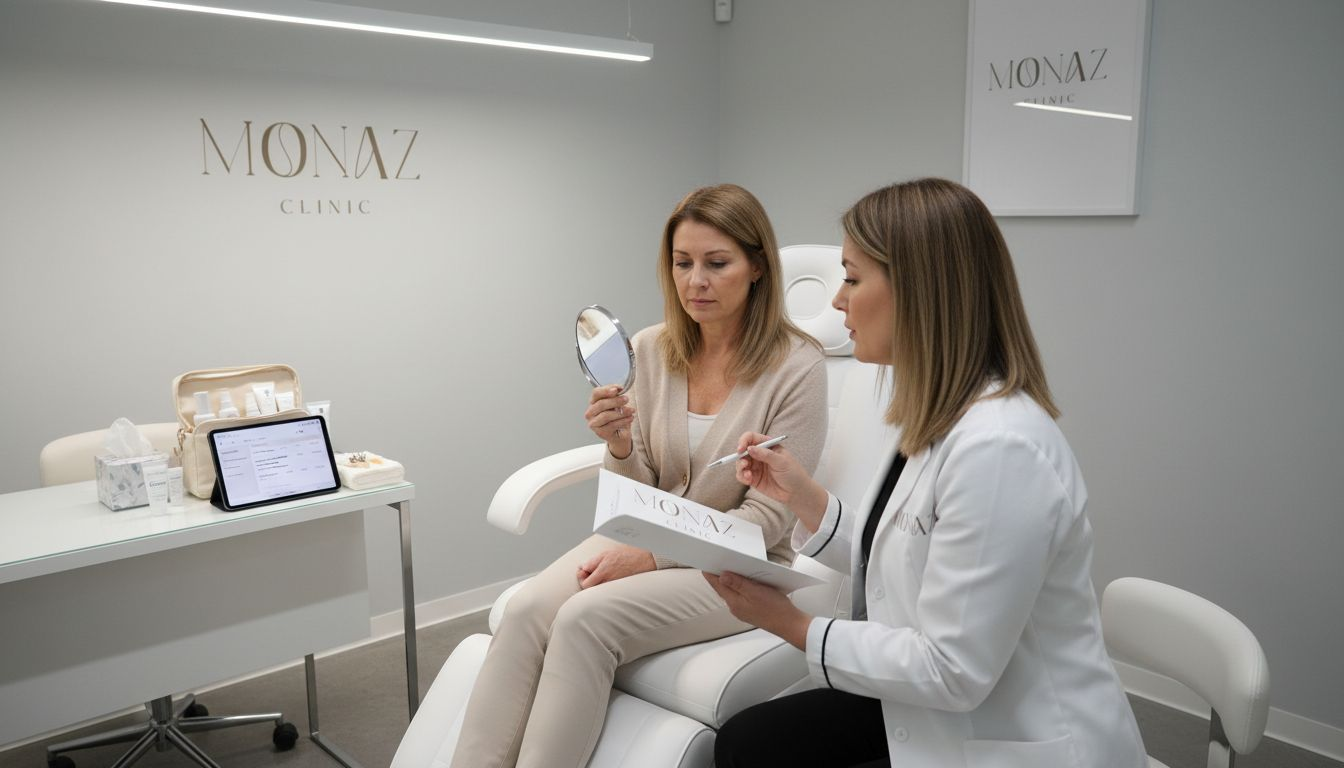
For quick reference, here is a summary of non-surgical treatments and their primary purpose:
| Treatment Type | Main Purpose | Typical Benefit |
|---|---|---|
| Anti-wrinkle injections | Relax facial muscles | Reduce line visibility |
| Dermal fillers | Restore lost skin volume | Smoothen wrinkles |
| Chemical resurfacing | Enhance skin texture | Improve radiance |
| Energy-based therapies | Stimulate collagen | Boost skin firmness |
Pro tip: Consult with a medically qualified practitioner to develop a tailored, holistic approach addressing your specific forehead wrinkle concerns.
Benefits and Safety of Anti-Wrinkle Injections
Botulinum toxin treatments demonstrate remarkable safety profiles when administered by qualified medical professionals specialising in aesthetic interventions. These precision treatments offer women a sophisticated approach to managing forehead wrinkles with minimal invasiveness and controlled outcomes.
Key benefits of anti-wrinkle injectable treatments include:
- Targeted muscle relaxation
- Reduced appearance of static and dynamic lines
- Minimal recovery time
- Natural-looking facial rejuvenation
- Temporary yet effective results
- Prevention of further wrinkle progression
Treatment Safety Parameters are stringently monitored through careful clinical assessment. Practitioners conduct comprehensive pre-treatment evaluations, considering individual facial anatomy, muscle dynamics, and potential contraindications to ensure optimal treatment personalisation.
Comprehensive safety considerations involve:
- Precise dosage calculations
- Thorough patient medical history review
- Advanced injection technique implementation
- Potential side-effect monitoring
- Follow-up consultation protocols
Modern anti-wrinkle injectable treatments prioritise patient comfort and natural aesthetic preservation. By strategically targeting specific muscle groups, these interventions soften existing lines while preventing excessive muscle contraction that contributes to wrinkle formation.
Pro tip: Select a medically qualified practitioner with extensive experience in facial aesthetic treatments to ensure safe and personalised anti-wrinkle injection outcomes.
Maximising Results While Maintaining Natural Expression
Ethical treatment protocols.pdf) demand a nuanced approach to managing forehead wrinkles that preserves individual facial dynamics and natural expressiveness. The goal is subtle refinement, not complete immobilisation of facial muscles.
Key strategies for maintaining natural expression include:
- Precise injection mapping
- Customised dosage calculations
- Comprehensive facial movement assessment
- Targeted muscle relaxation
- Respecting individual anatomy
- Gradual, progressive treatment
Facial Movement Preservation requires advanced clinical expertise. Practitioners must understand each patient’s unique facial architecture, muscle tension patterns, and natural expression ranges. This involves detailed pre-treatment consultations and personalised treatment planning.
Comprehensive assessment techniques involve:
- Detailed facial muscle mapping
- Dynamic expression range evaluation
- Asymmetry identification
- Individual movement pattern analysis
- Personalised injection strategy development
Successful treatments create a balanced approach that softens wrinkles while maintaining the patient’s inherent ability to convey emotion. By using minimal, strategic interventions, practitioners can achieve refined results that look natural and harmonious.
Pro tip: Request a comprehensive facial movement assessment during your initial consultation to ensure your treatment plan respects your unique facial characteristics.
Discover Lasting Solutions for Static Forehead Wrinkles at Monaz Clinic
Static forehead wrinkles are a common concern as they reflect permanent changes in the skin’s structure caused by ageing, sun exposure, and reduced collagen. If you are seeking to refresh your appearance without losing your natural expression, understanding the difference between static and dynamic lines is essential. At Monaz Clinic, we specialise in non-surgical treatments tailored to women who want subtle, harmonious results that honour their unique facial anatomy.
Experience the benefits of expert anti-wrinkle injections, dermal fillers, and skin rejuvenation therapies designed to restore volume and soften deep-set lines. Protect your skin’s health and maintain natural movement with personalised treatment plans led by Mrs Mona Zirak and overseen by GMC-registered doctors.

Take the first step towards revitalising your skin by exploring our expert advice in the tips – Monaz Clinic | Facial Aesthetic Clinic in London and learning more about our holistic treatment options on the Monaz Clinic website. Your journey to smoother, more youthful skin starts with a complimentary consultation at our Harley Street clinic. Book now to secure your appointment and enjoy personalised care crafted just for you.
Frequently Asked Questions
What are static forehead wrinkles?
Static forehead wrinkles are permanent lines located on the forehead that remain visible even when the facial muscles are relaxed. They result from deep structural changes in the skin due to factors like aging and environmental damage.
What causes forehead wrinkles to form over time?
Forehead wrinkles develop due to a combination of intrinsic aging processes (such as decreased collagen production) and extrinsic factors (like sun exposure and pollution), leading to reduced skin hydration, elasticity, and overall volume.
How can I prevent static forehead wrinkles?
To prevent static forehead wrinkles, maintain proper skin hydration, use daily sun protection, and implement a comprehensive skincare routine that includes anti-aging treatments and maintaining a healthy lifestyle.
What non-surgical treatments are available for forehead wrinkles?
Non-surgical treatments for forehead wrinkles include anti-wrinkle injectable treatments, dermal fillers, chemical skin resurfacing, energy-based therapies, and advanced skin rejuvenation techniques, which aim to restore skin quality and reduce wrinkle visibility.
Recommended
- What is Best for Forehead Wrinkles? Understanding Solutions – Monaz Clinic London
- How Can I Get Rid of Wrinkles on My Forehead Safely – Monaz Clinic London
- Forehead Wrinkle Solutions: Complete Guide for Women – Monaz Clinic London
- How do I get rid of wrinkles on my forehead naturally – Monaz Clinic London