




Discover what under eye filler is, how it works, and whether it suits your needs. Expert guide to hyaluronic acid treatments, safety, results, and costs in London.

Many women notice dark shadows and hollows beneath their eyes but feel uncertain about treatments available today. Under eye filler has become a trusted non-surgical solution for addressing volume loss and ageing signs around the eyes. This guide explains what under eye fillers are, how they work, their safety profile, and what you can expect from treatment.
Table of Contents
- Understanding Under Eye Fillers: What They Are And How They Work
- Anatomy And Patient Selection: Keys To Safe And Effective Treatment
- Treatment Options Comparison: Filler Versus Surgery For Under-Eye Concerns
- What To Expect: Procedure, Results, Risks, And Aftercare
- Discover Safe And Effective Under Eye Filler Treatments In London
- What Is Under Eye Filler? Frequently Asked Questions
Key takeaways
| Point | Details |
|---|---|
| Under eye fillers use hyaluronic acid to restore volume lost with ageing. | They smooth hollows and reduce shadows in the tear trough area naturally. |
| Treatment suits mild to moderate hollows with minimal downtime. | Results appear quickly and typically last 12 to 18 months. |
| Proper patient selection and practitioner expertise are essential. | Understanding your anatomy ensures safe, natural outcomes. |
| Fillers differ from surgery in cost, recovery, and longevity. | Surgery suits severe cases whilst fillers address early to moderate concerns. |
| Common side effects resolve within days, serious complications are rare. | Choosing an experienced clinician minimises risks significantly. |
Understanding under eye fillers: what they are and how they work
Under eye fillers primarily consist of hyaluronic acid, a substance naturally found in your skin that attracts moisture and adds volume. As we age, the area beneath the eyes loses fat and collagen, creating hollows that cast shadows and make you look tired. Hyaluronic acid fillers address infraorbital hollows, treating the tear trough and eyelid-cheek junction where volume loss becomes most visible.
The treatment involves careful injection by skilled clinicians who restore volume without creating lumps or an unnatural appearance. Modern HA fillers designed for delicate under-eye skin are soft and flexible, integrating smoothly with surrounding tissue. Tear trough filler is a non-surgical treatment using hyaluronic acid to address under-eye hollows, dark shadows, and volume loss effectively.
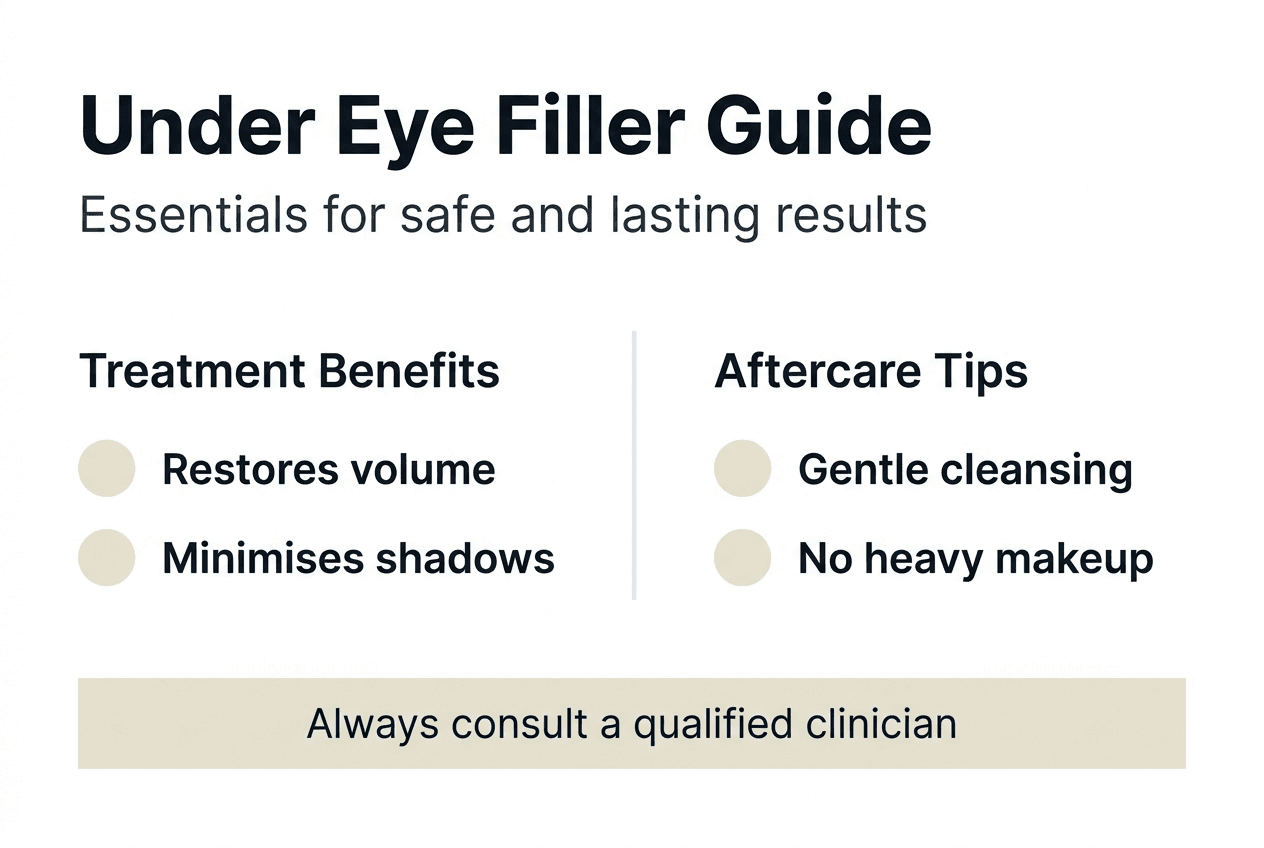
Typical benefits include:
- Reduced hollowing and smoother under-eye contours
- Brighter appearance with diminished dark circles
- More youthful, refreshed look without surgery
- Minimal downtime compared to invasive procedures
Pro Tip: Understanding tear trough filler science helps you make informed decisions about whether this treatment suits your specific concerns and anatomy.
Anatomy and patient selection: keys to safe and effective treatment
Successful under eye filler treatment begins with understanding the complex anatomy of the orbital region. The infraorbital area contains important neurovascular structures that experienced clinicians must consider to avoid complications. Blood vessels and nerves run through this delicate zone, making precise technique essential.

Patient assessment goes beyond simply identifying hollows. Your clinician evaluates skin quality, the severity of volume loss, presence of fat pads, and overall facial structure. Patient selection should rely on defined criteria, weighing benefits against the risk of irregularities or visible implants.
Not everyone makes an ideal candidate for fillers:
- Severe skin laxity may require surgical correction instead
- Pronounced fat bulging might worsen with added volume
- Very thin skin increases risk of visible product
- Certain medical conditions contraindicate treatment
Success depends upon accurate assessment of your specific anatomy and aesthetic goals. Experienced practitioners adjust injection technique, depth, and filler type based on individual needs. Some patients benefit from addressing midface volume loss first, which can naturally improve under-eye appearance.
Pro Tip: Learning about best under eye filler choices and natural filler techniques helps you understand why personalised assessment matters more than generic treatment protocols.
Treatment options comparison: filler versus surgery for under-eye concerns
Choosing between non-surgical filler and surgical blepharoplasty depends on your specific anatomy, severity of ageing signs, and personal preferences. Tear trough fillers work optimally for mild to moderate hollowing with minimal downtime. Prices typically range from £300 to £800 per session, with results lasting 12 to 18 months depending on product choice and individual metabolism.
Lower blepharoplasty suits severe cases with excess skin requiring permanent surgical correction. Surgery costs from £3,000 to £6,500 with results lasting over 10 years, but involves significant downtime and surgical risks. The decision requires careful consideration of your goals, budget, and tolerance for recovery time.
| Factor | Under Eye Filler | Lower Blepharoplasty |
|---|---|---|
| Cost | £300–£800 per session | £3,000–£6,500 one-time |
| Downtime | Minimal, 1–3 days | 2–4 weeks recovery |
| Results duration | 12–18 months | 10+ years |
| Ideal for | Mild to moderate hollows | Severe hollows, excess skin |
| Risks | Swelling, bruising, rare vascular events | Surgical complications, scarring |
| Reversibility | Yes, with hyaluronidase | Permanent surgical change |
Many women start with fillers to test results before considering surgery. Others prefer the longevity of surgical correction despite higher upfront costs. Understanding your priorities helps guide this decision.
Key considerations when comparing options:
- Fillers offer flexibility to adjust or reverse results
- Surgery provides permanent correction for appropriate candidates
- Combined treatments sometimes deliver optimal outcomes
- Budget and lifestyle influence practical choices
Exploring tear trough treatment options with an experienced clinician ensures you choose the approach that aligns with your anatomy and expectations.
What to expect: procedure, results, risks, and aftercare
The under eye filler procedure typically lasts 20 to 40 minutes in a clinical setting. Understanding each step helps reduce anxiety and prepares you for the experience.
- Consultation and assessment: Your clinician examines your anatomy, discusses goals, and determines suitability for treatment.
- Preparation and numbing: The treatment area is cleansed, and topical anaesthetic or ice may be applied for comfort.
- Precise injection technique: Filler is carefully placed using fine needles or cannulas to restore volume smoothly.
- Immediate aftercare guidance: You receive instructions to optimise healing and minimise side effects.
Results appear quickly, often immediately visible with full effect developing over several days as swelling subsides. HA injections provided durable aesthetic improvement for up to a year. Most patients see results lasting 12 to 18 months, though individual factors like metabolism and filler type influence longevity.
Common side effects resolve within days:
- Redness at injection sites
- Mild swelling and tenderness
- Bruising in some patients
- Temporary lumps or asymmetry
Immediate injection-related reactions such as erythema and oedema were the most reported complications in cosmetic periocular HA filler injections. These typically resolve without intervention.
Rare but serious complications require immediate medical attention. Filler-related loss of vision and orbital complications were infrequent but serious events requiring practitioner knowledge to manage. Vascular occlusion, though extremely rare, can compromise blood flow and demands prompt treatment with hyaluronidase.
Recent meta-analysis data shows patient satisfaction rates of approximately 91% following under eye filler treatments, reflecting both effectiveness and safety when performed by qualified practitioners.
Proper aftercare supports optimal results:
- Avoid touching or massaging the area for 24 hours
- Sleep with your head elevated for the first night
- Apply cold compresses to reduce swelling
- Avoid strenuous exercise for 24 to 48 hours
- Stay hydrated to support filler integration
Understanding dermal filler longevity and following filler aftercare tips helps you maintain results and minimise complications throughout your treatment journey.
Discover safe and effective under eye filler treatments in London
Now that you understand what under eye fillers are and how they work, you might be considering whether this treatment suits your needs. At Monaz Clinic, we specialise in tear trough treatments that respect your natural anatomy whilst addressing volume loss and ageing concerns.

Our approach combines medical expertise with an artistic eye to deliver subtle, harmonious results. Every treatment begins with a thorough assessment of your unique anatomy and aesthetic goals. We take time to explain your options, ensuring you feel confident and informed.
Explore our dermal fillers price list to understand treatment costs, or learn more about our specialised tear trough treatment services. Located at 96 Harley Street in central London, we provide a private, supportive environment exclusively for women.
Visit Monaz Clinic London to book your complimentary consultation and discover how we can help you achieve refreshed, natural-looking results.
What is under eye filler? Frequently asked questions
What is under eye filler made of?
Under eye fillers primarily contain hyaluronic acid, a naturally occurring substance in your skin that attracts moisture and provides volume. This biocompatible material integrates smoothly with surrounding tissue and can be dissolved if needed.
How long does under eye filler last?
Results typically last 12 to 18 months depending on the specific product used, your metabolism, and lifestyle factors. Some patients notice gradual fading after a year, whilst others maintain results longer before requiring touch-up treatments.
Is the under eye filler procedure painful?
Most patients experience minimal discomfort during treatment. Topical anaesthetic cream or ice numbs the area beforehand, and many modern fillers contain lidocaine for added comfort. You may feel slight pressure or pinching during injection.
What are possible side effects of under eye filler?
Common temporary side effects include redness, swelling, bruising, and tenderness lasting a few days. Rare serious complications like vascular occlusion require immediate medical attention. Choosing an experienced practitioner significantly reduces risks.
Who is the ideal candidate for under eye filler?
Ideal candidates have mild to moderate under-eye hollowing, good skin quality, and realistic expectations. Those with severe skin laxity, significant fat bulging, or certain medical conditions may be better suited to alternative treatments. A thorough consultation determines suitability.
Can under eye filler be reversed if I don’t like the results?
Yes, hyaluronic acid fillers can be dissolved using an enzyme called hyaluronidase if you’re unhappy with results or experience complications. This reversibility provides reassurance and flexibility compared to permanent treatments. Learn more in our tear trough filler guide.