




Timeline of filler results explained for London women: stages of change, how natural results develop, product types, and key aftercare tips.

A recent British beauty study found over 60 percent of women now prefer non-surgical facial options for subtle, refreshed results. In Central London, the quest for naturally enhanced features is leading many to explore dermal fillers as a trusted alternative to invasive procedures. Unpacking how these advanced treatments work, what results to expect, and the typical timeline brings confidence to your decisions—for women who value looking radiant and authentically themselves.
Table of Contents
- What Are Dermal Fillers And How They Work
- Types Of Fillers And Product Longevity
- Stages Of Filler Results Over Time
- Common Reactions, Settling Process And Aftercare
- How Long Results Last And When To Top Up
- Mistakes To Avoid For Natural Outcomes
Key Takeaways
| Point | Details |
|---|---|
| Understanding Dermal Fillers | Dermal fillers are non-surgical treatments primarily made of hyaluronic acid, designed to restore volume and enhance facial contours. |
| Types and Longevity | Various filler types exist with specific benefits and durability, typically ranging from 6 months to several years. |
| Post-Treatment Care | Proper aftercare is crucial for optimal results, including avoiding excessive heat, restricting strenuous activities, and staying hydrated. |
| Consult Experienced Practitioners | Choosing a qualified aesthetic professional is essential to avoid complications and achieve natural-looking results. |
What Are Dermal Fillers And How They Work
Dermal fillers represent an advanced non-surgical cosmetic treatment designed to restore volume, smooth wrinkles, and enhance facial contours. These injectable implants are predominantly composed of hyaluronic acid, a naturally occurring substance in human skin that attracts and retains moisture.
The primary mechanism of dermal fillers involves strategically injecting a gel-like substance beneath the skin’s surface to address specific aesthetic concerns. By replenishing lost volume and providing structural support, these treatments can effectively minimise signs of ageing, sculpt facial features, and create a more youthful appearance. Different types of fillers exist, each with unique properties and durations:
- Hyaluronic Acid (HA) Fillers: Most common, providing immediate hydration and volume
- Calcium Hydroxylapatite (CaHA) Fillers: Stimulate natural collagen production
- Poly-L-Lactic Acid (PLLA) Fillers: Gradually rebuild skin structure over time
- Polymethylmethacrylate (PMMA) Fillers: Offer longer-lasting volumisation
The treatment process involves a precise consultation where a skilled aesthetic practitioner assesses your facial anatomy and develops a personalised approach. Typically, the procedure takes between 30-60 minutes, with minimal downtime and immediate visible results.
Pro tip: Always consult a medically qualified professional who understands facial aesthetics and can recommend the most suitable filler type for your specific skin concerns and desired outcome.
Types Of Fillers And Product Longevity
Dermal fillers in London offer a diverse range of options for aesthetic enhancement, with each type designed to address specific concerns and provide varying durations of results. Regulatory authorities carefully monitor these products to ensure patient safety and treatment efficacy across different filler categories.
The primary types of dermal fillers include:
Hyaluronic Acid (HA) Fillers
- Provide immediate hydration and volume
- Typical duration: 6-18 months
- Best for: Fine lines, lip enhancement, and subtle facial contouring
Calcium Hydroxylapatite (CaHA) Fillers
- Stimulate natural collagen production
- Typical duration: 12-18 months
- Best for: Deeper wrinkles and facial volume restoration
Poly-L-Lactic Acid (PLLA) Fillers
- Gradually rebuild skin structure
- Typical duration: Up to 2 years
- Best for: Overall facial rejuvenation and collagen stimulation
Polymethyl Methacrylate (PMMA) Fillers
- Provide long-lasting structural support
- Typical duration: Several years
- Best for: Permanent volumisation and deep tissue augmentation
Each filler type offers unique benefits, with longevity depending on factors such as product composition, injection technique, individual metabolism, and treatment area. The hybrid fillers, combining Hyaluronic Acid and Calcium Hydroxylapatite, represent an innovative approach, offering both immediate lift and gradual collagen stimulation.
Here’s a summary of the main dermal filler types and their defining characteristics:
| Filler Type | Notable Benefit | Best Suited For | Typical Longevity |
|---|---|---|---|
| Hyaluronic Acid (HA) | Immediate hydration effect | Lip enhancement, fine lines | 6–18 months |
| Calcium Hydroxylapatite | Collagen stimulation | Deeper wrinkles, restoring facial volume | 12–18 months |
| Poly-L-Lactic Acid (PLLA) | Gradual tissue rebuilding | Overall facial rejuvenation | Up to 2 years |
| Polymethylmethacrylate | Long structural support | Permanent volumisation, deep augmentation | Several years |
| Hybrid (HA + CaHA) | Lift and collagen boost | Subtle lift with gradual improvements | Typically 12–24 months |
Pro tip: Consult a qualified aesthetic practitioner who can assess your individual facial structure and recommend the most appropriate filler type for your specific aesthetic goals and desired outcome.
Stages Of Filler Results Over Time
Dermal filler treatment results follow a nuanced timeline that varies depending on the specific product and individual patient characteristics. Understanding these stages helps patients manage expectations and appreciate the treatment’s progressive transformation.
The filler results journey can be broken down into several distinct phases:
Immediate Post-Treatment Stage (0-7 Days)
- Instant volume and contour enhancement
- Potential side effects: mild swelling, redness, and bruising
- Temporary asymmetry or slight overcorrection may be visible
Initial Settlement Stage (1-4 Weeks)
- Gradual reduction of initial inflammation
- Soft tissue adaptation to the filler
- Subtle refinement of treatment results
Collagen Stimulation Stage (2-6 Months)
- Particularly relevant for collagen-stimulating fillers
- Natural tissue integration begins
- Continued improvements in skin texture and firmness
Optimal Results Stage (3-6 Months)
- Peak aesthetic outcome achieved
- Maximum tissue integration and natural appearance
- Results most stable and refined
Gradual Degradation Stage (6-18 Months)
- Slow metabolisation of filler product
- Subtle reduction in volume and effects
- Individual metabolism significantly impacts longevity
Patients should understand that while immediate results are visible, the true aesthetic transformation occurs gradually. Factors like filler type, injection technique, individual metabolism, and lifestyle can influence the progression and duration of results.

Pro tip: Schedule a follow-up consultation around the three-month mark to assess your treatment’s progress and discuss potential refinement or maintenance strategies.
Common Reactions, Settling Process And Aftercare
Dermal filler treatments require understanding potential reactions and implementing proper aftercare to ensure optimal results. Patients in London should be aware of the nuanced healing process and potential side effects associated with injectable treatments.
Common immediate reactions include:
- Mild Swelling: Typically resolves within 48-72 hours
- Temporary Bruising: Can last up to 7-10 days
- Slight Redness: Usually subsides within 24-48 hours
- Minor Tenderness: Normal sensation that diminishes quickly
The settling process involves several critical stages:
Initial Healing Phase (First Week)
- Gentle skin adaptation
- Minimal intervention required
- Avoid intense physical activities
Tissue Integration Phase (Weeks 2-4)
- Gradual reduction of initial inflammation
- Filler begins to merge with natural tissue
- Subtle refinement of treatment results
Critical aftercare recommendations include:
- Avoid excessive heat and direct sunlight
- Minimise strenuous exercise for 48 hours
- Use cold compresses to reduce swelling
- Stay hydrated and maintain a balanced diet
- Refrain from alcohol and blood-thinning medications
Although rare, patients should monitor for potential complications such as persistent swelling, asymmetry, or unusual pain, and contact their practitioner immediately if these occur.
Below is a guide to managing dermal filler aftercare for enhanced outcomes:
| Aftercare Focus | Rationale | Recommended Action |
|---|---|---|
| Minimising swelling | Prevents prolonged discomfort | Use cold compresses, stay upright |
| Hydration | Supports healthy skin recovery | Drink sufficient water daily |
| Exercise limitation | Reduces risk of bruising or migration | Avoid for at least 48 hours |
| Sun/heat avoidance | Prevents inflammation or irritation | Wear SPF, avoid saunas |
| Monitoring for issues | Promptly addresses rare complications | Contact your practitioner |
Pro tip: Take clear, well-lit photographs of the treatment area immediately after your procedure to track subtle changes and discuss progress during follow-up consultations.
How Long Results Last And When To Top Up
Dermal filler longevity depends on multiple complex factors, including product type, treatment area, and individual patient metabolism. Understanding these variables helps patients plan their aesthetic maintenance strategy effectively.
Filler duration varies significantly across different product types:
Hyaluronic Acid (HA) Fillers
- Typical duration: 6-12 months
- Best for: Temporary volume enhancement
- Areas: Lips, cheeks, fine lines
Collagen-Stimulating Fillers
- Typical duration: Up to 2 years
- Best for: Gradual, natural rejuvenation
- Areas: Deeper facial structures, cheekbones
Semi-Permanent Fillers
- Typical duration: 12-24 months
- Best for: More substantial structural changes
- Areas: Chin, jawline contouring
Factors influencing filler longevity include:
- Metabolic rate
- Lifestyle habits
- Treatment area
- Injection technique
- Individual skin characteristics
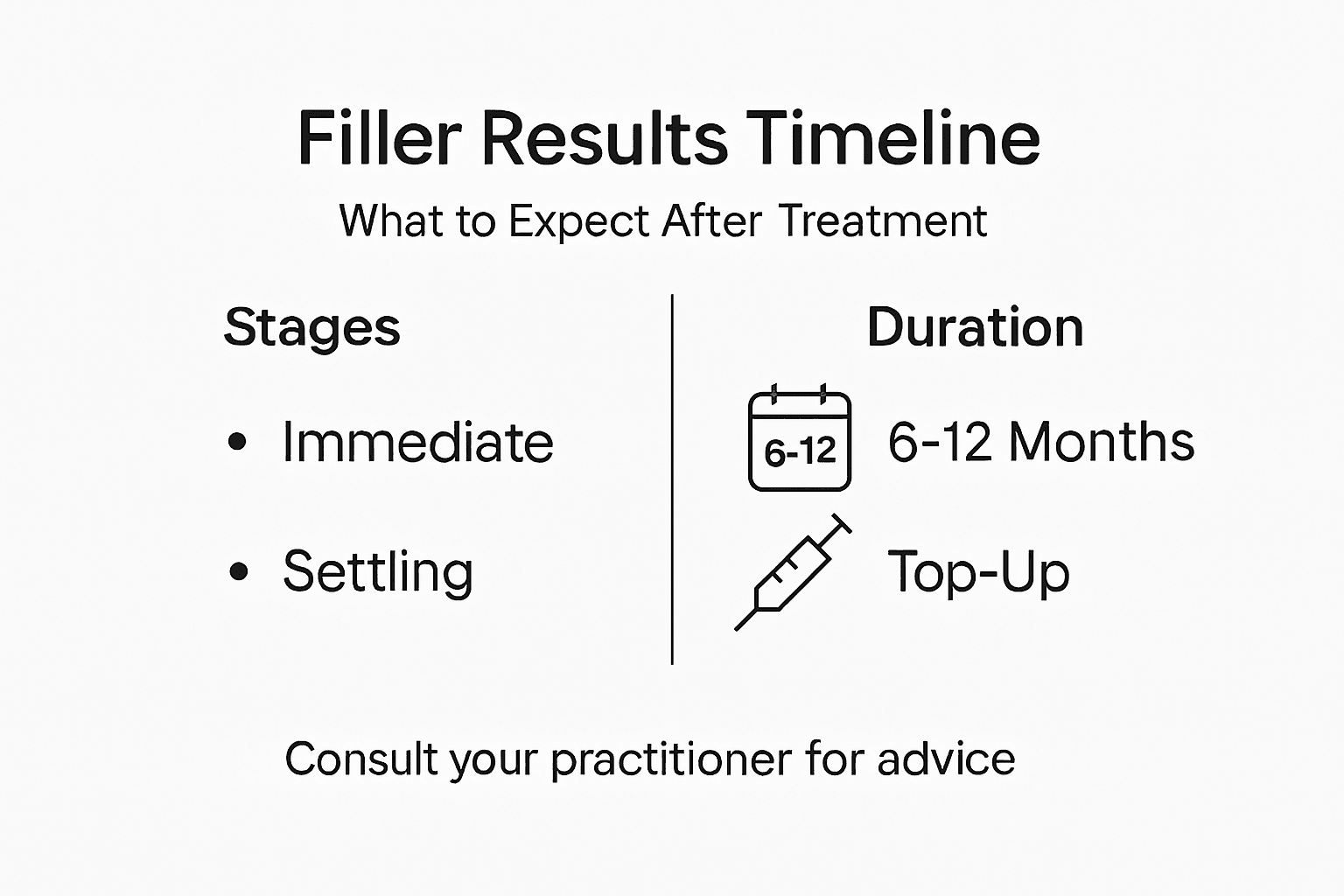
Most practitioners recommend scheduling a follow-up consultation between 6-12 months post-treatment to assess results and determine optimal top-up timing. This personalised approach ensures maintenance of desired aesthetic outcomes.
Pro tip: Schedule your follow-up consultation proactively and track your results through consistent, well-lit photographs taken from the same angles to discuss potential refinements with your aesthetic practitioner.
Mistakes To Avoid For Natural Outcomes
Dermal filler treatments require precision and expertise to achieve subtle, natural-looking results. Understanding common pitfalls can help patients make informed decisions and maintain aesthetic harmony.
Key mistakes to avoid during dermal filler treatments include:
Overfilling
- Creates an unnatural, puffy appearance
- Disrupts natural facial contours
- Risks looking artificially enhanced
Choosing Inexperienced Practitioners
- Increases risk of poor technique
- Higher likelihood of asymmetrical results
- Potential complications from improper injection
Ignoring Facial Anatomy
- Neglecting individual facial structure
- Failing to consider natural aging process
- Applying uniform techniques across different facial areas
Unrealistic Expectations
- Seeking dramatic transformations
- Comparing results with heavily edited images
- Misunderstanding treatment limitations
Neglecting Aftercare
- Skipping recommended post-treatment protocols
- Exposing treated areas to extreme temperatures
- Failing to follow practitioner’s specific guidance
Successful dermal filler treatments require a holistic approach that respects individual facial characteristics, embraces subtlety, and prioritises natural-looking enhancement over dramatic changes.
Pro tip: Always request a comprehensive consultation and review before and after photographs of your practitioner’s previous work to understand their aesthetic approach and skill level.
Discover Your Dermal Filler Journey with Expert Care at Monaz Clinic
Understanding the timeline of dermal filler results can be a challenge. From immediate volume enhancement to gradual collagen stimulation, knowing what to expect helps you feel confident and prepared. Whether you are concerned about swelling in the first week or curious about maintaining optimal results over several months, Monaz Clinic in London specialises in personalised treatment plans that honour your unique facial structure and natural beauty.
Experience a medically-led approach where every step of your filler journey is supported with expert advice and tailored care. Learn how to manage the settling process, maximise lasting benefits, and avoid common mistakes by exploring our helpful tips.

Ready to reveal your best self with natural-looking, timely results? Book your complimentary consultation today at Monaz Clinic to begin your bespoke non-surgical transformation under the guidance of medically qualified experts. Let us help you navigate your dermal filler timeline with confidence and elegance.
Frequently Asked Questions
How long do the results of dermal fillers last?
The longevity of dermal fillers varies by type. Hyaluronic Acid fillers typically last 6-12 months, while collagen-stimulating fillers can last up to 2 years. Factors like metabolic rate and treatment area also influence duration.
What should I expect immediately after my filler treatment?
Immediately after treatment, you can expect instant volume enhancement. However, mild swelling, redness, or bruising may occur, generally resolving within a few days.
How does the filler settling process work over time?
The settling process involves several stages. In the first week, mild swelling occurs. By weeks 2-4, inflammation decreases and results become more refined. Peak results are generally seen around 3-6 months after the treatment.
What aftercare should I follow to ensure optimal results?
Post-treatment, it’s advised to avoid excessive heat, minimise strenuous exercise for 48 hours, and stay hydrated. Cold compresses can help reduce swelling, and regular follow-ups with your practitioner are essential to monitor progress.
Recommended
- Essential Aftercare Tips for Fillers: Achieve Lasting Results – Monaz Clinic London
- Defining Lip Fillers – What Women Need to Know – Monaz Clinic London
- How to Recover After Fillers: A Step-by-Step Guide – Monaz Clinic London
- Step by Step Dermal Fillers: Achieve Aesthetic Perfection – Monaz Clinic London