




Discover why 90% of experts choose hyaluronic acid for under eye fillers in London. Learn about safety, types, longevity, and how to select the best treatment.

Many women in London notice their under-eye area ages them faster than any other facial feature. Hollows, shadows, and volume loss can make you look tired even when you feel energised. Safe, non-surgical fillers, particularly hyaluronic acid types, restore youthful volume without drastic changes. This guide explains what under eye fillers are, their types, safety profiles, and how to choose the best option for natural, harmonious results.
Table of Contents
- Understanding Under Eye Fillers: What They Are And How They Work
- Types Of Under Eye Fillers: Formulations And Safety Profiles
- Expert Clinical Protocols: Patient Assessment And Injection Techniques
- Longevity And Maintenance: What To Expect Over Time
- Common Misconceptions About Under Eye Fillers
- Choosing The Best Under Eye Filler For You: Practical Guidance
- Discover Expert Under Eye Filler Treatments At Monaz Clinic London
- Frequently Asked Questions About Under Eye Fillers
Key Takeaways
| Point | Details |
|---|---|
| Hyaluronic acid fillers dominate | Over 90% of practitioners use HA fillers for under-eye treatments due to safety and reversibility. |
| Specialized formulations matter | Advanced rheological properties prevent lumps, bruising, and the Tyndall effect in thin skin. |
| Expert technique is essential | Proper injection depth, angle, and individualized assessment determine natural outcomes. |
| Results last 9 to 12 months | Duration depends on metabolism, lifestyle, filler type, and maintenance habits. |
| Not everyone is suitable | Thorough medical evaluation ensures safe candidacy and realistic expectations. |
Understanding Under Eye Fillers: What They Are and How They Work
Under eye fillers are injectable substances designed to restore lost volume beneath the eyes, smoothing hollows and reducing the appearance of tired, aged features. The tear trough area, where the lower eyelid meets the cheek, is particularly prone to volume depletion as we age. This creates shadows that can be mistaken for dark circles, though fillers address structure, not pigmentation.
Hyaluronic acid is a naturally occurring sugar molecule in your skin that attracts and holds water, maintaining plumpness and hydration. HA-based face fillers are biocompatible, meaning your body recognizes them as safe. They integrate smoothly into tissue without triggering immune reactions. If you’re unhappy with results, HA fillers are reversible using an enzyme called hyaluronidase.
Hyaluronic acid fillers are the most suitable and widely recommended for under eye treatments due to their biocompatibility, reversibility, and hydrating properties. These fillers do two things: they add volume to fill hollow spaces and attract moisture to plump the skin from within. This dual action creates a refreshed, natural appearance.
Key properties that make HA fillers ideal for the under-eye area include:
- Biocompatibility: Your body accepts the substance without rejection or allergic response.
- Reversibility: Unwanted effects can be dissolved quickly and safely.
- Hydration: HA molecules bind water, improving skin quality over time.
- Natural appearance: Proper formulations mimic your own tissue, avoiding artificial looks.
- Safety profile: Decades of clinical use confirm low complication rates when administered correctly.
The thin, delicate skin under your eyes requires precise formulations and expert handling. Not all fillers work equally well in this area, which is why choosing the right type matters as much as selecting a skilled practitioner.
Types of Under Eye Fillers: Formulations and Safety Profiles
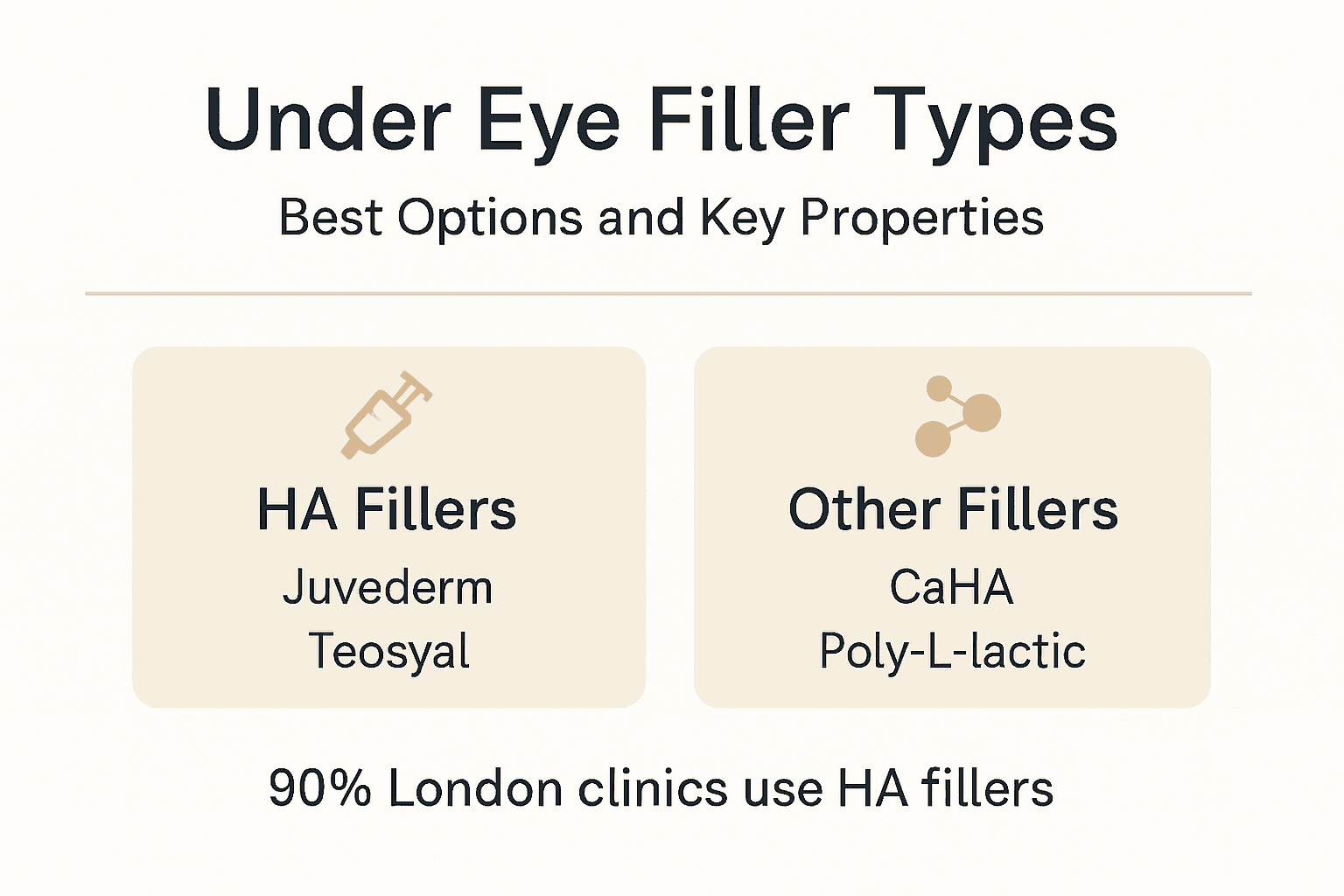
Hyaluronic acid fillers are the gold standard for tear trough treatments. Non-HA fillers, such as calcium hydroxylapatite or poly-L-lactic acid, carry higher risks in the under-eye area due to their permanence and inability to be reversed. The thin skin here makes any irregularities or complications highly visible, so practitioners overwhelmingly prefer HA options.
Filler rheology refers to how the gel behaves once injected. Properties like cohesivity, elasticity, and hydrophilicity determine how well a filler integrates with delicate tissue. Cohesivity keeps the gel from spreading unevenly. Elasticity helps it move naturally with facial expressions. Hydrophilicity controls water absorption, preventing excessive swelling.
Specialized formulations have rheological properties optimized for thin skin integration to prevent lumpiness and the Tyndall effect, a bluish discoloration caused by light scattering through poorly placed filler. These formulations use lower elastic modulus (G’) values and higher cohesivity to stay in place without creating visible lumps.
| Feature | Hyaluronic Acid Fillers | Non-HA Fillers |
|---|---|---|
| Reversibility | Fully reversible with hyaluronidase | Not reversible; permanent or semi-permanent |
| Safety in thin skin | Excellent; designed for delicate areas | Higher risk of irregularities and complications |
| Tissue integration | Smooth, natural blending | Can create visible lumps or nodules |
| Hydration benefits | Attracts moisture, improves skin quality | Minimal hydration effect |
| Clinical preference | Over 90% of practitioners for tear troughs | Rarely used in under-eye treatments |
Safety considerations specific to the under-eye area include:
- Thin skin shows imperfections easily, requiring low-viscosity, highly cohesive fillers.
- Proximity to blood vessels demands expert anatomical knowledge to avoid vascular occlusion.
- Lymphatic drainage is slower here, so formulations must minimize swelling risk.
- The orbital septum and muscle layers require precise depth control during injection.
Pro tip: Select fillers with low G’ (elastic modulus) and high cohesivity. These properties prevent the gel from spreading too widely or creating visible bumps. Ask your practitioner which specific HA formulation they use and why it’s suited to your under-eye anatomy. Understanding filler types helps you make informed decisions about your treatment.
Expert Clinical Protocols: Patient Assessment and Injection Techniques
Before any injection, a thorough evaluation determines whether you’re a suitable candidate. Skilled practitioners follow a structured assessment to maximize safety and outcomes. Here’s what that process looks like:
- Medical history review to identify contraindications like bleeding disorders, active infections, or allergies.
- Anatomical assessment of tear trough depth, skin thickness, vascularity, and bone structure.
- Skin quality evaluation, including elasticity, hydration levels, and existing damage.
- Discussion of realistic expectations, desired outcomes, and potential limitations.
- Pre-treatment photography and consent, ensuring you understand the procedure and risks.
Injection technique separates expert results from amateur attempts. The tear trough requires precise needle or cannula placement, typically at the supraperiosteal level (just above the bone) or within the deep fat compartments. Injecting too superficially causes visible lumps or the Tyndall effect. Going too deep wastes product and delivers poor correction.
Practitioners use either sharp needles for targeted placement or blunt-tipped cannulas for smoother distribution and reduced bruising. Cannulas glide through tissue rather than cutting, lowering vascular injury risk. The injection angle, speed, and volume per pass all affect the final result. Experienced hands know when to stop, avoiding overcorrection that looks unnatural.
Safety protocols include having hyaluronidase on hand to reverse HA fillers effectively in cases of overcorrection or complications within 24 to 48 hours. This enzyme dissolves HA quickly, restoring your original appearance if needed. Clinics should also have emergency equipment for rare vascular events, though proper technique makes such incidents extremely uncommon.
Pro tip: Always seek treatment from medically qualified practitioners trained in facial anatomy and tear trough injections. The cheapest option is rarely the safest. Ask about their experience with under-eye fillers specifically, not just general filler work. Tear trough filler safety depends on expertise, not just product choice.
An individualized approach accounts for your unique anatomy, skin type, and healing tendencies. Some patients bruise easily; others swell more. Tailoring the technique and post-treatment care to your profile minimizes side effects and maximizes satisfaction.
Longevity and Maintenance: What to Expect Over Time
Hyaluronic acid fillers in the tear trough typically last between 9 and 12 months. This duration varies based on several factors, including your metabolism, lifestyle habits, the specific filler used, and how precisely it was injected. Faster metabolisms break down HA more quickly. Active lifestyles and high sun exposure can also shorten filler lifespan.
Several factors influence how long your results endure:
- Metabolic rate: Individuals with faster metabolisms metabolize HA more rapidly.
- Filler formulation: Higher cross-linking density and molecular weight extend durability.
- Injection depth: Deeper placement often lasts longer but requires expert technique.
- Lifestyle: Smoking, excessive sun, and poor hydration accelerate breakdown.
- Aftercare adherence: Following post-treatment instructions protects your investment.
Maintenance tips to extend your filler longevity include:
- Wear broad-spectrum sunscreen daily to protect the delicate under-eye skin.
- Stay hydrated; HA binds water, so adequate hydration supports filler performance.
- Avoid rubbing or massaging the treated area aggressively.
- Follow your clinic’s aftercare advice, including any recommended skincare.
- Schedule touch-ups as needed, typically every 9 to 12 months for consistent results.
Signs that maintenance or a touch-up is due include the gradual return of hollows, shadows reappearing, or a subtle loss of the refreshed look you initially achieved. These changes happen slowly, not overnight. Filler breakdown is a natural process, not a complication. Your body gradually absorbs the HA, restoring your pre-treatment anatomy.
Some patients prefer to schedule touch-ups before full dissolution to maintain continuous improvement. Others wait until results have faded completely. Both approaches are valid. Discuss your maintenance preferences with your practitioner during your consultation. Filler longevity insights and aftercare tips help you plan for long-term results.
Gradual filler metabolism is expected and safe. The HA breaks down into water and carbon dioxide, both naturally occurring in your body. There’s no toxic accumulation or long-term harm from repeated treatments when performed correctly.
Common Misconceptions About Under Eye Fillers
Many potential patients hold beliefs about under eye fillers that don’t align with clinical reality. Clarifying these misconceptions helps you set realistic expectations and make informed decisions.
First, fillers do not correct pigmentation or truly remove dark circles caused by melanin deposits or visible blood vessels. They address volume loss and structural hollows, which create shadows that mimic dark circles. If your darkness comes from pigmentation rather than hollows, other treatments like laser therapy or topical agents are more appropriate.
Second, not everyone is a suitable candidate. Underlying anatomy matters. If you have very thin skin, prominent veins, or certain medical conditions, fillers may not be safe or effective for you. A thorough assessment determines candidacy; skip this step at your peril.
Third, fillers do not freeze or alter natural facial expressions when administered by skilled practitioners. This myth likely stems from confusion with anti-wrinkle injections, which relax muscles. Fillers simply add volume. Your face moves naturally because no muscles are affected.
Fourth, common side effects like mild swelling or bruising are temporary and expected, not complications. Swelling typically peaks within 24 to 48 hours and resolves within a week. Bruising, if it occurs, fades in days. These are normal responses to needle insertion, not signs of poor technique or product failure.
Fifth, fillers provide temporary enhancement, not permanent or drastic changes. Results last months, not years. This temporary nature is actually a benefit, allowing you to adjust your look over time or discontinue treatment if your preferences change.
Key misconceptions to avoid:
- Fillers remove all types of dark circles, regardless of cause.
- Anyone can safely receive under-eye fillers without proper assessment.
- Fillers freeze facial expressions or create a stiff appearance.
- Swelling and bruising indicate a complication rather than normal healing.
- Results are permanent or require no future maintenance.
Understanding what fillers can and cannot do protects you from disappointment. A reputable practitioner will discuss these realities during your consultation, ensuring you pursue treatment for the right reasons with accurate expectations.
Choosing the Best Under Eye Filler for You: Practical Guidance
Selecting the right under eye filler and practitioner in London requires careful consideration. Your safety and satisfaction depend on multiple factors, all within your control when you know what to look for.
Criteria for selecting a filler:
- Medical-grade hyaluronic acid with rheological properties tailored to thin skin.
- Proven safety record with extensive clinical documentation and peer-reviewed studies.
- Reversibility using hyaluronidase, ensuring you’re never locked into unwanted results.
- Practitioner familiarity; choose products your provider uses regularly and knows well.
- Regulatory approval from bodies like the MHRA, confirming quality and safety standards.
Medical expertise and clinic standards are non-negotiable. Seek treatment at GMC-registered clinics where practitioners have formal medical training and anatomical knowledge. The under-eye area sits close to critical blood vessels and nerves. Only trained professionals should inject here. Cheap offers from unqualified providers put your health and appearance at serious risk.
Schedule a thorough consultation before committing to treatment. During this visit, your practitioner should evaluate your anatomy, discuss your goals, review your medical history, and explain the procedure in detail. You should leave feeling informed, not pressured. A consultation that rushes through these steps is a red flag.
Check practitioner qualifications. Ask about their medical background, training in dermal fillers, experience with tear trough treatments specifically, and complication management protocols. Reputable practitioners answer these questions openly and provide evidence of their credentials.
Advocate for a personalized treatment plan. Your face is unique. Cookie-cutter approaches ignore individual anatomy, skin type, and aesthetic goals. A tailored plan considers how much filler you need, where it should go, and what results are realistic given your starting point.
For tear trough filler guidance and a comprehensive guide, explore resources that explain both product selection and practitioner evaluation. When you’re ready to move forward, under eye hollow treatment at a trusted clinic ensures you receive safe, effective care tailored to your needs.
Taking time to research and choose wisely pays dividends. Under eye fillers, when done right, deliver subtle, natural refreshment that enhances your appearance without altering your identity. Poor choices lead to complications, wasted money, and potential harm. Invest in quality from the start.
Discover Expert Under Eye Filler Treatments at Monaz Clinic London
If you’re seeking safe, expert under eye filler treatment in London, Monaz Clinic at 96 Harley Street offers personalized consultations and advanced hyaluronic acid formulations tailored to your anatomy. Led by Mrs Mona Zirak and overseen by a GMC-registered doctor, the clinic specializes in non-surgical treatments that restore volume naturally without freezing or altering your features.

Every appointment begins with a complimentary, no-pressure consultation to assess your suitability, discuss your goals, and create a treatment plan that prioritizes your safety and satisfaction. Expert tear trough filler advice and professional under eye filler treatment combine medical expertise with artistic precision. Explore safe and effective face fillers to refresh your appearance with confidence and care.
Frequently Asked Questions About Under Eye Fillers
What are the main risks of under eye fillers and how are they managed?
Mild swelling or bruising can occur but typically resolves within days to a week with proper post-treatment care. More serious complications like vascular occlusion are rare when treatments are performed by experienced practitioners using proper technique. Hyaluronidase can reverse hyaluronic acid fillers effectively in cases of overcorrection or complications, restoring your original appearance within 24 to 48 hours. Choosing a qualified practitioner and following aftercare instructions minimizes all risks.
Can fillers help with dark circles caused by pigmentation?
Fillers restore volume to hollows and shadows but do not remove pigmentation-related dark circles caused by excess melanin or visible blood vessels. If your darkness stems from pigmentation rather than structural volume loss, treatments like laser therapy, chemical peels, or topical lightening agents are more appropriate. A thorough assessment during consultation determines the true cause of your dark circles and the best treatment approach.
How do I know if I am a good candidate for under eye filler treatment?
Good candidates have volume loss or hollowing in the tear trough area, realistic expectations, and no medical contraindications like active infections or bleeding disorders. A thorough evaluation of your skin thickness, vascularity, bone structure, and overall health determines suitability. Not everyone is ideal for this treatment; specialist consultation is essential to assess your anatomy and ensure safe, effective outcomes tailored to your unique features.
How soon will I see results and how long do they last?
Results appear immediately after treatment, though mild swelling may temporarily obscure the final outcome for a few days. Once swelling subsides, the refreshed appearance is visible and continues to improve as the hyaluronic acid integrates with tissue. Effects generally last between 9 and 12 months depending on factors like metabolism, lifestyle, filler formulation, and aftercare. Touch-ups maintain continuous results over time.
Is it painful to get under eye filler injections?
Most patients experience minimal discomfort during under eye filler injections. Topical numbing creams are often applied 20 to 30 minutes before treatment to reduce sensation. Some fillers also contain lidocaine, a local anesthetic, within the gel itself. Expert practitioners use gentle techniques, often with blunt-tipped cannulas, to minimize pain and bruising. Any discomfort is brief and well-tolerated by the majority of patients.