




Discover how long dermal fillers last in smile lines, what affects their duration, and how to optimise results with expert techniques and aftercare.

Dermal fillers for smile lines promise smoother, more youthful contours, but many women find themselves confused about how long these results will truly last. The answer isn’t straightforward. Duration depends on multiple factors including filler type, injection technique, individual metabolism, and aftercare practices. Some patients enjoy results for over a year, whilst others notice changes within months. Understanding these variables helps you set realistic expectations and make informed decisions about your treatment. This guide breaks down what influences filler longevity in nasolabial folds and how you can optimise your investment for lasting, natural results.
Table of Contents
- Understanding How Long Fillers Last In Smile Lines
- Injection Technique And Practitioner Expertise: Key To Lasting Results
- Choosing The Right Filler Type And Understanding Reversibility
- Aftercare And Lifestyle Factors That Affect Filler Longevity In Smile Lines
- Explore Professional Filler Treatments At Monaz Clinic London
- Frequently Asked Questions
Key takeaways
| Point | Details |
|---|---|
| Duration varies widely | Hyaluronic acid fillers typically last 6 to 18 months in smile lines depending on product and metabolism |
| Technique matters | Skilled injection placement and volume distribution significantly impact both appearance and longevity |
| Filler choice is personal | Reversible HA fillers suit first-timers, whilst longer-lasting options require careful consideration |
| Aftercare extends results | Proper post-treatment care and lifestyle choices can meaningfully prolong filler duration |
| Maintenance is key | Regular touch-ups help maintain consistent, natural-looking results over time |
Understanding how long fillers last in smile lines
When you’re considering dermal fillers for your nasolabial folds, one of the first questions you’ll ask is how long the results will last. The honest answer is that hyaluronic acid fillers typically last 6 to 18 months in these areas, but this range reflects significant variation between individuals and products. Understanding what drives this variability helps you plan your treatment timeline and budget accordingly.
Hyaluronic acid (HA) fillers dominate the smile line treatment space because they offer a balance of effectiveness, safety, and reversibility. These fillers work by attracting and binding water molecules, which creates volume and smooths the fold. However, your body naturally breaks down HA over time through enzymatic processes, which is why results aren’t permanent. The rate of breakdown depends on several factors you can partly control.
Different HA filler products have varying molecular structures and cross-linking densities, which directly affect how long fillers last. Denser, more robust formulations typically persist longer in dynamic areas like smile lines, where facial movement constantly stresses the product. However, these firmer fillers may feel less natural in some patients, so your practitioner balances longevity against aesthetic goals. Lighter fillers integrate more seamlessly but may require more frequent top-ups.
Your individual metabolism plays a surprisingly large role in filler longevity. Women with faster metabolic rates tend to break down HA more quickly, shortening the duration of visible results. Age also matters, younger patients often metabolise fillers faster than older ones. Physical activity level influences breakdown too, very active individuals may notice their fillers diminishing sooner than sedentary patients.
Factors affecting filler duration in smile lines:
- Product formulation and cross-linking density
- Individual metabolic rate and age
- Facial movement patterns and muscle activity
- Initial volume placed and injection depth
- Sun exposure and skincare routine
Lifestyle choices impact how your body processes fillers. Smoking accelerates breakdown by reducing blood flow and increasing oxidative stress. Excessive sun exposure degrades HA through UV damage. Even certain skincare ingredients like retinoids may speed up cellular turnover near injection sites. These factors don’t make fillers unsuitable, but they do explain why identical treatments yield different durations in different patients.
Pro Tip: Track your results with monthly photos in consistent lighting. This helps you notice gradual changes and schedule touch-ups before the filler completely disappears, maintaining continuous improvement rather than cycling between extremes.
Injection technique and practitioner expertise: key to lasting results
The skill behind the syringe matters just as much as what’s in it. Injection technique and practitioner expertise critically influence both the immediate appearance and long-term duration of your filler results. A skilled injector doesn’t simply fill the fold, they strategically place product at optimal depths and volumes to work with your facial anatomy, not against it. This precision directly extends how long your results look natural and feel comfortable.
Precise placement makes the difference between fillers that integrate beautifully and those that look obvious or migrate. Expert practitioners understand facial anatomy in three dimensions, recognising where to place product for maximum structural support with minimal volume. They avoid overfilling, which can create an unnatural appearance and may actually shorten longevity by putting excessive pressure on surrounding tissues. Strategic underfilling with planned follow-up often yields better, longer-lasting results than aggressive initial treatment.
Multi-layering techniques represent an advanced approach that many experienced injectors favour for nasolabial fold treatment. Rather than depositing all filler in one plane, practitioners place small amounts at different depths, from deep on the bone to superficial dermal layers. This creates a scaffold effect that supports tissues more naturally and distributes mechanical stress, potentially extending duration. The technique requires significant skill and anatomical knowledge but delivers superior outcomes.
Poor injection technique creates problems beyond shortened duration. Incorrect depth placement can lead to lumps, asymmetry, or the Tyndall effect where filler shows through as a bluish tint. Injecting too superficially risks visible bumps, whilst too-deep placement may miss the target area entirely. Overfilling creates an unnatural, puffy appearance that ages poorly as the product shifts. These complications often require corrective treatment, adding cost and disappointment.
“The art of dermal filler treatment lies not in how much product you use, but in understanding precisely where and how to place it for results that enhance rather than alter.”
Your initial consultation reveals practitioner expertise through the questions they ask and observations they make. Skilled injectors assess your facial structure, skin quality, muscle movement patterns, and aesthetic goals before recommending a treatment plan. They discuss realistic expectations, potential risks, and why they recommend specific products and techniques for your unique needs. This personalised approach signals expertise that translates into better, longer-lasting results.
Choosing the best dermal filler for nasolabial folds involves matching product properties to your anatomy and goals, a decision that requires clinical experience and aesthetic judgement. An expert practitioner considers factors like your skin thickness, fold depth, facial animation patterns, and previous treatment history. They explain their reasoning and adjust the plan based on your feedback, creating a collaborative approach that respects your autonomy whilst leveraging their expertise.
Pro Tip: Ask potential practitioners about their injection technique for smile lines specifically. Their ability to explain their approach in clear, anatomically informed terms without jargon indicates genuine expertise rather than scripted marketing.
Choosing the right filler type and understanding reversibility
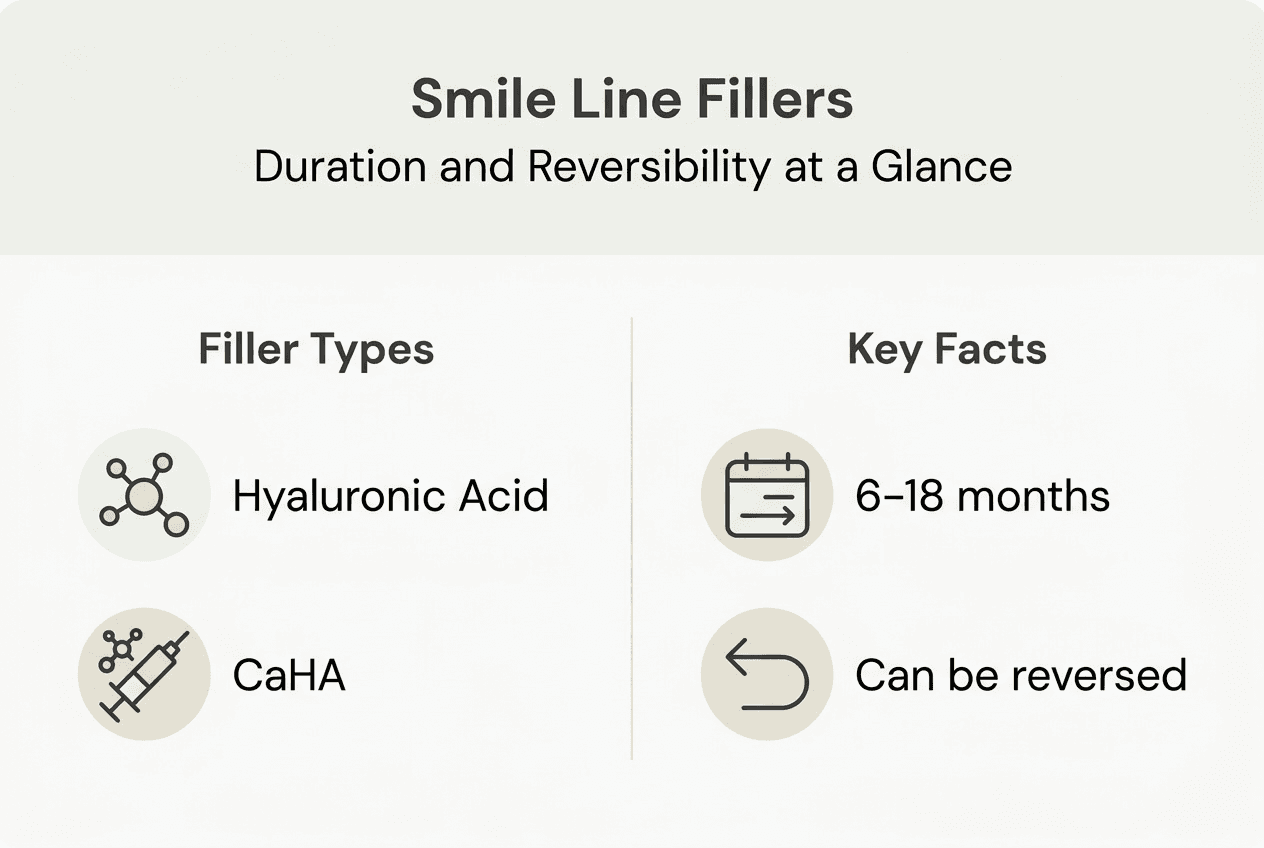
Not all dermal fillers are created equal, and understanding the differences helps you make informed choices aligned with your comfort level and aesthetic goals. The two main categories used for smile lines are hyaluronic acid (HA) fillers and calcium hydroxylapatite (CaHA) fillers, each with distinct properties regarding longevity, feel, and crucially, reversibility. Your choice should reflect both your desired outcome and your tolerance for permanence.
Hyaluronic acid fillers offer reversibility through an enzyme called hyaluronidase, which rapidly dissolves the product if you’re unhappy with results or experience complications. This safety net makes HA fillers ideal for first-time patients or those trying a new practitioner. The ability to reverse treatment reduces risk and anxiety, allowing you to approach enhancement with confidence. HA fillers typically last 6 to 12 months in smile lines, though newer formulations extend this to 18 months in some patients.
Calcium hydroxylapatite fillers like Radiesse provide longer duration, often lasting 12 to 18 months or more because they stimulate collagen production alongside immediate volumising. The body gradually replaces the CaHA microspheres with your own collagen, creating results that can persist beyond the product itself. However, these fillers lack reversibility, you cannot dissolve them if you’re dissatisfied. This permanence requires greater confidence in your practitioner and treatment plan before proceeding.
| Filler Type | Average Duration | Reversibility | Best For |
|---|---|---|---|
| Hyaluronic Acid | 6 to 18 months | Yes, with hyaluronidase | First-time patients, natural movement, flexible results |
| Calcium Hydroxylapatite | 12 to 18+ months | No | Experienced patients, deeper folds, collagen stimulation |
The reversibility factor influences treatment philosophy in meaningful ways. With HA fillers, practitioners can take an incremental approach, starting conservatively and adding more product in follow-up sessions if needed. This “less is more” strategy minimises risk whilst building towards your ideal outcome. With non-reversible fillers, the initial treatment requires more precision and confidence, as corrections are limited to massage, time, or in rare cases, surgical removal.
Non-permanent fillers encompass both HA and CaHA options, as both eventually metabolise completely. This distinguishes them from truly permanent fillers like silicone or polymethyl methacrylate, which remain in tissues indefinitely and carry higher complication risks. The temporary nature of modern fillers actually represents an advantage, allowing your treatment to evolve as your face changes with age and as aesthetic trends shift over time.
Your personal risk tolerance should guide filler selection. If the idea of non-reversible treatment causes significant anxiety, HA fillers provide peace of mind that supports a positive treatment experience. If you prioritise longevity and are confident in your practitioner after thorough consultation, CaHA fillers might offer better value through extended duration. There’s no universally correct choice, only the right choice for your individual circumstances and comfort level.
Pro Tip: Consider starting with HA fillers for your first treatment, even if you’re interested in longer-lasting options. This allows you to experience the treatment process, assess results, and build trust with your practitioner before committing to non-reversible products.
Aftercare and lifestyle factors that affect filler longevity in smile lines
Your treatment doesn’t end when you leave the clinic. The choices you make in the hours, days, and months following filler injection significantly influence both immediate healing and long-term duration. Proper aftercare optimises your investment by supporting integration, minimising complications, and potentially extending how long your results look their best. Small, consistent habits make measurable differences in outcome quality and longevity.
Immediate post-treatment care (first 24 to 48 hours):
- Avoid touching, pressing, or massaging the treated area unless specifically instructed by your practitioner
- Sleep elevated on your back to minimise swelling and prevent product displacement
- Skip intense exercise, saunas, and hot yoga which increase blood flow and swelling
- Avoid alcohol consumption which can worsen bruising and prolong recovery
- Apply cold compresses gently if swelling occurs, but avoid direct pressure on injection sites
- Stay hydrated to support the hyaluronic acid’s water-binding properties
Sun exposure represents one of the most significant controllable factors affecting filler longevity. UV radiation degrades hyaluronic acid through oxidative stress and inflammatory pathways, accelerating breakdown. In the first week post-treatment, avoid direct sun entirely as your skin is more vulnerable. Long-term, consistent sunscreen use (SPF 30 or higher) protects your investment and your skin health. Consider this non-negotiable if you want results to last towards the upper end of the duration range.

Certain skincare products require temporary modification after filler treatment. Retinoids, vitamin C serums, and alpha hydroxy acids can increase cellular turnover and potentially accelerate filler metabolism, especially in the first two weeks. Your practitioner will advise when to resume these products safely. Harsh physical exfoliants should be avoided over treated areas until fully healed. Gentle, hydrating skincare supports optimal results without interfering with filler integration.
Smoking dramatically shortens filler duration through multiple mechanisms. Nicotine constricts blood vessels, reducing nutrient delivery to tissues and impairing healing. The repetitive muscle movements of smoking also create mechanical stress on fillers in the lower face. Combustion products generate oxidative stress that degrades hyaluronic acid faster. If you smoke, expect results on the shorter end of the duration spectrum. Quitting even temporarily around treatment time improves outcomes measurably.
- Maintain consistent hydration by drinking adequate water daily
- Protect treated areas with broad-spectrum sunscreen year-round
- Avoid extreme facial treatments like aggressive peels or laser near injection sites
- Follow your practitioner’s specific aftercare instructions, which may vary by product
- Schedule follow-up appointments to assess results and plan maintenance
Lifestyle factors beyond immediate aftercare influence longevity too. High-intensity athletes often metabolise fillers faster due to elevated metabolic rates and increased facial blood flow during exercise. Extreme weight fluctuations can alter facial volume and affect how fillers sit in tissues. Chronic stress and poor sleep quality may accelerate ageing processes that work against your aesthetic treatments. A holistic approach to health supports better, longer-lasting cosmetic outcomes.
Natural recovery after fillers involves supporting your body’s healing processes rather than fighting them. Adequate protein intake provides building blocks for tissue repair. Anti-inflammatory foods like omega-3 fatty acids may reduce swelling and support integration. Arnica supplements or topical applications can minimise bruising, though evidence is mixed. These natural approaches complement rather than replace medical aftercare guidance.
Maintenance planning extends your results strategically. Rather than waiting until fillers completely disappear, scheduling touch-ups when you notice early softening maintains consistent appearance with less product over time. This approach often proves more cost-effective and aesthetically pleasing than cycling between full correction and complete dissolution. Discuss a maintenance schedule with your practitioner based on your individual metabolism and goals.
Pro Tip: Create a simple aftercare checklist on your phone with reminders for the first week post-treatment. Include sunscreen application, hydration goals, and product avoidance. Small, consistent actions compound into meaningfully better and longer-lasting results.
Explore professional filler treatments at Monaz Clinic London
Achieving natural, long-lasting results with dermal fillers requires more than quality products, it demands the expertise, artistry, and personalised care that define exceptional aesthetic practice. At Monaz Clinic on Harley Street, we combine medical precision with an understanding of feminine facial aesthetics to deliver smile line treatments that refresh without altering your natural expressiveness. Every treatment begins with a thorough consultation where we listen to your concerns, assess your unique facial structure, and create a tailored plan aligned with your goals and comfort level.

Our approach prioritises your wellbeing and realistic expectations over aggressive correction. We specialise in techniques that respect facial anatomy and movement, ensuring fillers integrate seamlessly for results that look like you, just refreshed. Whether you’re exploring dermal fillers for the first time or seeking a new practitioner who understands nuanced, natural enhancement, we provide the expertise and supportive environment you deserve. We also offer comprehensive wrinkle softening treatments that complement filler work for complete facial rejuvenation. Discover how our dedicated focus on nasolabial folds and smile lines can help you achieve the lasting, confident results you’re seeking.
Frequently asked questions
How long do fillers typically last in smile lines?
Hyaluronic acid fillers, the most common choice for nasolabial folds, typically last between 6 and 18 months depending on the specific product formulation and your individual metabolism. Denser, more cross-linked formulations tend towards the longer end of this range, whilst lighter products may require touch-ups sooner. Factors like facial movement patterns, sun exposure, and lifestyle habits influence where your results fall within this spectrum.
Can the longevity of fillers be extended by lifestyle changes?
Yes, several lifestyle modifications can meaningfully extend filler duration. Consistent sun protection prevents UV degradation of hyaluronic acid, whilst avoiding smoking eliminates factors that accelerate breakdown. Maintaining good hydration supports the water-binding properties that give fillers their volumising effect. Following proper aftercare instructions and scheduling strategic maintenance treatments also helps sustain results longer than a wait-and-see approach.
What are the differences between reversible and non-reversible fillers?
Hyaluronic acid fillers can be dissolved quickly using an enzyme called hyaluronidase, providing a safety net if you’re unhappy with results or experience complications. This reversibility makes them ideal for first-time patients or those trying new practitioners. Calcium hydroxylapatite fillers last longer and stimulate collagen production but cannot be reversed, requiring greater confidence in your treatment plan before proceeding. Both types eventually metabolise completely, distinguishing them from truly permanent fillers.
Why does injection technique influence how long fillers last?
Precise placement at optimal depths and volumes allows fillers to integrate naturally with your facial anatomy, reducing mechanical stress that accelerates breakdown. Multi-layering techniques distribute product strategically for better structural support and potentially longer duration. Poor technique can result in superficial placement that degrades faster, overfilling that creates pressure leading to premature migration, or incorrect depth that misses the target area entirely. Skilled practitioners optimise both immediate appearance and long-term longevity through expert technique.
Recommended
- How Long Fillers Last – What Every Woman Should Know – Monaz Clinic London
- Long-Lasting Filler Options: Complete Expert Guide – Monaz Clinic London
- How Long Do Dermal Fillers Last? Longevity, Science, and Safety – Monaz Clinic London
- Essential Aftercare Tips for Fillers: Achieve Lasting Results – Monaz Clinic London