


Discover how facial aesthetics enhances natural feminine beauty through personalised non-surgical treatments. Expert guidance on fillers, Botox, and safe approaches for women in London.

Facial aesthetics isn’t about chasing a mathematical formula or achieving some mythical ‘perfect’ face. It’s about restoring your natural feminine harmony through safe, personalised treatments that respect your unique anatomy. Many women believe aesthetic enhancements follow rigid beauty rules, but the reality is far more nuanced and empowering. This guide explores how facial aesthetics works for women in London, covering non-surgical treatment options, the truth about facial proportions, and how to achieve subtle, natural results that enhance rather than alter your features. You’ll discover practical insights into dermal fillers, neuromodulators, and personalised approaches that prioritise your wellbeing and confidence.
Table of Contents
- Understanding Feminine Facial Aesthetics And Harmony
- The Golden Ratio: Myth And Reality In Facial Aesthetics
- Non-Surgical Facial Treatments: Options And Benefits
- Personalising Facial Aesthetics For Women In London
- Explore Facial Aesthetic Treatments At Monaz Clinic London
- What Is Facial Aesthetics And Who Is It For?
Key takeaways
| Point | Details |
|---|---|
| Patient demographics | Women aged 35-45 represent the majority of facial aesthetic patients, with first treatments typically starting around age 37. |
| Golden ratio reality | The golden ratio offers useful guidance for facial proportions but isn’t a definitive beauty standard due to cultural and individual variation. |
| Treatment combinations | Non-surgical approaches often combine hyaluronic acid fillers, neuromodulators, and ultrasound technologies for comprehensive natural results. |
| Personalised planning | Effective treatments consider your BMI, age, skin quality, and cultural background rather than applying generic formulas. |
| Feminine harmony focus | Successful facial aesthetics for women prioritise soft transitions and balanced volume over harsh definition or masculinised features. |
Understanding feminine facial aesthetics and harmony
Feminine facial aesthetics centres on restoring and enhancing the soft, delicate contours that characterise female beauty. Unlike approaches that create sharp definition or angular features, treatments for women focus on maintaining gentle transitions between facial areas and ensuring balanced volume distribution. This philosophy matters because inappropriate techniques can inadvertently masculinise your appearance, creating results that feel unnatural or jarring.
The midface and cheeks play a crucial role in feminine facial harmony. Volume in these areas creates the soft, youthful contours that define female attractiveness. As we age, fat pads descend and volume diminishes, leading to hollow temples, flat cheeks, and more prominent lower facial features. Restoring midface volume doesn’t just address ageing signs but also maintains the feminine balance that makes you look like yourself, only refreshed.
Research confirms that 90% of aesthetics patients are female, with the average first treatment age around 37 and peak demand between 35 and 45 years. These women aren’t seeking dramatic transformation. They want subtle rejuvenation that preserves their identity whilst managing the visible signs of ageing. The goal is confidence through natural enhancement, not an artificial or overdone appearance.
Key elements of feminine facial harmony include:
- Soft jawline transitions without excessive definition
- Fuller midface volume creating gentle cheek projection
- Smooth forehead contours with minimal harsh lines
- Balanced lip proportions that complement facial structure
- Delicate brow positioning that opens the eye area
“Facial aesthetics for women should enhance your natural beauty, not impose someone else’s idea of perfection. The aim is to look like the best version of yourself.”
Pro Tip: When considering facial treatments, bring photos of yourself from 5 to 10 years ago. These images help your clinician understand your natural facial structure before age-related changes occurred, enabling more accurate restoration rather than arbitrary enhancement.
Understanding facial harmony balance aesthetic confidence helps you make informed decisions about which treatments will genuinely benefit your appearance. It’s not about following trends or copying celebrity looks. It’s about respecting your unique anatomy whilst addressing specific concerns through evidence-based, safe interventions.
The golden ratio: myth and reality in facial aesthetics
The golden ratio, approximately 1.618, has fascinated mathematicians, artists, and scientists for centuries. In facial aesthetics, it’s often presented as the mathematical key to beauty, suggesting that faces conforming to this proportion are universally attractive. The theory proposes that facial length to width should approximate 1.618, with the face dividing into vertical thirds and horizontal fifths according to specific measurements.
Whilst the golden ratio provides a useful framework for assessing facial proportions, research shows mixed evidence for its predictive value in determining attractiveness. Cultural preferences, individual variation, and subjective perception all influence what we find beautiful. A face that perfectly matches golden ratio calculations might appear less attractive than one with slight deviations, depending on context and personal taste.
Studies examining the golden ratio’s validity reveal important limitations. The ratio lacks universality due to cultural variation and subjective beauty standards. What appears harmonious in one cultural context may differ significantly in another. Additionally, factors like symmetry and averageness often prove more relevant to perceived attractiveness than strict mathematical proportions.
| Facial measurement | Golden ratio guideline | Clinical reality |
|---|---|---|
| Face length to width | 1.618:1 | Varies by ethnicity and individual anatomy |
| Vertical thirds | Equal forehead, midface, lower face | Natural variation common and attractive |
| Horizontal fifths | Face width divided into five equal parts | Slight asymmetry is normal and unnoticeable |
| Lip proportion | Upper to lower lip ratio | Personal preference and facial balance matter more |
Ethical practitioners recognise these limitations and prioritise natural results over rigid formulas. Your clinician should assess your unique facial structure, consider your aesthetic goals, and recommend treatments that enhance your individual features rather than forcing them into predetermined ratios. This approach respects your identity whilst achieving harmonious improvements.
Key considerations beyond the golden ratio include:
- Facial symmetry, which influences attractiveness more consistently than mathematical ratios
- Averageness, where faces closer to population norms often appear more attractive
- Skin quality, texture, and tone, which significantly impact perceived beauty
- Dynamic expressions and how your face moves during conversation and emotion
- Cultural and personal preferences that shape your beauty ideals
Pro Tip: Be cautious of clinics that promise to ‘correct’ your face to match the golden ratio. Natural, personalised results come from understanding your anatomy and goals, not from applying universal formulas that ignore individual variation.
Understanding best practices facial aesthetics means recognising the golden ratio as one tool among many, not as the definitive standard for beauty. Your face tells your story, and effective treatments enhance that narrative rather than rewriting it according to mathematical theory.
Non-surgical facial treatments: options and benefits
Non-surgical facial aesthetics encompasses a range of injectable and device-based treatments designed to restore volume, reduce wrinkles, and improve skin quality without surgery. These procedures offer significant benefits for women seeking natural enhancement with minimal downtime and lower risk compared to surgical interventions.
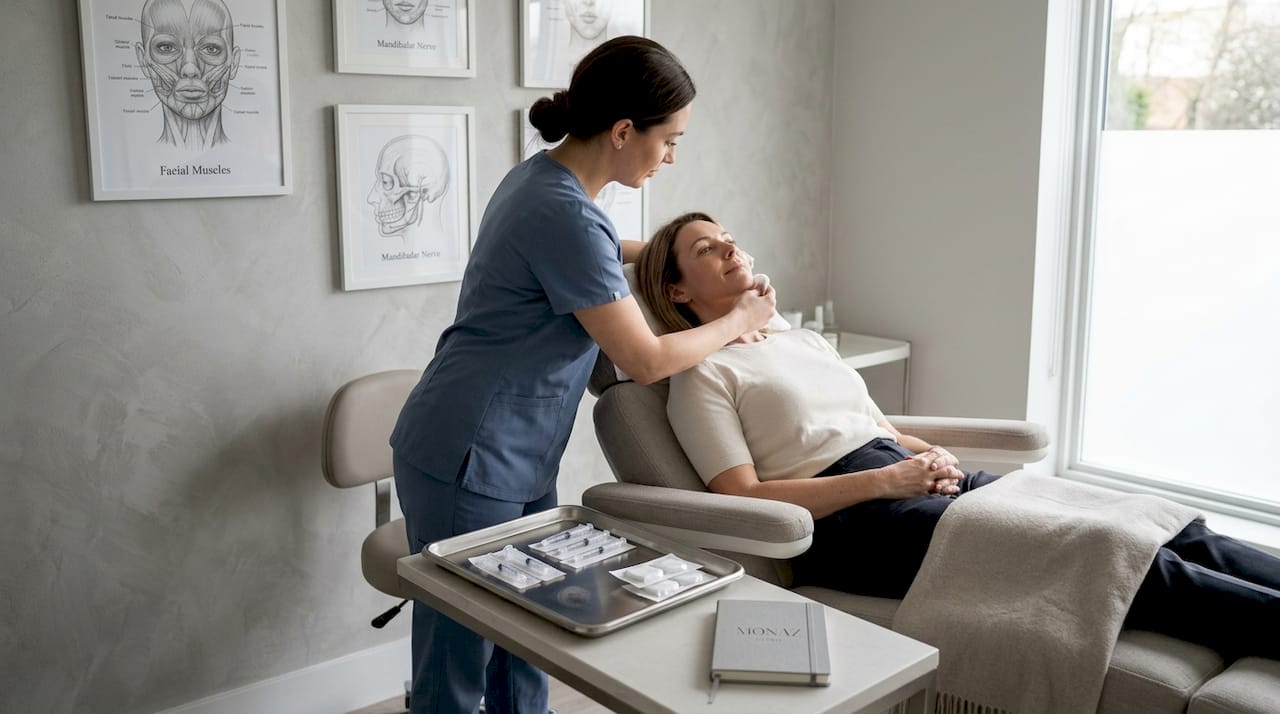
Dermal fillers represent the most common volumising treatment. Hyaluronic acid fillers provide hydration and volume, making them ideal for lips, cheeks, and tear troughs. They integrate smoothly with your tissue and can be adjusted or dissolved if needed. Calcium hydroxylapatite fillers offer more structural support, particularly useful for jawline contouring and deeper volume restoration. Combining both types delivers superior results by addressing multiple tissue layers simultaneously.
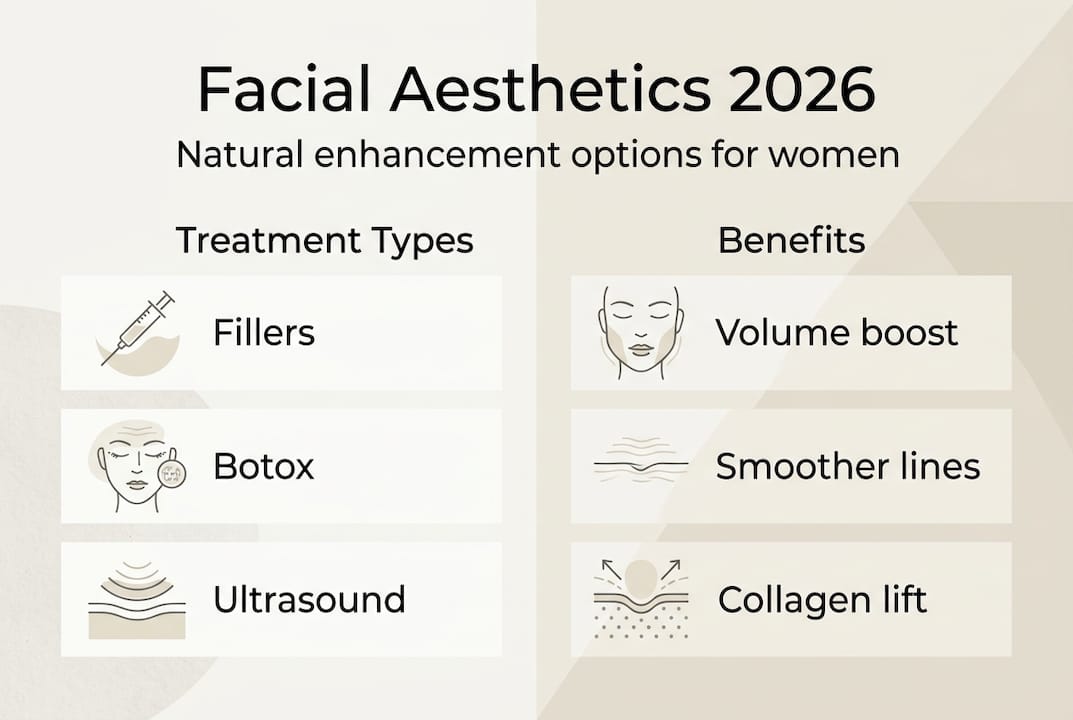
Neuromodulators like Botox work differently from fillers. These injectable treatments temporarily relax specific facial muscles, reducing the dynamic wrinkles that form during expression. They’re particularly effective for forehead lines, frown lines between the brows, and crow’s feet around the eyes. The results appear within days and last three to four months, making them suitable for ongoing maintenance.
Ultrasound technologies, including high-intensity focused ultrasound, stimulate collagen production deep within the skin. These treatments tighten and lift tissue gradually over several months, offering subtle improvement without injectables. They work well for women in their 30s and 40s who want preventative care or for those seeking overall skin quality enhancement rather than targeted volume restoration.
| Treatment type | Primary benefit | Typical duration | Best suited for |
| — | — | — |
| Hyaluronic acid fillers | Volume and hydration | 6-18 months | Lips, cheeks, tear troughs |
| Calcium hydroxylapatite | Structural support | 12-18 months | Jawline, deeper volume loss |
| Neuromodulators | Wrinkle reduction | 3-4 months | Forehead, frown lines, crow’s feet |
| Ultrasound therapy | Collagen stimulation | 6-12 months | Overall skin tightening and quality |
Combination treatments tailored to your specific needs often produce the most natural and comprehensive results. For example, addressing midface volume loss with fillers whilst simultaneously softening forehead lines with neuromodulators creates balanced rejuvenation. Your clinician can design a phased treatment plan that prioritises safety and gradual enhancement over aggressive intervention.
Key benefits of non-surgical facial treatments include:
- Minimal downtime, typically allowing immediate return to normal activities
- Lower risk compared to surgical procedures
- Adjustable results that can be refined over time
- Reversibility for certain treatments like hyaluronic acid fillers
- Natural appearance when performed by experienced practitioners
Pro Tip: Start conservatively with any new treatment. You can always add more product or combine treatments in subsequent sessions, but removing excess filler or correcting over-treatment is more complex and stressful.
Exploring the differences between dermal fillers vs anti wrinkle treatments helps you understand which option addresses your specific concerns. Many women benefit from learning about dermal fillers in detail before their consultation. For comprehensive rejuvenation, full facial rejuvenation approaches combine multiple modalities for harmonious results.
Personalising facial aesthetics for women in London
Personalised treatment planning separates natural, successful facial aesthetics from generic approaches that ignore individual variation. Your facial structure, skin quality, lifestyle, and aesthetic goals all influence which treatments will deliver the best results whilst maintaining your unique identity.
Body mass index significantly impacts facial aesthetics, particularly for women with lower BMI. Individualised treatments for women with naturally lean faces should emphasise medial cheek volume rather than lateral projection, preventing an overly gaunt or hollow appearance. Conversely, women with fuller faces may benefit from subtle contouring that enhances definition without creating harsh angles.
Female facial aesthetics requires particular attention to maintaining soft curves and avoiding over-sharp definition. Treatments that work well for male patients often create inappropriate masculinisation when applied to women. Your clinician should understand these gender-specific considerations and adjust techniques accordingly, focusing on gentle transitions and balanced proportions rather than dramatic angles.
Prejuvenation represents an increasingly popular approach for women in their 30s. Starting treatments early, before significant ageing signs develop, allows for subtle maintenance that delays visible decline. Small amounts of strategically placed filler or regular neuromodulator treatments can preserve your natural appearance far more effectively than attempting major correction later.
Key factors in personalised facial aesthetic planning include:
- Comprehensive facial assessment examining bone structure, soft tissue, and skin quality
- Discussion of realistic goals and expectations based on your anatomy
- Consideration of cultural beauty ideals and personal preferences
- Medical history review to identify contraindications or risk factors
- Lifestyle factors including sun exposure, smoking, and skincare habits
Steps to achieving personalised facial aesthetic results:
- Schedule a thorough consultation with an experienced practitioner who specialises in female facial aesthetics
- Discuss your concerns, goals, and any treatments you’ve previously received
- Undergo comprehensive facial assessment including photography and measurements
- Review a customised treatment plan with phased approach and realistic timeline
- Begin with conservative treatments, allowing time to assess results before progressing
- Maintain regular follow-up appointments to monitor outcomes and adjust plans as needed
Pro Tip: Bring makeup-free photos from different angles to your consultation. Natural lighting images help your clinician assess your true skin quality and facial structure without cosmetic enhancement, leading to more accurate treatment recommendations.
Clinicians should avoid overreliance on mathematical formulas like the golden ratio, instead prioritising your natural facial harmony and individual characteristics. This approach ensures results that enhance your existing beauty rather than imposing arbitrary standards that may not suit your features.
Learning how to personalise facial aesthetics naturally empowers you to make informed decisions about your care. A comprehensive facial assessment checklist london helps you understand what to expect during consultation. Recognising signs you need facial aesthetics naturally guides your timing for seeking professional assessment.
Explore facial aesthetic treatments at Monaz Clinic London
If you’re considering facial aesthetic treatments that prioritise your natural beauty and individual needs, Monaz Clinic offers expert, personalised care exclusively for women. Located at 96 Harley Street in central London, our clinic provides a safe, supportive environment where your wellbeing comes first.
We specialise in non-surgical treatments including dermal fillers and wrinkle softening procedures tailored to enhance feminine facial harmony. Our approach combines medical expertise with an artistic eye, ensuring subtle, natural results that refresh rather than alter your appearance. Every treatment begins with a complimentary consultation where we assess your unique anatomy, discuss your goals, and create a personalised plan that respects your natural features. Explore our transparent dermal fillers price list and wrinkle softening price list to understand your investment. For specific concerns like forehead lines, we offer targeted solutions that deliver visible improvement whilst maintaining natural movement and expression.
What is facial aesthetics and who is it for?
Facial aesthetics refers to non-surgical treatments designed to enhance your natural facial features, manage signs of ageing, and improve skin quality. These procedures include dermal fillers, neuromodulators, skin boosters, and device-based therapies that restore volume, reduce wrinkles, and stimulate collagen production. The focus is on subtle, natural enhancement rather than dramatic transformation.
Ideal candidates are women seeking safe, effective solutions for age-related concerns like volume loss, fine lines, or skin texture changes. You might consider facial aesthetics if you notice early signs of ageing in your 30s and want preventative care, or if you’re in your 40s or beyond and wish to restore lost volume and smooth wrinkles. The treatments suit women who value natural results and prefer non-surgical options with minimal downtime.
Successful facial aesthetics prioritises feminine harmony, ensuring treatments enhance your existing features rather than creating an artificial or overdone appearance. Your clinician should tailor recommendations to your unique anatomy, cultural background, and personal aesthetic goals, avoiding generic approaches that ignore individual variation.
How do non-surgical treatments like fillers and Botox work?
Dermal fillers restore facial volume by injecting gel-like substances, typically hyaluronic acid or calcium hydroxylapatite, beneath the skin. These materials integrate with your tissue, filling hollows, smoothing contours, and providing structural support where fat pads have diminished with age. Results appear immediately and develop fully over several days as any swelling subsides.
Botox and similar neuromodulators work by temporarily relaxing specific facial muscles responsible for dynamic wrinkles. When injected into areas like the forehead or around the eyes, they prevent repetitive muscle contractions that create lines during expression. The effects become visible within three to seven days and last approximately three to four months, requiring regular maintenance treatments.
Is the golden ratio essential for natural beauty?
The golden ratio serves as a helpful guideline for assessing facial proportions but isn’t essential for natural beauty or successful aesthetic outcomes. Research shows that cultural preferences, individual variation, and factors like symmetry and averageness often matter more than strict mathematical ratios. Many beautiful faces deviate from golden ratio measurements whilst still appearing harmonious and attractive.
Ethical practitioners use the golden ratio as one assessment tool among many, not as a rigid template for treatment planning. Your unique facial structure, personal aesthetic goals, and natural harmony should guide treatment decisions rather than attempts to force your features into predetermined mathematical formulas. Natural, personalised results come from respecting your individual anatomy, not from applying universal standards.
What should I expect during a facial aesthetics consultation?
A comprehensive facial aesthetics consultation begins with discussion of your concerns, goals, and medical history. Your clinician will examine your facial structure, skin quality, and areas of concern whilst explaining which treatments might address your specific needs. This assessment includes photography from multiple angles to document your baseline appearance and aid treatment planning.
You should receive honest, realistic information about what treatments can achieve, including expected results, potential risks, and recovery time. Your practitioner will recommend a personalised treatment plan that may include multiple procedures or a phased approach over several months. The consultation ensures you feel informed, comfortable, and confident before proceeding with any treatment, prioritising your safety and natural outcomes above all else.