




Discover which anti-wrinkle creams actually work based on scientific evidence. Learn about retinoids, bakuchiol, hyaluronic acid and how to choose for your skin type.
Walking into any chemist reveals shelves packed with anti-wrinkle creams promising miraculous results, yet most women leave confused about which products actually deliver. The truth is stark: research shows that only 5 of 197 products tested contained sufficient active ingredients to reduce wrinkles effectively. This guide cuts through the marketing noise to reveal which ingredients genuinely work, how they function at a biological level, and how to select creams tailored to your skin type for natural, visible results without wasting money on ineffective formulations.
Table of Contents
- How Anti-Wrinkle Creams Work: The Science Behind Results
- Retinoids And Bakuchiol: Comparing Gold Standard And Natural Alternatives
- Hydration And Antioxidants: The Role Of Hyaluronic Acid And Vitamin C In Wrinkle Care
- Choosing The Right Anti-Wrinkle Cream For Your Skin Type And Concerns
- Explore Expert Wrinkle Softening Treatments At Monaz Clinic London
- Frequently Asked Questions
Key takeaways
| Point | Details |
|---|---|
| Retinoids deliver proven results | Prescription tretinoin and over-the-counter retinol increase collagen production and cell turnover, showing visible wrinkle reduction within 3 to 12 months |
| Bakuchiol suits sensitive skin | This plant-based alternative matches retinol’s effectiveness on wrinkles and pigmentation but causes 70% less irritation, ideal for those who cannot tolerate retinoids |
| Hydration enhances appearance | Hyaluronic acid combined with vitamin C improves skin elasticity by 34% and reduces pigmentation by 45% within 8 weeks through deep hydration and antioxidant protection |
| Concentration matters critically | Effective creams require active ingredient concentrations above 2 to 5% to stimulate meaningful biological changes in skin structure |
How anti-wrinkle creams work: the science behind results
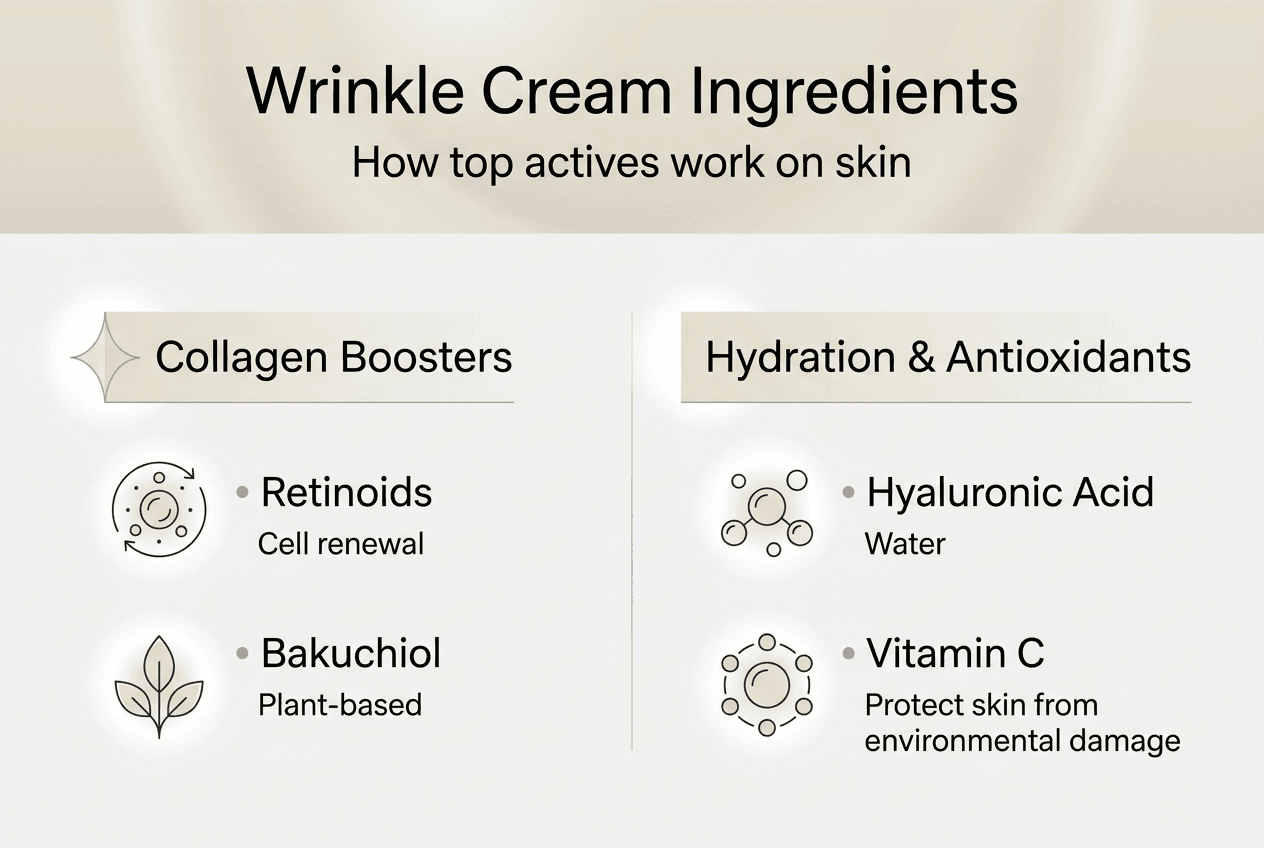
Understanding how active ingredients reduce wrinkles helps you evaluate product claims with confidence. Effective creams work through collagen stimulation, hydration, and antioxidant protection, but only when formulated at sufficient concentrations above 2 to 5%. Without adequate levels of proven actives, creams simply moisturise without addressing the underlying structural changes that cause wrinkles.
Retinoids represent the gold standard for wrinkle reduction because they penetrate skin layers to increase collagen synthesis and accelerate cell turnover. This process gradually thickens the dermis and smooths fine lines over several months. However, retinoids can irritate sensitive skin, causing redness and flaking during the adjustment period.
Hyaluronic acid takes a different approach by binding up to 1,000 times its weight in water, creating a plumping effect that softens wrinkle depth immediately. This top anti-ageing ingredient improves skin elasticity over time through sustained hydration, making it essential for dry or mature skin types.
Vitamin C provides antioxidant protection against free radicals that break down collagen and accelerate ageing. It also inhibits melanin production, reducing age spots and uneven tone whilst supporting collagen synthesis. The combination of vitamin C with hyaluronic acid delivers particularly impressive results on both wrinkles and pigmentation.
Peptides are short chains of amino acids that signal skin cells to produce more collagen and elastin. They work synergistically with retinoids and antioxidants to promote firmer, more resilient skin. Key mechanisms include:
- Stimulating fibroblast activity to increase collagen production
- Supporting skin barrier function to retain moisture
- Reducing inflammation that contributes to premature ageing
- Enhancing penetration of other active ingredients
The critical factor across all these ingredients is concentration. Many commercial creams contain trace amounts of actives insufficient to trigger biological changes, which explains why wrinkle cream studies find most products ineffective despite promising labels.
Retinoids and bakuchiol: comparing gold standard and natural alternatives
Choosing between retinoids and bakuchiol depends on your skin’s tolerance and your preference for natural ingredients. Both reduce wrinkles through collagen stimulation, but they differ significantly in irritation potential and suitability for sensitive skin.
Retinoids like retinol and retinal increase collagen production and cell turnover, with visible wrinkle reduction typically appearing within 3 to 6 months of consistent use. Prescription tretinoin delivers the fastest results because it works directly without requiring conversion, whilst over-the-counter retinol must be converted by skin enzymes into its active form. This makes tretinoin more potent but also more likely to cause irritation, especially during the first weeks of use.
The challenge with retinoids lies in their side effects. Many women experience redness, peeling, and increased sun sensitivity, particularly those with naturally sensitive or dry skin. Starting with lower concentrations and gradually increasing frequency helps minimise discomfort, but some individuals simply cannot tolerate retinoids regardless of careful introduction.
Bakuchiol offers a compelling alternative for these situations. This plant-derived compound matches retinol’s efficacy on wrinkles and pigmentation whilst causing 70% less irritation in clinical trials. Research demonstrates that bakuchiol reduces fine lines, improves skin elasticity, and evens tone comparably to retinol after 12 weeks of twice-daily application.
Pro Tip: If you want to try retinoids but have sensitive skin, apply a pea-sized amount only twice weekly for the first month, gradually increasing to nightly use as your skin builds tolerance.
The choice between these actives should reflect your skin’s characteristics and your aesthetic philosophy. Retinoids suit most skin types and deliver proven results backed by decades of research, making them the best anti-wrinkle cream option for women seeking maximum efficacy. Bakuchiol appeals to those preferring natural ingredients or experiencing retinoid intolerance, offering comparable benefits without the adjustment period.
Consider this comparison when selecting your treatment:
| Factor | Retinoids | Bakuchiol |
|---|---|---|
| Wrinkle reduction | Proven over decades, visible in 3 to 12 months | Comparable results in 12 weeks |
| Irritation potential | Moderate to high, especially initially | Low, suitable for sensitive skin |
| Sun sensitivity | Increases photosensitivity | No increased sensitivity |
| Natural origin | Synthetic or vitamin A derivative | Plant-based from Psoralea corylifolia |
| Pregnancy safety | Contraindicated | Generally considered safer |
Both ingredients work best when combined with broad-spectrum sun protection, as UV exposure undermines collagen-building efforts. For expert tips on selecting anti-wrinkle creams, consider your skin’s unique needs rather than following generic recommendations.
Hydration and antioxidants: the role of hyaluronic acid and vitamin C in wrinkle care
Whilst collagen-stimulating ingredients address wrinkle formation at its source, hydration and antioxidants create immediate improvements in skin texture and tone. These complementary approaches work together to deliver comprehensive anti-ageing benefits.
Hyaluronic acid improves hydration, elasticity, and wrinkle appearance by drawing moisture into the skin and maintaining it within the extracellular matrix. This creates a plumping effect that softens fine lines instantly whilst supporting long-term skin health through improved barrier function. For dry or mature skin, hyaluronic acid proves essential because natural production declines with age, leaving skin less able to retain moisture.
Vitamin C enhances these benefits through multiple mechanisms. As a potent antioxidant, it neutralises free radicals generated by UV exposure, pollution, and metabolic processes that degrade collagen and elastin. It also inhibits tyrosinase, the enzyme responsible for melanin production, reducing age spots and uneven pigmentation that add years to your appearance.
The combination of hyaluronic acid and vitamin C delivers particularly impressive results. A clinical study tracking 40 women over 8 weeks found significant improvements across multiple ageing markers:
| Measurement | Improvement | Timeframe |
|---|---|---|
| Wrinkle score reduction | 34% | 8 weeks |
| Hyperpigmentation reduction | 45% | 8 weeks |
| Skin elasticity increase | 28% | 8 weeks |
| Overall skin quality | Significant improvement | 8 weeks |
These results demonstrate that hydration and antioxidants complement collagen-stimulating ingredients rather than replacing them. Whilst retinoids or bakuchiol rebuild skin structure over months, hyaluronic acid and vitamin C provide immediate textural improvements and protect existing collagen from degradation.
Pro Tip: Apply hyaluronic acid to damp skin immediately after cleansing to maximise moisture retention, then seal it with a cream containing vitamin C and ceramides for comprehensive protection.
Moisturising becomes increasingly critical as skin matures and natural oil production declines. Ingredients that support the skin barrier, including ceramides, niacinamide, and fatty acids, work synergistically with hyaluronic acid to prevent transepidermal water loss. This matters because dehydrated skin emphasises wrinkles and appears dull, whilst well-hydrated skin reflects light better and appears more youthful.
Antioxidants beyond vitamin C also contribute to wrinkle prevention. These include:
- Vitamin E, which works synergistically with vitamin C to neutralise free radicals
- Ferulic acid, which stabilises vitamins C and E whilst providing additional UV protection
- Green tea extract, containing polyphenols that reduce inflammation and oxidative stress
- Resveratrol, which activates longevity genes and protects against environmental damage
For those seeking the best facial cream for wrinkles, formulations combining multiple antioxidants with hyaluronic acid deliver broader protection than single-ingredient products. The key is consistency: antioxidants work preventatively, so daily application protects skin from cumulative damage that manifests as wrinkles over time.
Understanding these anti-ageing ingredients empowers you to evaluate product formulations critically and select creams that address your specific concerns through proven mechanisms.
Choosing the right anti-wrinkle cream for your skin type and concerns
Applying ingredient knowledge practically requires matching actives to your skin’s unique characteristics and tolerance levels. Personalised selection ensures you achieve natural-looking results without unnecessary irritation or wasted investment in unsuitable products.
Begin by honestly assessing your skin type and primary concerns:
- Identify whether your skin is sensitive, dry, oily, combination, or mature, as this determines which actives and formulations suit you best
- Note specific concerns beyond wrinkles, such as pigmentation, redness, or loss of firmness, to select creams addressing multiple issues
- Consider any known sensitivities or allergies to common skincare ingredients, particularly fragrances or preservatives
- Evaluate your current routine to identify gaps or redundancies that a targeted anti-wrinkle cream could address
- Set realistic expectations based on ingredient mechanisms, understanding that visible results require consistent use over several months
For sensitive skin or those experiencing retinoid intolerance, bakuchiol provides comparable wrinkle reduction with significantly less irritation. Start with formulations containing 0.5% to 1% bakuchiol applied nightly, gradually increasing frequency if no irritation occurs. Pair with soothing ingredients like centella asiatica or allantoin to further minimise inflammation.
Dry or mature skin benefits most from creams combining hyaluronic acid with ceramides and fatty acids that reinforce the moisture barrier. Look for formulations containing at least 1% hyaluronic acid in multiple molecular weights, as smaller molecules penetrate deeper whilst larger molecules create surface hydration. Ceramides restore lipid balance, preventing moisture loss that emphasises wrinkles.
Oestrogen-deficient skin, common during perimenopause and beyond, may respond particularly well to creams containing phytoestrogens like soy isoflavones or red clover extract. These plant compounds gently stimulate collagen production and improve skin thickness without the risks associated with hormone replacement therapy. Combine with retinoids or bakuchiol for comprehensive anti-ageing benefits.
Patch testing new products prevents adverse reactions that could set back your skincare progress. Apply a small amount to your inner forearm for three consecutive days, watching for redness, itching, or irritation before using on your face. This simple step identifies sensitivities before they cause visible facial reactions.
Consistency matters more than product price or brand prestige. A moderately priced cream with proven actives at effective concentrations, used nightly for months, delivers better results than expensive formulations applied sporadically. Set a realistic routine you can maintain long-term, as collagen remodelling requires sustained stimulus over 12 weeks minimum.
When selecting anti-ageing treatments naturally, prioritise evidence-based ingredients over marketing claims. Products listing retinol, bakuchiol, hyaluronic acid, or vitamin C within the first five ingredients typically contain meaningful concentrations. Avoid creams relying primarily on moisturisers with trace actives added for label appeal.
Remember that no cream addresses severe volume loss, deep static wrinkles, or significant skin laxity as effectively as professional treatments. Understanding top anti-ageing ingredients helps you recognise when topical treatments have reached their limits and more advanced options could better serve your goals.
Explore expert wrinkle softening treatments at Monaz Clinic London
Whilst effective creams improve fine lines and skin quality, professional aesthetic treatments deliver more dramatic wrinkle reduction for those seeking enhanced results. At Monaz Clinic on Harley Street, we specialise in personalised wrinkle-softening injections and dermal fillers that complement your topical skincare routine.

Our approach focuses on natural-looking results that refresh rather than alter your features. Whether you’re concerned about forehead lines, crow’s feet, or loss of facial volume, we create bespoke treatment plans tailored to your unique anatomy and aesthetic goals. Every appointment begins with a complimentary consultation where we assess your concerns and explain realistic outcomes.
Transparent pricing ensures you make informed decisions about your care. Visit our wrinkle softening price list to understand investment levels for different treatment areas. For specific concerns like forehead lines treatment, we explain exactly what to expect during and after your procedure.
Combining professional treatments with evidence-based skincare creates comprehensive anti-ageing results. Our team can recommend optimal cream formulations that enhance and maintain your treatment outcomes. Explore our dermal fillers price list to discover how volume restoration complements wrinkle reduction for harmonious facial rejuvenation.
Frequently asked questions
What active ingredient reduces wrinkles fastest?
Prescription tretinoin delivers the fastest visible results, typically within 3 to 6 months of consistent nightly use. Over-the-counter retinol takes slightly longer because skin must convert it into its active form, but still shows meaningful wrinkle reduction within 6 to 12 months. Bakuchiol provides comparable results to retinol over 12 weeks with less irritation. For guidance on selecting effective formulations, review our recommendations for the best anti-wrinkle cream for women.
Is bakuchiol as effective as retinol for sensitive skin?
Bakuchiol matches retinol’s wrinkle and pigmentation results whilst causing 70% less irritation, making it ideal for sensitive skin types. Clinical trials demonstrate that 0.5% bakuchiol applied twice daily for 12 weeks improves fine lines, elasticity, and tone comparably to 0.5% retinol without the redness or peeling retinoids commonly cause. This makes bakuchiol the preferred choice for those who cannot tolerate retinoids or prefer plant-based ingredients. For more guidance, see our expert tips for anti-wrinkle creams.
How long before I see results from anti-wrinkle creams?
Visible improvements typically appear within 3 to 12 months depending on the active ingredient and its concentration. Retinoids show results faster, usually within 3 to 6 months, whilst gentler ingredients like bakuchiol require 8 to 12 weeks of consistent use. Hyaluronic acid provides immediate plumping effects but takes 6 to 8 weeks to improve elasticity measurably. Patience and consistency prove essential because collagen remodelling occurs gradually. For recommendations on effective formulations, explore the best facial cream for wrinkles.
Can I combine retinoids with vitamin C and hyaluronic acid?
Yes, combining these ingredients creates comprehensive anti-ageing benefits when introduced carefully. Apply vitamin C serum in the morning under sunscreen for antioxidant protection, then use retinoids at night to avoid potential irritation from layering acids. Hyaluronic acid works beautifully with both, applied to damp skin before other actives to maximise hydration. Start with lower concentrations and alternate nights if you experience sensitivity, gradually building to nightly use as your skin adapts.
Do anti-wrinkle creams work on deep wrinkles?
Topical creams improve fine lines and moderate wrinkles but have limited effect on deep static wrinkles caused by significant collagen loss and facial volume depletion. Retinoids and bakuchiol can soften deeper lines over many months by rebuilding dermal thickness, but professional treatments like wrinkle-softening injections or dermal fillers deliver more dramatic results for advanced ageing. Creams work best as preventative maintenance or for early wrinkles, whilst professional treatments address more pronounced concerns effectively.
Should I use anti-wrinkle cream during the day or night?
Most anti-wrinkle creams work best at night when skin enters repair mode and you avoid UV exposure that degrades active ingredients. Retinoids particularly require nighttime application because they increase sun sensitivity and break down in daylight. However, antioxidant creams containing vitamin C suit morning use under sunscreen, providing daytime protection against free radical damage. Hyaluronic acid works equally well morning or night, so choose timing based on your other actives and routine preferences.
Recommended
- Best Facial Cream for Wrinkles: Science and Impact – Monaz Clinic London
- Best Anti Wrinkle Cream for Women: Achieve Youthful Skin Safely – Monaz Clinic London
- 10 Expert Tips for Choosing Top Ten Anti Wrinkle Creams – Monaz Clinic London
- 7 Top Anti-Wrinkle Strategies Every Woman Should Know – Monaz Clinic London